




 19 min. read
Tariff turmoil, extreme drought, late-season rain, wildfire smoke, a change in federal government: to say it’s been an atypical year on the farm would be an understatement.
Then again, as most farmers are quick to point out, there’s really no such thing as a typical farming season.
By all accounts, the crop has been strong. Yields are above average for canola and wheat, despite early season heat waves, dry conditions and smoky skies. In fact, those factors probably helped. The onset of endless fall rain has been a bigger challenge for farmers as they race to finish harvest and prepare the fields for spring seeding — but it’s nothing they haven’t faced before.
Tariffs are a more uncomfortable reality. China has levelled a 75 per cent levy on canola — one of Manitoba’s most important crops — on top of a slate of ever-shifting tariffs from the province’s biggest market: the United States. Market prices have taken a hit, putting pressure on farmers to find buyers for their bumper crops. Not to mention the steady increase in expenses — even as the carbon tax disappeared — as tariffs trickle down the supply chain and notch up the price of farm equipment and inputs.
And yet, on Manitoba’s farms, optimism prevails.
As harvest comes to an end and the agricultural world starts preparing for another season, four southern Manitoba farmers reflect on the year’s unique challenges — and their hopes for the coming year.

A summer of drought and smoke
By the numbers, this summer could have been a disaster for crops. Drought has been common on the Prairies for many summers now; severe dry conditions struck in 2021 and 2023, and the 2025 growing season seemed off to a similar start.
Manitoba saw an uncharacteristically early heat wave in May, then a single bout of heavy rain. Throughout much of the southern part of the province, there was hardly more than a few inches of precipitation through the early months of summer. The Interlake region experienced one-in-10-year severe drought conditions through June, July and August. Some areas reached the one-in-20-year extreme drought threshold.
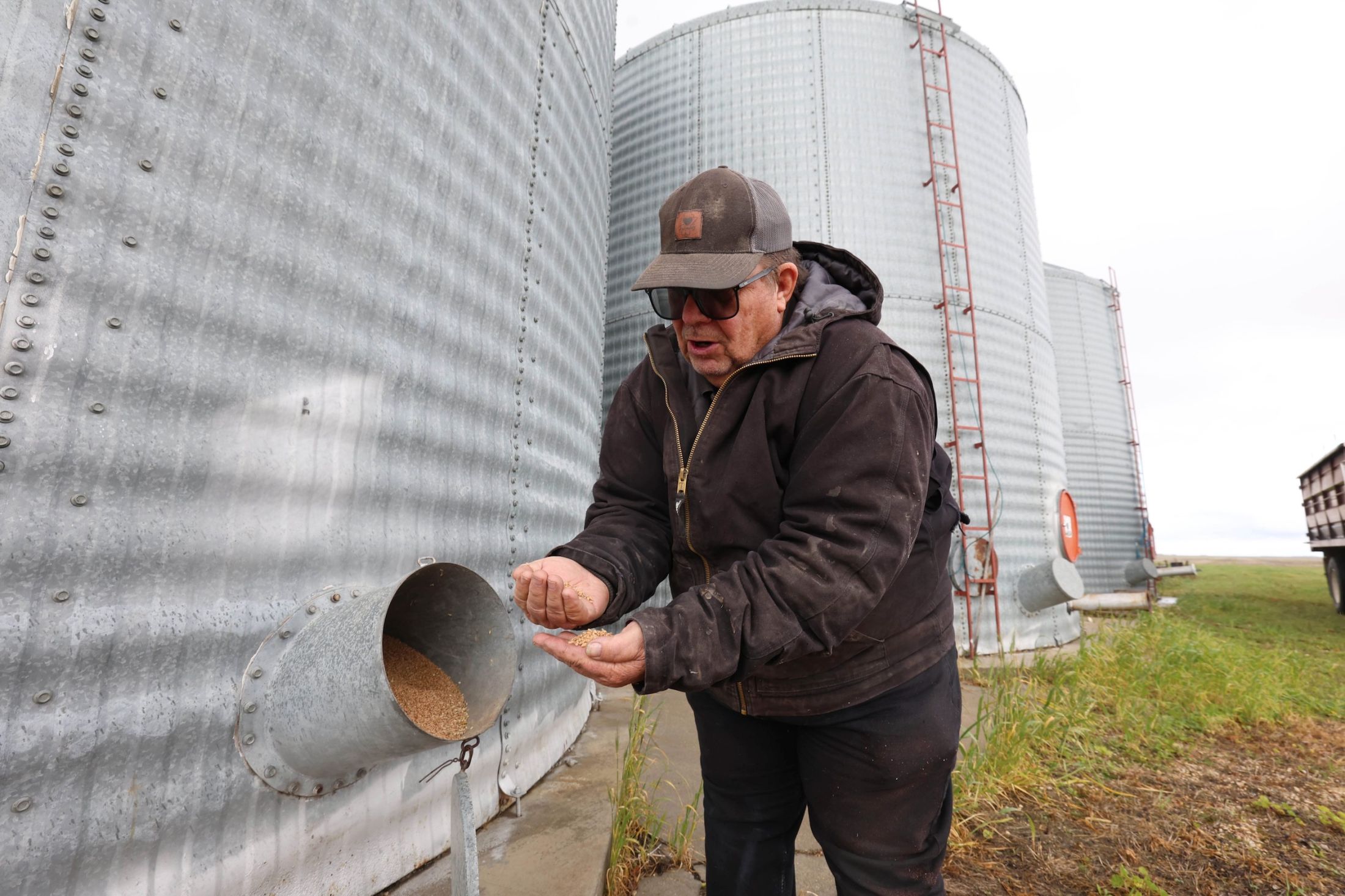
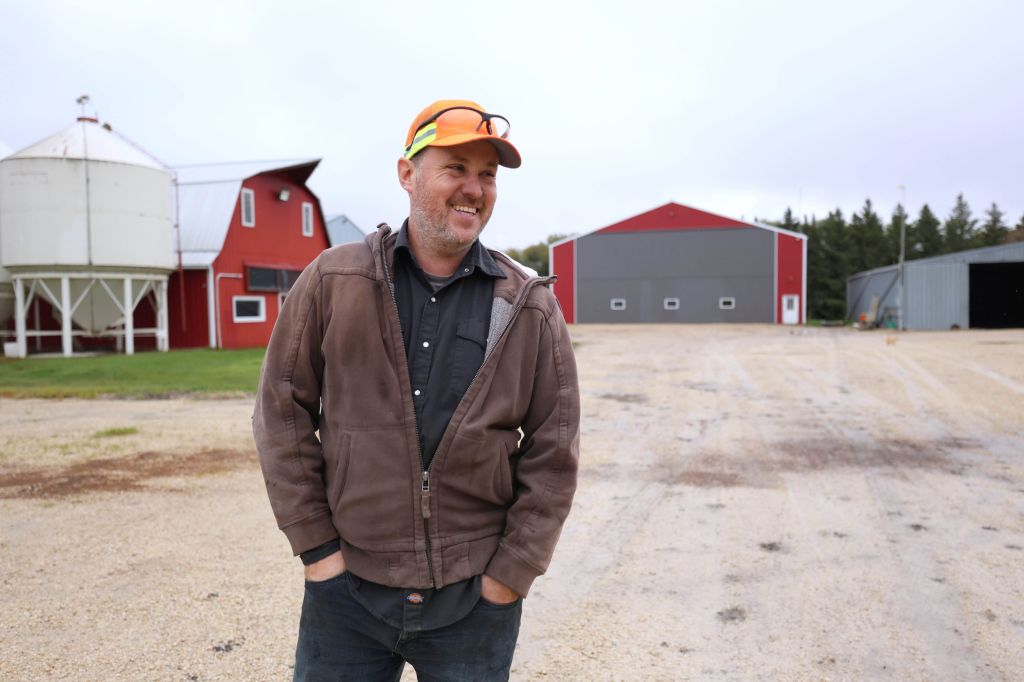
But on Colin Penner’s 3,700-acre family farm, all that dry weather turned out to be a bright spot.
Penner runs the Elm Creek-area farm with his brother and not-quite-retired father, where he grows a blend of grains. This year, the Penners focused on soybeans, canola, wheat and oats.
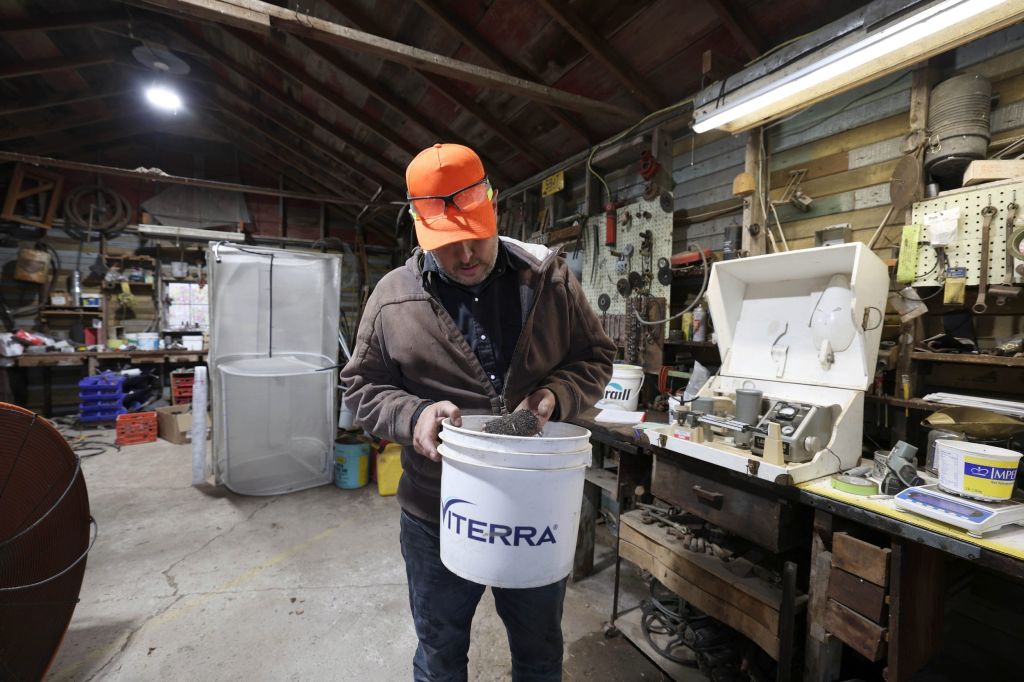
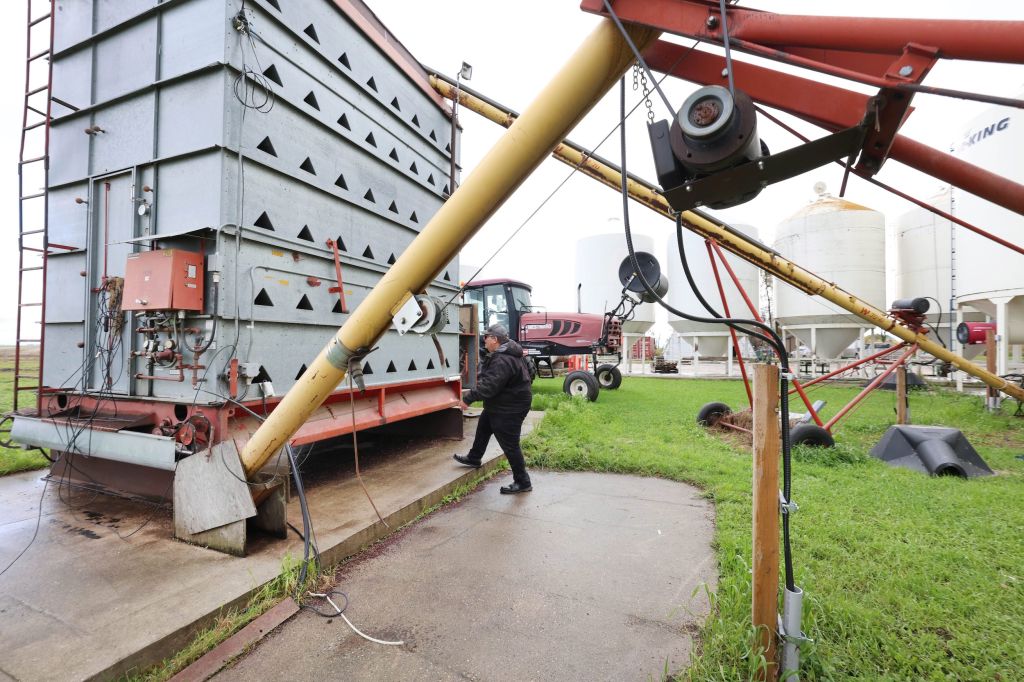
It’s a Friday morning in mid-October and ideally, Penner would be on the field getting the soil ready for spring. But it’s been drizzling for a couple days, and there’s not much use sending machinery out in the thick Red River valley clay, so he’s spending his time catching up on the long to-do list on his shop whiteboard.
As for the weather this year, he says, the drought wasn’t such a bad thing.

Colin Penner
We got our seeding done relatively early, which was nice. Typically, the longer the seed’s in the ground the better, it’s a longer chance for the plant to grow and then typically an earlier harvest for us. And then we had spray season, it was dry, we didn’t have any ruts out in the field, which was awesome, we didn’t have to worry about getting stuck.
Growing season, we were concerned the whole time along, are we going to have enough moisture. We had like six inches of rain, which is not a lot. So we worried about that. The plants were short, they were drought-stressed so the wheat and the oats were short, but they were putting energy into the seed rather than the plant, so that was a positive.
I think the roots went down and they found fertilizer from 100 years ago and they were fantastic. This would be considered a bumper crop.
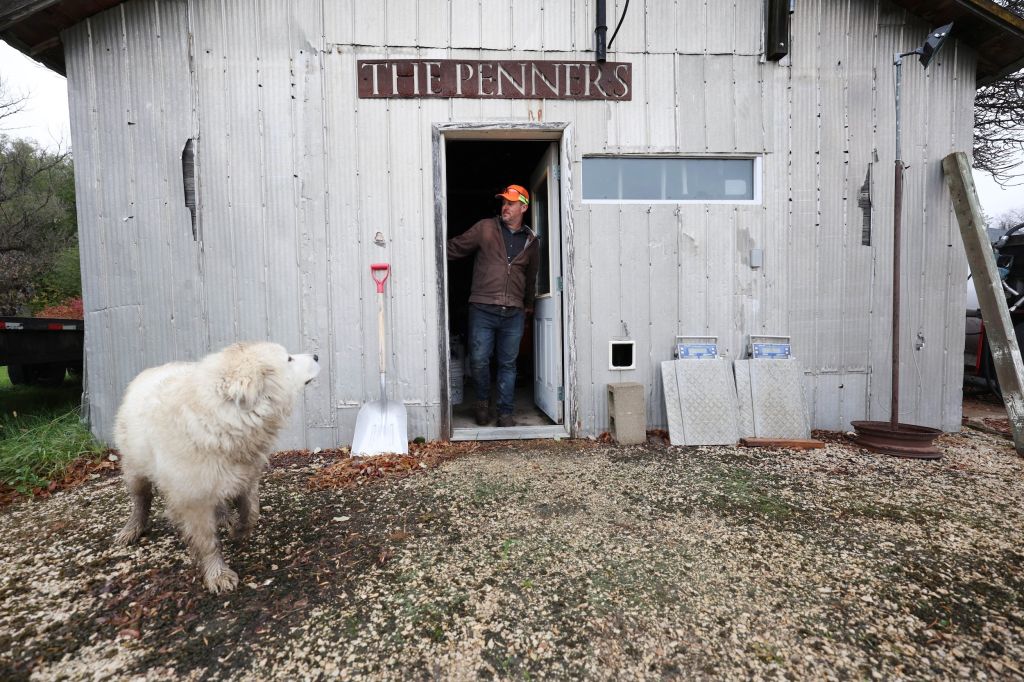
In Starbuck, just a 30-kilometre drive northeast of Elm Creek, third-generation farmer Chuck Fossay’s canola, wheat, soybean and oat crops were similarly successful in spite of the early setbacks caused by drought.
He attributes some of that success to the natural qualities of wheat and barley, which tend to fare well in dry weather. But there was another unique feature that Fossay and many other farmers believe brought a little respite this summer.

Chuck Fossay
Even though it was dry, we didn’t have a lot of high-temperature days; and the other thing that I think helped was the forest fire smoke.
We’ve noticed a couple times in the last four or five years where we have a big fire … you get that smoky haze and for some reason we seem to get better crops. Whether it’s because it’s like an umbrella or a sunshade. … I’m thinking it allows the crop to not be affected by high heat stress.
Heat stress can [be hard on] certain crops, like canola. Canola has a flower, and when the temperature gets above 30 C that flower usually aborts, so it’s not producing a pod and it’s not producing any seed. That shade seems, for some reason, to reduce the impact of high temperatures.
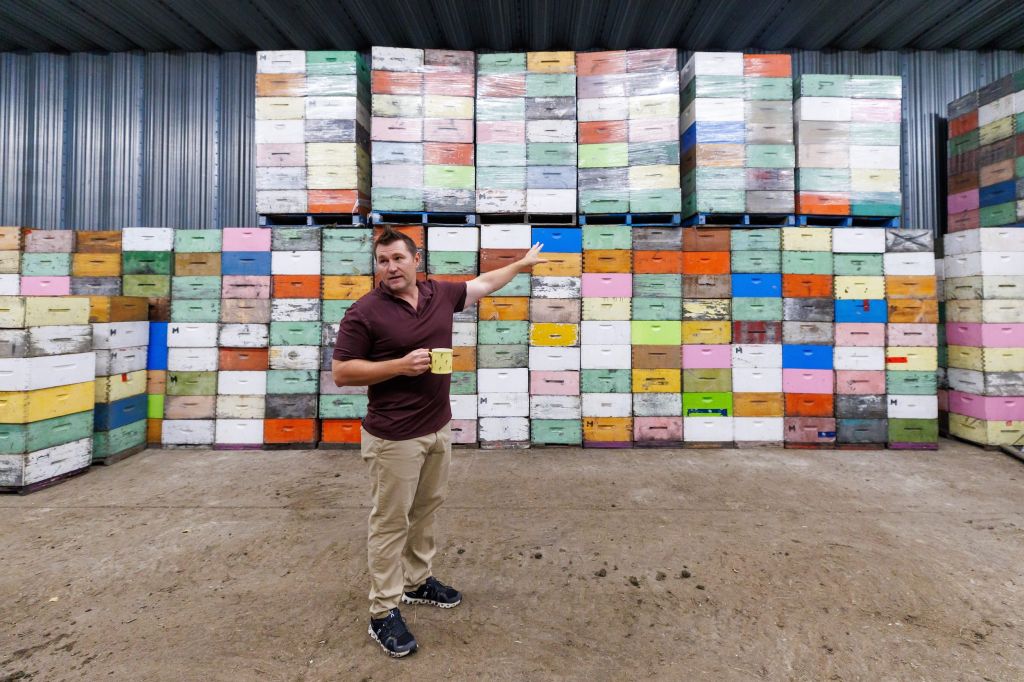
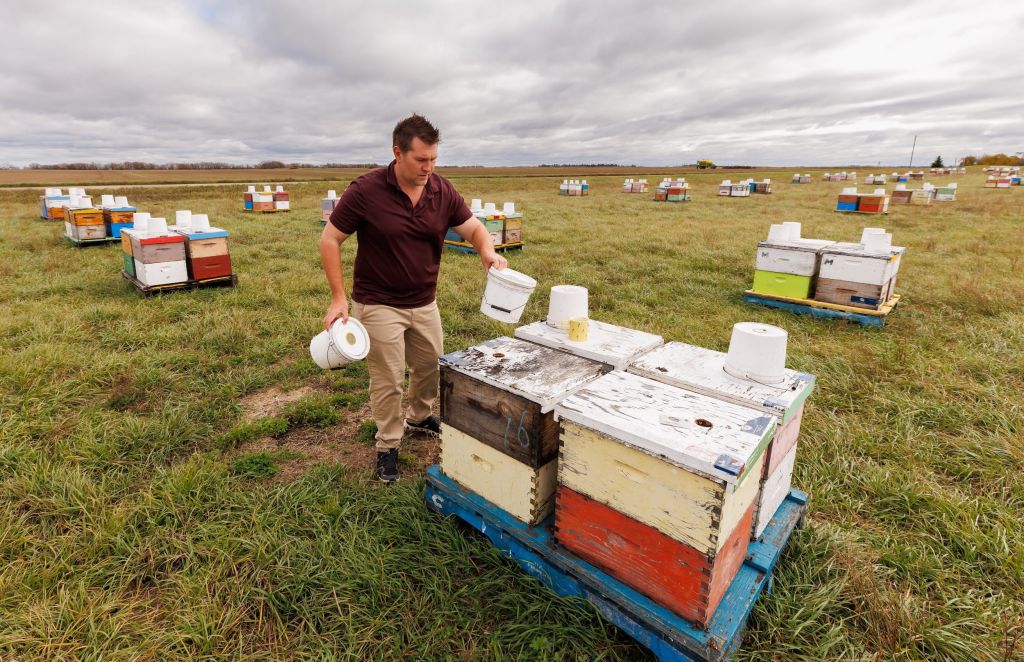
High on the banks of the Souris River on the other side of the province, near the village of Treesbank, beekeeper Mike Clark was admittedly a little grateful for the smoke cover, too. After suffering the loss of nearly all his bees — about $1.8 million worth — to a parasitic mite in 2022, Clark has been in the midst of a precarious rebuild.
In recent years, commercial beekeepers like Clark, who sells his honey to Manitoba-based BeeMaid, have lost an average of 40 per cent of their bees every year, a level he calls unsustainable. Pesticide-resistant mites and fluctuating temperatures in the shoulder seasons have put additional pressure on an industry already battling to stay afloat.
Smoke can be a problem for beekeepers, but Clark says the wildfires likely helped more than they hurt him this year.

Mike Clark
For wildfire to impact the bees, basically the smoke has to be thick enough that you’re really smelling it. We maybe had one day here where it was impacting the bees.
There are benefits too, because there are some days where it was like 35 [degrees] and if it’s too hot, the bees have to stop getting nectar and start hauling water, so you’re losing honey crop. But because that haze was there … it cooled. It must have been at least a five-degree difference, I’d say.
Little research has been dedicated to understanding the effects wildfires and smoke can have on agricultural production. So far, agronomists mostly agree the impacts can vary widely. There are obvious downsides, for example, for livestock producers whose animals are undoubtedly affected by spending hours breathing in toxic wildfire smoke. Smoky air also lets less light through, which can slow growth for some — but not all — crops. Anecdotally, farmers believe this year’s smoke meant better yields, but the poor air quality didn’t come without challenges for an industry that often requires long hours of outdoor labour.

Colin Penner
I know we’re impacted by it. You’re tired, you’re exhausted after being outside in the smoke all day. I also have friends who had to fight a fire to save their farm. It just kind of weighs on you a little bit here and there.
And then came the rain
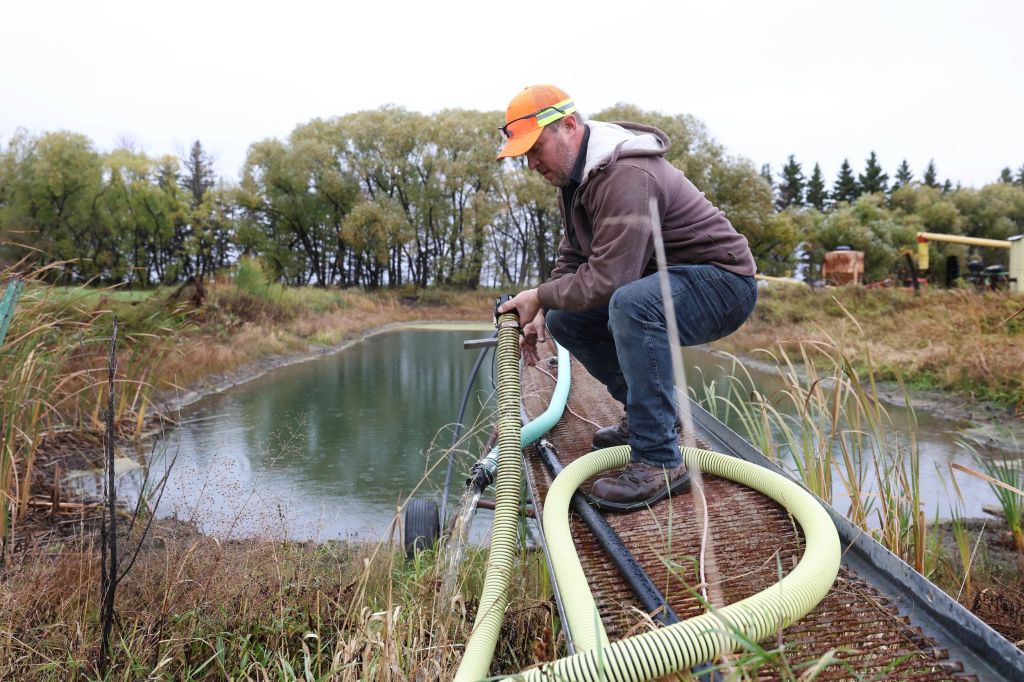
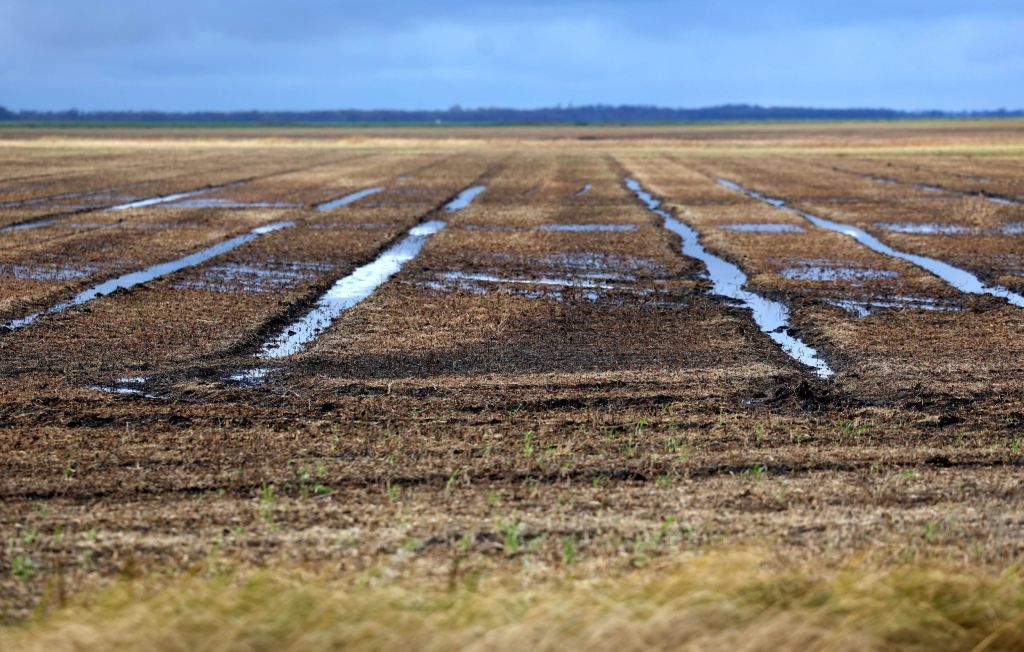
It’s not the drought that’s strained agricultural producers this year — it was the rain.
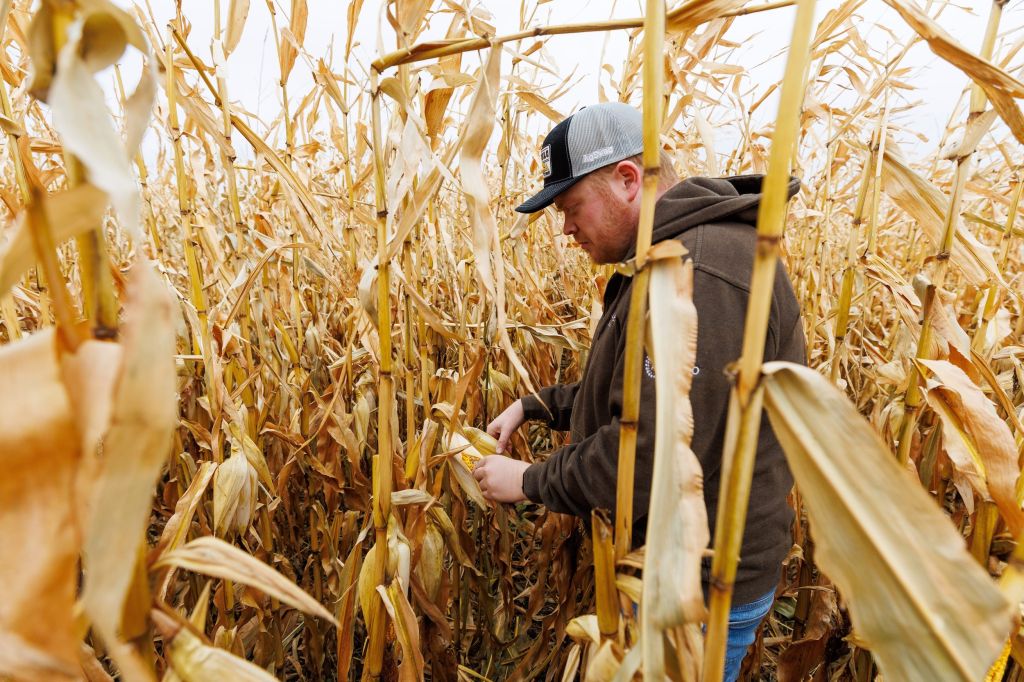
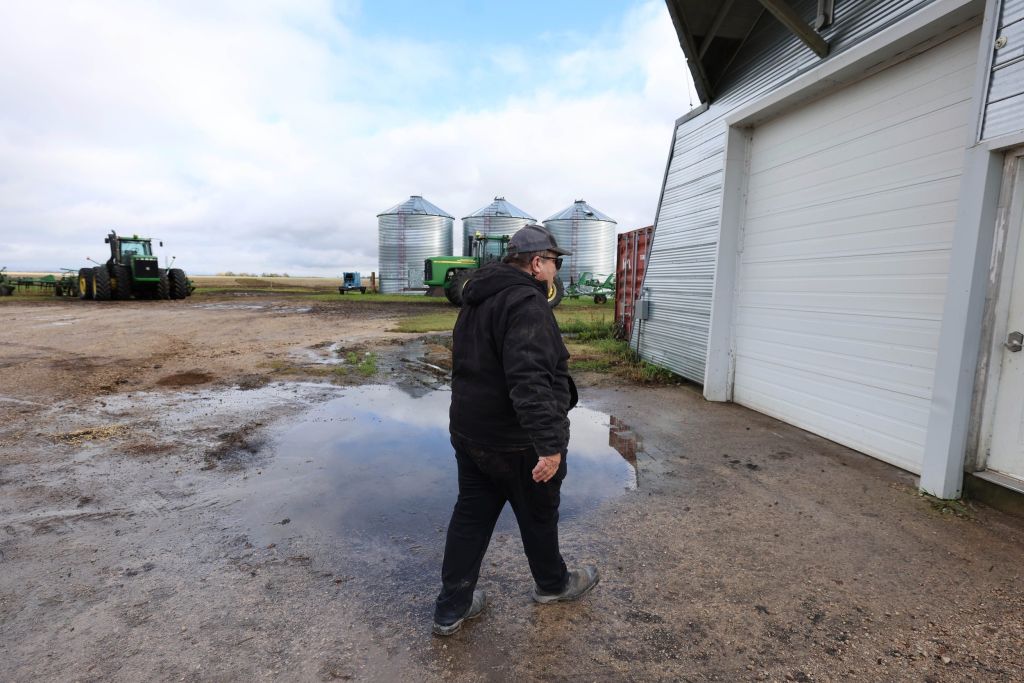
Near Minto, just a short drive southwest from Treesbank, Jake Ayre steers a pickup truck through the maze of dirt and gravel roads that criss-cross the farmland in the Souris River valley. He points through the window at field after field of cornstalks — some of the last crops left to harvest.
Ayre would like to be on the combine, but the ground’s still soggy from the weeks of wet weather, and the machines are prone to sinking in the mud. Corn can handle a late harvest, though. Next week, if the ground dries up, he’ll give it another try.

Jake Ayre
Most farms around here I’d say are about 70 per cent done their harvest. If you don’t have corn they’re more likely 90 or 100 per cent. But the weather changes what you’re going to harvest. For us, we combined all of our pinto beans before our canola because the pinto beans were standing and the canola was in swaths, so it wasn’t curing, it was just kind of wet.
So it changes what you’re going to harvest, but the biggest thing is that it impacts your cash flow, because if you have stuff pre-sold — which we did — and it’s not in the bin, they’re not going to take it and you’re not going to get paid.
To mitigate risk, Ayre’s farm grows a wide variety of crops — pinto beans, navy beans, corn, soybeans, wheat, barley, oats, winter wheat, grasses, pulses.

Jake Ayre
It spreads out your risk, you’re not putting all your eggs in one basket. Our later season crops have been better, yield-wise, but some of our earlier season stuff was good as well. Every year is different, every part of the province is different.
The southwest saw a little more rain than other parts of the province this year, Ayre says, reaching about 40 to 50 per cent of the average annual precipitation through the summer. As fall arrived and harvest picked up pace, the rain became a little punishing for several southwestern farms, which saw as much as 200 per cent of normal precipitation levels.

Colin Penner
It’s been tiring. The end of harvest was really muddy. I know I would much rather harvest in a drought than in a muddy season. It’s easier on equipment, it’s easier to get the crop off. In the mud, it’s just frustrating. Stuff breaks, it’s just gross.
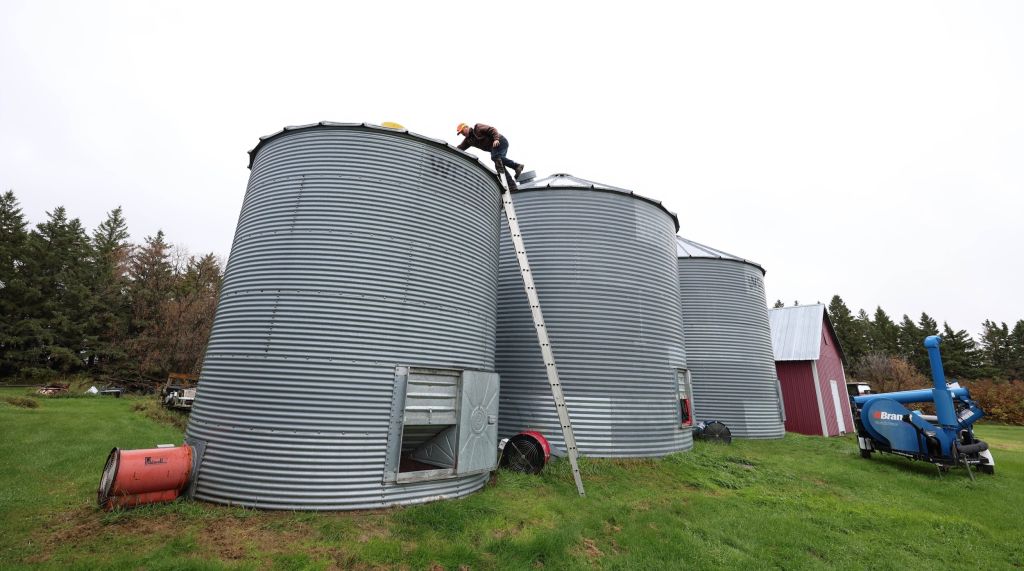
He points to a row of grain bins, each full of oats originally destined for the United States.

Colin Penner
We had a massive oat crop, probably in the top five oat crops we’ve ever had. We had it out in the field, ready to go — then it rained. And then it rained again. We had one field where we started harvesting it and it went from 150 bushels an acre, which is a pretty good crop, and after six inches of rain on it we got 86 bushels on average — almost half.
Then the stuff we did take off was sprouted, and I don’t blame the buyers, they don’t want it for oatmeal or granola bars. But now how do we find a secondary market for this? Who’s willing to pay for it?
Taking crop to market
Finding buyers for crops is hard enough, but this year posed unprecedented challenges. Since U.S. President Donald Trump took office in January and started to threaten, then implement, a complex web of tariffs, Canadian farmers have been at the mercy of rapid twists and turns in global markets.

Jake Ayre
The big one was canola; the market price dropped quite a bit. I was fortunate, I sold a bunch of our canola at a very high price. The dollar amount difference between what I sold it for and what its market value is today is about three dollars a bushel, which doesn’t seem like a lot, but when you’re selling 20,000 bushels, that’s $60 grand.
The markets have been really unstable this year as a result. Lots of up and down — mostly down — but a lot of instability. Typically you don’t see these swings, but this year it’s just been every day.
There were some people around here that sold canola — this is back in February, March — that suddenly had no market because that canola was destined for the U.S. They didn’t know if it was going to sell, and it was quite a large contract. It’s pretty stressful.
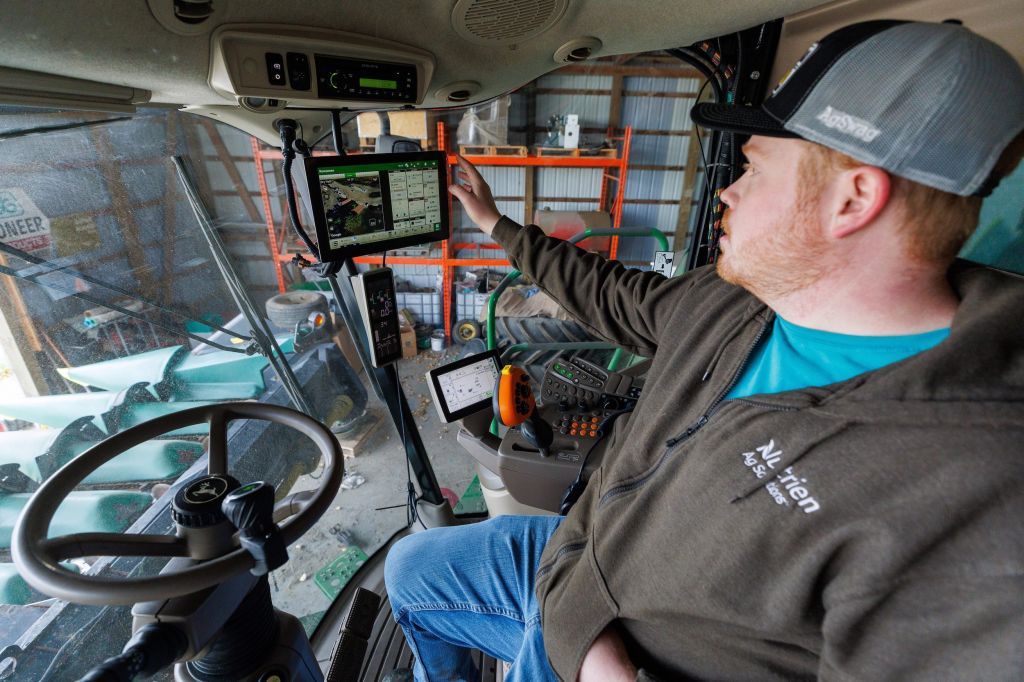
In between the hard farm work near Starbuck, Fossay sits on the Canola Council of Canada’s board of directors and the board of Manitoba Canola Growers, where tariffs have been a central talking point all season long. As a result, he says, reclining in a rolling office chair at the back of his workshop, “I probably know more about tariffs than most farmers do.”

Chuck Fossay
Everybody’s concerned about the impact of the tariffs on canola prices because China typically buys around four million tonnes of canola seed, quite a bit of canola oil and canola meal. So when you have a big crop of canola — and [Statistics Canada] just came up with a report saying they expect that we’ll harvest over 19 million tonnes of canola this year — that’s about 20 per cent of your market.
This 75.8 per cent tariff on canola has basically [meant] nobody’s buying canola from Canada, so it has had an impact on prices, but I think a lot of farmers don’t realize that the impact may not be as big right now as we first thought.
A year ago, he explains, canola prices were around $11 to $12 per bushel; today they’re just over $13. That increase can be traced, at least in part, to growth in the domestic canola crushing industry, which can now process almost 60 per cent of this year’s crop.
There’s also growing demand for canola oil in bio-fuels like renewable diesel, which uses cooking oils as a substitute for petroleum. Environmental mandates are driving demand for biofuel, which in turn opens up new markets for Canadian canola.
Imperial Oil recently finished construction of a renewable diesel production plant near Edmonton that is expected to consume a million tonnes of oil [equivalent to two million tonnes of seed], Fossay says, meaning the domestic market is growing too.

Chuck Fossay
We still have a lot of competition from [American] soybeans and used cooking oil from China. You may recall that recently, President Trump talked about putting a tariff on Chinese cooking oil; that’s for the renewable diesel market, where this used cooking oil is severely under-pricing soybean oil and canola oil.
So I think there are people saying: ‘Well, if he puts a tariff on used cooking oil, that’s going to cause an increased demand for soybeans and potentially canola.’ So it’s not all bad.
Beekeepers like Clark are making the most of tariffs, too. He sees the American levies as a way to stabilize the market price of honey, which has dropped in recent years owing to an influx of cheap, “fraudulent” honey — mixed with flavoured corn or rice syrup — from east and south Asia.

Mike Clark
North America–wide, we’ve had huge bee losses the last four years, but the price of honey has fallen. How does it make sense when you have lower production yields and heavy losses, yet the price of honey falls? U.S. tariffs have helped prop up the price of honey.
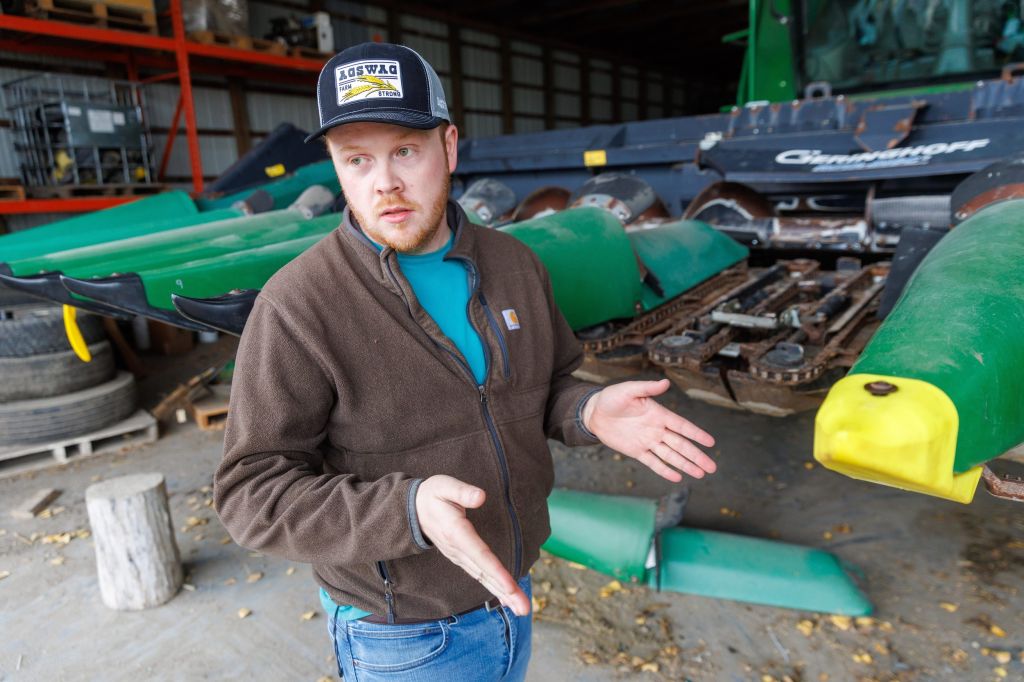
But tariffs are affecting more than the market price of goods. Back in the Elm Creek workshop — a lofty barn with an elaborate workstation along one wall — Penner hoists a muffler from where it’s temporarily bolted to a 40-year-old tractor.
He’d normally buy a replacement, but today the part he needs would cost between $3,000 and $4,000 because of tariffs and supply-chain disruption. Instead he went to a truck shop, found a similar part for about a tenth of the price, and is learning how to modify it to fit his machine.

Colin Penner
That’s the fun part about farming is there’s always new challenges. And I think if we’re not willing to learn and adapt … we’re not going to succeed.
We don’t have the luxury of sitting around and waiting for something, we just have to go out and do it.
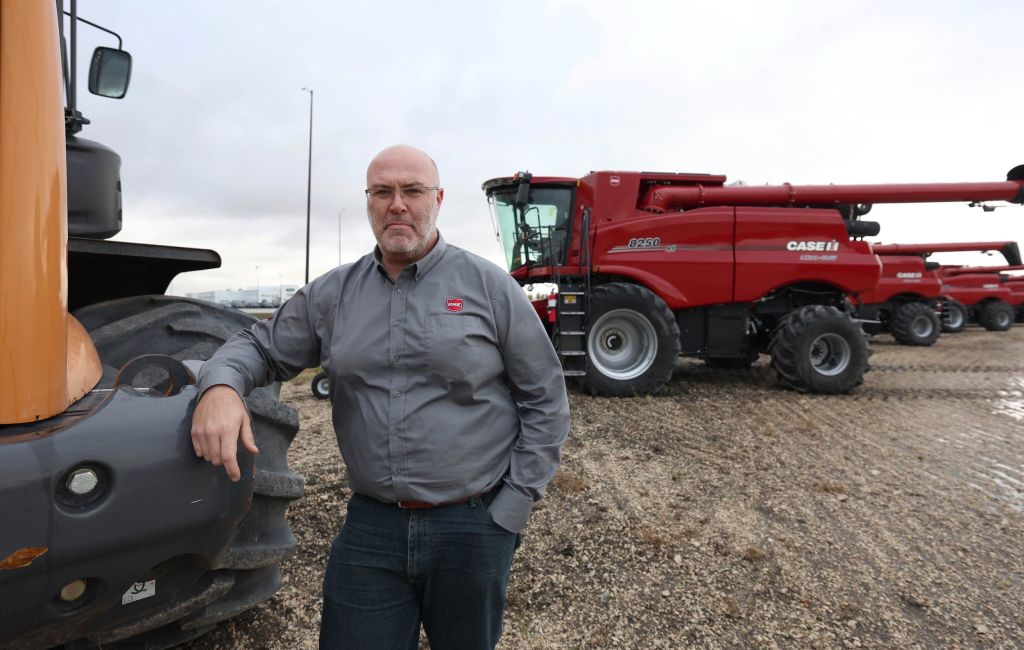
Just off Highway 1, on the edge of the town of Elie, Matt Tkachyk sits in a corner office at Rocky Mountain Equipment, a farm equipment dealer where he sells “everything that helps put the crop in and take the crop off: combines, sprayers, tractors, seeders, tillage equipment, planting equipment.”
The machines he sells typically cost north of a million dollars. Tkachyk says it’s difficult to give an apples-to-apples comparison of costs before and after tariffs because other factors like inflation have played a significant role, but he’s seen costs climb anywhere from three to eight per cent — tens of thousands of dollars — since the levies came into effect.

Matthew Tkachyk
It’s very uncertain, because it could all dissipate tomorrow depending on what our friend in the south is feeling that day. We have a very large company with Rocky Mountain Equipment, so the people who order and maintain our inventory have taken steps to try and shield our customers from that, whether that’s getting machinery here in an expedited fashion, or stocking up with more inventory ahead of potential tariffs.
Depending on where machines are built by different companies, they have altered their operations now so that certain machinery may not go through the U.S. anymore to avoid tariffs. That can only be done with certain machines because some of this stuff is built in the United States. In those machines, we’re subject to it. Various companies have re-routed machines, or have direct transport directly to Canada, but it’s different from company to company.
The dealership has been here as long as Tkachyk can remember, though under different names over the years. Having grown up in the area, Tkachyk knows his customers well. In a year where tariffs have rocked the automotive industry and prompted price hikes across supply chains, he’s been doing everything he can to protect those customers from the impacts, and he’s watching them adapt in real time.

Matthew Tkachyk
I think the uncertainty of a tariff had people reserve decision-making in the potential of prices going up. There was more hesitation. Now our reality is uncertainty, people have become more comfortable with it, and they’ve accepted more that the uncertainty is our reality.
Planning for the future
Uncertainty, on the farm, is par for course. This season had its challenges, but all seasons do.
“I think every farmer has to be an optimist,” Penner says, reflecting on the year.
“We’re gamblers,” says Ayre, driving back onto the home section of his sprawling farm. “At the end of the day it’s living, breathing things. You can’t control every aspect of it, so you just kind of hope for the best. The quote is: you’re always two weeks away from a drought and two days away from a flood. It’s different every day. Every year is chaotic in its own way. There’s always something.”
Clark, the beekeeper, is holding on to gratitude through the sleepless, uncertain nights.
“I would say this year turned out better than I thought,” he says. “Lately I’m just trying to be grateful for what we have — even if it’s not what I want. You know, my bees are healthy right now; this whole spring it was just me and my sister and it was kind of nice to do everything yourself and take a little bit more pride.”


Fossay has seen it all over his years on the farm by Starbuck. He’s 71 now and the oldest of nine siblings. He remembers his dad farming through much more challenging seasons in the late ’60s. He’s seen the markets rise and fall. Though he’ll acknowledge this season was far from perfect, “it could have been a whole lot worse.”
“It’s not a job where you’re guaranteed income every year,” Fossay says. “You’ve got to deal with drought, excess moisture, sometimes both, sometimes it’s insects — grasshoppers, locusts — sometimes the market.”
“There’s a lot of things that we can’t control, so you always have to be patient. It’s always next year. If it’s bad this year, next year will be better.”
Julia-Simone Rutgers is a reporter covering environmental issues in Manitoba. Her position is part of a partnership between The Narwhal and the Winnipeg Free Press.