



 14 min. read
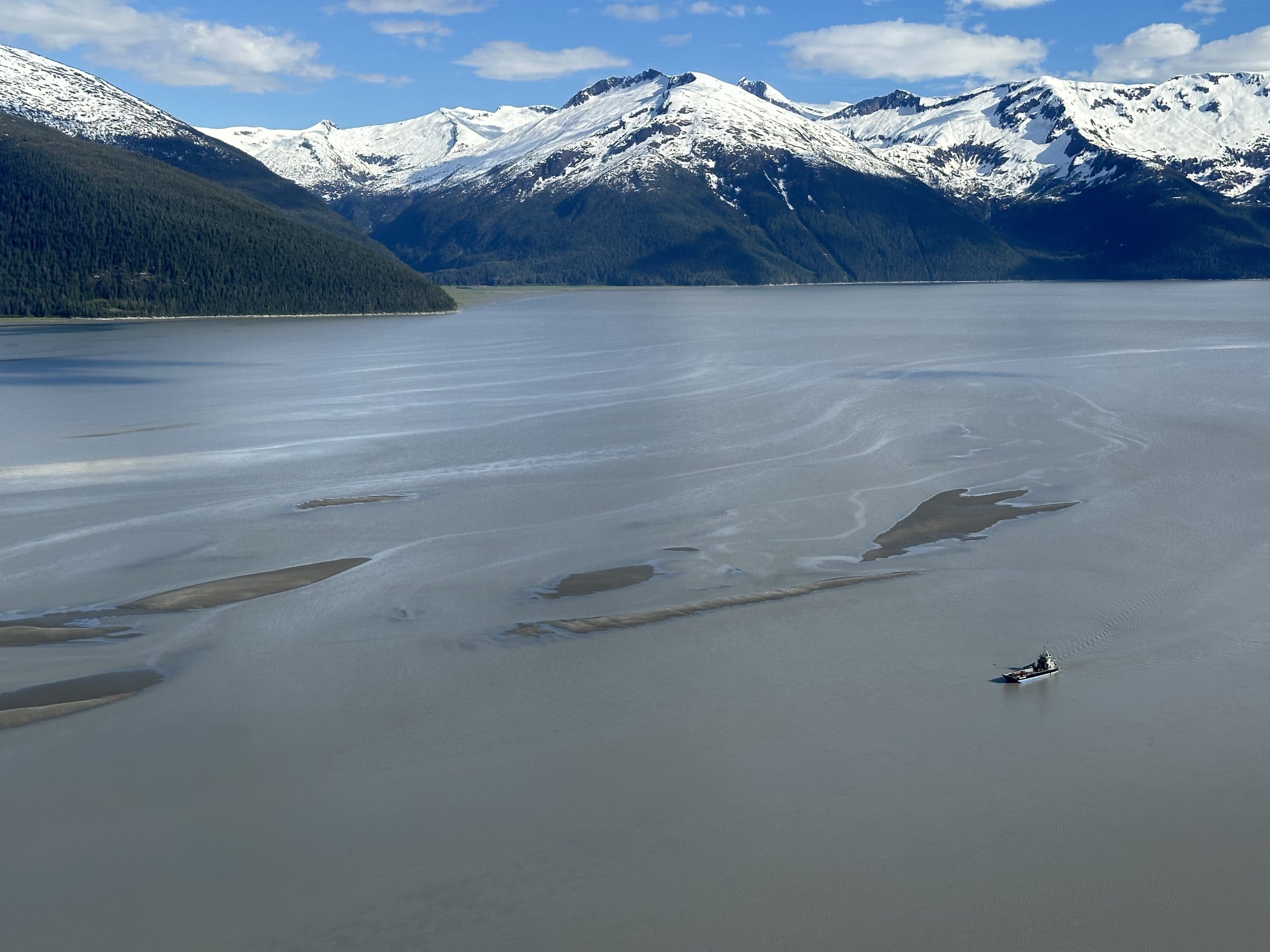
Twilight hangs over the Inlet Raider’s empty deck as it charges up the river. Its voyage has a single, cargo-free purpose: its crew was hired to find out whether the journey up the Taku River from Southeast Alaska past the B.C. border is possible.
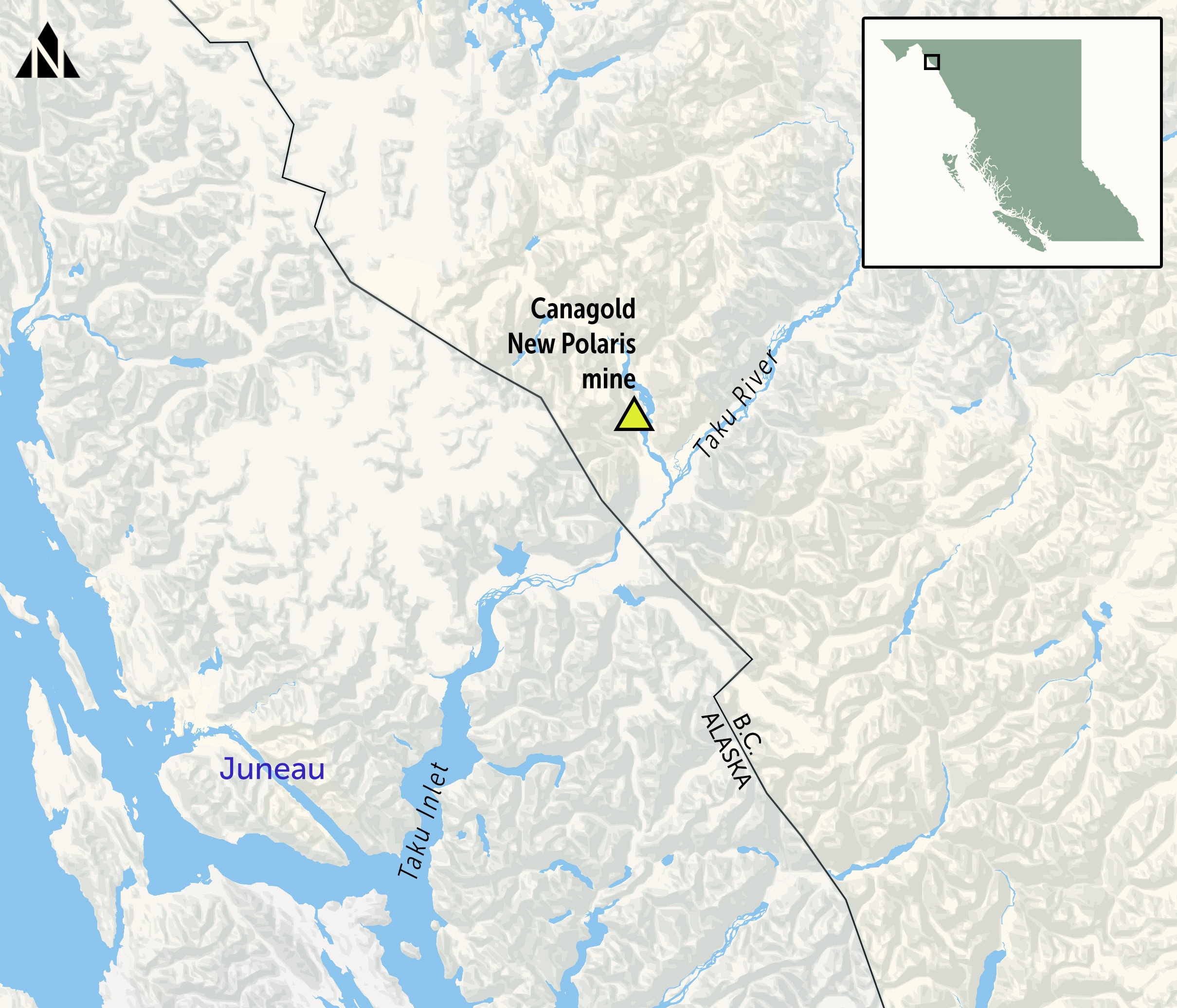
If they succeed, this could be one of dozens of trips carrying construction supplies and infrastructure to the proposed New Polaris gold mine along the river, currently under review by the B.C. government and among its list of priority projects for expedited review.
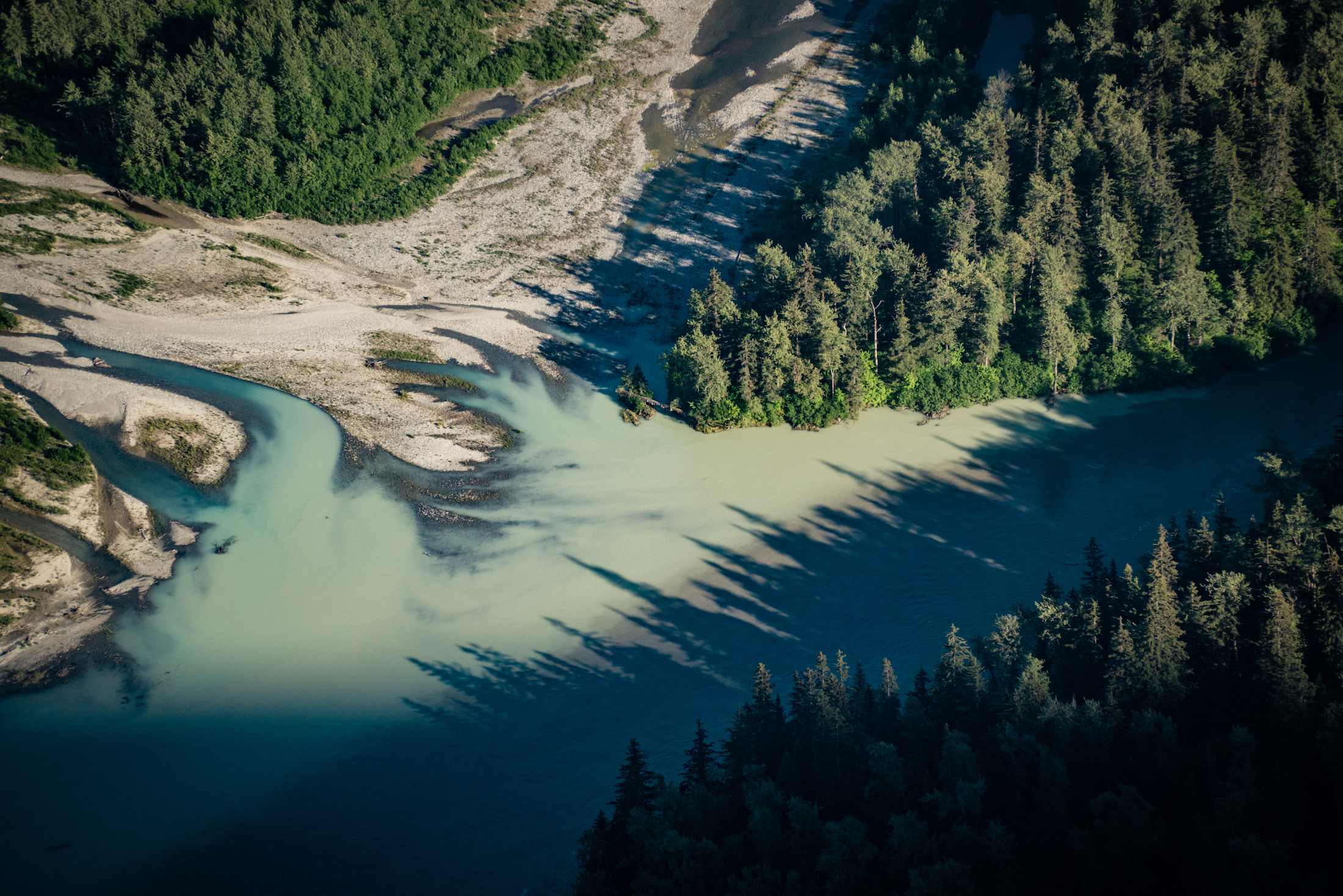
The boat picks up speed, blasting up a passage nicknamed “the narrows” in honour of its thin, flute-shaped banks, which can host fierce, swirling currents. Its other concern lies underneath in braided river channels that can move at least annually to a new configuration, a common trait of glacial-fed rivers like this one.
As the motor churns, the crew’s stream of banter is replaced by a tense silence punctuated by calls of encouragement as their barge follows a sonar-equipped motorboat guiding its journey up ahead.
“Three hours of boredom punctuated by 30 seconds of sheer terror,” says a joking voice off-screen, in a video posted to the captain’s Facebook page.
A few minutes later, the Inlet Raider makes it through.
New Polaris’s owner, Canagold Resources Ltd., acknowledges the transport challenges ahead. “We never said it’s easy,” Canagold’s chief executive officer, Catalin Kilofliski, tells The Narwhal in an interview.
“But it’s doable.”
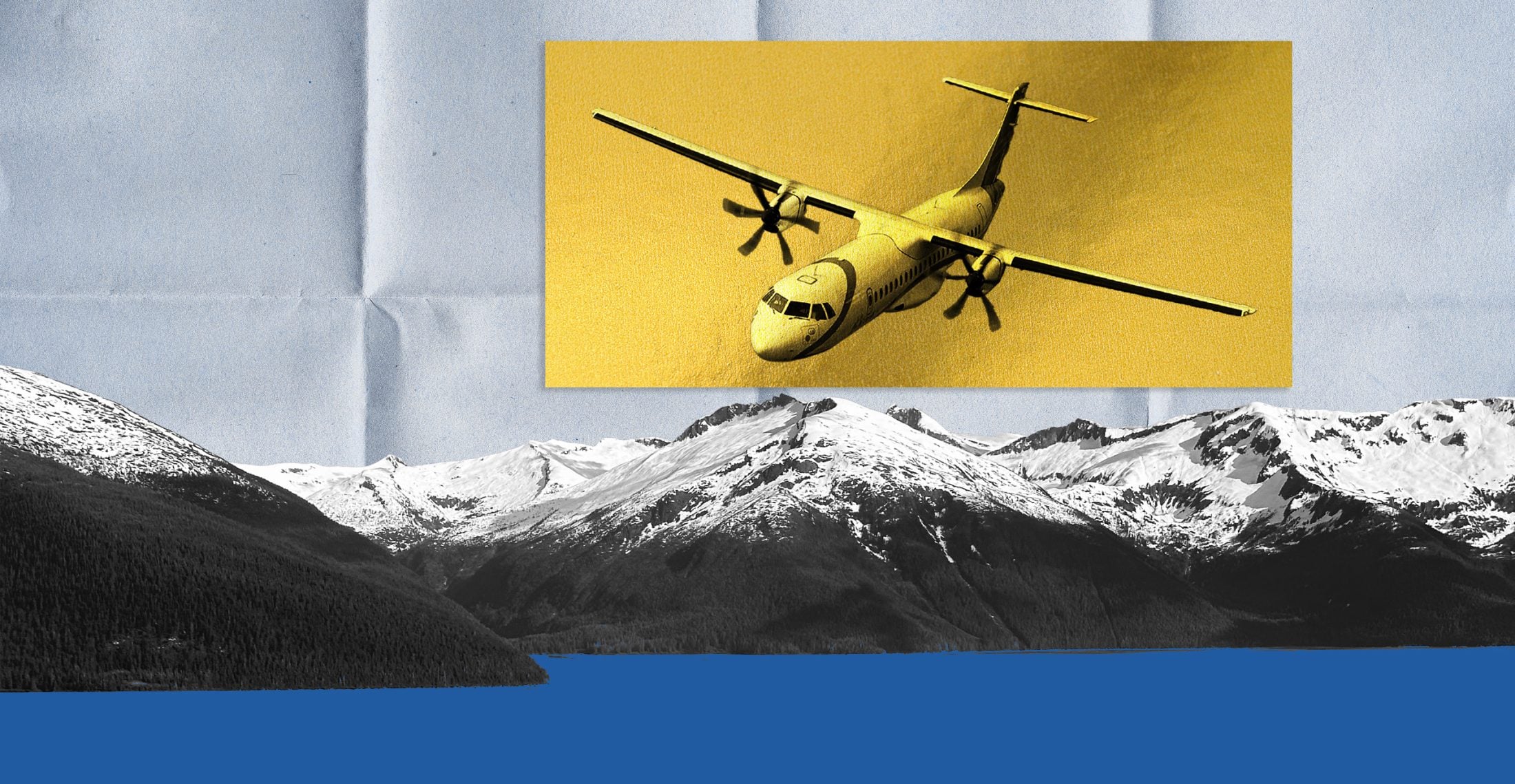
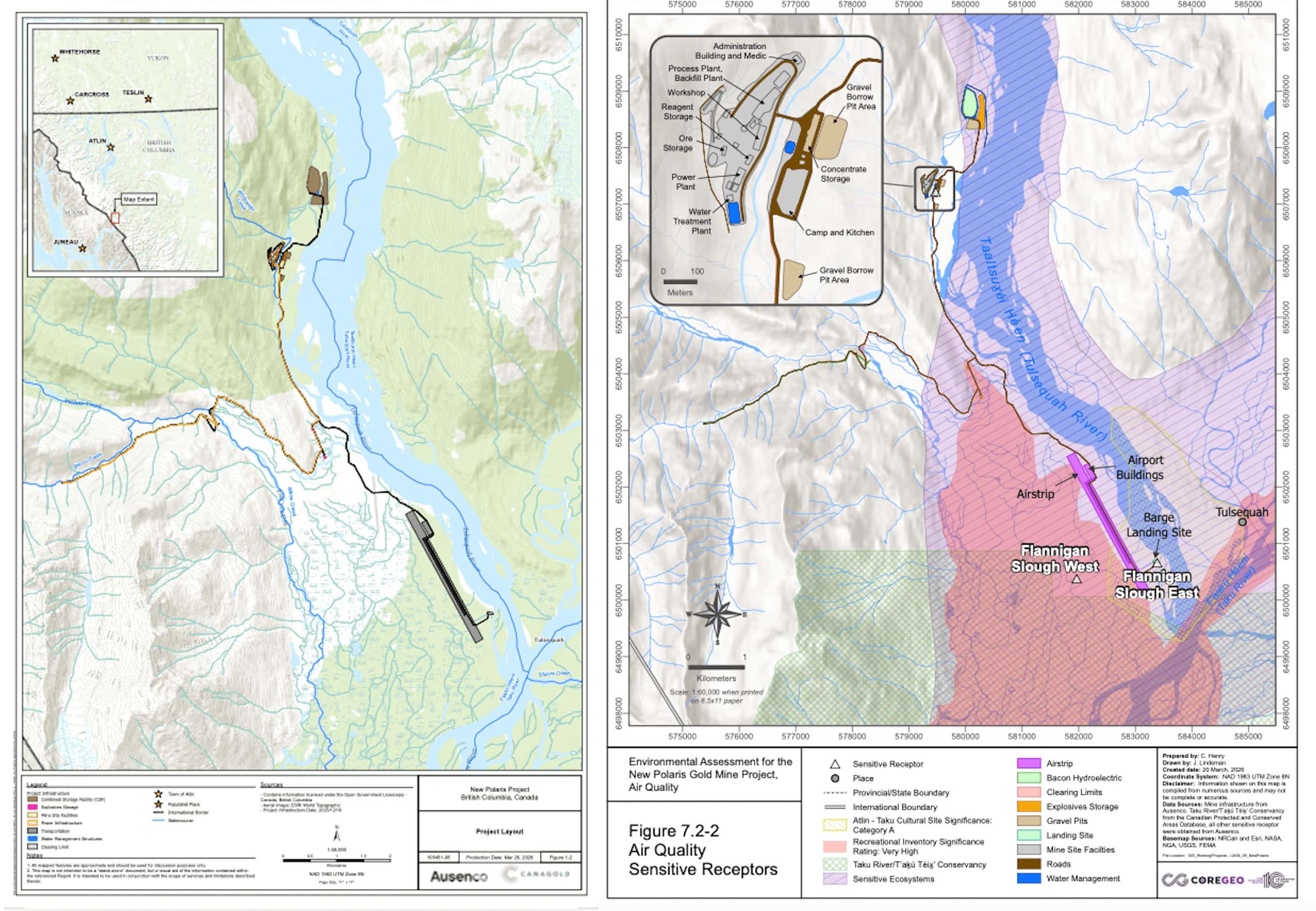
To avoid these precarious barge trips during operations, Canagold plans to transport its gold concentrate on cargo planes. It anticipates up to 15 flights a day, carrying a total of around 27,000 tonnes per year.
The goal is to capitalize on record-breaking gold prices by reopening New Polaris, a long-shuttered mine site on the Tulsequah River.
The project is among a select group featured in a federal prospectus document delivered to attendees of Canada’s recent investment summit in Toronto. This year, New Polaris was included in the federal government’s map of critical minerals projects, thanks to its potential to produce antimony — a heavy metal deemed “critical” by Canada for its use in a variety of applications from bullets to batteries. But Canagold’s feasibility study did not establish New Polaris’s antimony reserves and it does not include antimony in its projected revenues.
Meanwhile, B.C. has included New Polaris among its 35 priority major projects slated for expedited review.
In an emailed statement, the Environmental Assessment Office said New Polaris is on the list because of its “potential to make meaningful contributions to B.C.’s long-term economic growth” along with the other projects chosen.
“No project will be expedited at the expense of protecting the environment and communities or meeting our consultation obligations, which remain at the core of the [Environmental Assessment Office]’s mandate,” it added.
The company intends to create hundreds of direct jobs annually and provide around $500 million in federal and provincial tax revenue during its operations.
But some observers remain concerned that the mine’s potential risks, from water contamination to habitat loss, aren’t worth the financial benefits.
Environmental concerns with New Polaris
The Taku River watershed is one of the largest intact river systems on the Pacific Coast of North America, and one of the few remaining places where Pacific salmon populations are booming, meaning New Polaris’s riverside mine and tailings ponds naturally come with high stakes.
The mine sits around the riverbend from the also-dormant Tulsequah Chief mine site, which was owned by another company, where contamination has been seeping into the watershed for over 50 years.
Canagold has worked to distinguish New Polaris from the tarnished legacy of its next-door neighbour. The company has signed a collaborative engagement consent agreement with the Taku River Tlingit First Nation, whose territory extends across the mine site and surrounding regions on the Canadian side of the border. According to the nation, the agreement means it will have the final say on whether the project goes ahead. The nation did not respond to The Narwhal’s request for comment.
The company has altered its plans in response to concerns raised in its engagement with the public and with the Taku River Tlinigit. It no longer plans to process gold on site using cyanide, which, if spilled, can poison fish and watersheds. It’s also planning to dry out its tailings to reduce the risk of impacts and limit barge trips mostly to the construction phase. The barge trips will only happen in the high-water months, spring and summer, to reduce the risks of running aground — a change that means more flights and higher costs.
With gold prices above US$2,500 per ounce — a price reached for the first time in 2024 — the “projected cash flow and economics are outstanding,” according to a quote from Kilofliski on Canagold’s website.
But the company’s application hints at potential challenges ahead: the historic underground mine is leaching some levels of arsenic and antimony into the surrounding watershed, and rocks in the company’s largest targeted gold deposit appear capable of leaching more of the same. According to a report prepared for the company and included in its application, the mine’s proposed tailings facilities appear to be located within the flood zone of the Tulsequah glacier, which sends a massive deluge of water and sediment into the river below at least yearly. However, Kilofliski said in an email to The Narwhal that its facilities are “in a location that is naturally protected from the floods.”
According to a map in Canagold’s application, it appears New Polaris plans to put an airstrip atop part of a wetland and salmon spawning ground known as Flannigan Slough, although Kilofliski says it is located beside it.
These and many other issues worry Jill Weitz, intergovernmental affairs manager for the Central Council of the Tlingit & Haida Indian Tribes of Alaska.
“It’s this incredible, critical habitat for spawning and rearing of salmon,” she says, adding that the council questions if the mine is feasible given its transport challenges, and worries that, if it goes ahead, the project could “create irreparable damage to the watershed.”
“We’re just not willing to risk it,” she says.
Located just 13 kilometres upstream from the U.S. border, New Polaris’s barges will spend most of their travel time in U.S. waters. And any water contamination from the mine could also make its way south, including across the traditional territory of the Douglas Indian Association, which extends across the reaches of the Taku River. In a submission to the environmental assessment process, the association said it “strongly opposes” the mine “due to fears that a mining accident and subsequent mining pollution could devastate our salmon stocks.”
This year, B.C. made a legal amendment functionally removing its requirements to consult U.S. tribes on transboundary projects by stripping their previous status in environmental assessment processes.
In an email, the Environmental Assessment Office noted that it will still “fulfill its constitutional obligations to consult with U.S. Tribes when there is a credible assertion of Indigenous Rights in Canada, and the potential for these rights to be impacted by a proposed project undergoing assessment.”
It added that the ministry has “considered and incorporated” feedback submitted by some U.S. Tribes to New Polaris’s application process.
Still, for many southeast Alaskans who have submitted letters of opposition to the company’s environmental assessment process, New Polaris presents an untenable threat.
Kilofliski says New Polaris’s environmental assessment application proves otherwise.
“The conclusion is that there are no material negative effects on the environment,” he says, adding the company has proven it will not require water treatment post-closure.
These comments seem to be contradicted by some parts of New Polaris’s environmental assessment application, including one section that notes: “The primary negative residual effect of groundwater quality will occur during post-closure.”
“This is experts talking about scientific stuff,” he says when asked why the application appeared to have included a different analysis than his own. When asked again about incongruities between his comments and the application in a follow-up email, Kilofliski wrote that the application does identify a risk of metal leaching. “If anything I said informally differs from the application, please treat the application as correct.”
The Taku River watershed
From space, the Taku and its tributary, the Tulsequah, look like winding ribbons coloured steely grey and cotton-candy-blue — a product of the steady stream of silt and minerals delivered by the churn of glaciers over the mountaintops above.
Their combined watershed forms a mecca for Pacific salmon that return to its waters each year. “I don’t know if there’s any place like it in western North America in terms of being a salmon stronghold and being so intact,” Jonathan Moore, an aquatic ecologist and lead at Simon Fraser University’s Salmon Watersheds Lab, says. Though the majority of B.C.’s salmon stocks are declining, the fate of salmon in the Taku watershed is looking up. Moore and his colleagues have mapped out salmon’s likely escape route as watersheds warm down south, and they predict they’ll seek refuge in the Taku’s glacial waters.
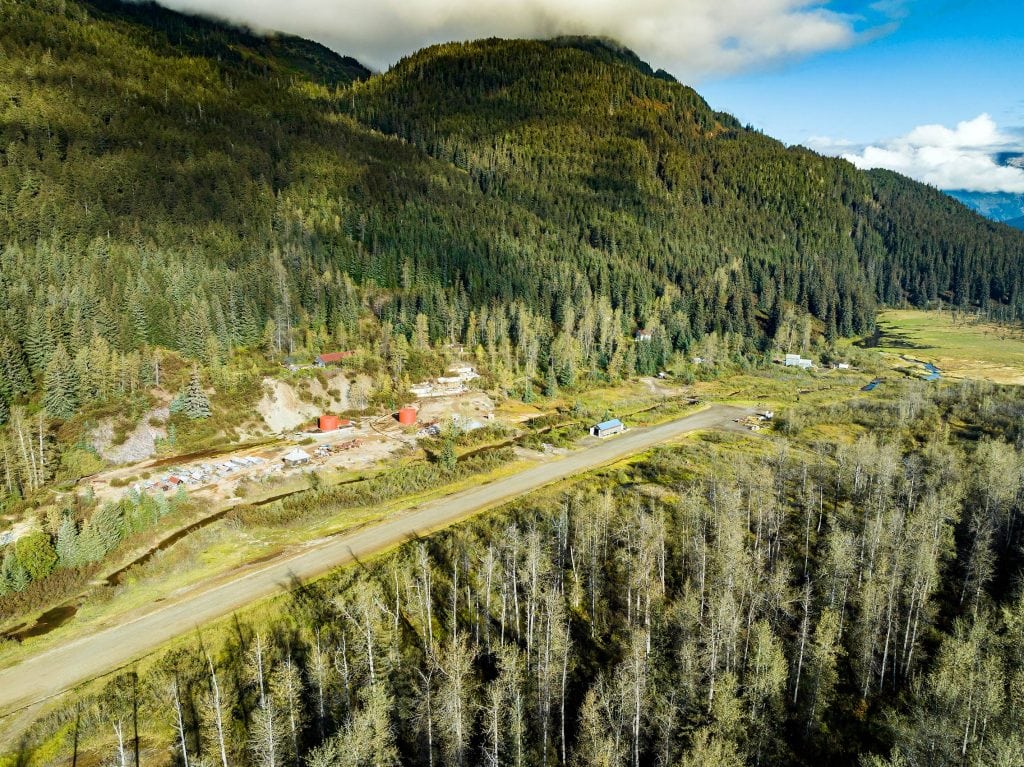
But despite its remoteness, the region is no stranger to industry. First staked in the early 1900s, what’s now the New Polaris site was mined for gold between 1937 and 1951. It shut down after a departing barge sank in the midst of a storm. That year, the Tulsequah Chief mine opened up across the river, building a temporary bridge to carry its ore to New Polaris’s mills. After Tulsequah shut down just six years later, the New Polaris site sat dormant for decades.
Canagold’s predecessor, Canarc Resources Corp., acquired the property in 1988, and the company slowly dabbled in exploration work until 2022. That’s when its former founder and chair was ousted in a a vote led by a Swiss-based investment company, Sun Valley Investments, which is now the company’s largest shareholder. Kilofliski, Canagold’s CEO between 2014 and 2018, was reappointed and soon announced the company’s intentions in a press release.
“The time has come to take New Polaris across the finish line,” he said, adding that with the company’s “refocused ownership,” its board would expedite the project “to reward our company’s shareholders.”
A history of water concerns
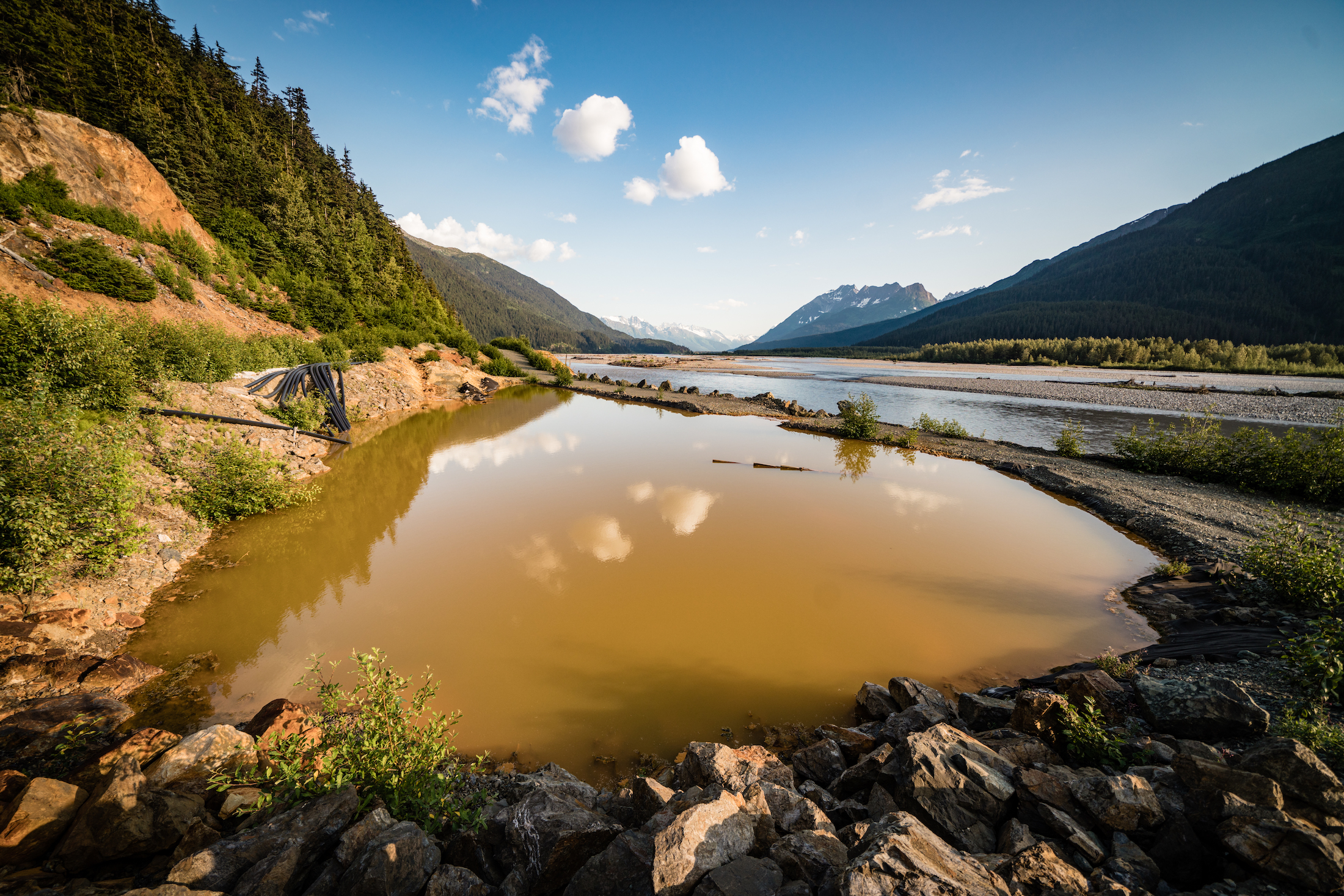
Next door to New Polaris, the Tulsequah Chief mine continues to leach orange-crush-tinged effluent into the river downstream. Its decades-long pollution has galvanized a bipartisan uprising of Southeast Alaskans concerned B.C.’s government could allow another Tulsequah Chief to occur.
In a January interview with the Alaska Beacon, Republican Senator Lisa Murkowski said B.C.’s efforts to clean up pollution at Tulsequah Chief had been “a complete failure.”
“They know that for projects going forward, they’re kind of stained by the operation there,” she added.
Kilofliski says such conflations are misguided. “They associate our project with the other project, the Tulsequah Chief,” he says. “In our rocks, we do not have the potential for acid drainage like you see on the other side.”
Despite their close proximity, New Polaris and the Tulsequah Chief come from distinct types of ore deposits — Tulsequah Chief’s ocean-formed sulphide rocks are more readily associated with acid mine drainage, whereas New Polaris’s rocks are generally not.
That may have exceptions: a recent report commissioned by the company has noted some rocks contain potentially acid-generating properties, potentially including some of the historic waste carried over from the Tulsequah Chief mine, though some tests are still ongoing.
And even without the ingredients to leach acid, some rocks contain metals that can escape into waterbodies anyway. Heavy metals arsenic and antimony are frequent culprits of this kind of non-acidic leaching, and New Polaris’s targeted rocks have lots of both.
According to a previous report commissioned by the company and cited in its environmental assessment application, 15 samples from the mineral vein New Polaris plans to target had “high potential” to leach metals, particularly arsenic and antimony, due to the types of rocks present.
Non-acidic leaching has caused damage in B.C. before: New Polaris’s deposits are similar to those of the Bralorne gold mine near Lillooet, where seepage from the flooded mine includes levels of arsenic that far exceed Canadian effluent regulations.
In an email to The Narwhal, Kilofliski said: “I do not know the particulars of the Bralorne gold mine seepage issues but it is probable, based on the nature of these kinds of geological deposits, that the concerns would be analogous.” He elaborated, adding New Polaris is “a modern mine” which will leverage new science and technology for water management and ecological health.
“At Canagold we are focused on learning from the lessons of the past and building a modern mining project that provides demonstrable benefits to the Taku River Tlingit First Nation, the region and Canada’s economy,” he added.
To help avoid the risk of metal leaching, the company plans to export a partially processed product called gold concentrate, which can include impurities like arsenic and antimony that would get smelted out elsewhere.
“We take the antimony, we take the sulphur, we take the arsenic,” he told The Narwhal. “We recover 90-plus per cent of those metals into the concentrate.”
The remaining ten-or-so per cent of the metals and other materials leftover would be thickened and deposited into a tailings pond with an impermeable covering on top, Kilofliski says, helping to keep it isolated from the environment. During the operational phase, the mine plans to run a water treatment system, but Kilofliski tells The Narwhal he is confident the mine’s concentrate-extraction approach will avoid the need for long-term water treatment.
“We have demonstrated in the environmental assessment that no water treatment is required post-closure,” he says.
In a follow-up email, Kilofliski added the application “assesses a range of scenarios, including conservative cases where water treatment after closure could be needed.” If it is, “Canagold would be responsible for providing it until we are able to demonstrate that passive treatment (that is without active/chemical water treatment technologies) is able to manage the long-term water quality requirements,” he added.
New Polaris’s environmental assessment application suggests metal leaching may not be easily contained: historic contamination has already travelled below the site in a large plume of metals that is projected to grow if New Polaris proceeds. Leaching can also escape from the mine shaft, as it has from the historic mine portal at New Polaris. Groundwater seeping from the existing mine site contains arsenic and antimony above B.C.’s water quality guidelines, and is flowing directly into the salmon-bearing Whitewater Creek, according to the application, which added seepage may grow post-closure. Recent samples from the mine’s targeted deposits and waste rock reflected an extremely high concentration of arsenic and antimony — achieving the highest possible level on a 6-point scale for mineral concentration.
This leaching risk is cited in parts of New Polaris’s environmental assessment application as a reason that water treatment may be required post-closure.
In his email to The Narwhal, Kilofliski said “water was tested as part of mine dewatering programs for effects to fish, and the water was not determined to be acutely toxic, despite high levels of arsenic.”
What’s next for New Polaris?
September marks a major milestone in Canagold’s decades-long pursuit to mine New Polaris. By the end of the month, the company will receive its final guidance from the province’s environmental assessment office on how it could strengthen a revised application, which, once submitted, will be final. In meeting notes discussing the company’s application, B.C.’s environmental assessment office noted “significant gaps” in the company’s application, including “a notable lack of groundwater information,” a lack of analysis about the potential impacts of glacial floods and missing information about the site’s potential to leach metals. The Ministry of Environment noted the company’s hydrological information appeared to reflect “draft documents rather than final product.”
The office has informed Canagold that submitting another application “where significant issues remain unresolved” would “lead to a high level of uncertainty on the potential effects of the project.”
Kilofliski suggests these kinds of issues are standard for projects like this. “They are very normal,” he says, adding that Canagold plans to fill any remaining gaps before it submits its final application, adding in a later email that the company has “continued to collect samples since the submission of the application, and we are updating our water modelling.”
But some uncertainties could remain during the assessment process by design: under B.C.’s mining laws, key aspects of New Polaris’s plans, including how it plans to manage leaching on site, how it will treat water and how it plans to deal with contaminants post-closure, would be determined in the permitting stage after the company receives its environmental assessment.
Through the assessment and later permitting stages, Kilofliski remains confident that Canagold will establish its case. “We have to demonstrate,” he says, “because our word doesn’t mean anything.”
“We have to prove, we have to show, and we have to test. … This is how it’s done.”
Updated on Sept. 18, 2026, at 8:52 a.m. PT: This story has been updated with Jill Weitz’s current professional title of intergovernmental affairs manager for the Central Council of the Tlingit & Haida Indian Tribes of Alaska, as it has changed since the story was written.