


 17 min. read
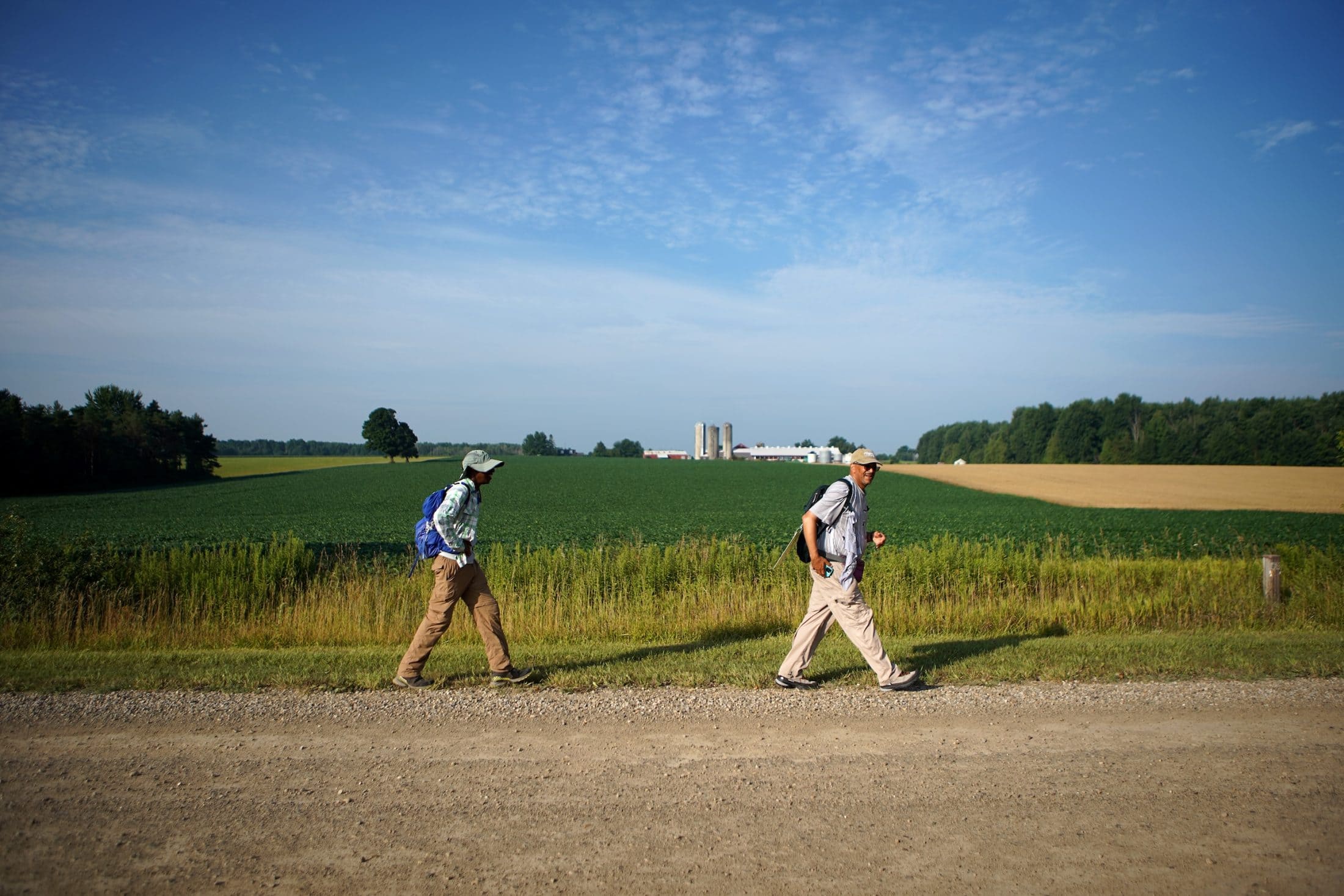
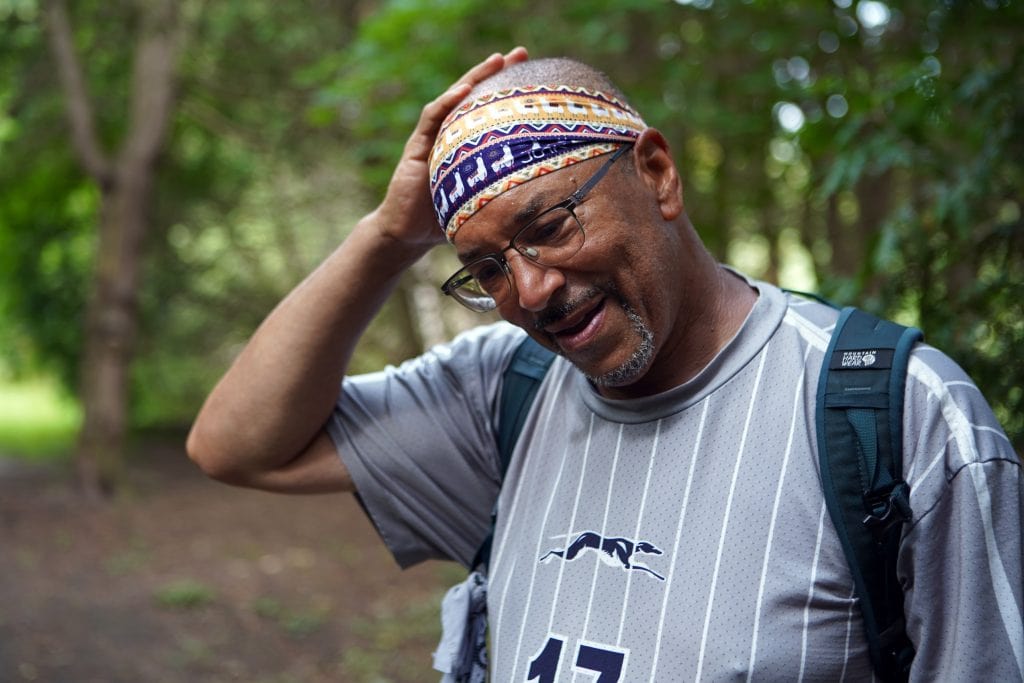
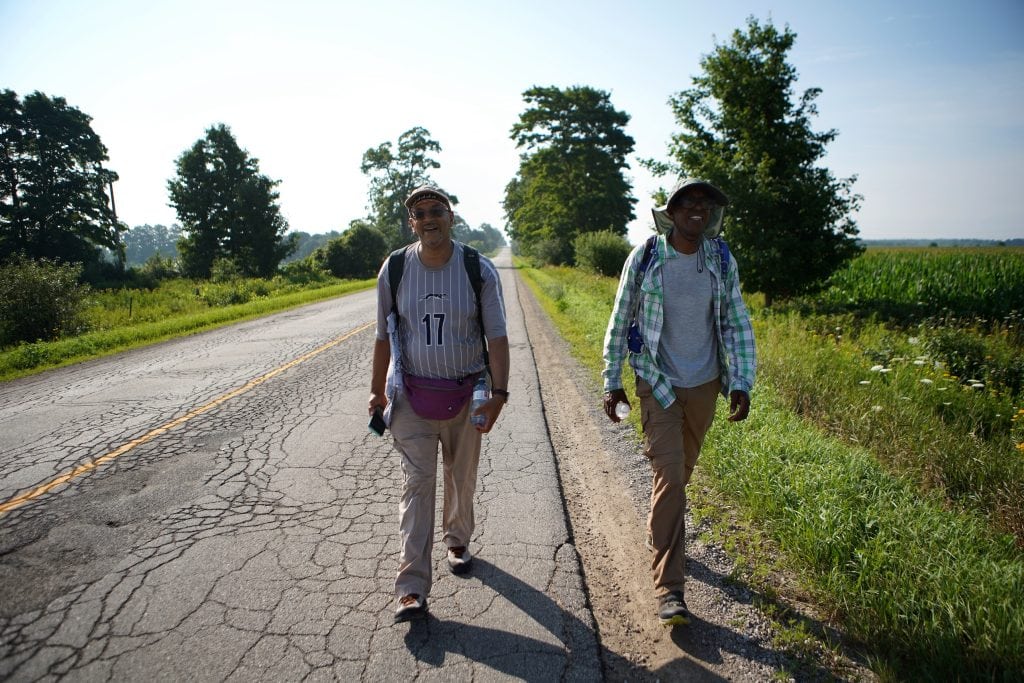
Ken Johnston walks north on a gravel road through southern Ontario farmland on a July morning. It’s cool just after sunrise, but in a few hours everything will be enveloped in thick midsummer humidity.
“By 10 or 11 o’clock, the land was just on fire, like walking in an oven,” Johnston says. He wasn’t expecting this heat in Canada, he says, nor the bugs. He dabs his face with a bandana.
“Look how dense it is in there,” he points to a thick stand of trees in Wellington County, about an hour west of Toronto, as mosquitos buzz around him. “Freedom seekers would have had to fight their way through that.”
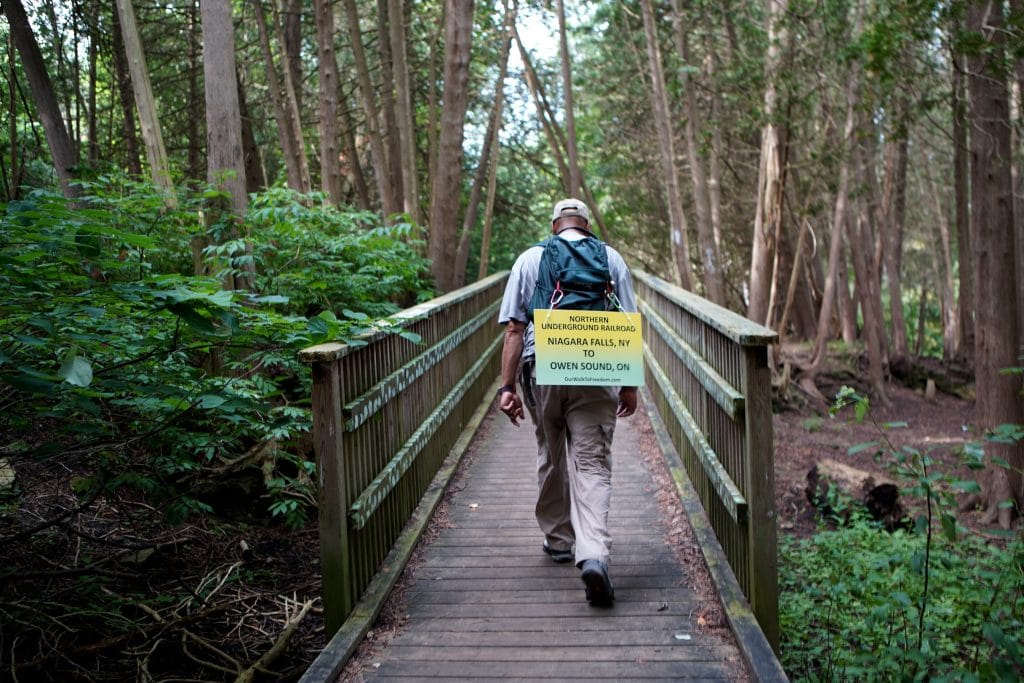
Gravel crunches under Johnston’s brisk footsteps. On his pack swings a placard that reads “Northern Underground Railroad — Niagara Falls, NY to Owen Sound, ON” and a leather strap of jangling bells.
“These are not bear bells,” he says. “They’re bells I wear to signal to the ancestors and spirits that I’m here, if they want to reach out and communicate.”
Since 2018, Johnston has been retracing freedom routes used by African Americans escaping slavery on the Underground Railroad, through his project Walk to Freedom.
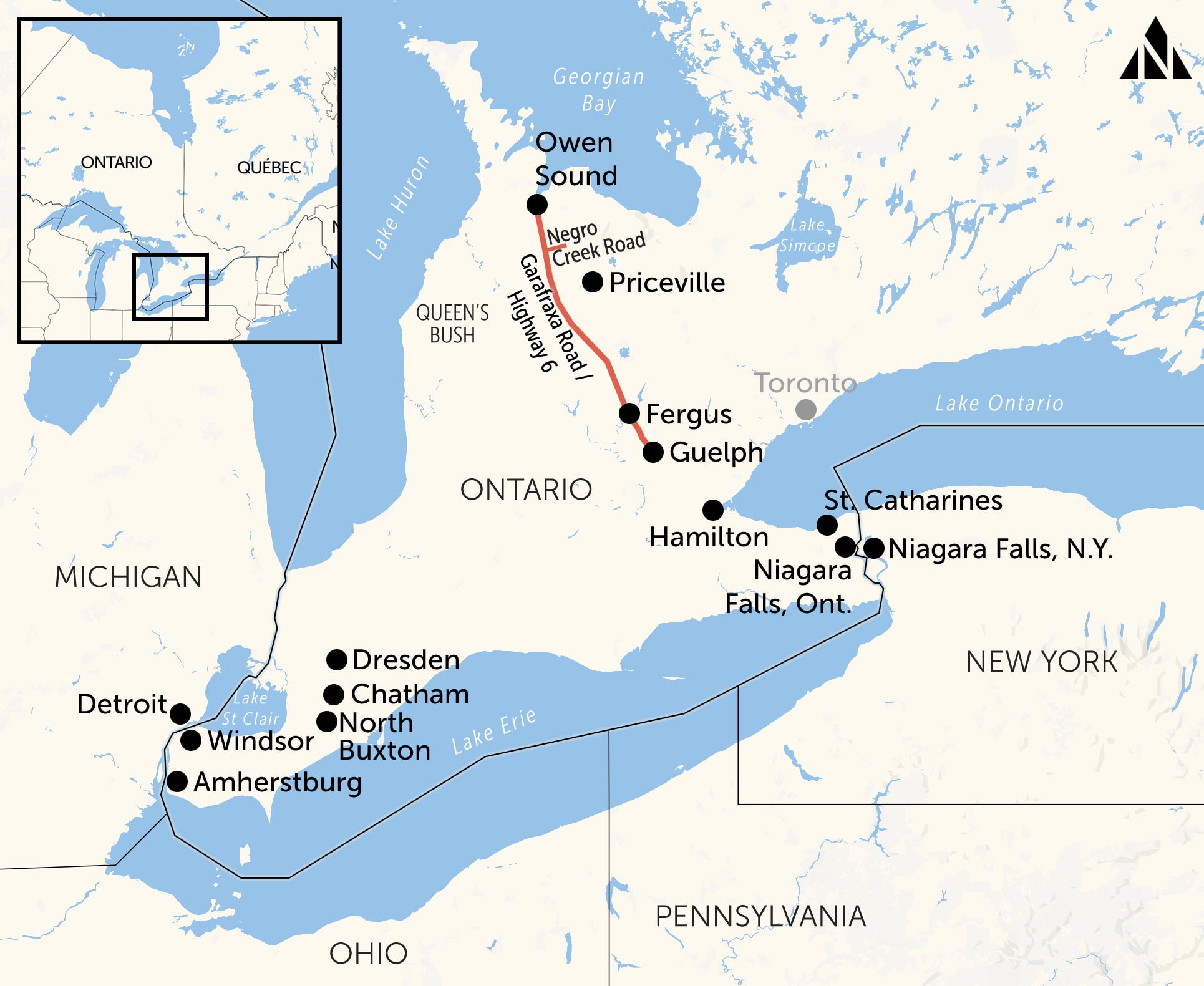
He followed the footsteps of abolitionist and conductor Harriet Tubman from her home in Maryland to Niagara Falls, N.Y., and is, on this hot July day in 2025, closing out the final 265 kilometres from the U.S. border to Owen Sound, Ont., a major terminus for the Railroad. When he finishes, he will have walked more than 1,360 kilometres on this route.
Johnston has commemorated other freedom struggles on walks through the Deep South, Massachusetts, Puerto Rico, Texas and Northern Ireland — in total, he’s trekked some 3,540 kilometres. When he’s not walking, the 65-year-old works in visitor services at the Penn Museum, an archeology- and anthropology-focused museum in Philadelphia.
The ancestors “willed me to do this walk,” he says. Months earlier, he had been waffling on whether to commit to this particular trip when he saw a U-Haul truck parked in front of his home. On its side was an illustration of a freedom-seeking woman, carrying a lantern and peering warily into the unknown. Behind her was a map of eastern Canada and the U.S. marked with arrows pointing north. “Venture across Canada,” the slogan cheerily invited, with a write-up of the Underground Railroad.
“The woman is literally staring right at my front door,” he laughs. “I remember looking up to the sky and going, ‘I hear you! I hear you!’ ”
Not all freedom seekers ventured all the way to British North America, which had abolished slavery in 1834. Movement accelerated after 1850, when U.S. Congress passed the Fugitive Slave Act. Escaped slaves and free folk in the northern free states could be kidnapped by slavecatchers and sent back to the South, which meant northern states were no longer a safe haven.
An estimated 30,000 to 40,000 freedom seekers pushed to Canada. They came overland on foot, but when possible also used trains, horses, wagons and carriages. Ships carried them across the Detroit, Niagara or St. Lawrence rivers and through the Great Lakes to port towns like Owen Sound.
“The American narrative is they made it to Canada and then they were free. Well, the story continues on the other side, and that’s what I discovered when I reached St. Catharines,” Johnston says. “They had extraordinary lives.”
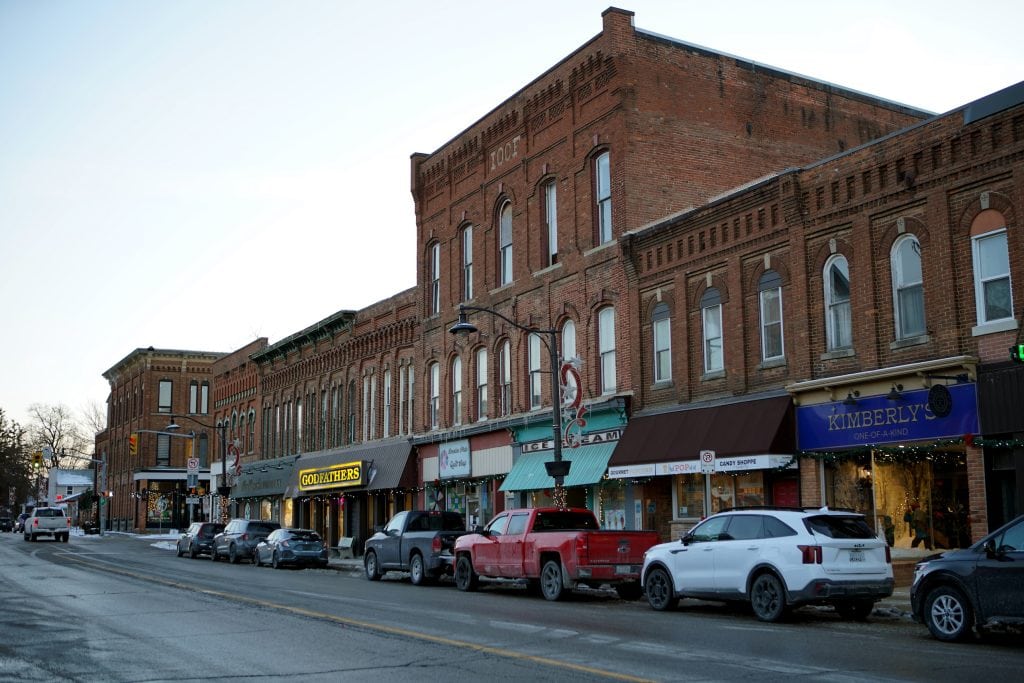
Ontario towns such as St. Catharines, Windsor, Hamilton, Guelph and Chatham became cultural and economic hubs for these refugees, full of settlements, churches, businesses, newspapers, schools and abolitionist organizations. As one example, Chatham’s population was one-third Black and regarded as a “Black Paris” in the 1850s, according to Kristin Moriah, an associate professor of African-American literary studies at Queen’s University.
“This idea of being able to start your own businesses, to support the Black community, to really celebrate the kind of freedom you specifically had in Canada, makes that area very special,” she says.
These are the Railroad stops on Johnston’s walk: Tubman’s church in St. Catharines, monuments, early settlements that fostered economic independence and the museums dedicated to preserving these local Black histories.
Connecting the stories and places of the Underground Railroad is an intentional part of his walks, Johnston says, amid efforts by U.S. President Donald Trump to round up undocumented immigrants, crack down on Black Lives Matter protests, scrub government websites of Black histories and end diversity, equity and inclusion initiatives.
“Democracy in the United States is backsliding, and here in 2025, in the second Trump administration, protecting and preserving civil rights is more important than ever,” he says. “That’s sort of the idea behind these walks: to encourage people, to meet them one-on-one in their communities, in the streets, to engage in conversations with them about some of the erosion of civil rights we’re seeing.”
In an era when so much political activism happens online and furiously, he finds intention in the slow act of walking — as people did during the Montgomery bus boycotts or on civil rights marches in the 1950s.
“It generated a lot of activity and forced people to engage. … The energy of that movement I feel is what’s been lost,” Johnston says. “We saw a little bit of it after George Floyd’s death, there was a spontaneous movement of Black Lives Matter, but then that dissipated and there was no leadership to really keep it moving forward. So this is my way of encouragement to get that movement back, to find that energy.”
On the road, he channels the same struggles, suffering and emotions as his freedom-seeking ancestors, but also meditates on his own life.
“I’ve enjoyed the ebb and flow of marriage, the delight in raising a child, the profound grief of losing a child and finally divorce,” Johnston writes on his website. His daughter, who passed in 2008, had severe disabilities. He wrestled with the way the world engaged with her, and in return what autonomy and access she had.
“After all these experiences, I’ve learned one has to keep going in life because another horizon awaits you over the next mountain.”
Escaping enslavement required expert outdoor survival skills
Walking up the shoulder of Highway 6, Johnston follows the rough trajectory of Garafraxa Road, which first connected Guelph to Owen Sound. Garafraxa was one of many colonization roads criss-crossing southern Ontario, which cleared the first paths for British expansion and opened up new areas for settlement.
It provided access to a region called Queen’s Bush, stretching from Waterloo, Ont., to Lake Huron. Though it’s now a paved two-lane highway, when Garafraxa was first surveyed in 1837 it would have been a boggy, densely wooded and miserable stretch.
“It required a huge amount of backcountry skills to be comfortable walking the trails, navigating as you made your way north,” Jacqueline L. Scott, a Toronto-based scholar on race and nature and contributor to The Narwhal, says. “You are working out your route as you go along, not knowing what’s around the bend or corner. You mostly hiked in the evenings because when you run into white people, you don’t know if they are friend or slavecatcher.”
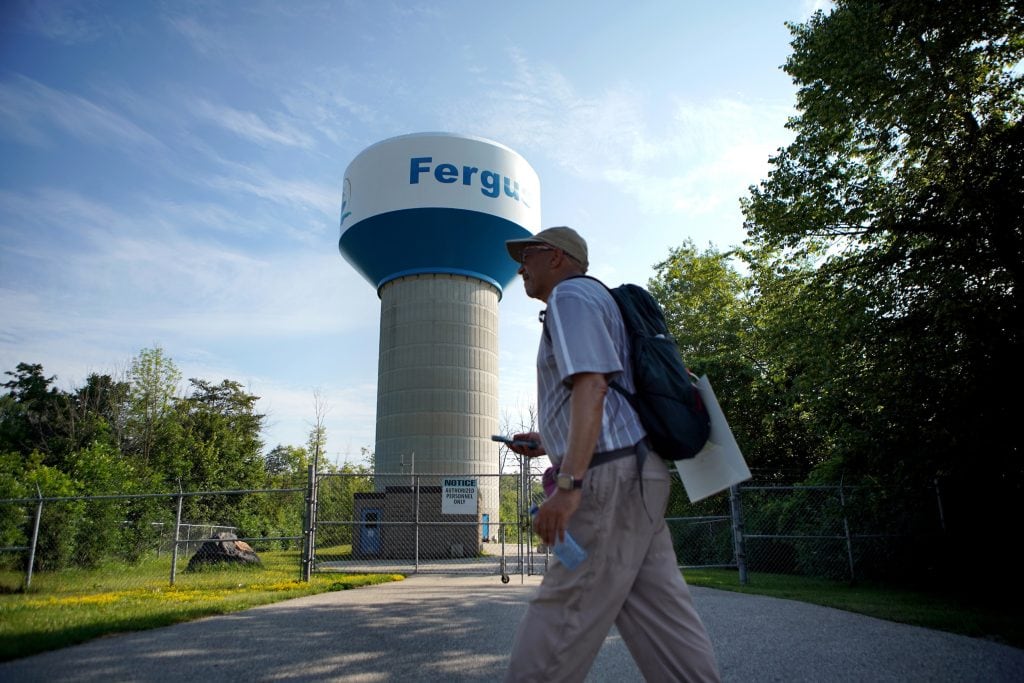
It was a rough journey up this corduroy road, made of timber laid down in the mud. On one stretch dubbed “The Long Swamp,” wagons and oxen would sometimes slip off these bumpy, jolting roads and sink to their doom in the water and mud. In total, the 113-kilometre trip from Fergus to Owen Sound would have been a four- or five-day journey.
One person who escaped enslavement only to find themselves on this mucky route to freedom was John Little, who fled Tennessee in 1841. Little’s testimony is included in the 1856 collection The Refugee: or the Narratives of Fugitive Slaves in Canada. He recounted how he and his wife Eliza were on the run for three months before finally arriving in Windsor, Ont.
Six months later, “We heard of the Queen’s Bush, where any people might go and settle, colored or poor, and might have a reasonable chance to pay for the land,” he recalled.
With $18, two axes, a few kitchen tools, flour, pork, a blanket and bedquilt, he and Eliza “marched right into the wilderness, where there were thousands of acres of woods which the chain had never run round since Adam. At night we made a fire and cut down a tree, and put up some slats like a wigwam. This was in February, when the snow was two feet deep.”
Wolves, bears and lynx roamed the bush, thick with old-growth maple, beech, elm, birch and ash trees. The land was so thick that often only three or four acres could be cleared and cultivated in a year.
Little was proud of their grit, producing thousands of bushels of produce and livestock out of nothing: “The man who was ‘a bad n—r’ in the South, is here a respected, independent farmer.”
Freedom seekers were indeed expert survivalists. Whatever food they could not carry, purchase, beg or steal they supplemented with foraged plants, fish and small game.
Tubman’s early life prepared her for the 13 missions she took back to Maryland to lead about 70 friends and family out of slavery. Her enslavers tasked her to harvest timber, trap muskrats and work the fields. Like a modern wilderness guide, Tubman navigated water and land, read stars, foraged for food and plant medicine — and did so all while keeping her fellow freedom seekers alive.
The idyll of a summer hike doesn’t capture the terror of fleeing for one’s life in midwinter, without the luxury of waterproof boots or Gore-Tex, Scott says. “When I look at what they had to do on that trek, it loses a lot of its romance. It’s not an outdoor adventure … to prove I can walk 500 kilometres in however many days, right? That’s an adventure quest.”
These traumas shape how Black folks relate to the outdoors today, Scott says. Off-leash dogs on a hiking trail can evoke the slavecatchers’ hounds. Police are still a common threat for Black people in nature, like birdwatcher Christian Cooper, who was falsely accused of threatening a white woman in New York’s Central Park, or Ottawa cyclist Ntwali Bashizi, who had 911 called on him by a white woman that accused him of blocking her path in a park.
Canada can’t achieve its land conservation goals without nurturing future generations of racialized outdoors enthusiasts, especially when a quarter of Canadians identify as what Statistics Canada calls visible minorities, Scott says. “Why should we care when we’ve never felt like we belonged there or were invited to be there?”
Canada’s complicated history of enslavement, Black Loyalists and Indigenous displacement
Canada was the Promised Land, in both the aspirations of freedom seekers and our present-day mythologies. While that narrative should rightly be celebrated, slavery is, as Scott puts it, “as Canadian as our snow or maple syrup.”
Olivier Le Jeune was the first documented person of African descent to be enslaved in what is now Canada. Sold as a child, Le Jeune was brought to Quebec City during English occupation around 1629 to 1632.
Over the next 200 years, some 7,000 people, including Indigenous individuals, were enslaved in British and French colonies. It’s just a fraction of the 12 million African lives stolen in the transatlantic slave trade, but chattel slavery is very much part of Canada’s foundation.
Ships built in Quebec, Nova Scotia, New Brunswick and Newfoundland carried captured Africans from as early as 1725 until the early 1800s. The worst, cheapest grades of cod fished from the North Atlantic were shipped south to the Caribbean to feed the enslaved on British plantations.
Even after Britain abolished slavery, racist sentiments remained. The Ontario-based newspaper Provincial Freeman, published by abolitionist, educator and lawyer Mary Ann Shadd Cary, put it plainly in 1853: “Prejudice against negroes, so prevalent in various parts of the Province, as maintained by many persons of all nations … is one of the strongest pro-slavery influences that disgraces and degrades our fair country.”
Still, leaders like Shadd Cary were committed to the idea of Black settlement in Canada. “She really supported the British colonial project, and I think that she thought of it as a project that was directly in opposition to the evils of U.S. chattel slavery,” Moriah, of Queen’s University, says.
Viewed today, with an understanding of how colonization harmed Indigenous nations, this is an uncomfortable position. But Scott lays out the scant choices for a Black Loyalist, the name given to Black people who supported the Crown in the war against the United States. “You’ve fought for Canada because the fear was that if the U.S. won, the U.S. would reimpose slavery in Canada. … You know that freedom is hanging by a thin thread. Your reward is to be given land grants. … But it’s Indigenous land grants that you’re given.”
“And so the intertwining of that complex history — freedom for one group, the promise of freedom, of economic prosperity — it’s based on taking away the land from a different group,” Scott says.
Canada’s promises to Black Loyalists were hollow. Most weren’t awarded the land they were owed, while others received “the worst land grants, smaller size, in the middle of nowhere, so far from the roads and later far from the railways, so it was economically unfeasible,” to earn a living there, Scott says.
Many lost their homes after white labourers, resentful of perceived wage undercutting, instigated the first recorded race riot in North America in Shelburne, N.S., in 1784. Disillusioned, more than 1,000 people, representing a third of Nova Scotia’s Black Loyalists, left for Sierra Leone just eight years later.
Some who lived along Johnston’s route were left disappointed, too. On Highway 6, near Williamsford, Ont., Johnston stops at an intersecting dirt road. Here, where a stream meets old Garafraxa Road, some 50 families of Loyalists and freedom seekers settled in what became the Negro Creek Settlement.
Black settlers were among the first non-Indigenous residents of the Queen’s Bush, as early as the 1820s. Their presence predated county surveys in 1851 that carved up plots of land. Though they had done the hard work to clear their land, many of these families could not afford to buy it. Without titles, land agents regarded them as squatters. Other families could not afford the land payments.
What followed were threats, evictions, harassment and coercion to sell or simply walk away. By the early 1850s, families migrated out of the area. Only a handful were established enough to hold onto their plots. By the 1960s, the community cemetery had been desecrated. All that remained were the signs for Negro Creek Road.
In 1995, perceiving the name to be politically incorrect, Holland Township announced the street would be renamed Moggie Road after an early white settler. Descendants of early Black settlers marched in protest, calling it an erasure of their families’ presence, and filed a complaint with the Ontario Human Rights Commission. Nearly two years later, the town backed down.
This spring, community members intend to break ground on a memorial park on two acres of land donated by Jim Douglas, a descendant who still owns his family’s 300-acre parcel. Descendants continue to gather their histories in an online archive.
Johnston’s route doesn’t quite reach the town of Priceville, Ont., just 34 kilometres away, where Black residents were also pushed out violently. Eventually all that was left was a cemetery, which was razed in the 1960s for a potato field. Some tombstones were hidden in a stone pile near the local school, while others lined the floor of a barn and the basement of a farmhouse, as revealed in the 2000 documentary Speakers for the Dead.
Local white kids played baseball using a piece of a broken headstone for home plate. “I think it said Margaret,” one resident tells the camera with a laugh. “Pitch it to Maggie!”
In Dresden, Ont., an emotional meeting with descendants of early Black settlers
As 2025 drew to a close, Johnston was called again by the ancestors to walk. He set off from Detroit on Boxing Day, bound for the Black settlements of southwestern Ontario.
His trip landed during a cold snap. Some freedom seekers chose — or seized the opportunity — to leave in winter, when the long dark nights provided more cover. In freezing temperatures, they would have been able to walk over the frozen Detroit and St. Clair rivers.
“One of the things I did not fully understand was the psychological journey for these people coming across,” Johnston says. “They were happy to be free, but the psychological weight of the cold as I experienced in the last week dampened my spirit a little.”
On his route were sites with rich Black history: Chatham, Amherstburg, North Buxton and Dresden.
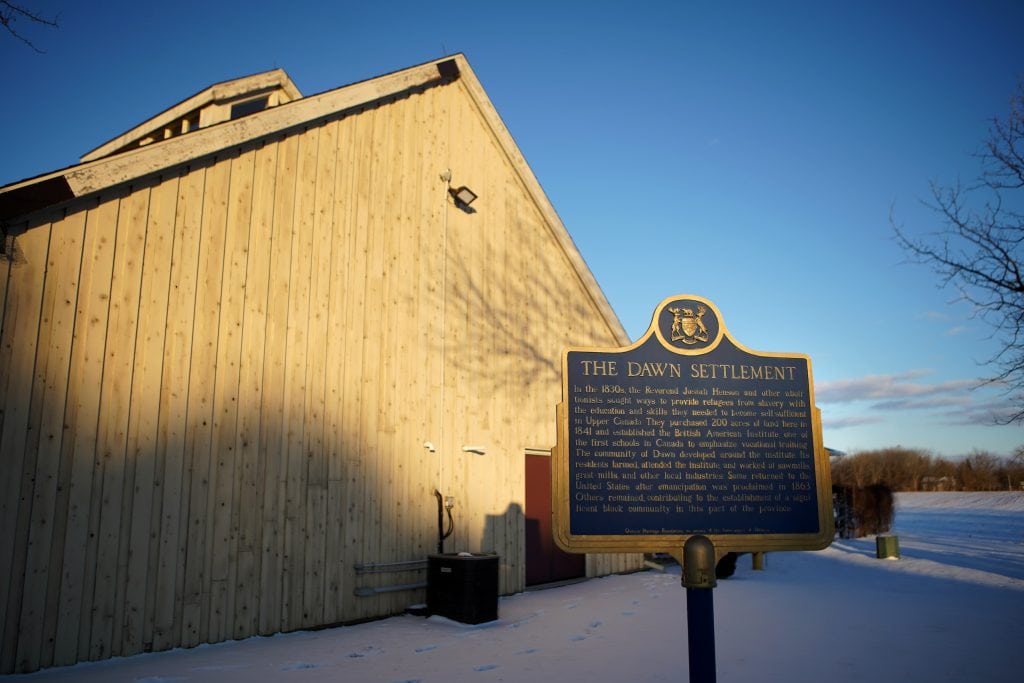
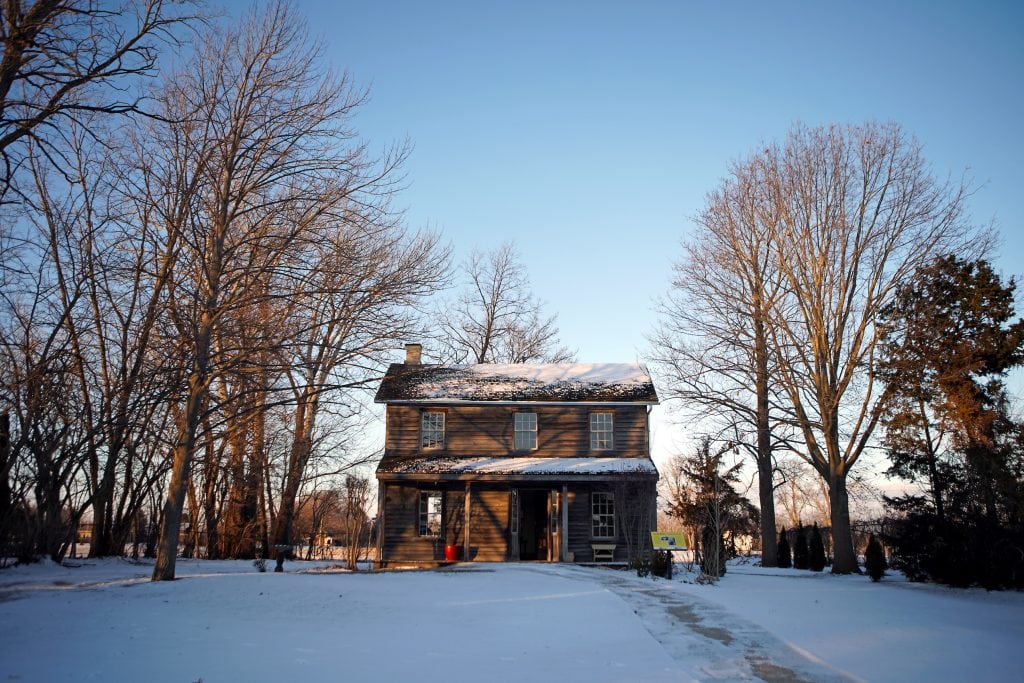
The Dawn settlement in Dresden was founded in 1841 by the abolitionist, preacher and Underground Railroad conductor Josiah Henson. Enslaved in Maryland and Kentucky, he had been permanently disabled by beatings that left him unable to lift his arms above his head. After discovering his enslaver had cheated him out of an agreement to buy his freedom, he escaped at the age of 41 with his wife and four children.
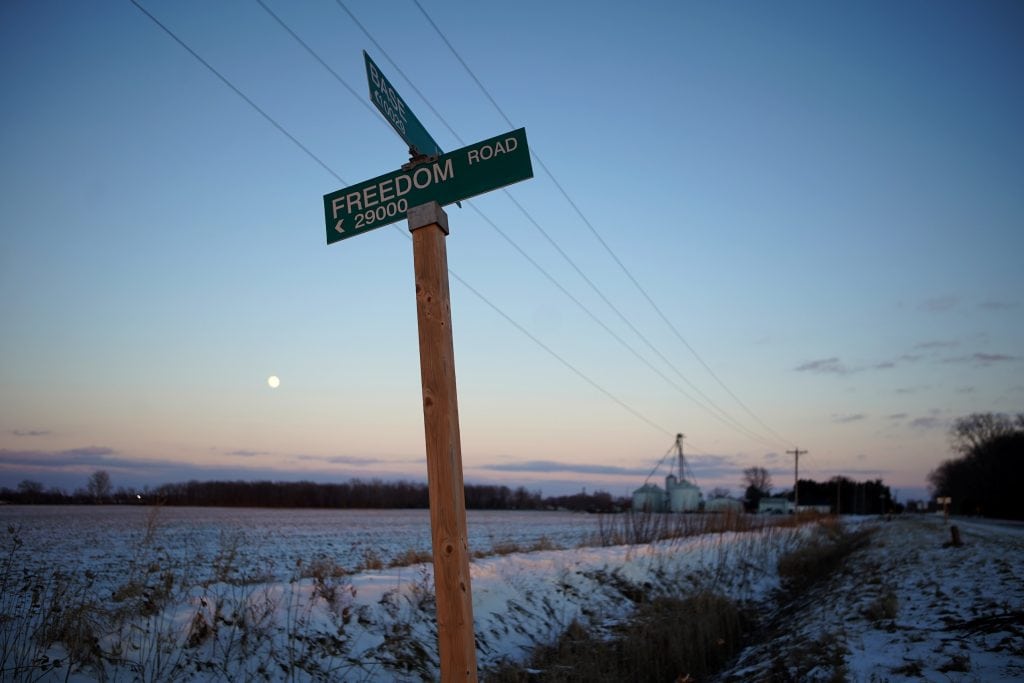
Henson, who advocated for economic independence and self-reliance, built a co-operative farm, church and vocational school to teach residents the skills to work at nearby sawmills and gristmills. His life was the inspiration for Harriet Beecher Stowe’s often-misunderstood anti-slavery novel, Uncle Tom’s Cabin, and his home sits on what is now Freedom Road.
On those 200 acres, Dawn’s early residents began the task “of settling upon wild lands which we could call our own; and where every tree which we felled, and every bushel of corn we raised, would be for ourselves; in other words, where we could secure all the profits of our own labor,” Henson wrote in his 1849 autobiography.
A century later, the area became a part of Black history as the site of Canada’s first racial discrimination trial. Many businesses in Dresden refused to serve Black customers, most notoriously Kay’s Café and Emerson’s Soda Bar Restaurant.
Hugh Burnett, a Dawn descendant, and his neighbours formed the National Unity Association in 1948 and lobbied town council and then the provincial government to pass anti-discrimination legislation. They succeeded in 1954, but some local businesses refused to comply. Two years later, after sit-ins and two drawn-out provincial trials, the owner of Kay’s Café finally served his first Black customers in 1956.
“It has been stated you can’t make a law to make one man love another — I think they knew very well the law would not do that — but it would eliminate the act of discrimination,” Burnett said in a 1954 National Film Board documentary.
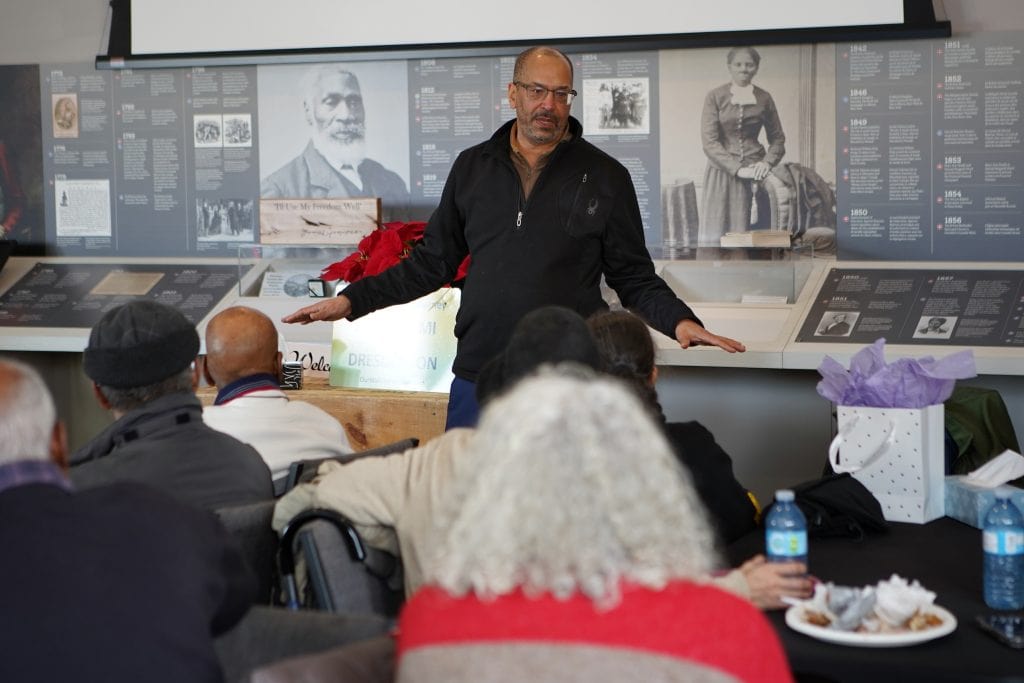
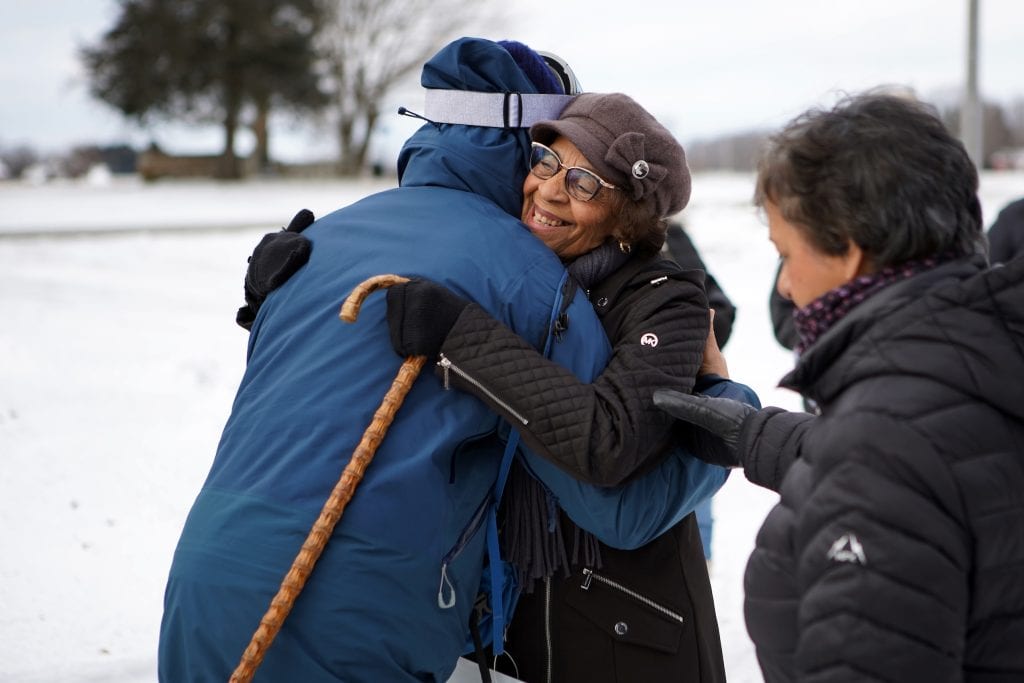
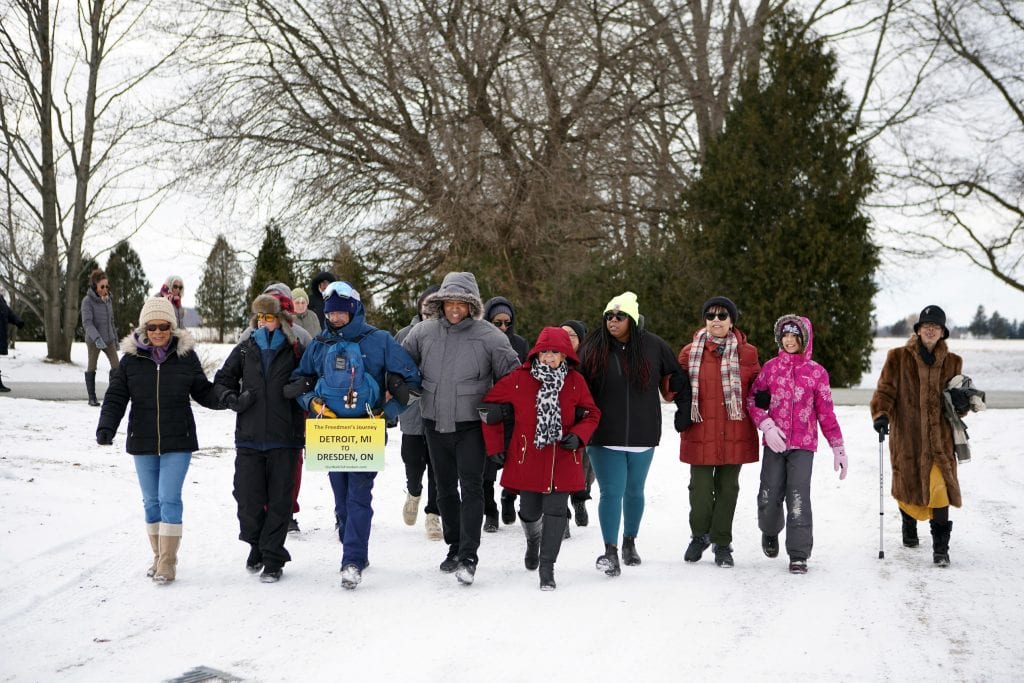
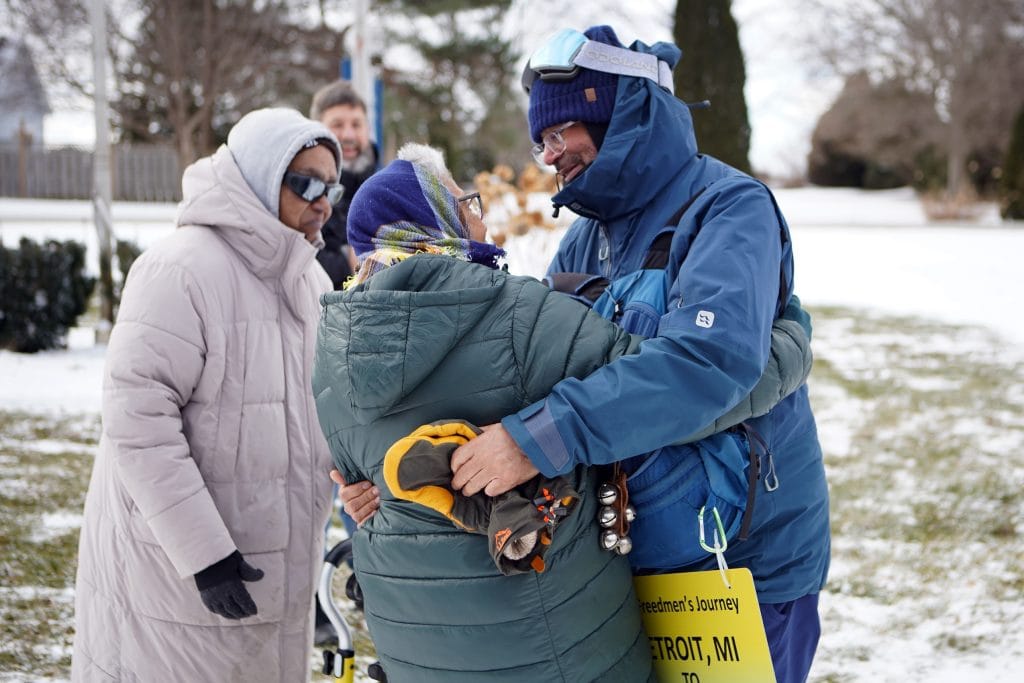
On the final day of his walk, Johnston was greeted at the foot of Freedom Road by several dozen Black residents, many of them descendants of Dawn settlers. They walked arm-in-arm toward the museum, singing a gospel hymn.
Retracing Ontario’s Black history ‘touched me to my core’: Johnston
For those who made it to the end of the Underground Railroad, life was bittersweet. Though many freedom seekers found a piece of their Promised Land, the pains of dispossession, prejudice and slavery were ever-present.
“I reached Canada about a year ago. Liberty I find to be sweet indeed,” Henry Atkinson recalled in 1856, after escaping enslavement in Virginia. “I found an opportunity to escape, after studying upon it a long time.”
“But it went hard to leave my wife; it was like taking my heart’s blood: but I could not help it — I expected to be taken away where I should never see her again, and so I concluded that it would be right to leave her. I never expect to see her again in this world — nor our child.”
After the American Civil War and emancipation in 1865, this yearning drew many freedom seekers back to the U.S. in the hopes of being reunited with their families, Moriah says. Having achieved economic success in Ontario settlements like Elgin (in what is now North Buxton) which grew to 1,000 Black residents at its peak, families chased opportunities in bigger cities like Detroit or Toronto. Today these clans are transnational, slipping between countries with family, friends, school and work on both sides.
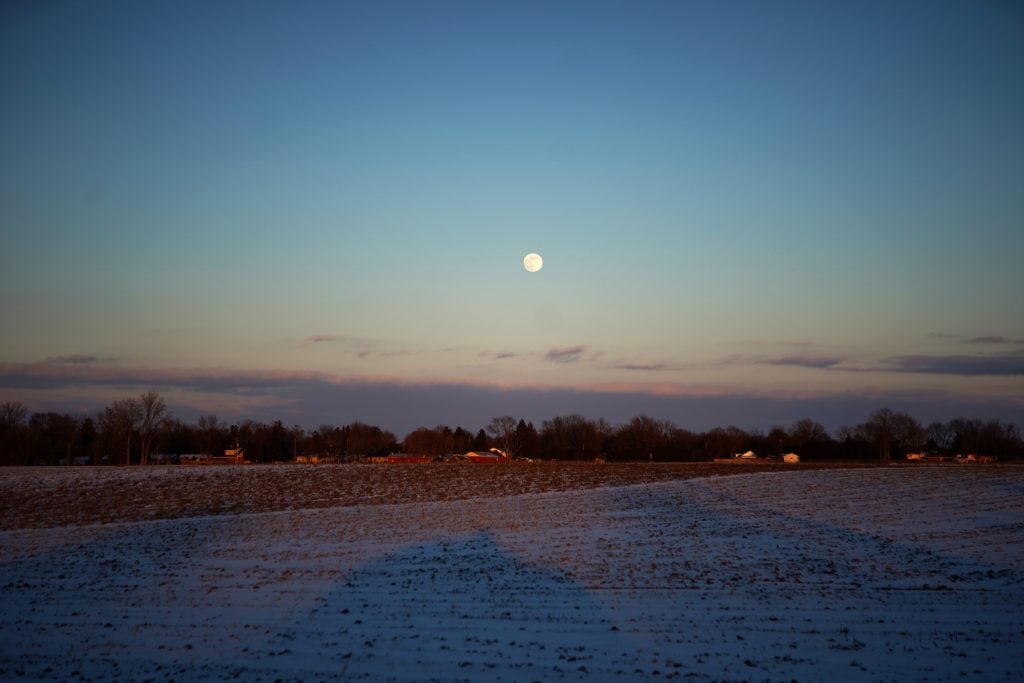
The magnitude of these many journeys hit Johnston when he first arrived at the border divide in Niagara Falls.
“I’ve been tracing the footsteps of Harriet Tubman, from the banks of the Choptank River in Maryland on the eastern shore all the way to St. Catharines,” he says. “Harriet Tubman rescued her brothers in Christmas of 1854. They made that journey to St. Catharines in one month. It has taken me five years.”
“Just looking back and seeing how extraordinary that journey was that they made, and the sacrifice that many people made — many people left their families and they weren’t going back,” he says, pausing as he tears up.
“I had the privilege of knowing I was going back home to my family and friends. It touched me to the core of my bones just what that walk meant to them.”