


For about 150 years, humans have pumped carbon dioxide into the atmosphere at rates high enough to alter the climate. But more than half of global carbon dioxide since the industrial revolution has been emitted since 1990, meaning climate change is a very modern problem.
The source of all that carbon pollution? Fossil fuels, which emit heat-trapping carbon dioxide molecules when they are burned to create energy.
Now, as the environmental, economic and public health costs of global warming become harder to ignore, scientists say we need to severely curtail fossil fuel production and use in order to slow the effects of climate change.
That could be achieved by transitioning away from fossil fuel energy sources such as oil, coal and natural gas and toward sustainable options like renewable energy and rechargeable batteries.
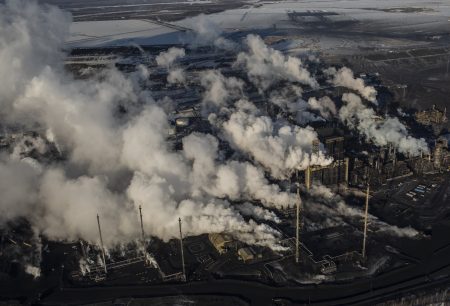
Carbon capture is a different approach. It involves continuing to burn fossil fuels, but blocking the resulting carbon dioxide from escaping into the air. It’s an attractive proposition for people who want to address the climate crisis while continuing to produce and consume the same amount of fossil fuels as we do today.
In most cases, carbon capture systems are installed on major industrial facilities to trap the carbon dioxide produced by those facilities as it exits an exhaust stream. Then, the carbon dioxide is either stored underground or repurposed for other uses.
Carbon capture touted as a climate fix, but critics call it expensive and ineffective
Carbon capture has gotten a lot of attention from politicians in Canada. When Prime Minister Mark Carney and Alberta Premier Danielle Smith jointly expressed support for a new oil pipeline connecting Alberta’s oilsands to the West Coast in 2025, it was on the condition that Alberta’s biggest oilsands companies also build a carbon capture and storage network called the Pathways Project. Smith said the Pathways Project would help the oilsands companies to “decarbonize the production of their bitumen.”
Carney and Smith are the latest in a long line of Canadian politicians who have touted carbon capture as a way to reduce emissions.
But the technology has never lived up to expectations. In 2024, the oilsands produced more carbon emissions in a single year than Canadian carbon capture projects removed in the entire quarter-century leading up to that year. And according to the latest estimates, the Pathways Project will capture six million tonnes of emissions per year by 2035, or around six per cent of the oilsands’ output of 92 million tonnes in 2024.
Critics also point out that carbon capture systems, such as the proposed Pathways Project, only target emissions related to the production of fossil fuels, not their use, which is where the majority of emissions come from.
Carbon capture is also an expensive way to reduce emissions. The Pathways proposal was initially estimated at $16.5 billion and is now pegged at between $20 billion and $30 billion, with much of that cost expected to be covered by government subsidies.
The Narwhal has covered the Pathways Project and the broader public discourse around carbon capture in Canada for years.
To learn more, browse the stories below, and be sure to sign up for The Narwhal’s newsletter to stay up to date with our reporting on the natural world in Canada.

 6 min. read