




 7 min. read
Summary
- On May 27, Canada announced an agreement to supply Germany with one million tonnes of liquefied natural gas, or LNG, annually beginning in the early 2030s.
- The federal government says the deal will help Canada reduce its dependence on the U.S. market as trade relations grow more uncertain under President Donald Trump.
- Climate experts say the deal raises questions about the long-term costs of expanding fossil fuel exports.
Last week, the Canadian government celebrated a deal with Germany to supply the European country with one million tonnes of liquefied natural gas (LNG) per year, starting in the early 2030s. The agreement — essentially a handshake deal, yet to be finalized — is part of a broader federal scheme encouraging investment in major industrial developments across the country.
Natural gas is a fossil fuel mostly composed of methane, a potent greenhouse gas and major contributor to global climate change. Fossil fuels account for around 68 per cent of global greenhouse gas emissions and nearly 90 per cent of all carbon dioxide emissions. The more greenhouse gases released into the atmosphere, the bigger the effect on global warming and the stronger the impacts felt on the ground. More frequent and intense extreme weather is one significant effect, and one that Canada is already experiencing.
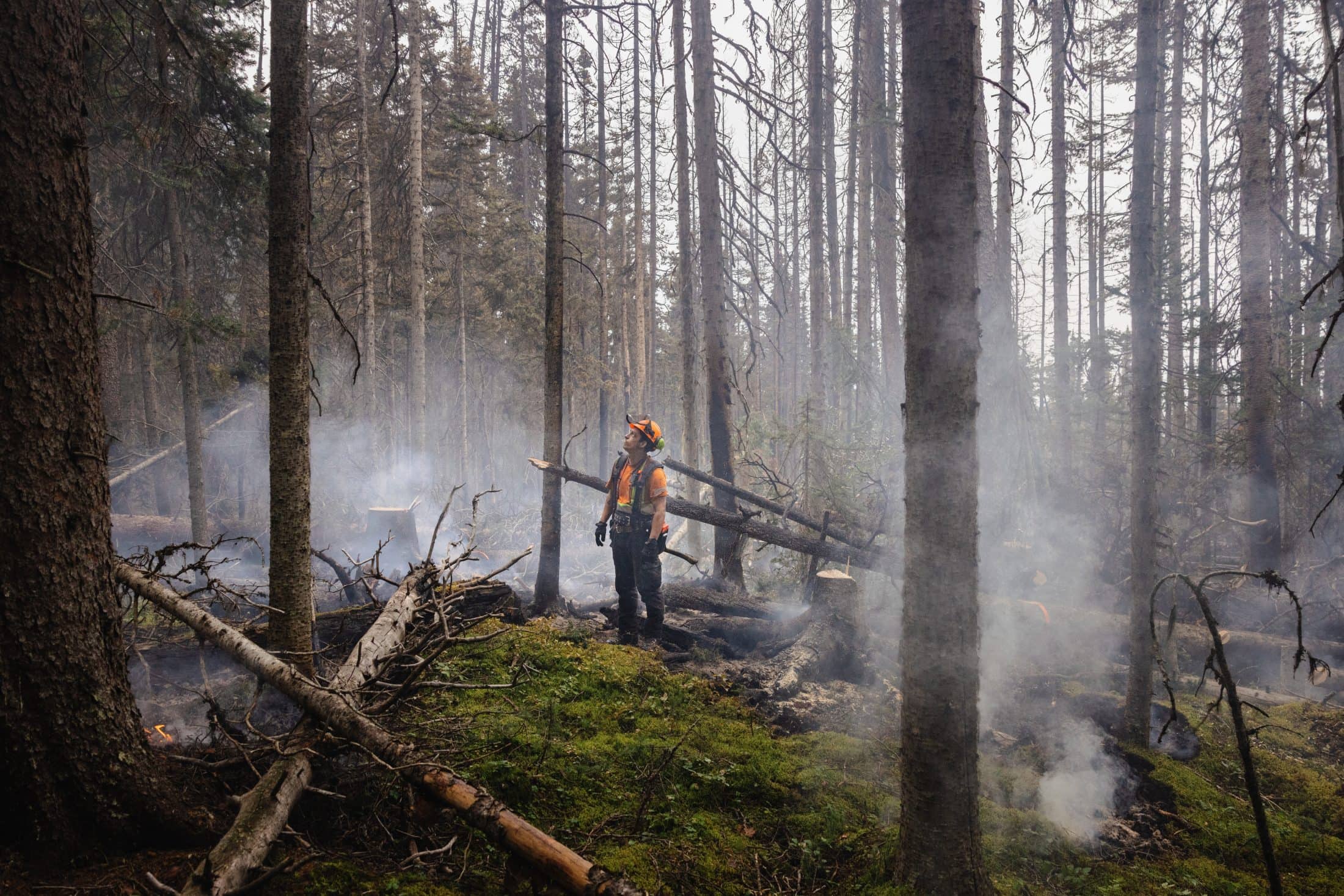
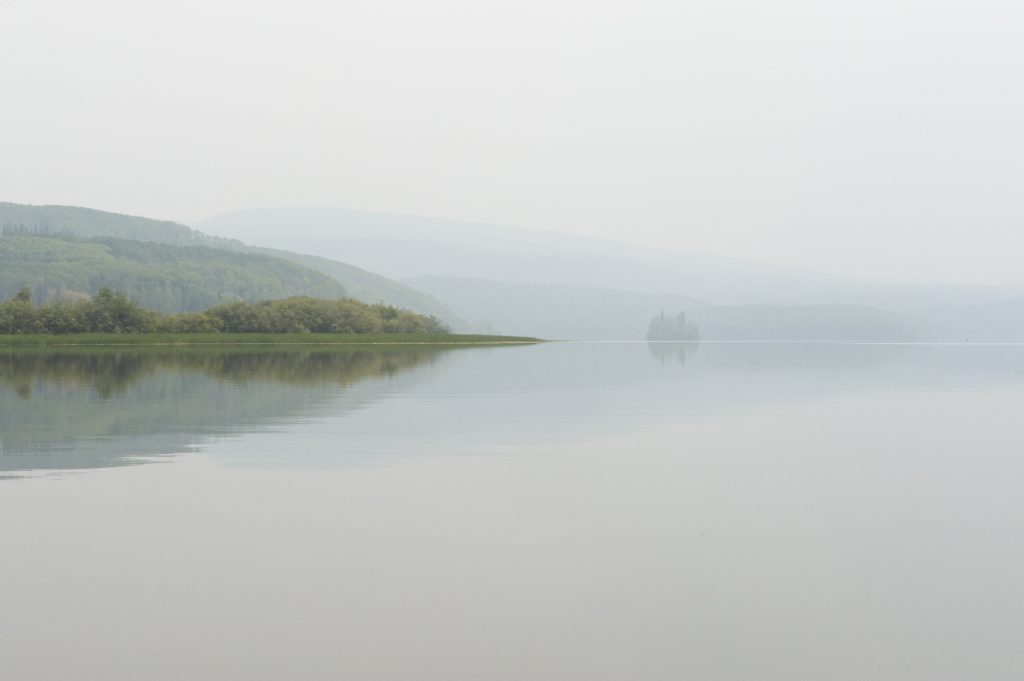
In 2023, smoke from wildfires in Canada caused more than 80,000 premature deaths across the globe. Of those who died, more than 20,000 lived in Europe. That same year, nine-year-old Carter Vigh died in B.C. of an asthma attack aggravated by wildfire smoke.
The following year, fires burned through Jasper, Alta., killing a young firefighter named Morgan Kitchen and causing more than $880 million in insured damages. According to the Insurance Bureau of Canada, nationwide losses related to “severe weather” surpassed $9.4 billion in 2024, including $3 billion in a single hour during a hailstorm in Calgary.
In 2025, around 85 per cent of Canada experienced severe drought conditions. Meanwhile, a storm surge flooded the northern community of Tuktoyaktuk, N.W.T., with water levels rising to the highest ever recorded in the region at 2.62 metres.
Canada touts the new export agreement with Germany as a necessary move to diversify the economy by decreasing its reliance on trade with the United States, which has become increasingly volatile since the re-election of President Donald Trump.
“We must build projects that strengthen our economy, that diversify our supply chains and enhance our energy sovereignty as well as expand our exports beyond a single market,” Canada’s Minister of Energy and Natural Resources Tim Hodgson said on May 27.
When asked how Canada squares its stated climate commitments with support for expansion of fossil fuel production, a spokesperson with Natural Resources Canada said LNG produced in Canada is “widely recognized for its low emissions intensity compared to global averages.”
Canadian LNG is often positioned as a “transition fuel” helping countries reduce reliance on other energy sources, like coal. But many European countries, including Germany, have been importing LNG as a means to replace Russian gas since the Ukraine war began in 2022. The current U.S.-Israel war on Iran has put further pressure on countries with gas contracts in the Middle East.
Environmental economist Dave Sawyer said the new agreement clearly shows how the narrative of Canadian LNG as a climate solution is “patently false.”
“This notion that LNG is reducing global emissions is blown out of the water by this German deal,” he told The Narwhal. “This LNG is not being used to displace coal. There’s no incremental emission benefit from Canadian LNG in this deal.”
‘Just be honest’
Increasing long-term reliance on fossil fuel exports is also a risky economic maneuver, according to Steven Haig, policy advisor with the International Institute for Sustainable Development.
“The costs of climate change are being felt now and we shouldn’t lose sight of that,” Haig told The Narwhal in an interview. “They will get worse as time goes on and emissions increase — but this is a problem today, not just a problem for the future.”
Wildfires, droughts and floods are among the many increasing climate impacts claiming lives and diverting government funds to emergency response and health services. These costs will need to be met by higher taxes, placing a heavier burden on lower-income households.
A recent New York University School of Law cost-benefit analysis of U.S. LNG exports found that “climate damages greatly exceed economic benefits.” The analysis showed that a conservative accounting of damages — described in the report as “likely underestimates” — are roughly double the economic benefits. In other words, LNG exports cost twice as much as the revenues they earn.
“These are costs that are expected to increase as temperatures continue to rise, meaning that reducing carbon pollution today is an economic imperative,” Haig said. “Good climate policy is good economic policy and the two shouldn’t be considered [in] opposition.”
In 2022, Sawyer worked on a Canadian Climate Institute report analyzing the macroeconomic effects of climate impacts. The report detailed how the federal and provincial governments are increasingly forced to allocate public funds to respond to climate disasters and how this impacts the cost of living for all Canadians.
“Replacing and repairing damaged infrastructure, back-stopping weather-related disaster costs and funding increased health care needs all place greater demands on government budgets,” the report noted.
Sawyer said LNG exports are like an ATM.
“It is a profitable business — it generates a lot of money for some,” he said. “But it is climate damaging and there are costs associated with climate damages. Just be honest about it.”
Canada should not subsidize fossil fuel exports: experts
The new agreement with Germany’s state-owned energy importer is the third supply deal secured by Ksi Lisims LNG, a provincially and federally approved floating export facility in British Columbia.
Ksi Lisims aims to produce up to 12 million tonnes of LNG annually, sourcing its gas from northeast B.C. and transporting it through an 800-kilometre pipeline. Construction has not started on the facility and its owners have not reached a final investment decision, the crucial last step before companies decide to spend the vast sums required to build a major project.
“This deal with Germany … only covers around eight per cent of Ksi Lisims’ projected annual export capacity, so that’s not a lot of LNG that we’re talking about,” Haig noted. “The broader market trends still point to long-term risks for high-cost LNG exporters like Canada.”
The deal also isn’t really a deal — yet. So far, the parties have signed a non-binding preliminary document known as a “heads of agreement.” An official purchase agreement would need to be finalized before Ksi Lisims could use it to attract investment.
Ksi Lisims is owned by Texas-based Western LNG, in partnership with the Nisga’a Lisims Government and a coalition of gas producers called Rockies LNG Partners. The owners have already signed deals with Shell and TotalEnergies to provide each with two million tonnes of LNG per year.
Canada has long been a major producer of oil and gas, mainly exporting to the U.S. via a network of cross-border pipelines, but the country’s economy is not reliant on the sector like some petrostates. According to the Canadian Association of Petroleum Producers, the industry accounts for about 3.8 per cent of the country’s gross domestic product.
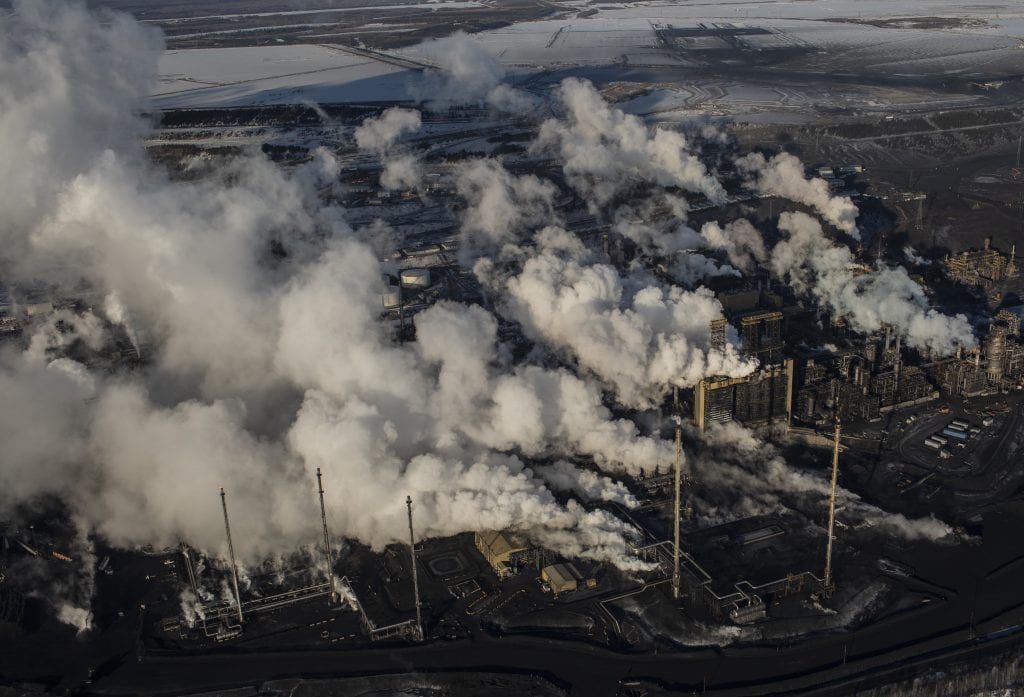
Canada’s ambitions to become a global player in liquefied natural gas exports were first realized last year, when LNG Canada sent its initial shipments of the fossil fuel across the Pacific Ocean to Asia. Construction of LNG Canada was heavily subsidized by the B.C. and federal governments.
The federal government’s public investment agency, the Canada Infrastructure Bank, is considering providing new financial support for projects like Ksi Lisims LNG, according to recent reporting by the Globe and Mail.
“The government of Canada should not be subsidizing oil and gas development — they can bet their own money,” Sawyer said. “The government’s job is to put the safeguards in place, not spend money.”
Haig agreed.
“If Canada’s LNG projects can’t stand on their own two feet, then public dollars should not prop them up,” he said. “These are highly risky investments and public subsidies effectively shift that risk away from private corporations onto Canadian taxpayers.”
“[That], in turn, makes it more likely that projects go ahead even if they may lose money in the long run, becoming stranded assets that may need to be cleaned up with public funds.”