

 6 min. read




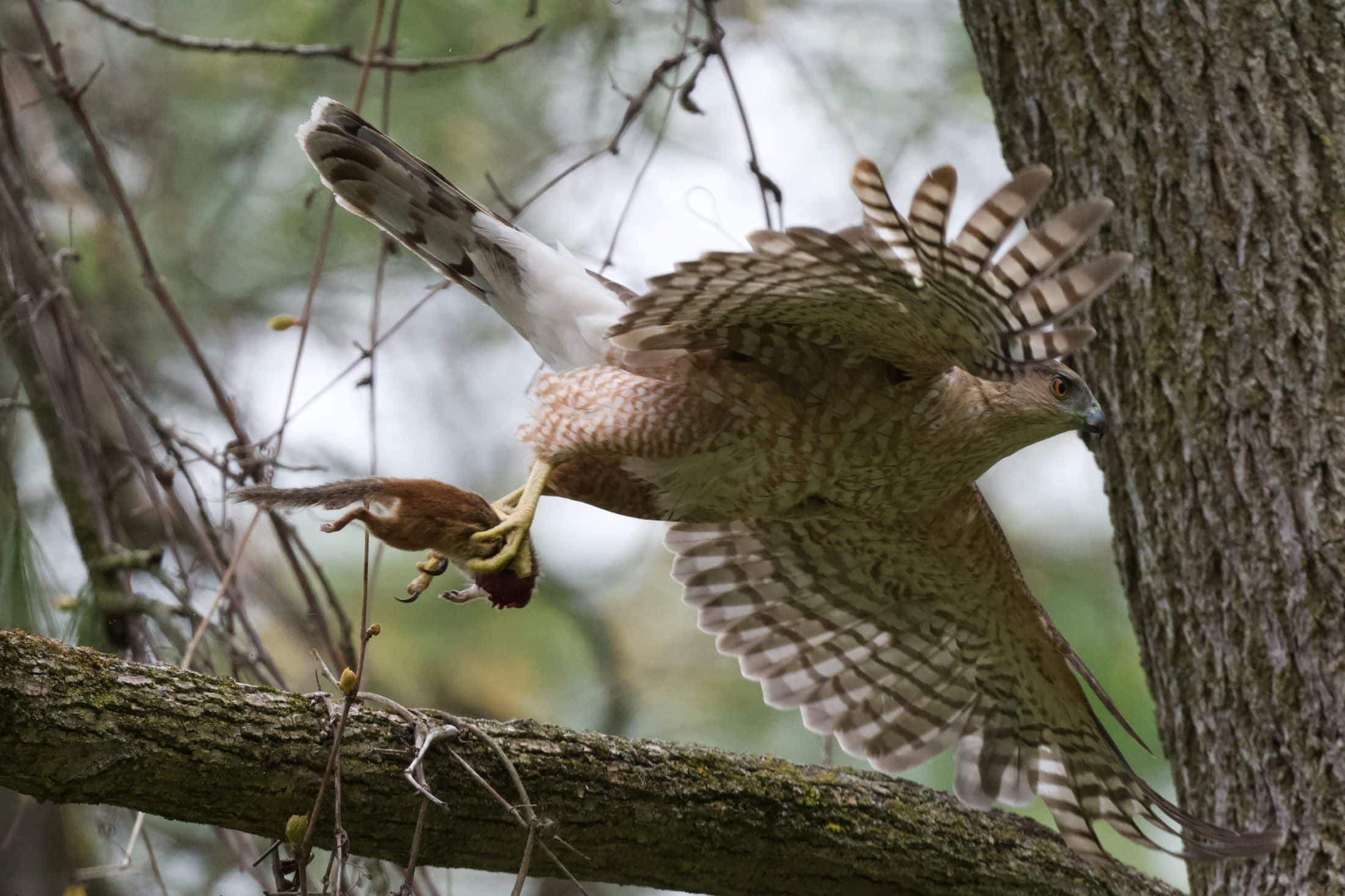
For 18 months, a pair of Cooper’s hawks have been hunting in the woods behind my apartment building. Though they’re primarily forest dwellers, these raptors have adapted to urban living, preying on smaller birds that frequent ground-floor feeders and sometimes hunting chipmunks, squirrels and rabbits.
They live year-round in southern Ontario, while those in northern climes may migrate south for the winter.
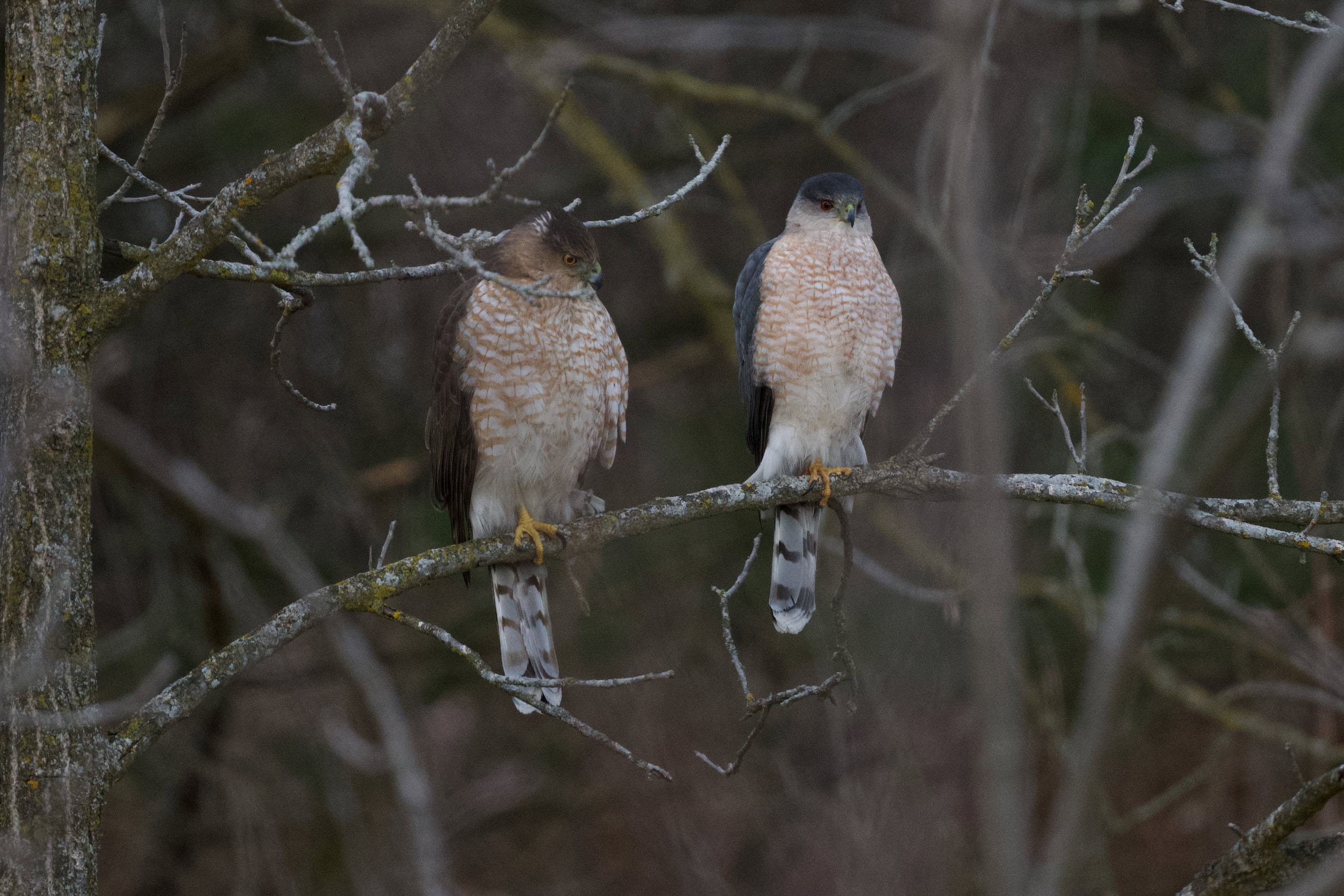
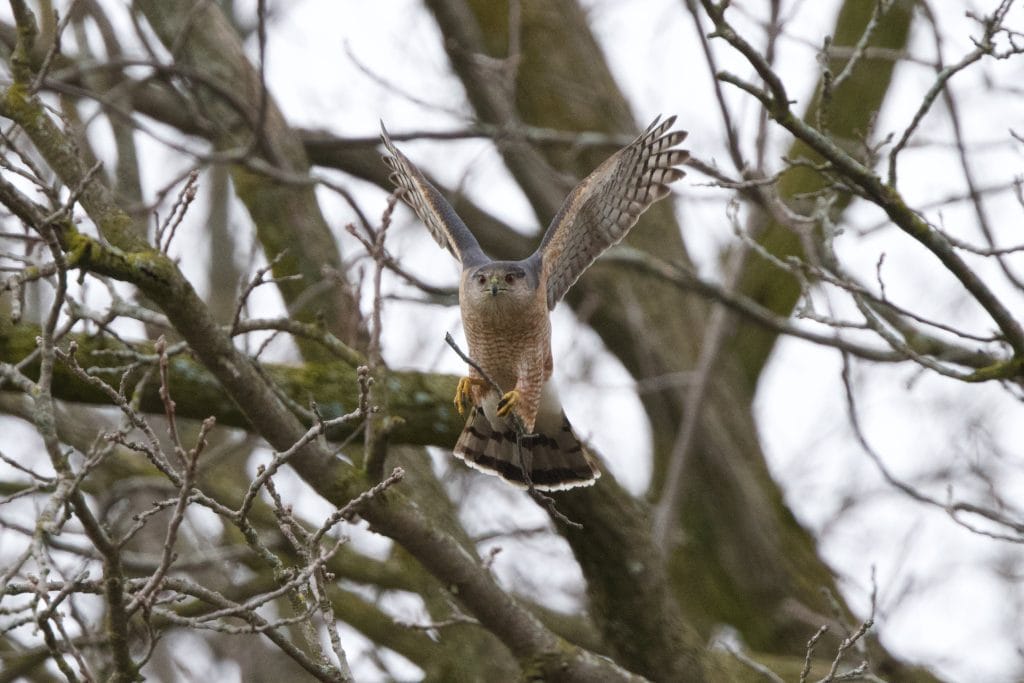
The sex of this pair is easily distinguishable. Like most raptors, the male is smaller than the female, about the size of a crow and while both have brown-streaked breasts, the male has blood-red eyes with blue-gray feathers on his back. The female retains some brown feathers at the moment but as she molts and grows new feathers those will be blue grey. Her orange-brown eyes will also darken with age.
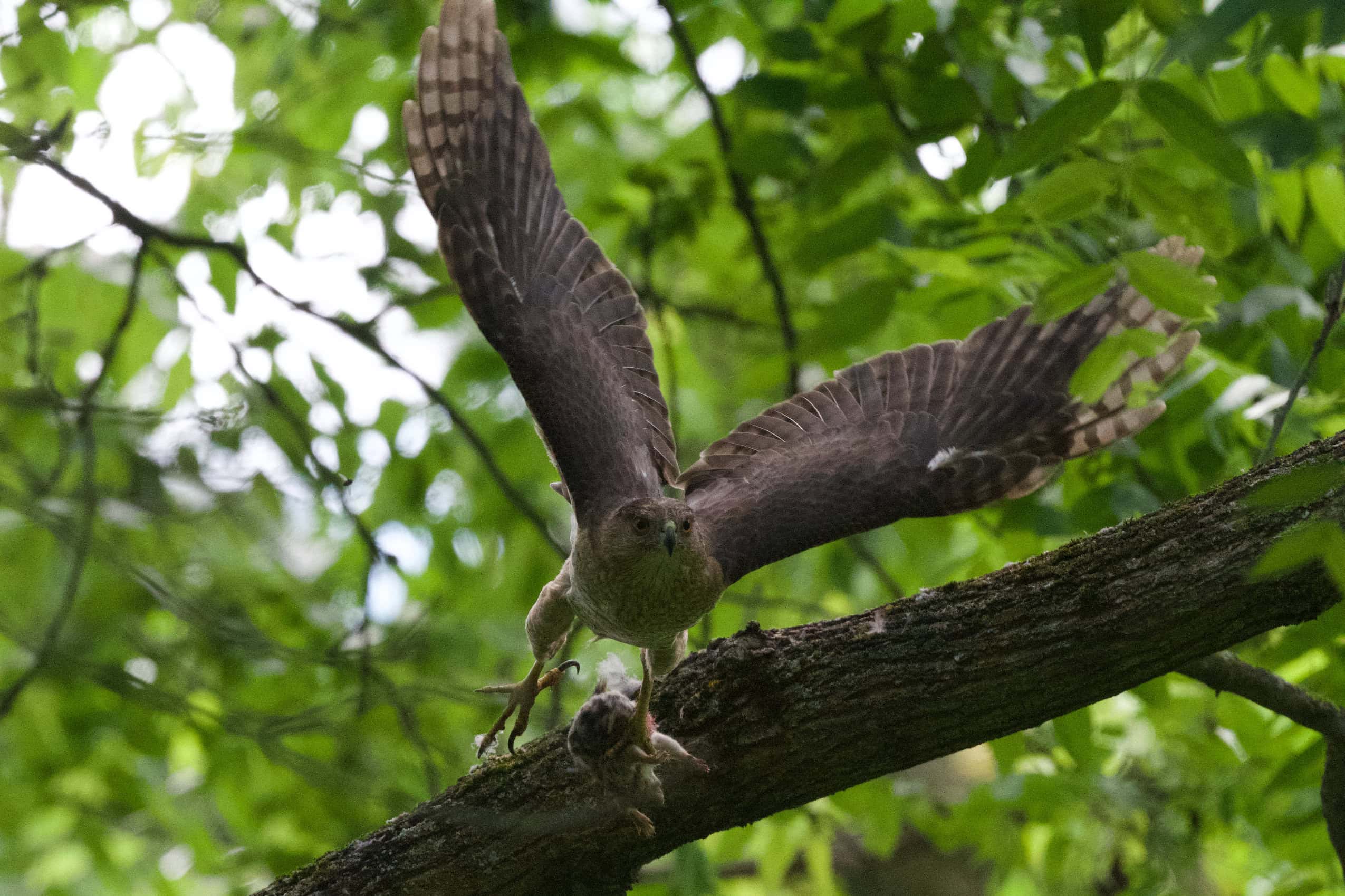
Using speed, agility and surprise, they launch themselves from a perch, quickly locking on to their prey. Their rounded wings and long tail feathers allow them to maneuver through tree branches with the precision of a laser-guided missile. They rarely miss, but when they do, it can hurt.
The Owl Foundation in Vineland, Ont., which specializes in rehabilitating raptors, sees many Cooper’s hawks that have suffered concussions as well as broken coracoid and furcular bones, or breast bones, due to hitting tree branches or windows. Smaller birds can be confused by reflections of trees and sky in windows and when the hawks give chase they aren’t able to put the brakes on quickly enough to avoid a collision.
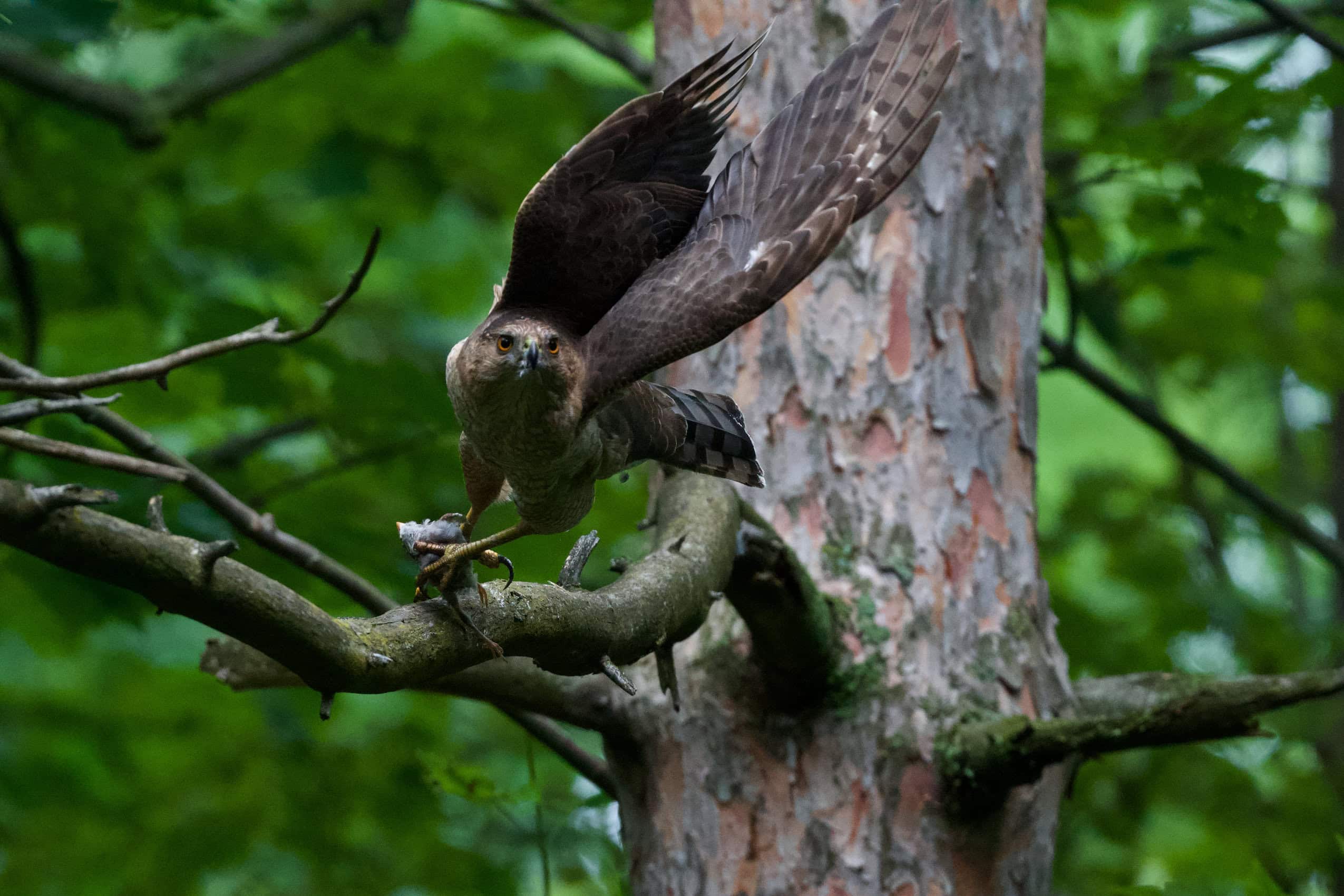
A study of 300 Cooper’s hawk skeletons revealed 23 per cent of them had evidence of healed chest bone fractures. Fortunately, this pair focus their hunting in the woods and I have rarely seen them near a building.
Despite the risks, the birds’ focus on the hunt is necessary to feed themselves and their young — Cooper’s hawks have a high metabolism and must eat roughly 12 per cent of their body weight each day. For the adult female that could mean two medium-sized prey birds.
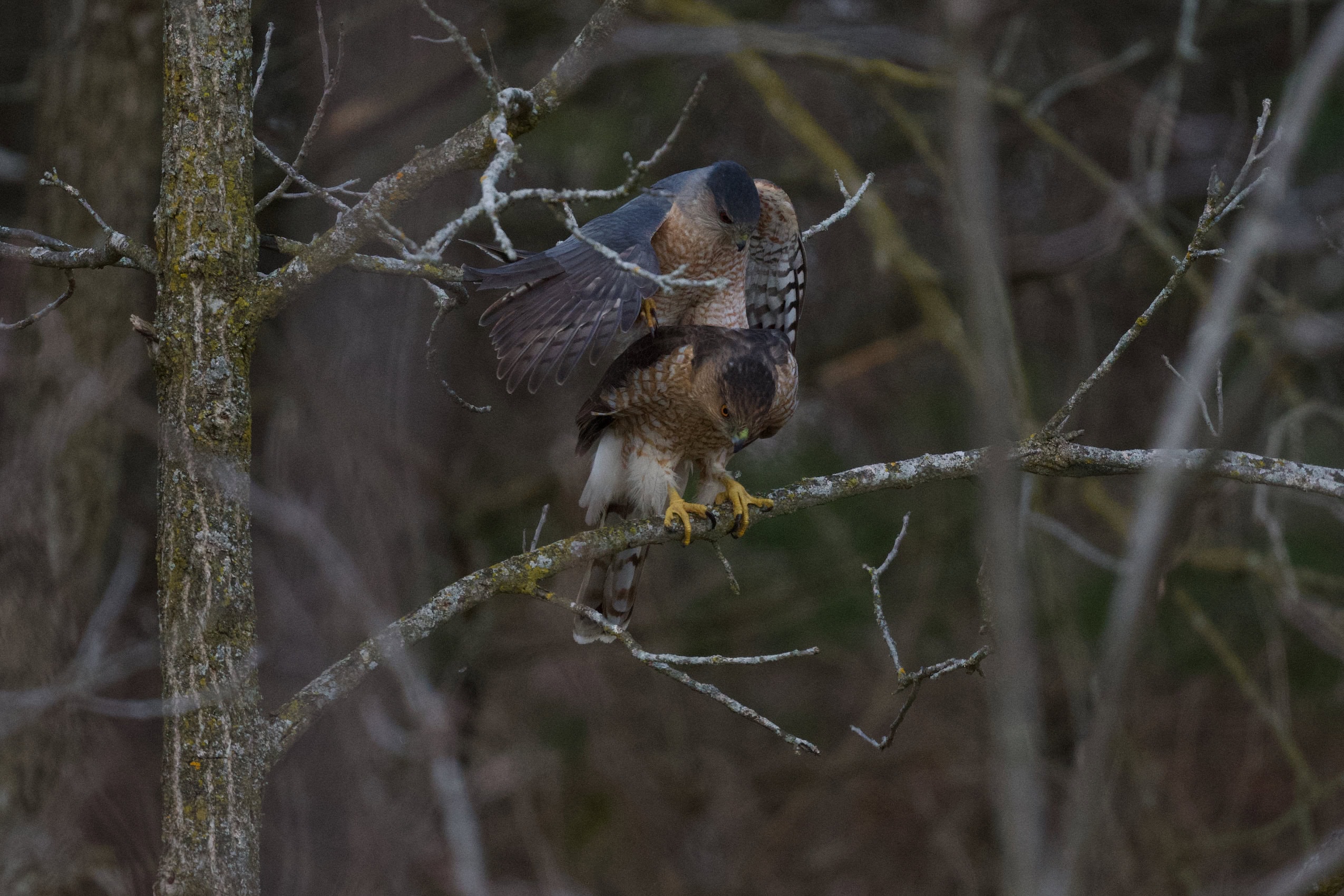
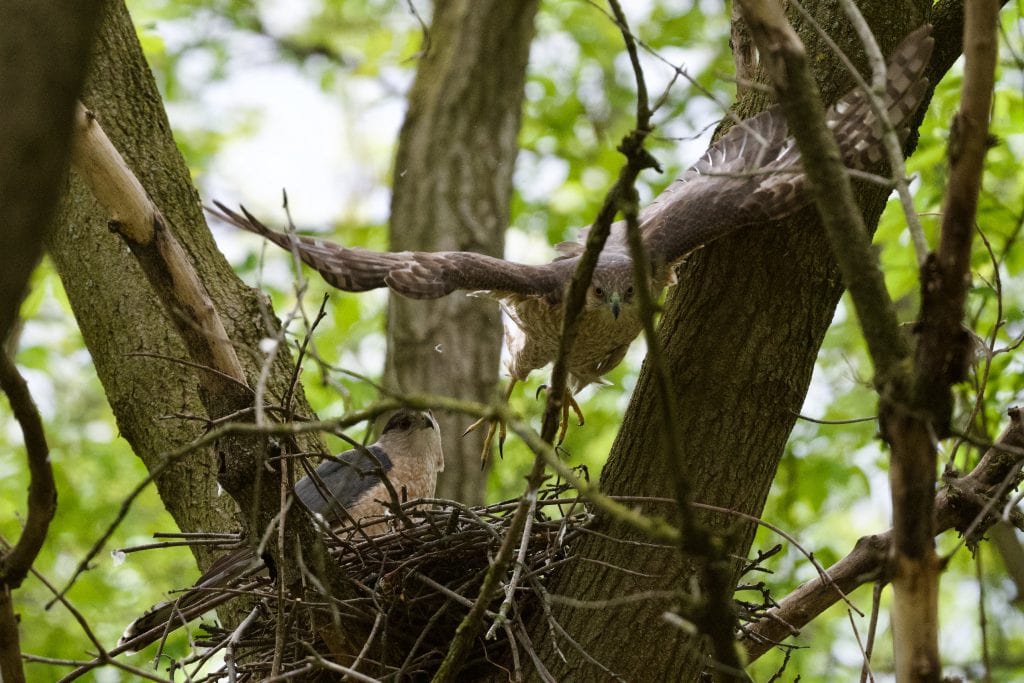
This pair behind my apartment have become very comfortable in this location. In late March, from my balcony, I caught them engaged in some hanky panky, and within a few weeks I noticed things were getting serious: the male was breaking off twigs to build a nest in a nearby pine. The location failed to satisfy his mate, however, and ultimately they chose the crotch of an ash tree to make a home.
Even with an enormous overhead canopy, the nest is far from secluded — or quiet. Within 50 metres there are two apartment buildings and a public park complete with people, barking dogs and lawnmowers, not to mention occasional fireworks which surely wreak havoc when the hawks are listening for prey. These Cooper’s hawks seem to have developed a high tolerance for their human neighbours.
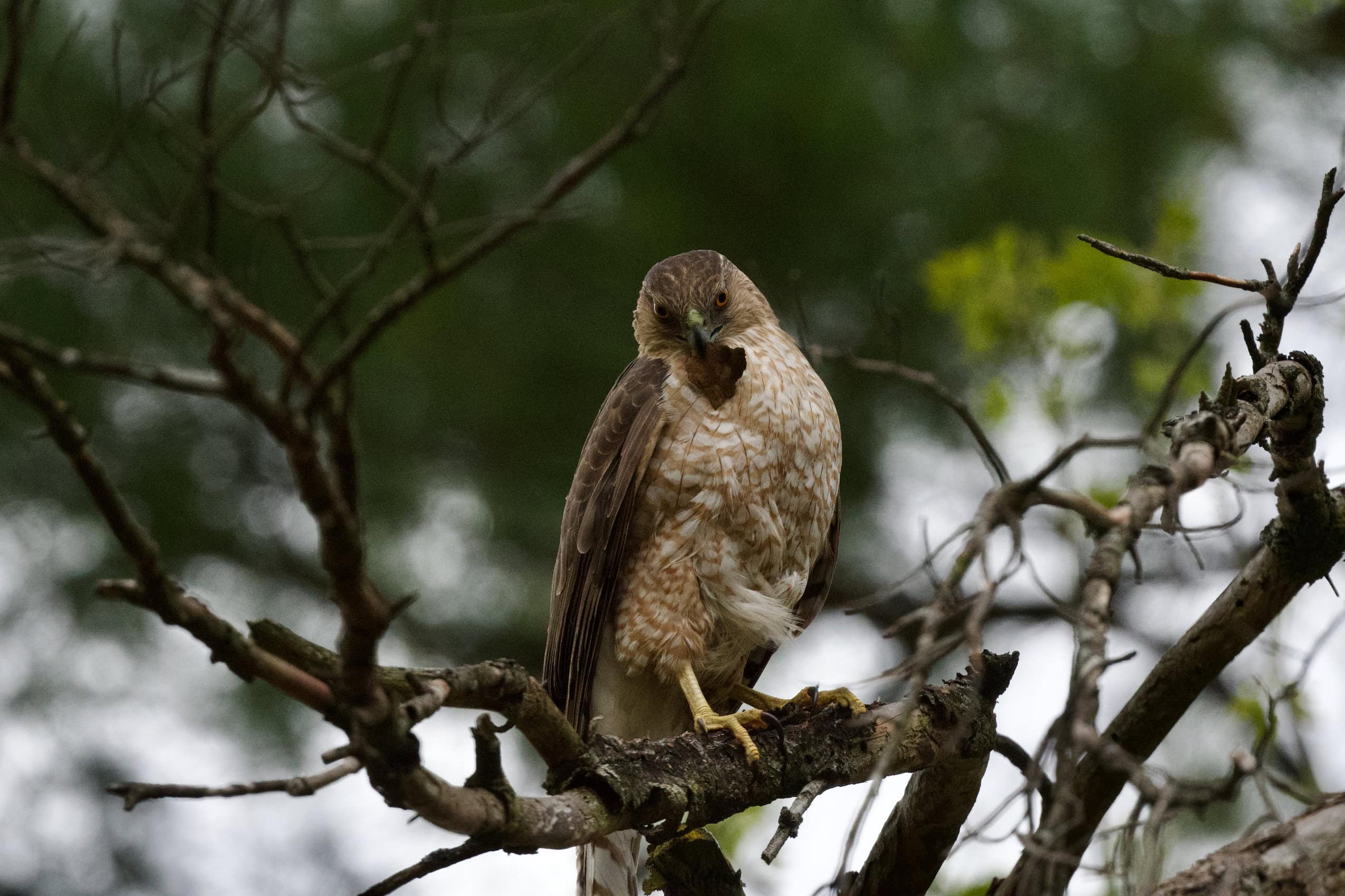
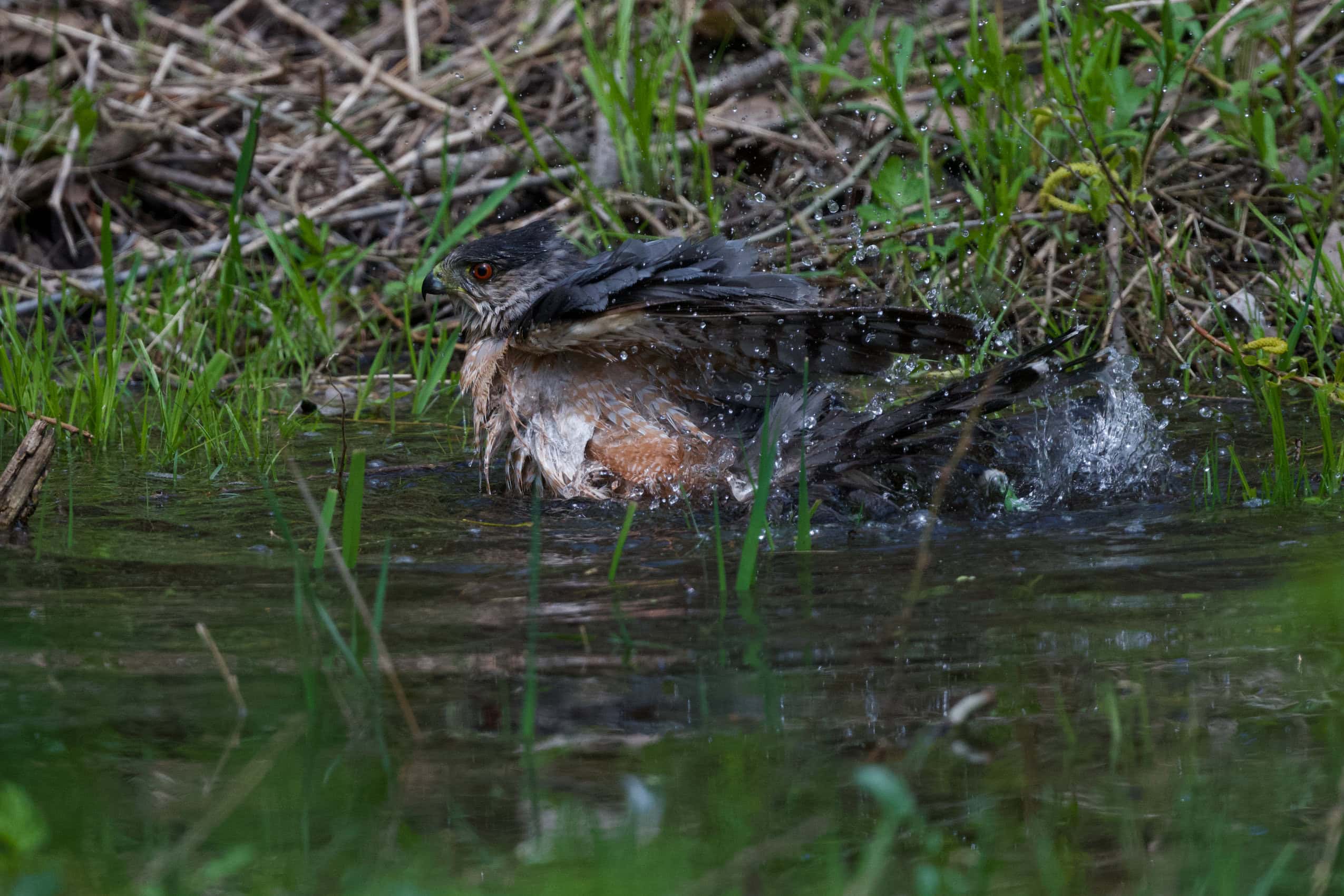
Initially I limited visits to the nest area to a minute or two, as I was concerned about stressing the hawks. Now they regularly dive past me on the hunt or when bringing prey to the nest, passing within a couple of metres. Twice they tag-teamed squirrels that came too close to their chicks and fended them off as I stood nearby. As a falconer friend told me, “they have determined you’re not a threat.” But when someone else approaches me I have noticed they will remain on their perch.
In early May the female was spending most of her time in the nest — a sign she was probably incubating eggs. The male took the occasional shift so his mate could eat, clean and stretch her wings. As the eggs hatched, the female became the doting parent.
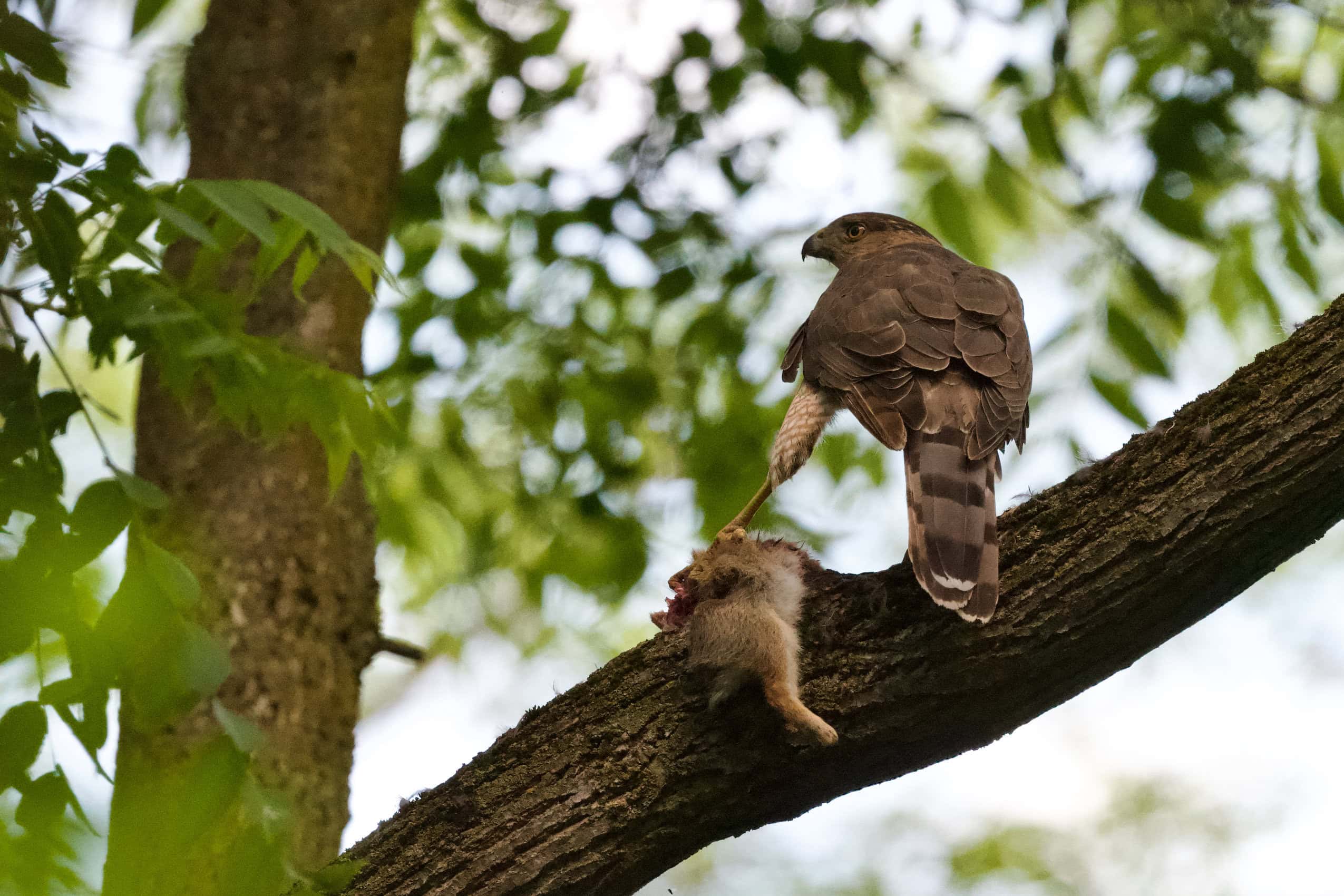
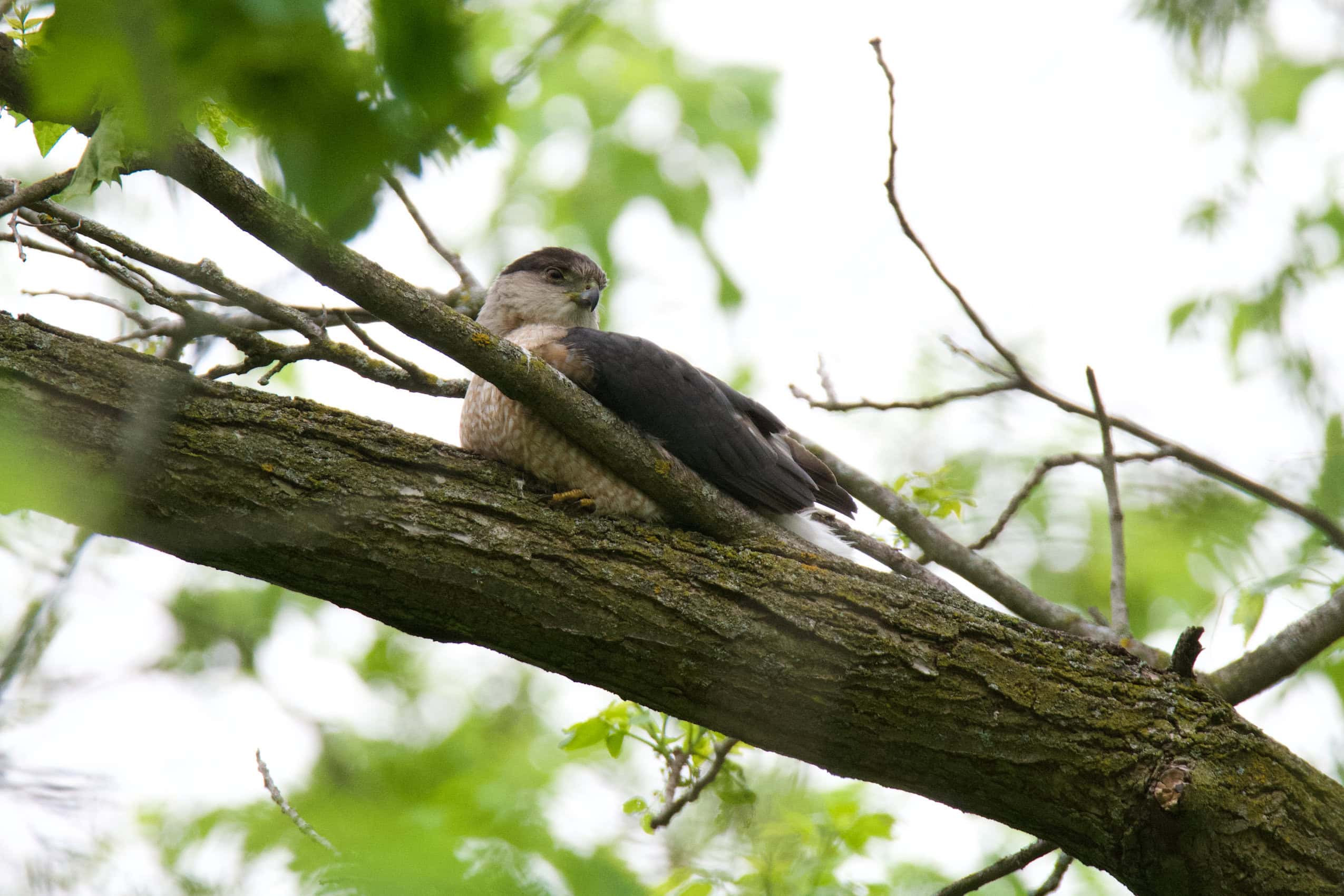
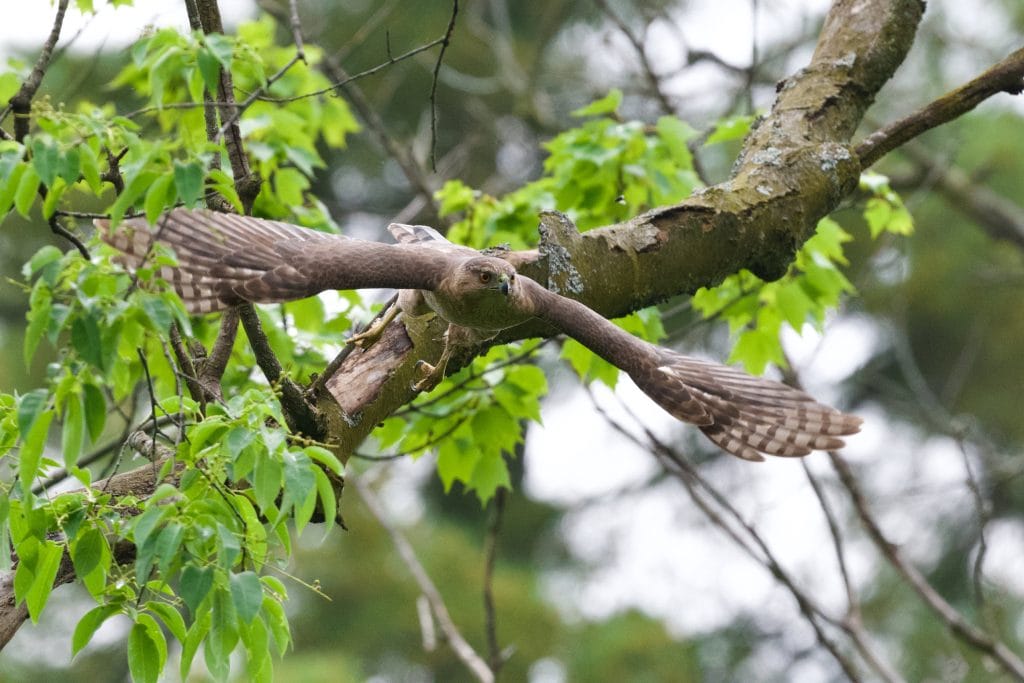
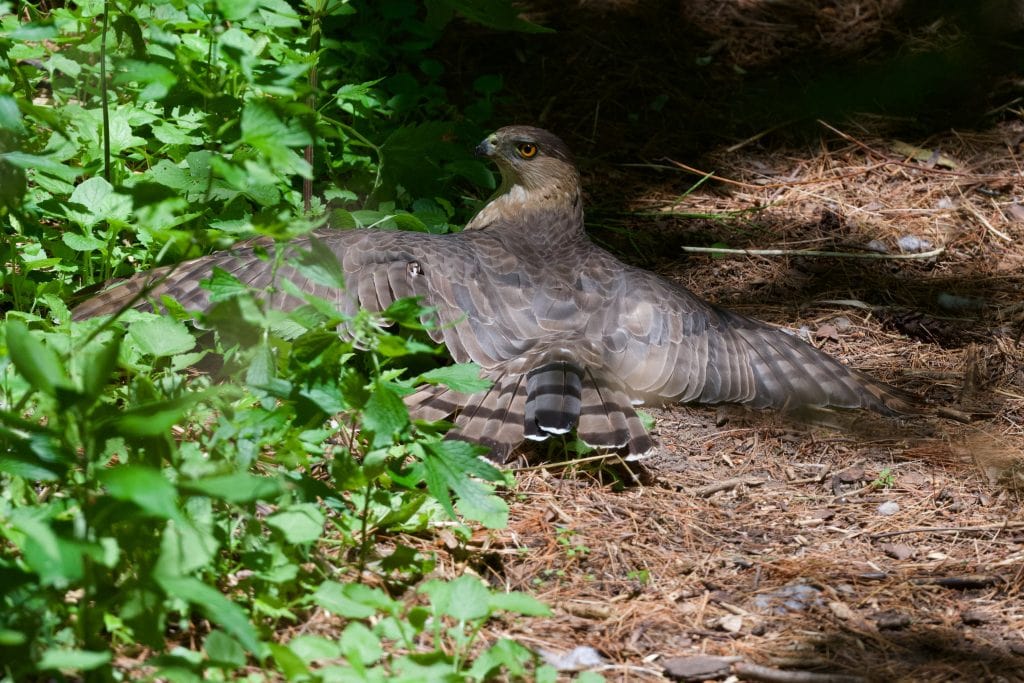
The male is an excellent and well-practised hunter; with a mate and four rapidly growing chicks in the nest, he needs to be. When he returns with prey, he sits on a tree branch announcing his presence with a single squeak. The female then leaves the nest to eat while he stands guard.
After she has ravaged the prey, picking off feathers and eating her share, she takes the remainder to the young. Sometimes she retrieves leftovers that she and her mate have cached on nearby tree branches. Never have I seen the male feed the chicks. His blood-red eyes might be mistaken for food by the young and trigger their pecking response.
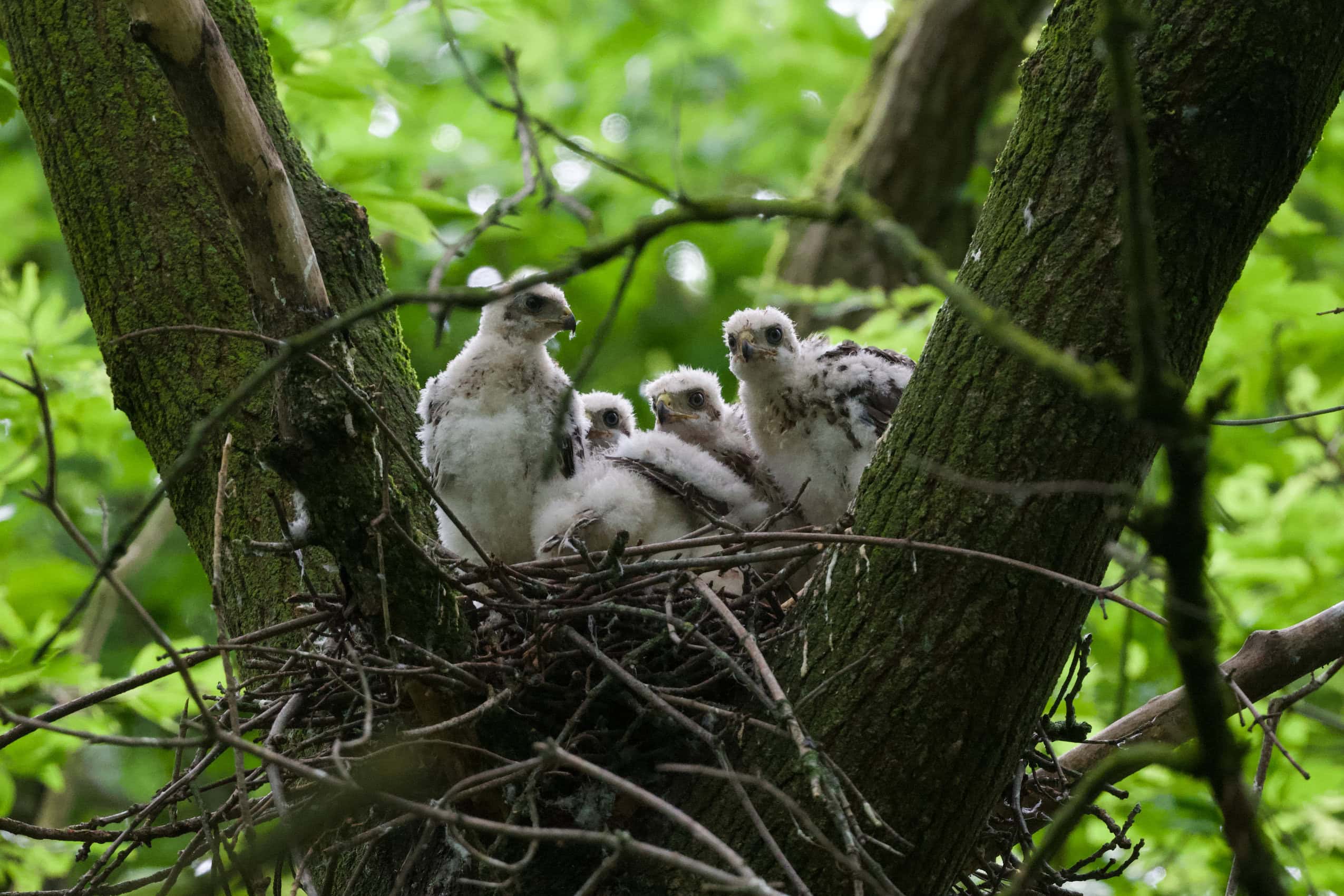
As the chicks grow, the nest has become crowded, so the adult female perches in a nearby tree, closely watching for danger. I have watched her hunt several times a day from this spot, to help satisfy their voracious appetites. Her “food preparation” is now done in full view of the chicks — no doubt a teaching opportunity.
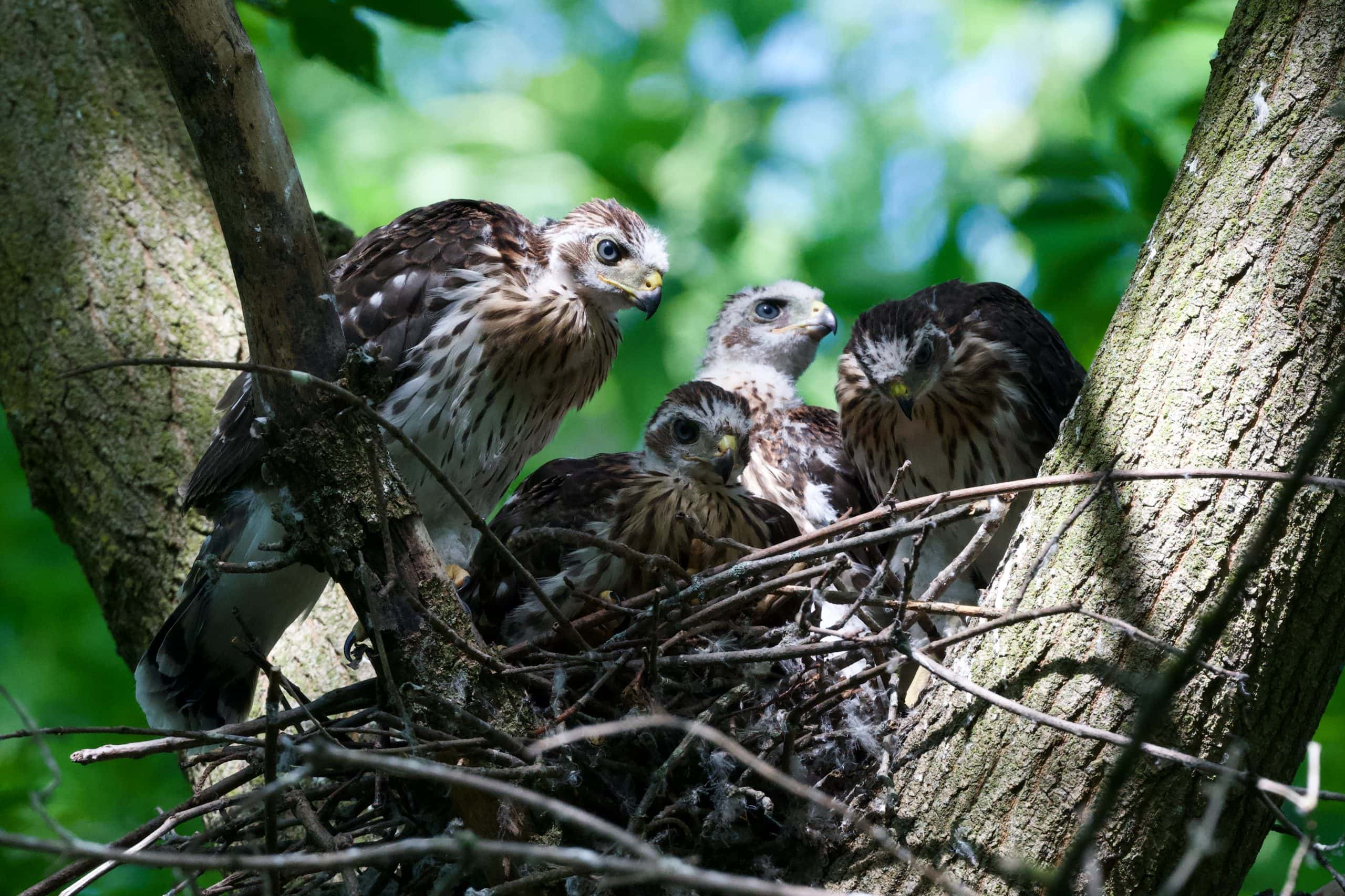
The odds of the chicks’ survival is low. The mortality rate of Cooper’s hawks is between 70 and 80 per cent in the first year, so learning survival skills early is critical. And threats abound. On Canada Day, a severe thunderstorm destroyed this nest. Thankfully, all four chicks survived, and the adults quickly commandeered a nearby squirrel’s nest.
No doubt there will be other hazards for these young chicks. Those that successfully navigate the challenges will fly off and eventually build their own nest — perhaps in a forest, but on occasion in a backyard with trusted and welcoming neighbours.