






 8 min. read
Summary
- Tick populations are spreading in Ontario, increasing the risk of Lyme disease.
- Of the 44 varieties of ticks found in the province, only one — blacklegged ticks — carry Lyme, but they make up more than half of all ticks here.
- Experts say people need to recognize the risk of ticks and Lyme in the outdoors, and check themselves and others.
With the kids in bed and the movie credits rolling, I turned to my partner and asked the question no man can resist: would you check me for ticks? We’d been out in the backyard most of the day, among a not-so-recently mowed lawn, shrubs and tall native grasses. They all could be harbouring any number of pests — including the one adding an extra element of terror to southern Ontario summers. Wildfire smoke? Check. Extreme heat? Check. Ticks? Check — no, really: check yourself for ticks.
The insects have been spreading across Canada as the climate changes, and southern Ontario has seen a dramatic increase among several species of ticks. Unfun fact: our province has 44 species in total, according to Public Health Ontario. But only one, the blacklegged tick, carries Lyme disease (we’ll get to that in a minute).
Ticks have been on the rise in Canada for the better part of the last decade, Manisha Kulkarni, a professor in University of Ottawa’s School of Epidemiology and Public Health, says.
“What we’re really seeing is the result of this multi-year trend of tick population expansion in North America,” she says. “And now we’re really seeing those populations establishing in more regions in southern parts of Canada, including in Ontario.”
With warmer weather, ticks in Ontario are spreading
There are a few factors encouraging the tick’s northward march, Kulkarni says, but “one of the main drivers is climate change.”
“We’re not seeing as cold winters that would normally prevent them from surviving and reproducing, so they’re able to survive in more regions,” she adds.
That longer warm season allows more time for ticks to find hosts — like us — to feed on, and to reproduce. As a result, every year we’re seeing populations establish in new areas that now have desirable conditions for ticks.
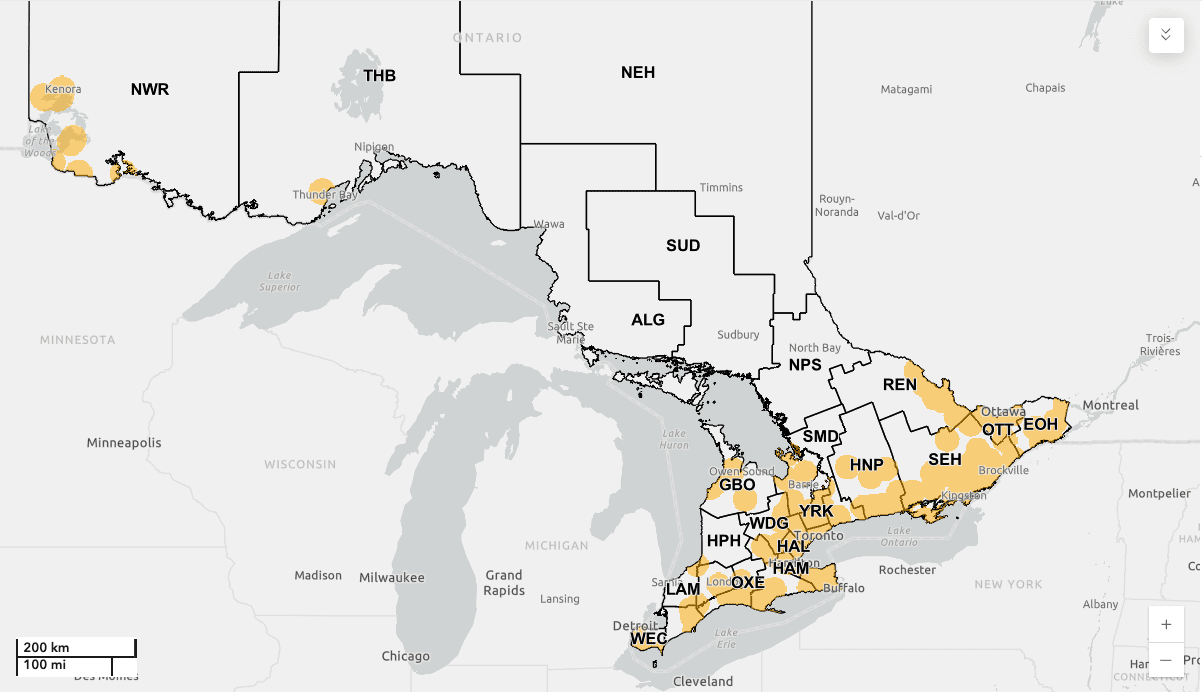
So while my family in the Niagara region has been dealing with ticks every spring and summer for years, this summer they’ve become a shared foe within the family chat. The latest map from Ontario Public Health shows populations of blacklegged ticks as far north as Thunder Bay and Kenora, throughout the Ottawa Valley and in Owen Sound, on Lake Huron.
I’ve heard a few people seek a silver lining on the coldest days of winter, saying that at least long stretches of deep freeze will decrease the risks of ticks. They were — officially — wrong.
While we did have some bitingly cold temperatures in Ontario this winter, Kulkarni says, “We also had lots of snow, which is a great insulator.” Ticks burrow down in the leaf litter, blanketed by snow, and stay cozy even when we’re complaining about a stretch of -30 C days.
So depending on where you live, it might be time to draw the blinds, strip down … and turn on the lights.
How to check for ticks (or stop them before they get to you)
How exactly should you check yourself and loved ones for ticks? Cover as much surface area as possible, according to Health Canada. Check your chest and back, and in your hair — and don’t forget the crevices: armpits (and kneepits!), belly button and between your toes. Ticks also have a habit of going for the groin so … yeah.
To prevent ticks from reaching your skin in the first place, Health Canada suggests closed-toed shoes, long sleeves and pants — with your shirt tucked into your pants and your pants tucked into your socks. Ten minutes in a hot dryer will take care of any that hitched a ride on your clothes.
Sticking to cleared paths and trails helps, too.
And there may be ways to keep ticks away, more broadly, from outdoor spaces humans like to frequent. Kulkarni’s team at University of Ottawa recently released a study that found spreading wood chips at the edges of gardens and trails where ticks are prevalent effectively reduced the number that came looking for blood.
How did they test that? Dragging a piece of flannel material across the ground before and after wood chips were laid to see how many latched on. It really tells you something about how easily ticks attach, doesn’t it?
Why do so many Canadian musicians have Lyme disease? Blame the deer
As ticks take on new territory, their presence isn’t just creepy and unwelcome, it’s actually a public health risk: ask Justin Bieber, Avril Lavigne or Shania Twain.
They’ve all publicly announced their diagnoses of the disease that, if left untreated, can cause neurological and cardiac issues, as well as arthritis.
Some areas of the country and our province, particularly around Lake Ontario and Lake Erie, have a higher concentration of ticks carrying bacteria that cause Lyme disease. Though it’s the most common disease people get from ticks, Lyme isn’t the only one they carry. And while not all types of ticks can pass on Lyme disease, more than half of the ticks found in Ontario are of the blacklegged variety that can, according to Public Health Ontario’s recent report.
How does it happen, you ask? After mating on the backs of deer, the female blacklegged tick drops to the ground and, in the spring, lays eggs among the leaf litter, Kulkarni explains. Those eggs hatch into larvae, which quickly go looking for their first drink of blood. Down among the leaves, that’s usually from a small animal like a mouse or bird. If that animal is infected with the bacteria that causes Lyme, the tick takes on the infection. When it’s larger and more active, in the nymphal stage, the tick will find a bigger animal or human to feed on, and pass that infection on to them. As they mature into adults, white-tailed deer, dogs and humans are all on the menu.
“There’s several points in the cycle where humans are susceptible, but that tends to be during the nymphal peak of activity, in kind of the late spring and summer months, and then the adults, which are in the early spring and in the fall,” Kulkarni says.
For a general rule of where there might be a risk of ticks, consider if it’s a place populated by white-tailed deer, Kulkarni says.
Lyme disease diagnosis is up, so pull your pants down. But what do you do if you find one?
Across Canada, diagnoses of Lyme disease have skyrocketed from 104 cases in 2009 to a preliminary count of 7,105 cases in 2025, though the increase is likely due to awareness and increased testing, as well as a rise in cases. So far this year in Ontario, 236 cases have been identified by Public Health Ontario.
If you can remove the tick within a day, you can spare yourself a lot of trouble — it typically takes more than 24 hours after it attaches for the tick to pass on the bacteria that causes Lyme disease. Properly removing it means pulling the tick out straight, rather than twisting or bending, which risks leaving some of its mouthparts (unfortunately, that is the proper anatomical term) embedded.
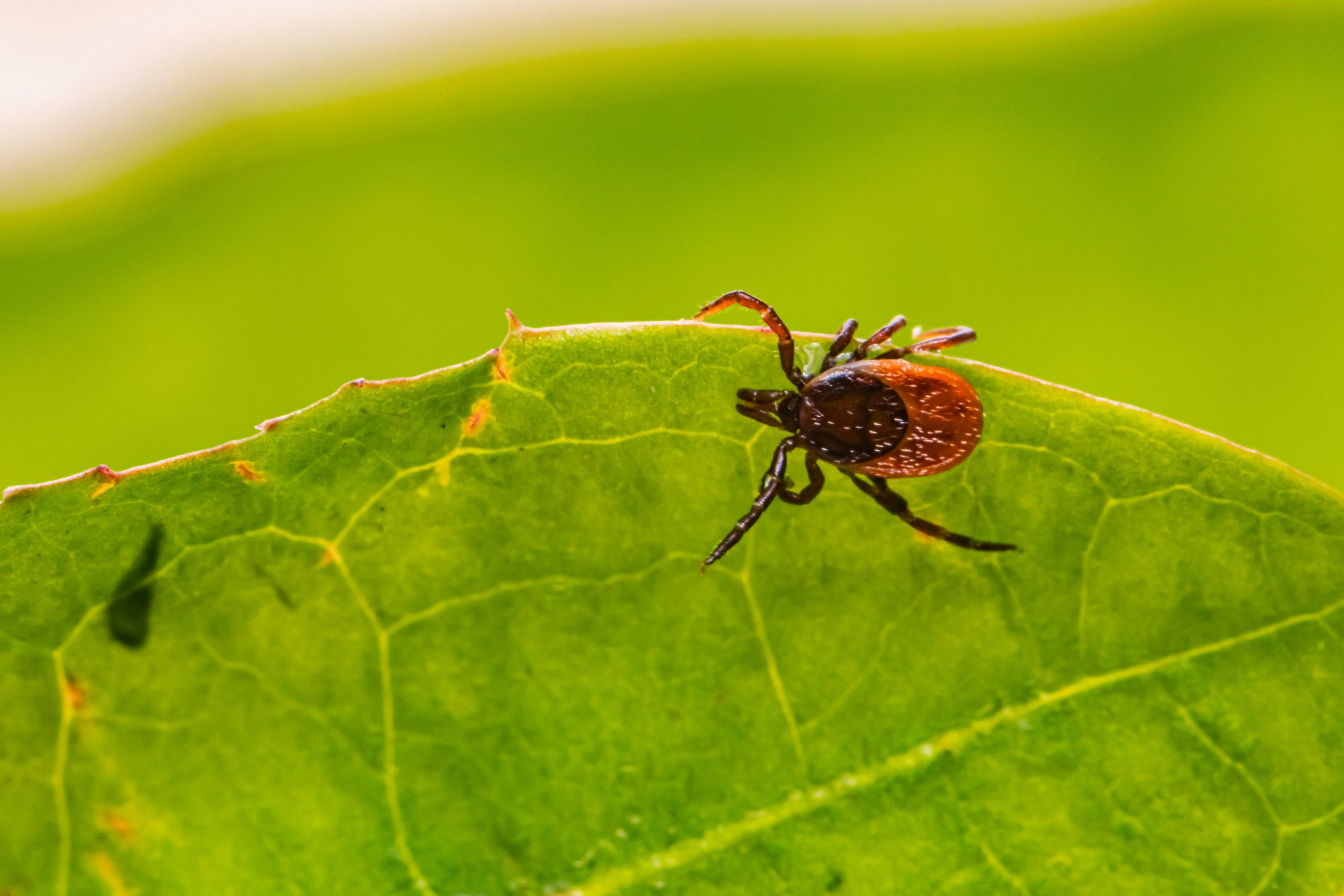
Next up? Keep the tick. Put that little sucker into a sealed container and take it to your doctor for testing (they’ll be thrilled). And if you can’t wait to know whether you’re holding a little blacklegged tick hostage — the kind that carries Lyme — you can also submit photos of the little offender online, where it will be quickly identified by kind-hearted insect enthusiasts.
If you have been bit, or even suspect you may have been, look out for Lyme symptoms like a rash or fever, headache or joint pain, Kulkarni says. These can occur even without the most famous Lyme symptom: a bullseye rash around the bite. “Not everybody actually gets the rash, so it’s important to look out for those other symptoms,” she says. If you have a summer fever, she adds, “that’s a good indication you should get checked out for Lyme, especially if you’ve been in an area where ticks are present.”
It’s not about being afraid to go outside, she adds, but equipping yourself with knowledge: both of the level of risk for ticks and Lyme wherever you’re going (there’s a map for that!) and how to properly remove one of it digs in (there are kits for that — and tweezers work, too!).
Kulkarni likens the threat of ticks to another unpleasant natural hazard. “There are settings where we know there’s poison ivy. People don’t go off the trail because they might brush along it, and if they do get a rash, they know what to do, right?,” she says. “Tick bites can be a bit more serious than that, but it’s the same concept: that being out in nature isn’t without risks, but by knowing what the risks are and how to manage them, you can really reduce any potential impacts.”
So check yourself, your kids, your pets — and your friends, if they need it. And if you’ve got a special someone at home, why not make 2026 the summer of sexy tick checks?