






 12 min. read
Summary
When the heat becomes unbearable inside Nicole Darlaston’s Brampton apartment, her son would get into the shower — and stay there.
“He would spend hours in there just trying to be comfortable,” Darlaston says.
Darlaston has lived for about 14 years in a high-rise near Bramalea City Centre. The building has central cooling, she says, but it is often turned on late in the season and does little to make her apartment comfortable. On a good day, her unit might stay around 23 C. More often, she says, it reaches 28 C. She has recorded temperatures as high as 35 C, with high humidity.
Darlaston and her son both have asthma. She says the heat has aggravated their symptoms and reshaped their summers. She saves vacation time so she can leave the apartment during the hottest weeks, sometimes staying with family in northern Ontario.
Cooking adds more heat. Cleaning becomes exhausting. Even opening a window offers little relief when the building has been warming for days, she says.
“It just continues to build and build and build.”
Her son is 20 now, but Darlaston says he has been dealing with the heat since he was about six. And it didn’t always end when he left home.
“He had that problem in his schools as well,” she says.

For children who live and learn in hot buildings, there can be little opportunity for their bodies to cool down. Researchers have warned the effects can accumulate when children spend a hot day at school only to return to a home without adequate cooling.
As students return to classrooms across Peel Region this month and summer weather remains longer than it has in previous years, that raises a basic question: where does a child go when neither school nor home offers reliable relief from the heat?
Inside Peel’s overheated classrooms
Jill Promoli has seen that problem as both a parent and a Peel District School Board trustee representing wards six and 11 in Mississauga, which includes Mavis-Erindale, Creditview, Erindale, Meadowvale Village and Streetsville.
On hot days, she says, some of the classrooms she visits become unbearable, including her son’s.
One of those visits was to her son’s elementary-school portable classroom in Mississauga, which became too hot to use in May 2025, she says. Students from two portables were moved into the school library, the same room meant to serve as a cooling station for everyone else.
“When you are using the cooling station for two classrooms, then that cooling station becomes unavailable for the rest of the school. But if the rest of the school is also hot, then there’s no more space available to give kids that break either,” Promoli says.
Then came two days of extreme heat in June 2025. Promoli says she brought a thermometer with her as she visited the schools she represents, asking principals to show her their hottest classrooms.
“Some of the classrooms were getting up to 39 C, and that’s not manageable,” she says.
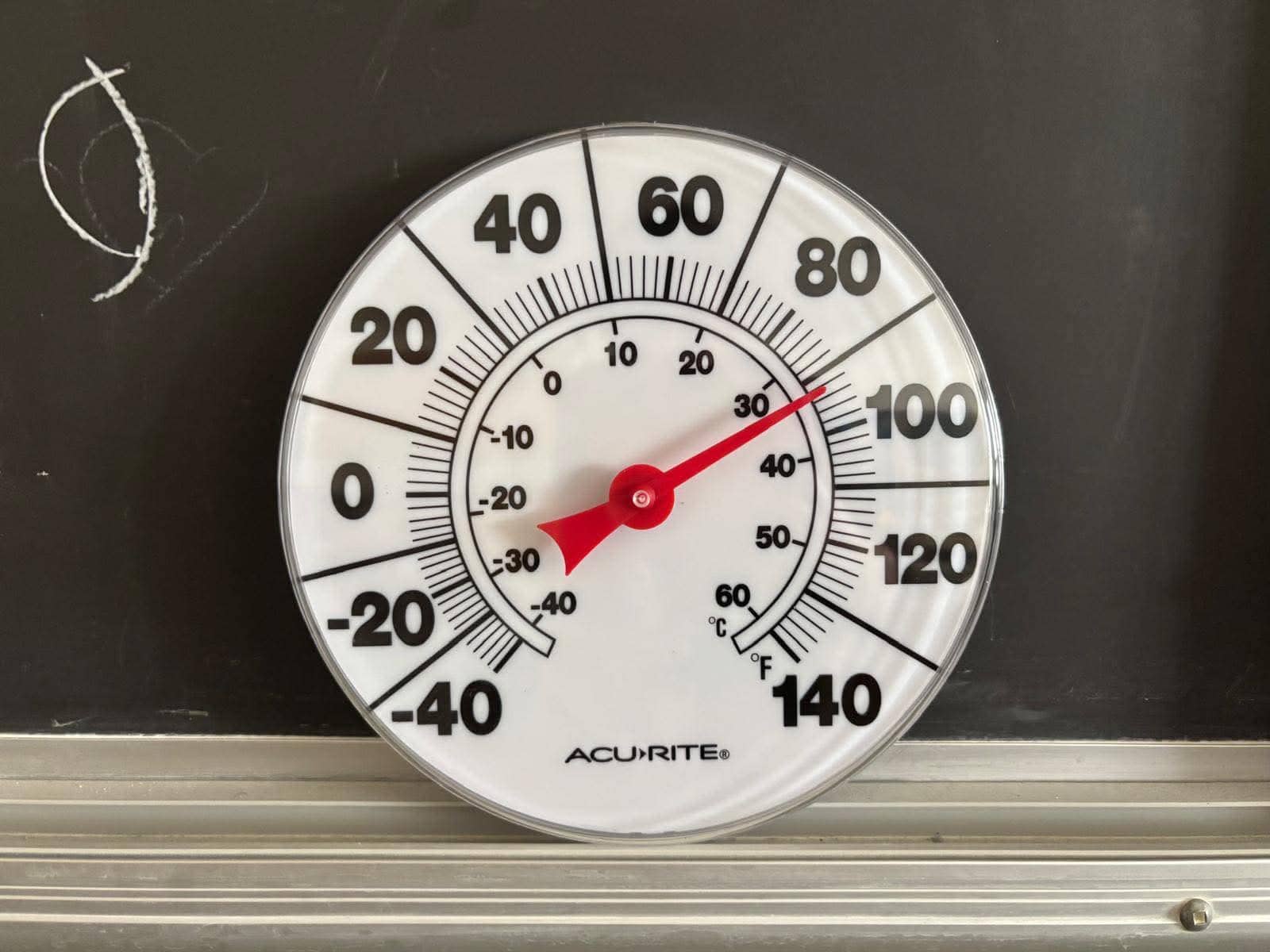
Her son still had to attend school for his Grade 5 graduation practice. When Promoli arrived to pick him up, the blinds were closed and the lights were off.
“It was still so hot in the cooling centre that the kids were literally lying on the floor with the lights off, and they were just doing nothing because it was so hot in there. This is not functional,” she says.
Promoli says she heard from other families whose children left school early, stayed home the following day or sought medical care after feeling sick during the heat.
Peel District School Board did not provide the requested breakdown of how many schools or classrooms are air conditioned, or respond to detailed questions from The Narwhal. On its website, the board says every school has a designated cooling station, while some older buildings do not have air conditioning at all. Hot weather measures can include opening windows and doors, using fans, closing blinds, turning off lights and other heat-producing equipment, rotating students and staff through cooler areas and reducing strenuous or outdoor activities.
Heat isn’t only uncomfortable
Children are among the people Peel Public Health considers particularly vulnerable to extreme heat.
Alexa Caturay, the region’s medical officer of health, says young bodies do not regulate temperature in the same way adult bodies do. Chronic respiratory and heart conditions can make it harder to cope with heat as well.
As exposure increases, what begins as discomfort and thirst can progress to dehydration, faintness, a rapid heartbeat and difficulty breathing. In more serious cases, people can become dehydrated enough to require hospital treatment, Caturay says.
Health Canada similarly warns that children with asthma, heart or kidney problems, disabilities, developmental disorders or who take certain medications can face greater risks in extreme heat. Warning signs can include dizziness, nausea, headache, changes in behaviour, rapid breathing or heartbeat and extreme thirst. Confusion, unconsciousness or a high body temperature accompanied by a loss of sweating can signal heat stroke — a medical emergency.
The effect can show up in the classroom in many ways.
A recent U.S. report from a network of school-climate researchers convened with the American Psychological Association found younger children acclimatize to heat more slowly and may be less able to recognize when they need water or should reduce physical activity. It also points to evidence connecting poorly cooled and ventilated schools with increased absences and poorer learning outcomes.
Studies cited in that report found classroom temperatures around 20 C to 23 C were associated with better cognitive performance, while hotter conditions reduced the speed and accuracy of cognitive tasks. Other research found students performed worse on standardized tests on hotter days, with air conditioning reducing some of that effect.
The Peel school board’s plan for heat is tied up in Ontario’s Education Ministry
What Promoli saw that June in her son’s classroom eventually pushed her to take the issue to the Peel District School Board.

Her original motion asked the board to work with Peel Public Health to establish an upper temperature threshold for extreme heat days. It pointed to the board’s existing response to extreme cold and noted that many classrooms in the Peel region lacked air conditioning or other ways to substantially lower the temperature.
Promoli says the goal was to know when a hot classroom crossed from uncomfortable to unsafe.
“If we are hitting a point where it’s no longer safe to be operating, we have to know what those numbers look like and what we should be doing to properly meet the needs of our staff and students,” she says.
In August 2025, they passed an amended motion directing the Peel District School Board to work with Peel Public Health on a plan for extreme heat days, but without the proposed temperature threshold. In general, the health unit’s role is to issue heat alerts to municipalities, hospitals, schools and school boards, which can then activate their own response plans.
Promoli says she has not been aware of updates on that work since the Ministry of Education took control of the board earlier this year. The Ontario ministries of Education and Health did not respond to requests for comment.
Trying to stay cool at home
Tanya Burkart hears the same dilemma repeatedly from renters.

Burkart, chair of the Brampton Centre chapter of the Association of Community Organizations for Reform Now (ACORN), says members report hot apartments, older inefficient buildings and landlords charging additional fees for air conditioning.
She pointed, in particular, to older rental buildings and says tenants can face another problem when upgrades finally happen: landlords may seek above-guideline rent increases to recover the cost of major work.
The association’s “beat the heat” campaign is pushing municipalities to require landlords to keep rental buildings at no more than 26 C and to help low-income tenants obtain air conditioners. It has also called for cooling rooms inside buildings, free transit to cooling locations on extreme heat days and more transparent tracking of heat-related illness.
At the provincial level, the group wants greater support for electricity costs and broader access to air conditioning.
Without those supports, Burkart says some renters are “being forced to either choose between air conditioning or paying the rent or putting food on the table.”
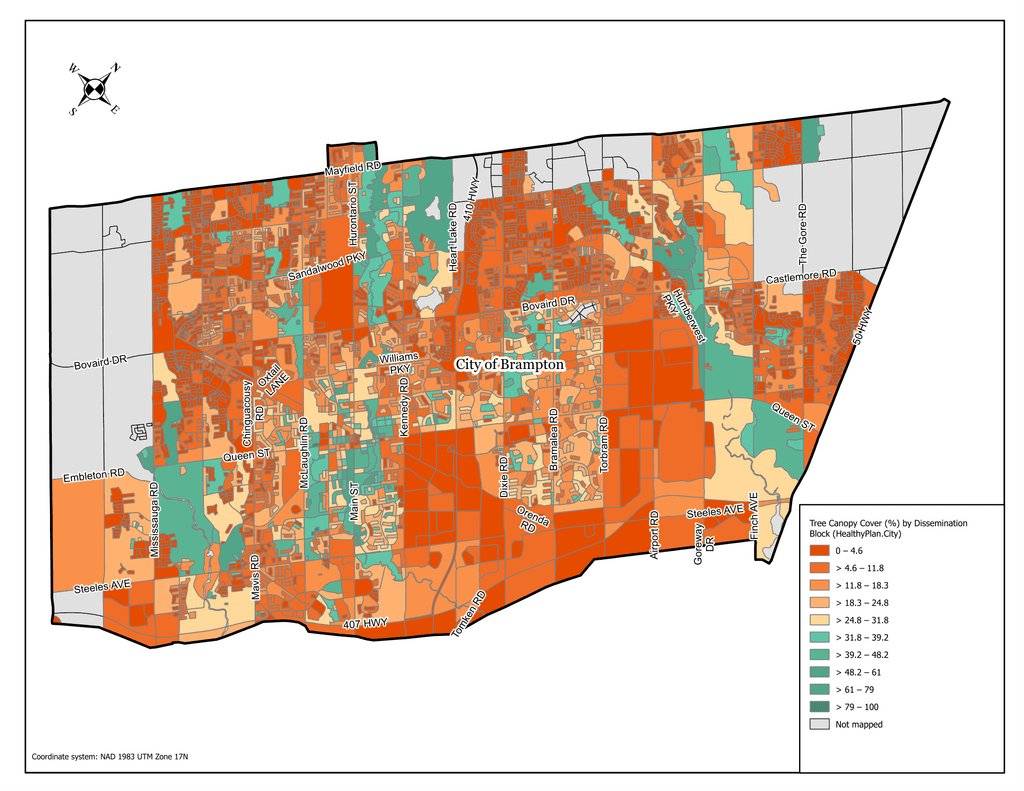
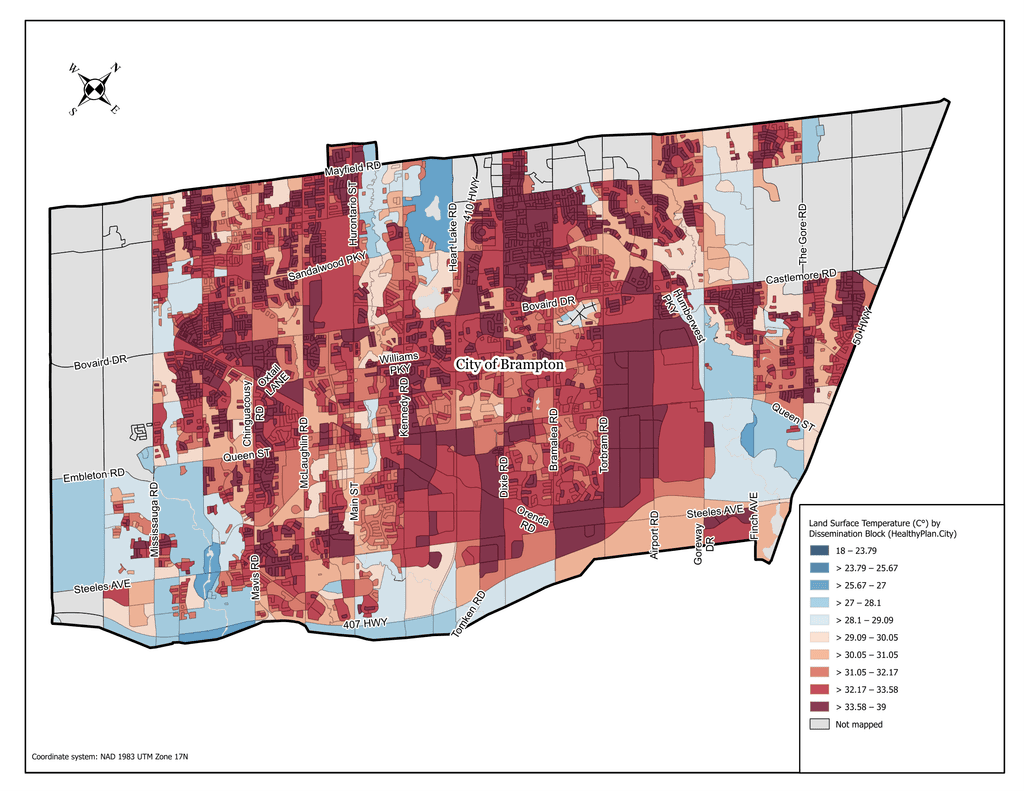
Yet, heat is already considered one of the top five climate-related health hazards affecting Peel residents, according to the region. The Public Health Agency of Canada says the largely urban region is particularly vulnerable to the urban heat island effect, with that risk shaped by factors such as income, housing, age and outdoor work.
Income can shape how much choice a family has when temperatures climb.
The U.S. schools report specifically notes lower-income families face extra hurdles including lacking air conditioning, nearby cooling spaces or flexible schedules that allow children to avoid the hottest parts of the day.
In Peel, the help available depends partly on where someone lives and what kind of housing they are in.
Unlike Toronto, which provides portable air conditioners to low-income pregnant residents and families with infants, the Peel Region does not provide direct financial assistance to buy air conditioners.
Peel Housing Corporation, which has 75 sites, operates cooling rooms during extreme heat in buildings that do not have central air conditioning and provides tenants with heat-safety information.
The City of Brampton says it has no current plan to provide free air conditioners to low-income residents either. During heat events, it directs residents toward public facilities such as its nine library branches and 27 community centres as well as its pools and splash pads.
In Mississauga, about 57 per cent of low-income children live in areas where additional investment in green space would improve equity, according to Canadian Urban Environmental Health Research Consortium data cited in a 2025 Canadian Environmental Law Association report.
At the July 29 council meeting, Mississauga council approved a motion brought forward by Ward 7 Coun. Dipika Damerla, which asked staff to look at more ways to protect residents of purpose-built rental apartments during hot weather.
Mississauga council has directed staff to review its current adequate temperature by-law and consider stronger cooling protections for renters, including access to cooling devices, building retrofits and other heat-mitigation measures. Staff are also looking at requiring apartment buildings to provide accessible common cooling spaces kept at or below 26 C, with recommendations expected before next summer.
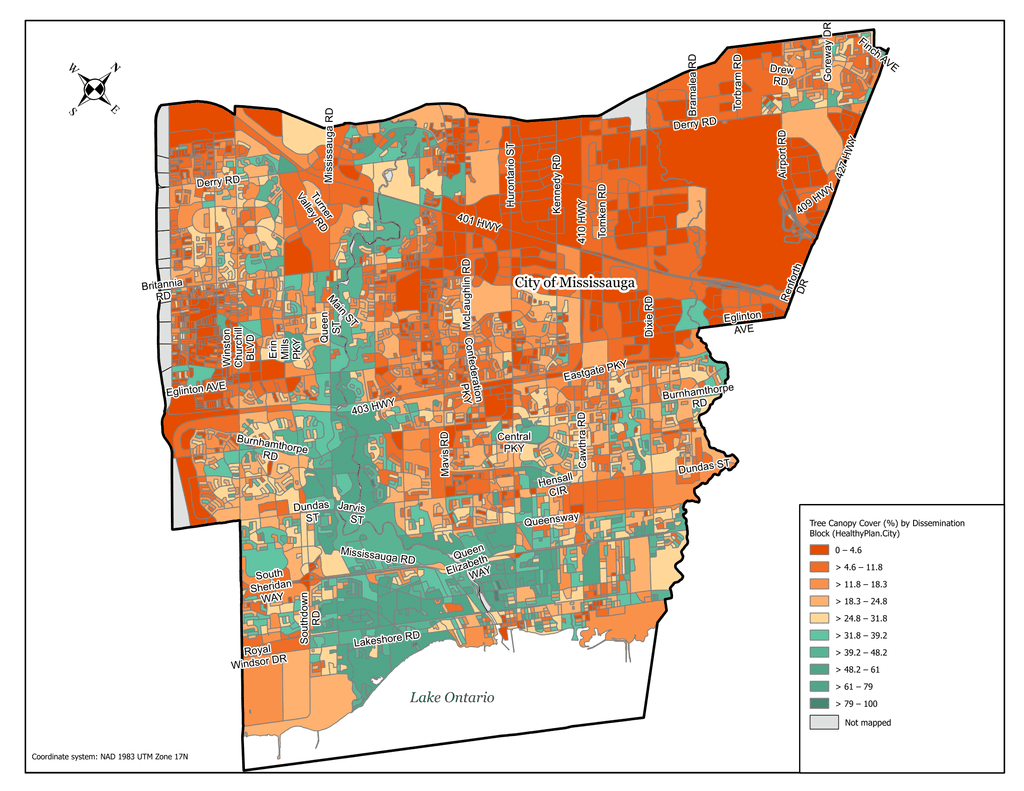
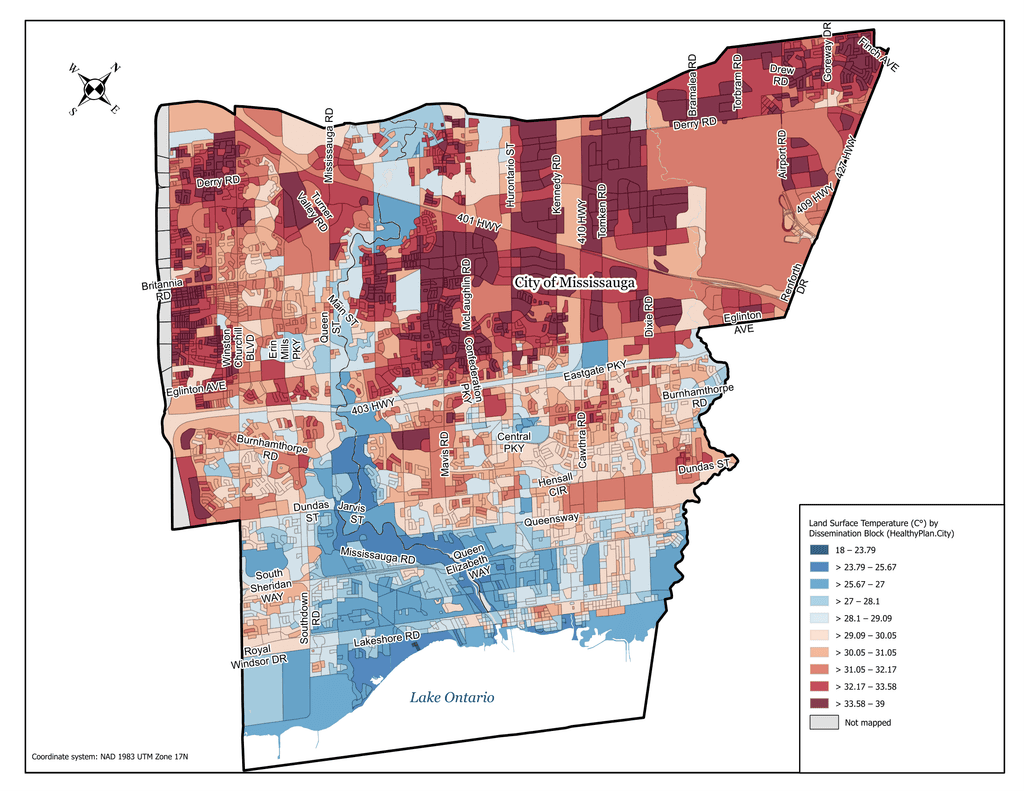
Currently, the city’s by-law requires landlords who provide air conditioning to maintain indoor temperatures at or below 26 C but buildings without air conditioning are not subject to a maximum indoor temperature requirement.
“We have to recognize that climate patterns have changed in southern GTA at least, and our summers are hotter than ever before. Traditionally, we’ve built our homes and our condos and our apartment buildings around cold weather, because hot weather was rare and that was reasonable,” Damerla says.
“But I think it’s changed now, and so it’s time for us to look at what are the other cooling options that we can provide for in purpose-built rentals.”
When does hot become too hot in schools?
Ontario does not currently set a maximum indoor temperature for schools.
The Education Act does require principals to pay attention to the “health and comfort” of students, including school temperature and ventilation. But without a maximum standard or equipment capable of cooling a building, advocates argue there is little clarity about when a classroom has become too hot to safely use.
The shortage of broader cooling infrastructure is not small. Ontario’s school repair backlog was estimated at $16.8 billion in 2022, even as the province committed billions toward school construction, repair and renewal.
The Canadian Environmental Law Association has recommended a 26 C maximum temperature for schools, more mechanical cooling and changes to the building code so new schools and major retrofits are designed with hotter conditions in mind. The group says 26 C should be treated as a starting point and revisited as more research emerges, specifically about children’s heat exposure.
There may be relief on the horizon. Ontario’s NDP put forward Bill 123, the Fighting Extreme Heat in Schools Act, which received first reading on May 26, 2026, and was ordered for second reading. If passed, it would require school buildings and school buses to remain at or below 26 C while students and workers are present.
School boards would also have to create annual heat-mitigation strategies and extreme-temperature emergency plans. The education minister would review those plans for gaps and inequities at least once every three years. Ontario’s legislature will return in late October and will likely continue debating this bill.
Rajpreet Sahota is a community and policy reporting fellow. Her position is funded in part by the Canadian Race Relations Foundation. As per The Narwhal’s editorial independence policy, the foundation has no editorial input.