


 5 min. read
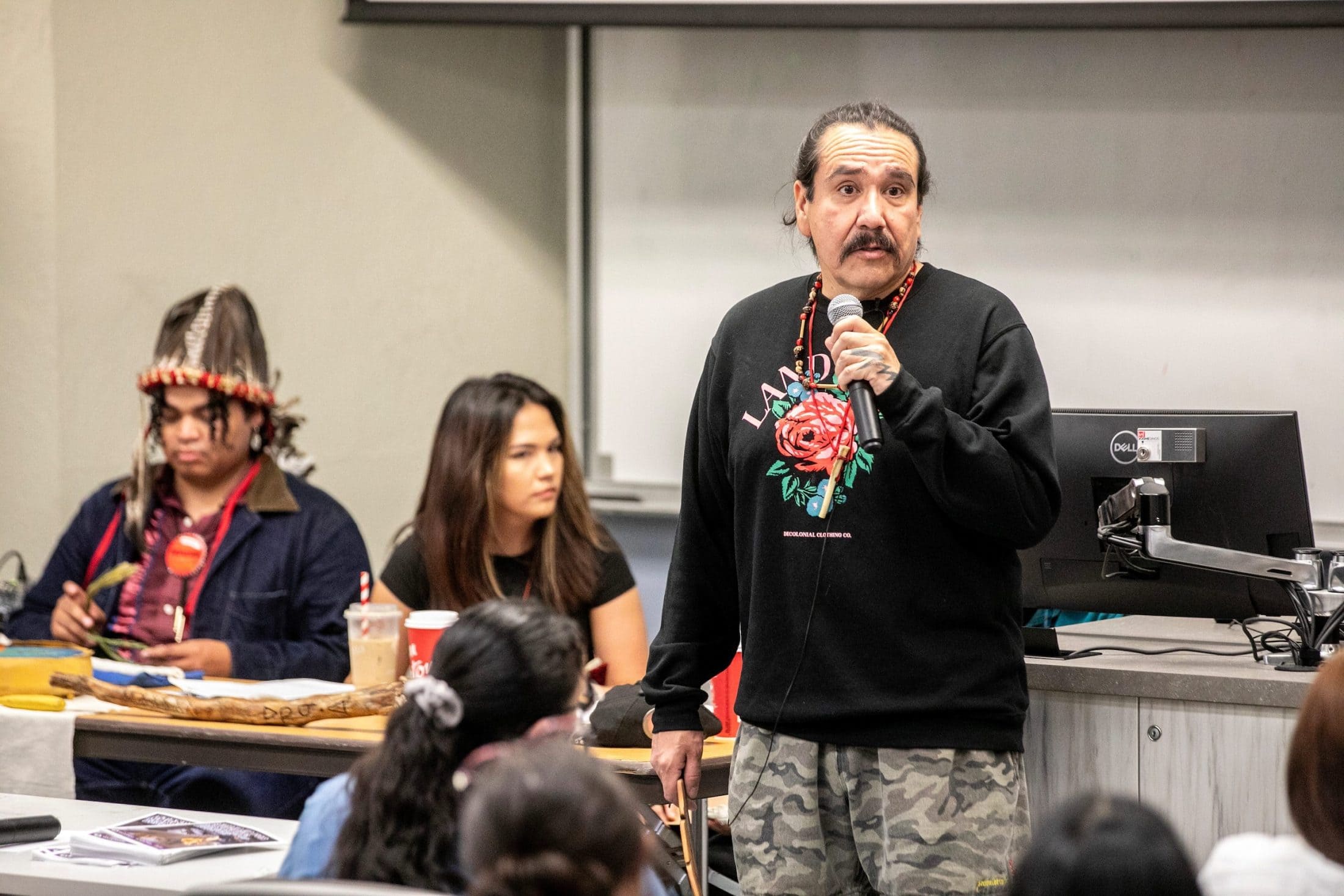
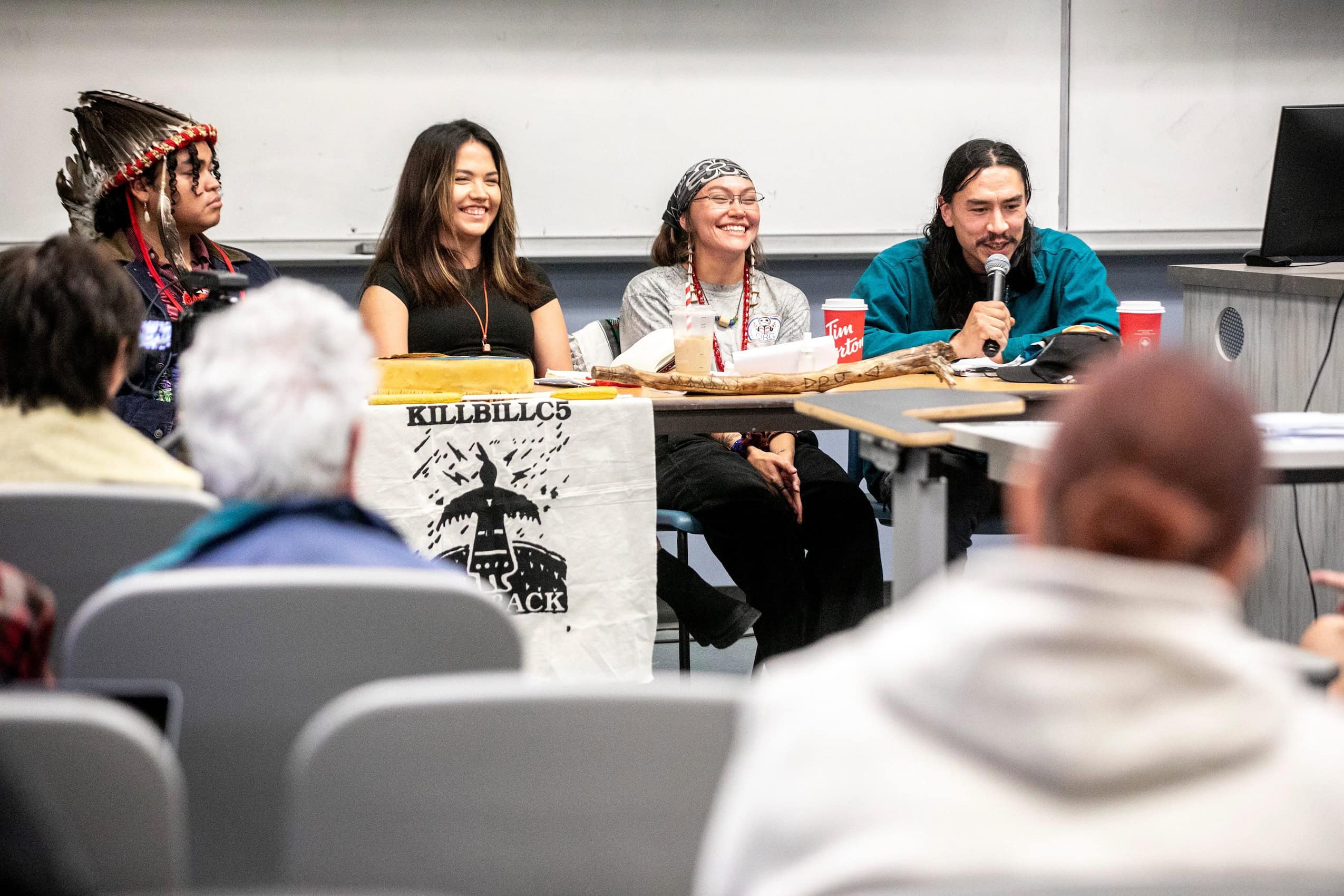
A group of students, residents and environmental advocates gathered in Winnipeg on Friday afternoon to discuss Indigenous sovereignty and the future of northern Manitoba.
The event at the University of Manitoba was the final stop on the Arctic Crossroads tour, an Indigenous-led public engagement campaign highlighting the potential impacts of proposed major infrastructure projects on northern First Nation communities. The tour also stopped in Nisichawayasihk Cree Nation, Churchill and Brandon, Man., this week.
Summary
Event host Clayton Thomas-Müller — a local climate activist, author and member of Pukatawagan Cree Nation — said concerns raised by attendees run counter to Premier Wab Kinew’s assertion earlier this year that there is no Indigenous opposition to a proposed liquefied natural gas (LNG) pipeline to Churchill.
“There is a ton of Indigenous concern, as well as fear to speak out,” Thomas-Müller, the Arctic and Hudson Bay campaigner for Climate Reality Project Canada, said in an interview ahead of Friday’s event.
“A lot of folks in Churchill are arm’s length away from government-funded agencies — the ecotourism industry is very much wrapped up in both federal and provincial interests and funding streams — and so folks don’t want to speak out.”
The federal and provincial governments want to introduce year-round shipping and build an offshore LNG terminal at the Port of Churchill, which is owned by the Arctic Gateway Group. The proposal to expand the deep-water Arctic port includes a new energy corridor, an all-weather road, critical mineral storage and an upgraded rail line through northern Manitoba.
In an emailed statement, Environment and Climate Change Minister Mike Moyes described the Port of Churchill expansion as a historic opportunity and said his government is committed to working closely with Indigenous and northern communities on the project. He pointed to provincial and federal efforts to establish a national marine conservation area in western Hudson Bay as a way to balance economic growth and environmental stewardship.
Feasibility studies related to the port expansion have flagged concerns about the impact of increased shipping on Hudson Bay’s sensitive marine ecosystem and resident species, including polar bears and beluga whales.
During the tour, participants expressed worries about the cumulative effects of climate change and increased industrial activity on access to traditional hunting, trapping and fishing grounds, Thomas-Müller said.
“There’s no Safeway up where I come from in Pukatawagan, and a lot of our people still depend on country foods,” he adds. Pukatawagan is one of 29 First Nations with an ownership stake in the Arctic Gateway Group.
Attendees also raised concerns about the social implications of the proposed northern resource projects.
“A community member in Churchill said one of his biggest fears is Churchill becoming one giant ‘man camp,’ and what that would mean for the safety of not only his sisters but future women and girls in the community,” panelist Kakeká ThunderSky, an Anishinaabkwe member of Poplar River First Nation, said.
The National Inquiry into Missing and Murdered Indigenous Women and Girls found high rates of violence against Indigenous women connected to work camps, or “man camps,” associated with the resource extraction industry.
In Winnipeg, ThunderSky also emphasized the importance of thinking about the multigenerational impacts of energy and mining projects. “Whatever we do to the land, we do to the children,” she said.
Questions and comments from those in attendance ranged from tactics for engaging future generations in resource-development resistance to Treaty Rights to self-care.
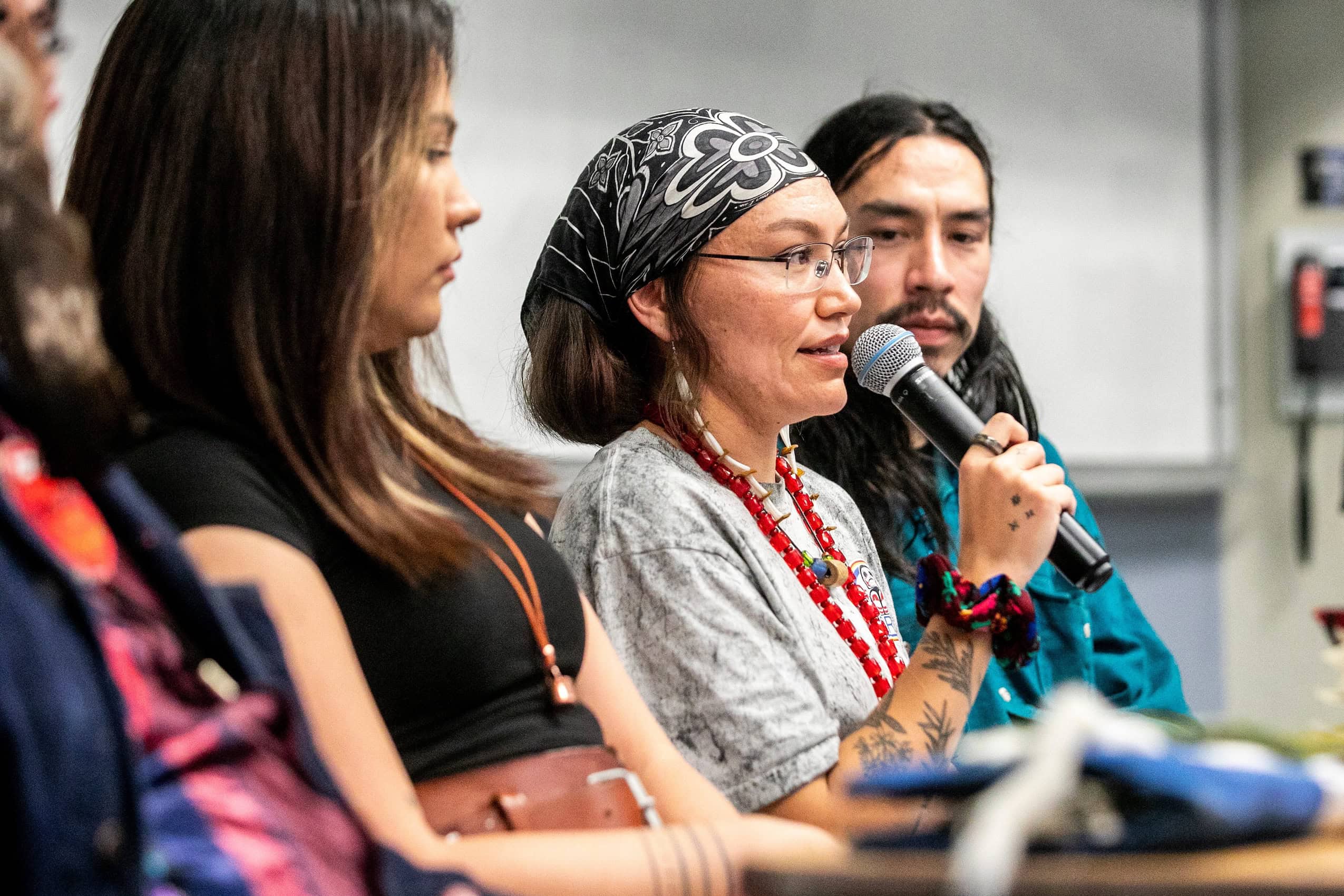
ThunderSky, the northern and rural coordinator for Climate Action Team Manitoba, was joined on the panel by Indigenous youth organizers and land defenders from Ontario and British Columbia who have advocated for better government consultation and opposed industrial development projects in their home communities.
“It’s important to bring people who have had these experiences and have gone through similar things in their territories, to share and talk about what the reality is and what it actually is like and to push back on these narratives,” ThunderSky said. “We’re not alone in this.”
Denzel Sutherland-Wilson hails from the Gitxsan village of Anspayaxw in northwestern B.C. and is a member of the Fireweed Clan of the house of Git’luuhl’um’hetxw’it. He was arrested by the RCMP’s Community-Industry Response Group — a unit tasked with policing resource extraction protests — in 2021 while resisting the construction of the Coastal GasLink pipeline on unceded Wet’suwet’en territory.
Sutherland-Wilson sought to share what he learned during that experience with Manitoba audiences. He believes Indigenous solidarity will be integral as Prime Minister Mark Carney seeks to fast-track major national projects through Bill C-39, the Build Canada Strong Act. First Nation leaders across the country have opposed the bill, which would centralize Indigenous consultations and limit the timeline for environmental assessments.
“We need to find creative and new ways to resist on our own terms,” Sutherland-Wilson said. “We have to have our own people’s safety and security [in mind]. We have to develop strong protocols and … collectives that are accountable to one another, rooted in our own culture, in our ceremonies and our ways of life.”
Thomas-Müller hopes this week’s speaking tour inspires political engagement locally and nationally. Climate Action Team Manitoba has launched a petition opposing the LNG pipeline to Churchill.
“We need to go back to the drawing board and create economic plans that don’t create sacrifice zones across the country … disproportionately in Indigenous communities, in our lands that we depend on,” he said.
Eva Wasney is a reporter covering environmental issues in Manitoba. Her position is part of a partnership between The Narwhal and the Winnipeg Free Press.