
 10 min. read




This story is part of a series called Shockwave: Rising energy demand and the future of the Great Lakes. The Great Lakes region is in the midst of a seismic energy shakeup, from skyrocketing data centre demand and a nuclear energy boom, to expanding renewables and electrification. In 2026, the Great Lakes News Collaborative will explore how shifting supply and demand affect the region and its waters.
Summary
- Reusing waste heat could help the Great Lakes reduce climate change emissions from heating and cooling buildings.
- The region has a huge opportunity for energy innovation that could reduce costs to consumers and limit damage to land and water.
- The biggest barriers are political and organizational.
We’re trying out staff-written summaries. Did you find this useful?
The energy system in the Great Lakes region, as in most parts of North America, is wasteful. Stupendously wasteful.
Consider these data points. Two-thirds of the energy generated by the 2,100-megawatt Pickering Nuclear Generating Station, east of Toronto, comes in the form of heat, not electricity. The excess heat is transferred to cooling water that is dumped into Lake Ontario.
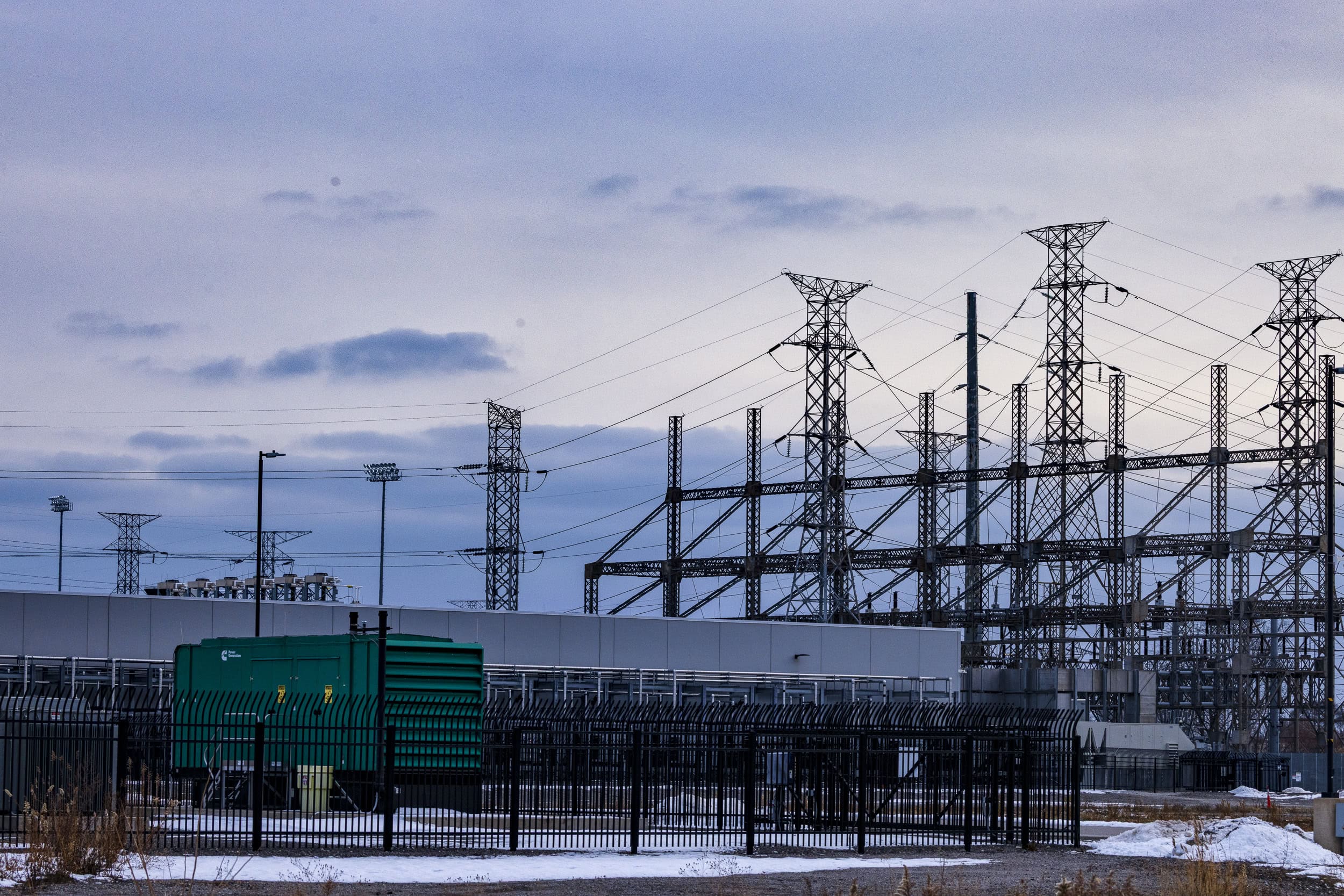
For data centres, a booming, voracious energy user, nearly all the electricity that enters a facility to power servers turns into heat. Ejecting that heat so that the servers continue to support Zoom calls and ChatGPT queries can consume gobs of energy and water.
Even underground business and household waste holds wasted energy. Sewage flows in pipes at an average temperature of roughly 15 C, a thermal energy source waiting for an enterprising soul to tap into and extract the heat.
A movement is underway to do just that — mine the region’s power plants, data centres and sewers for heat and use it to develop cleaner, cheaper energy that helps reduce or remove carbon emissions from heating and cooling. The same practices cut the expense of adding new electric generating capacity.
Such a transformation is certainly possible and has been embraced in northern Europe. But it will not be easy here. Though the physics and equipment for waste-heat recovery are tested and proven, other barriers — financial, organizational and political — are more formidable hurdles for a region and a country in which energy efficiency is less valued than energy expansion.
“It’s not a technology issue,” said Luke Gaalswyk, president and chief executive officer of Ever-Green Energy, a district energy company based in St. Paul, Minnesota, that is eyeing wastewater as a heat source. “The engineering of this is well understood. It’s an awareness issue, it’s a funding issue, it’s a priority issue. We, the United States, don’t have the same policy frameworks or funding mechanisms that Europeans do as it relates to these sorts of projects and incentivizing waste-heat recovery.”
Gaalswyk and others see tantalizing opportunities for waste heat in aiding the region’s electric transition. The benefits include cheaper energy, less exposure to fossil fuel price fluctuations, fewer carbon emissions, less land disruption to build new generating and transmission capacity, and less thermal pollution into waterways. But getting there, they say, requires foundational shifts in understanding, attitudes and public policy.
A new energy scenario
Electricity demand in the Great Lakes is growing, in some states for the first time in decades. If the projected buildout occurs, data centres will gobble electricity while the climate-friendly push to electrify everything boosts demand for electrons.
Thermal networks, such as district heating systems that circulate hot water or steam to multiple buildings, garner less attention. Comparable to a home radiator at scale, they have been part of the urban energy landscape for more than a century, predating the invention of the gas-powered automobile. College campuses have them, as do hospital complexes. Cities like St. Paul, Chicago, Rochester and Lansing use district heating or cooling in their downtown cores. Toronto has a district cooling system that uses water drawn from deep in Lake Ontario to cool 80 buildings.
Waste heat — or, heat that is currently regarded as waste — could be a new reservoir of energy for district heating systems.
To find one source, building owners need only look beneath their basements. Promoting sewer thermal energy is a passion project for Paul Kohl, the board chair of the Sewer Thermal Energy Network, a trade association founded in 2023 to advocate for an unsung energy source. “We thought, let’s get people talking about it,” he said.
Kohl’s primary pitch is that sewer thermal energy goes hand-in-hand with reducing greenhouse gas emissions from buildings. Say an office complex wants to stop burning fuel oil for heat and instead wants to install a heat pump. An air-source heat pump, which extracts heat from ambient air, is a common option. But it can be problematic in an era of constrained electricity supply.
“What we’re finding is there are certain entities that are really excited about electrifying their building stock but they’re running into electrical demand problems,” Kohl said. “They can’t get enough electricity from the supplier.”
Enter sewer thermal. The building owner could instead tap into the sewer line running beneath the property and circulate the wastewater through a water-based heat pump that extracts the heat. The sewage is always contained and is not a health risk for those in the building. The water-based heat pump still uses electricity, but because of water’s superior capacity to transfer heat, its electricity demand is about half that of an air-based unit. In short, the well-understood thermal dynamics of water translate into substantial energy savings.

The sewer is a heat resource that constantly renews itself — people take showers, do laundry and wash dishes every day, using hot water in the process. The heat that went into the water could be used again. So why aren’t there more such systems? Kohl cited two major obstacles. One is knee-jerk revulsion, typically from the general public. “The ‘ick’ factor,” he said.
The second is an unwillingness from utilities to allow other organizations to access their pipe infrastructure when it is not the utility’s mandate to do so. The utilities, he said, are more concerned with regulatory compliance and ensuring the integrity of their pipes.
Asked if his organization operates like a matchmaker, uniting parties that otherwise might not have met, Kohl turned the analogy around. A matchmaker works only if there are willing participants, he said. “A lot of water and wastewater utilities are the consummate bachelors. So they’re like, ‘If I never have to do this, great.’”
What brings utilities into the market? Progressive leadership, Kohl said.
Leaders heating the way
That leadership is on display in pockets around the Great Lakes region, from both the public and private sectors.
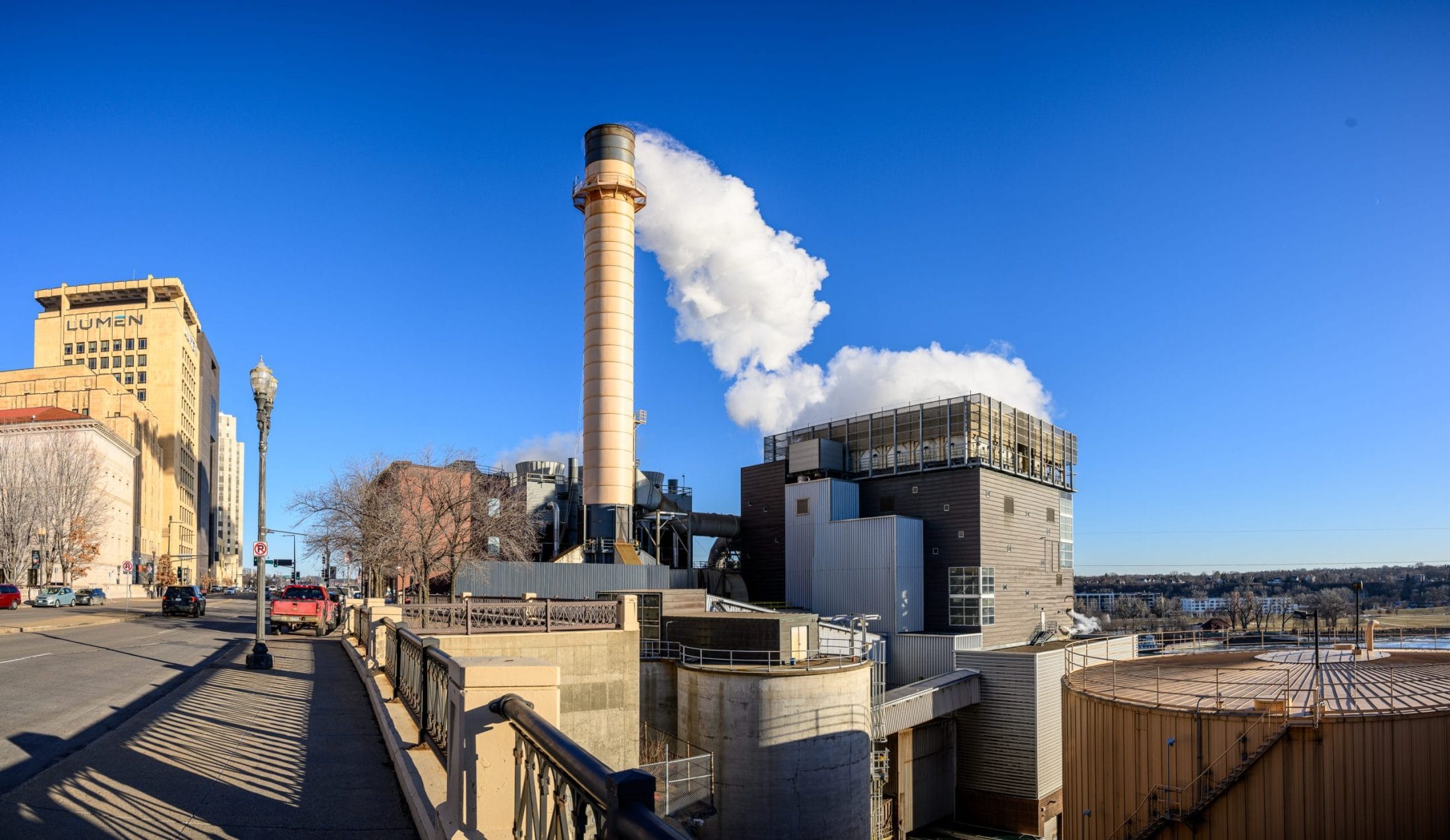
In St. Paul, Ever-Green Energy has drawn up plans to tap the heat in the roughly 650,000,000 litres of wastewater that flows daily out of the Metropolitan Council’s treatment plant and into the Mississippi River. The US $150 million project would use the wastewater heat to replace the natural gas that currently fuels half of the district energy system, which is the largest hot water system in the United States.
Project proponents, including the City of St. Paul and Ever-Green, applied for the U.S. Environmental Protection Agency’s climate pollution reduction grant in 2024 but they were not selected. (Ever-Green’s wastewater heat project in Duluth also was not selected for the grant.) Though Clean Heat St. Paul, as the project is known, is currently unfunded, leaders continue to advocate for it.
“It presents an enormous opportunity for our community, for our state, to build a project that would generate global recognition around what’s possible with linking up wastewater and district heating,” Gaalswyk said.
Across the border, Toronto Western Hospital, part of the city’s leading hospital system, partnered with Noventa, an energy company, to install the world’s largest raw sewage thermal system. Completed in 2025, the project provides about 90 per cent of the hospital’s heating and cooling.
Also in Toronto, Enwave, a district energy company, operates the Deep Lake Water Cooling system that uses cold water drawn from Lake Ontario to cool 115 buildings before the water is sent to taps as drinking water. Enwave, which operates systems across eastern Canada, is now adapting that system to utilize waste heat from the cooling operations so that heating and cooling work in tandem. At the same time, the company is considering sewer heat recovery from a wastewater treatment plant in Mississauga, Ont.
“The idea is you’re trying to capture waste heat in whatever form you can find it in,” said Carson Gemmill, vice president for solutions and innovations at Enwave.
More trade associations are embracing that logic. The Boltzmann Institute, a group of engineers focused on obstacles to electrification, persuaded the Ontario Society of Professional Engineers to start a campaign in September 2025 to advocate for thermal energy systems. Since the province is considering new nuclear power plants and building small modular reactors, including four 300-megawatt units at Darlington Nuclear Generating Station, the institute would like to see their designs incorporate waste heat reuse.

“In Ontario, the heat rejected from nuclear power plants is quite a bit greater than the heat required for heating with natural gas in the whole province,” said Michael Wiggin, a Boltzmann Institute director who is also leading the Ontario Society of Professional Engineers’ thermal energy advocacy. “So there’s an enormous possibility to use the heat from these power plants to heat cities.”
Waste heat can flip conventional narratives on their head. Data centres today are maligned for their energy needs. Yet what if their waste heat was put to beneficial use?
That’s the objective in Lansing, Michigan, where Deep Green, a London-based company, has proposed a 24-megawatt, US $120-million data centre project that would transfer its waste heat into a district heating system run by the Lansing Board of Water and Light, a water and power provider. The Lansing City Council is set to vote on the project on April 6.
“Previously, we didn’t consider heat as an asset because we didn’t need to,” Mark Lee, CEO of Deep Green, wrote in a January 2026 blog post. “There was an abundance of power, cheap energy and less awareness of environmental impact. That’s changing: electricity prices are high, grids are congested and there’s pressure to meet net-zero and [environmental, social and governance] targets.”
Barriers to entry
Even with these first steps, energy experts agree that North America, as a whole, is playing catch-up. Scandinavian countries have been reusing waste heat for decades. Stockholm has a 3,000-kilometre district energy pipe network that serves 800,000 residents and more than 90 per cent of the city’s buildings. More than 30 data centres feed waste heat into the system. In Oslo, sewer thermal provided nearly 7 per cent of the energy for the city’s district heating system in 2025. As a whole, the system provides 30 per cent of Oslo’s heating and hot water demand. China, a more recent entrant in the market, has developed world-champion projects in Qingdao and elsewhere.
Committed cities and governments can reach scale quickly. “The Chinese had nothing hardly in the early ’90s, now they’ve got perhaps the most district heating installed capacity in the world,” Wiggin said.
Rapid growth in waste-heat recovery will not happen in the Great Lakes region on its own. Without policy signals, electric companies, data centre operators and water utilities don’t have the incentives to innovate and co-operate, Kohl said. And for waste heat, collaboration is the key to success.
What are those policy signals? Gaalswyk focused on carrots: tax breaks for companies that install heat recovery systems and a quicker permitting process for those that incorporate efficiency measures.
Wiggin, by contrast, outlined the sticks. A tax on waste heat. State or provincial efficiency standards.
Kohl mentioned both measures. Massachusetts, he noted, set aside state funds for waste-heat recovery feasibility studies. New York, meanwhile, passed a law in 2022 to develop a regulatory framework for thermal energy networks. The law requires the largest investor-owned utilities to submit pilot projects for development.
Those in the district energy industry see waste heat as a massive opportunity, one that begins in the early stages of project development, whether it’s a data centre or a nuclear power station. Incorporating waste-heat recovery into a project’s initial design is easier than retrofitting the facility in the future.
“Our thesis is data centre projects that are bringing additional layers of community benefit to communities will find more success in building trust and gaining the necessary social licence to operate,” Gaalswyk said. “A really important aspect of that is heat recovery, free heat. Again, it’s not a technology issue. We have the heat pumps, we have the industry that can design heat offtake. It’s a matter of figuring out how to get a diverse stakeholder group to work together to realize these benefits in tandem.”