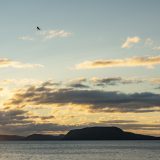
The Alderville Black Oak Savanna is a 81-hectare protected area, actively managed to support a rare grassland ecosystem.
Photo: Gabrielle McMann / The Narwhal
Inside a 25-year effort to restore a rare Ontario ecosystem
Savannas and grasslands once thrived in southern parts of the province. An Alderville First Nation conservation project shows what recovery can look like
Looking down across the black oak savanna, I could barely see Gabrielle McMann. Metre-high grasses swayed in the wind, punctuated by black oak trees. I watched as the tiny dot of her paused along trails to document this rare place — and what it took to bring it back from the brink.
Gabrielle reported and photographed the story of Alderville First Nation’s Black Oak Savanna, located roughly between Toronto and Kingston, Ont., for a feature article published this week. Editors typically don’t accompany reporters in the field, but thanks to limited public transit options — I rarely say that with genuine gratitude — I got to chauffeur and tag along.
This story is a special one. The Narwhal has been eyeing the conservation project since 2022, and we’ve been talking to Gabrielle about bringing it to life for more than a year.
Before colonization, grasslands thrived in southern Ontario, managed and regenerated by cultural burning. Colonization extinguished that practice, Rick Beaver, one of the founders of the Alderville Black Oak Savanna, told Gabrielle.
The Indian Act was passed, “and we no longer had control over our territories,” Beaver said. “With that comes the suppression and extinction, in some cases, of traditional practices like burning, language and other customs that are appropriate to harmonize with living on the land, loving the land and acknowledging the connection between all things.”
In 1999, Beaver and others from Alderville First Nation set about bringing back the savanna, and the foods, medicines and species it supports. Now, a team works year-round to manage the Black Oak Savanna and conservation projects that stem from it, including a native plant nursery and a turtle protection program.
After a day in the autumn sun, following trails through tallgrass that duck into the bordering woodlands, Gabrielle had the tall task of paring down hundreds of photographs to a few handfuls. Luckily, she had the help of renowned photojournalist and National Geographic Explorer Pat Kane, who came on as the photo editor. As Pat explained early on, the photos should tell their own story.
We’re now four days into The Narwhal and Amber Bracken’s trial against the RCMP. Amber was arrested while on assignment for The Narwhal in 2021, as she documented tensions over the construction of the Coastal GasLink pipeline through Wet’suwet’en territory. Through this lawsuit, we hope to clear a path for all journalists in Canada to do their work without risk of police interference.
Today, Amber was on the stand, being cross-examined by lawyers for the Attorney General of Canada, representing the RCMP. Testimony from Carol Linnitt, The Narwhal’s editor-in-chief, will follow. The Vancouver courtroom is open to the public. Details on attending, plus other information and updates, can be found on this page.
As always, we are indebted to the generosity of thousands of readers who have chipped in to our legal fund. You made this fight for press freedom possible; a million thank yous, from all of us at The Narwhal.
An inside look
Speaking of Amber Bracken — this week her astonishing photography transported us to a place few get a chance to see: the inside of a glacier.
Amber, along with reporter Sara King-Abadi, documented the story of two photographers and their effort to capture the vanishing beauty of the Columbia Icefield in the Rocky Mountains as it melts away in the warming climate.
Canada ‘cash strapped’ in fight against wildlife diseases, national network says By Ainslie Cruickshank
A national wildlife disease network warns persistent underfunding is leaving Canada vulnerable as threats like avian flu and chronic wasting disease continue to spread.