



 9 min. read
In March 2025, the government of Nova Scotia repealed a ban on uranium exploration and mining that had stood for more than four decades. That May, it opened a request for proposals on three sites known to hold uranium deposits, with a deadline in June. Nobody applied.
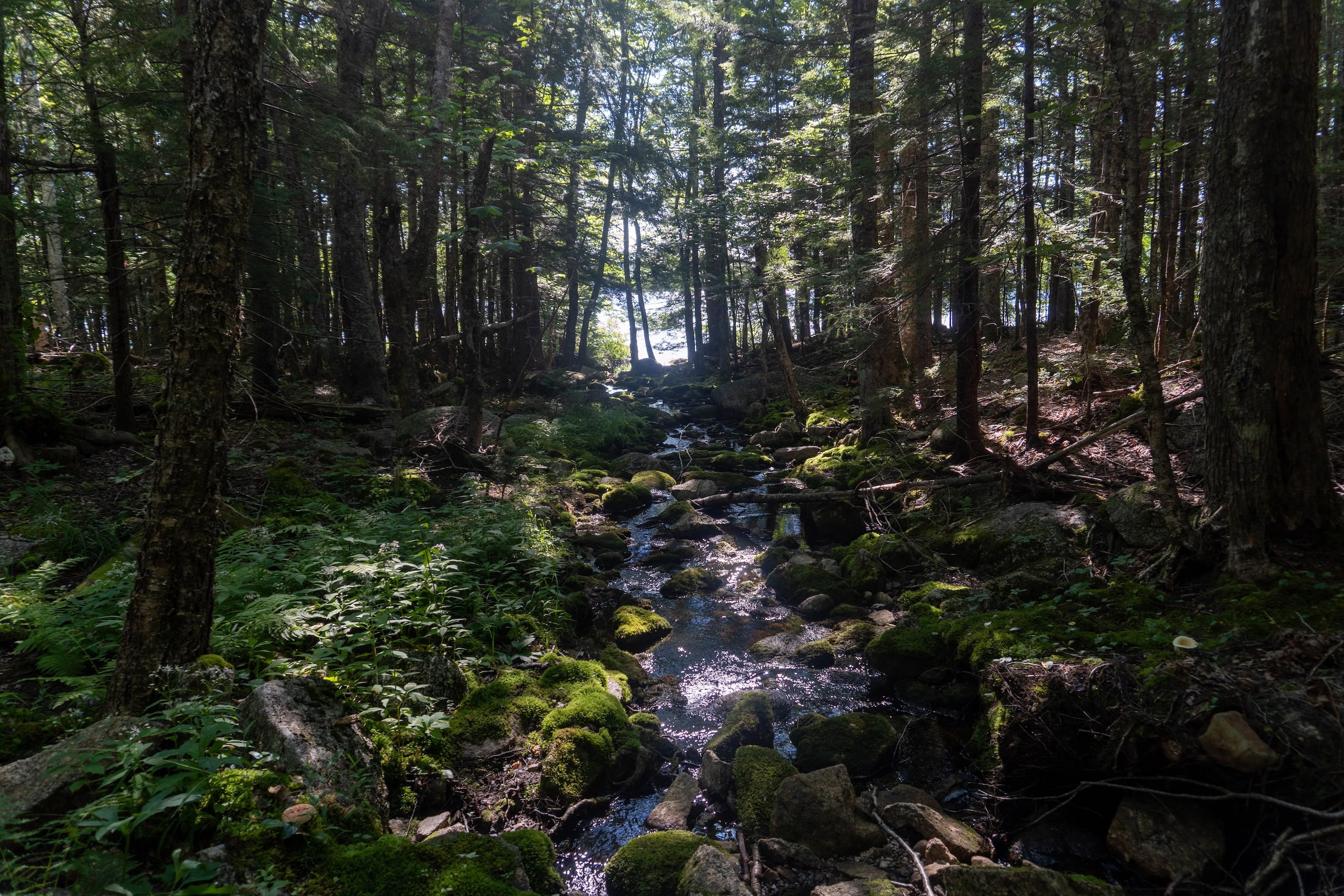
But for the people who live near Millet Brook in Hants County, N.S., one of the sites chosen for exploration, the matter is far from settled.
“The lack of applications has provided some immediate relief, but it has not provided the sense of finality that many residents are hoping for,” municipal Councillor Kayla Leary-Pinch said. “For them, the concern was never solely about whether a company would come forward through this particular call for proposals. It is about the fact that the moratorium was removed in the first place and that the door remains open for uranium exploration in Nova Scotia.”
Summary
As councillor for Vaughan and Upper Falmouth, N.S., her district in the municipality of West Hants covers the Millet Brook site.
“Until there is greater certainty about the long-term status of Millet Brook, I think that concern will remain,” she said.
Those concerns include potential environmental impacts, especially to groundwater, as well as private property rights and what exploration now could mean for mining in the future, Leary-Pinch said.
“There is frustration with how quickly the issue moved forward and a feeling that communities were reacting to decisions rather than being meaningfully involved before those decisions were made,” Leary-Pinch said.
Like many other governments in Canada, Nova Scotia is passing policy meant to supercharge resource extraction. The uranium moratorium, which dates back to 1981, became a legislated ban in 2009. The province repealed the ban as part of Bill 6, An Act Respecting Agriculture, Energy and Natural Resources, an omnibus bill that also amended the Petroleum Resources Act to allow fracking.
It’s been more than a year since the ban ended and it’s still on community minds. On Sept. 8, 2026, two petitions were tabled at the provincial legislature with over 2,000 signatures asking for a “permanent legislative ban” on uranium exploration and extraction. These new signatures bring the grand total to 10,652 signatures collected since October 2025, NDP MLA Kendra Coombes said.
Despite half a century of scattershot uranium interest, Nova Scotia has never developed the industry. Now, the federal government, along with dozens of countries worldwide, is pushing for what’s often called a nuclear renaissance. Canada is among at least 38 countries that have pledged to work toward tripling global nuclear energy capacity by 2050.
Part of uranium’s appeal is energy density. According to the Nuclear Energy Institute, a single uranium fuel pellet produces as much energy as one ton of coal, 149 gallons of oil or 17,000 cubic feet of natural gas. But that energy comes with a long-term cost. Canada has long been trying to find a permanent home for decades’ worth of nuclear waste, with a proposed $26 billion underground repository in northwestern Ontario still years from approval.
NS premier says uranium mining is essential to economic growth and clean energy transition
When the request for proposals was live in June 2025, a unanimous council vote made West Hants one of four municipalities, along with Annapolis, Lunenburg and Pictou, to request a pause on exploration. Premier Tim Houston responded with a letter saying the government was committed to moving forward “on all natural resource projects so long as they can be done thoughtfully and safely.”
The world needs uranium for nuclear energy and cancer treatments, Houston’s letter said.
“Uranium hasn’t changed but mining has,” it said, echoing the Mining Association of Nova Scotia, an industry group representing mining and quarrying companies. The group’s website says uranium mining today “is very different” from when the ban was put in place: specifically, it says a shift toward solution mining, also known as in-situ leaching, “produces basically no tailings or waste rock.”
Uranium is essential to Nova Scotia’s economic growth, the premier said, adding that a blanket ban without discussion is lazy public policy.
“The sad reality is that when you look at the [gross domestic product] per capita across all 60 American states and Canadian provinces, Nova Scotia ranks last,” Houston said. “The worst performing economy in North America.”

But so far, uranium mining has not been an economic driver in the province. The June deadline came and went with no bids to pursue exploration.
In an email to The Narwhal, Lynette MacLeod, communications director for the Department of Natural Resources, said the repeal of the ban didn’t approve any uranium mining or exploration projects.
“It removed a legislative prohibition and allows the province to better understand the occurrence of uranium using modern science and regulatory safeguards,” MacLeod said.
MacLeod said the province is not exploring for uranium but is doing research using existing data and core samples. She was clearer about the province’s broader mining ambitions.
The department’s focus is ensuring “Nova Scotia remains one of the most competitive jurisdictions for mineral exploration investment in Canada,” MacLeod said. The province is “expanding investment attraction efforts with our partners [and] supporting exploration through targeted funding programs.”
That means implementing the provincial mining strategy; completing NovaMINE, a government website detailing regulatory requirements and listing the status of mining proposals and projects; digitizing the province’s assets and data; and continuing regulatory modernization, she said.
Uranium has been on the federal critical minerals list since it was released in 2021, but it’s only been on Nova Scotia’s list since May 14, 2025, the same day Natural Resources Minister Tory Rushton announced a request for proposals for exploration sites at Millet Brook, East Dalhousie and Louisville.
“We’ve lifted blanket bans and we’re targeting minerals that are in great demand for the clean energy transition in Canada and around the world,” Rushton said in a press release. “We’re also focusing on minerals that will help us grow our economy and create good-paying jobs for Nova Scotians.”
The economic promises of uranium have never been enough to convince Nova Scotians it’s worth the cost, Karen McKendry at Halifax’s Ecology Action Centre said. Exploration by companies such as Shell and Esso in the late 1970s prompted a public inquiry that held 44 meetings across the province. The majority of submissions opposed uranium mining, and the government imposed a moratorium in 1981. In 2009, the NDP government led by Darrell Dexter turned that moratorium into a permanent legislative ban.
“We’ve learned that it very much is a radioactive zombie,” McKendry said. “It’s come back. This is the third time we’ve had a big fight around uranium.”
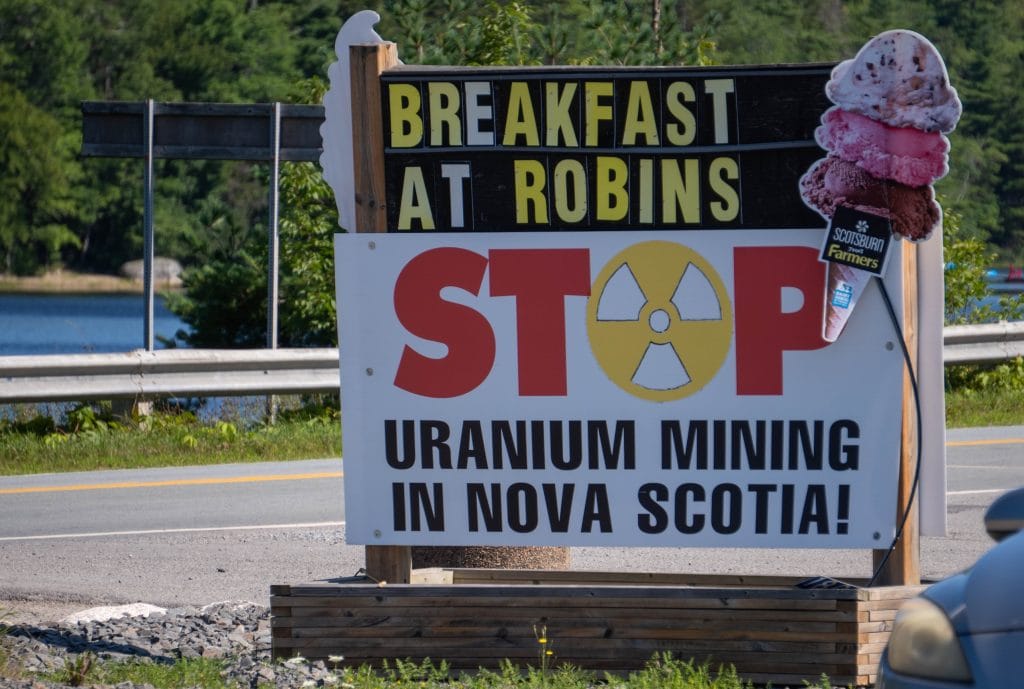
Even without a proposal on the table last year, people put up signs expressing opposition and began organizing in the areas most promising for exploration, she said. Locals heard there was a company considering a proposal, she said, and so they posted online to make their opposition clear.
“I think it scared them off,” McKendry said. “One thing that’s somewhat real in the mining industry is what they call social licence. Do you have community buy-in for the kinds of things you’re proposing?”
Experts say opposition and low quality make NS uranium unappealing to industry
Exploration is a high-risk economic activity, Erin Adlakha, a professor in the department of earth science at Saint Mary’s University, said.
“Fewer than one per cent of exploration targets ever become mines, so companies must rigorously vet historical data to ensure they are spending capital wisely,” Adlakha said. The province’s request for proposals was only open for four weeks, she said, requiring companies “to digest historical data from the late 1970s and 1980s, evaluate land access constraints, build a technical exploration strategy and allocate capital, on very short notice.”
Mining companies also want political stability, according to Brad Redden, the president of the Society for Safe and Responsible Resource Development, a non-profit dedicated to protecting communities and the environment in Nova Scotia’s resource sectors.
“These guys plan a long way into the future,” Redden said, adding it can sometimes take decades to bring a new mine online. “The Houston government won’t be forever, and when they’re gone, the Liberals or the NDP are going to be in power.”
While some parts of Canada have what companies consider stable mining policies, companies are very careful about volatile situations such as this one, he said.
Redden, who has worked as an exploration geologist and held public office as a municipal councillor and deputy warden in Annapolis County, said he is skeptical of the province’s interest in uranium.
“I don’t think they genuinely thought there was uranium here,” he said, adding that fracking and uranium were probably bundled together on the same bill as part of a bigger industrial drive. “It’s a political statement to say we’re open for business.”
He said he wouldn’t work on a uranium project in Nova Scotia, because he doesn’t think the deposits here are good enough. Uranium in the province tends to sit in thin, centimetre-wide fractures rather than deep deposits and grades are far lower than in Saskatchewan’s uranium heartland, Redden said.
He offers as an example Cigar Lake in the Prairie province, which at a grade of 15 per cent is “the world’s highest grade uranium mine” according to its owner. Redden said this translates to 150,000 parts of uranium per million parts of rock. By comparison, New Ross, N.S., “has some higher-grade areas …but they are still less than one per cent,” or 10,000 parts per million.
“Most of the grades reported in Nova Scotia are much lower, in the hundreds of parts per million,” Redden said. The Mining Association of Nova Scotia says the site at Millet Brook “is known to have 1.3 million pounds of 0.2 per cent uranium.”
The more important difference, Redden said, is that in Nova Scotia, uranium deposits tend to be closer to population centres than they are in Saskatchewan’s Athabasca Basin.
Last year, in his response to the West Hants council’s request for a pause, the premier noted provincial investments of more than $227 million in West Hants during his time in office.
“I have no doubt that your council has many more wants and needs,” the Houston letter said. “We would love to be able to meet every ask, but to do that, we need the resources to move forward.”
However things move forward at Millet Brook, Leary-Pinch said the people of West Hants deserve to be consulted about what the province intends to do in their backyard. “Many of the residents I have spoken with want to see the moratorium on uranium exploration and mining reinstated.” She said the absence of bids this time around was never the point. For the people of West Hants, she said it’s about closing the door on uranium for good.