





 7 min. read
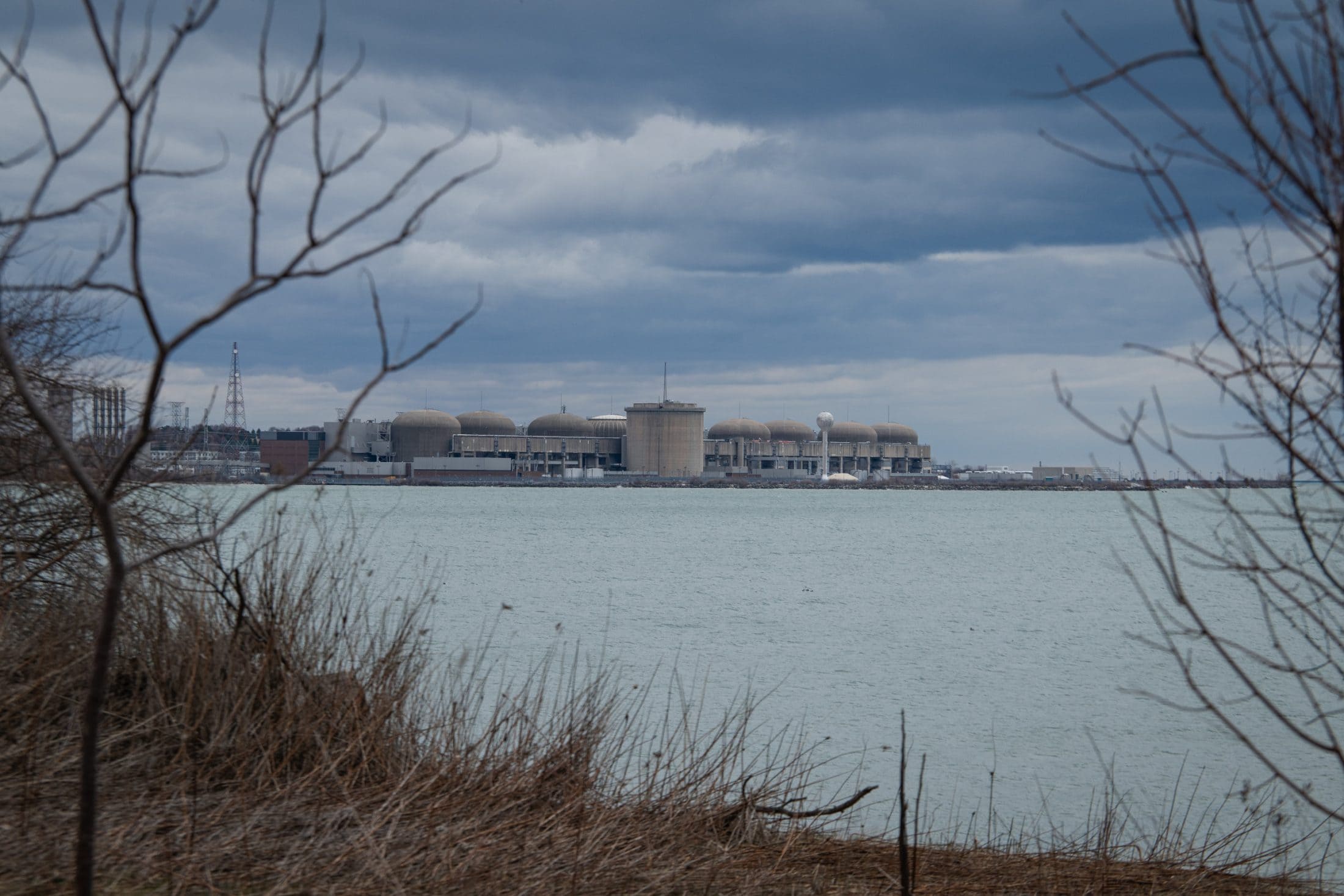
Pickering Nuclear Generating Station, which produces ten per cent of Ontario’s energy supply, will go fully offline next week.
Nicolle Butcher, president and CEO of Ontario Power Generation, told the gathering of investors, CEOs and politicians at Prime Minister Mark Carney’s Canada Investment Summit on Monday that the plant, which has operated for 50 years, “will come out of service next week and we’ll start its refurbishment.” Butcher said it would be off-grid for five to seven years.
The shutdown was expected this fall, with plans to begin repairs early next year, pending regulatory approval. The refurbishment is expected to last until the mid-2030s, enabling the plant to provide enough energy to power more than two million homes for an additional 30 years. Ontario has had two other nuclear facilities undergoing similar repairs: the update at Darlington just wrapped up, while the one at Bruce Power is ongoing.
Summary
In the interim, the province will maintain its electricity supply largely by relying on natural gas — a fossil fuel composed mainly of the greenhouse gas methane. This is not a surprise. In 2021, the Independent Electricity System Operator cited aging nuclear facilities coupled with increasing demand as driving an increase in gas generation in the province.
Not everyone thinks the Pickering project is worth it. “The real question that Ontarians should be asking is: does the refurbishment of this plant make any sense?” Keith Brooks, a program director with a focus on energy at the advocacy group Environmental Defence, told The Narwhal. “It’s going to be more expensive than the Darlington and Bruce refurbishments” — themselves years-long, multibillion-dollar projects already pushing rates higher — “and meanwhile, wind and solar and batteries have come of age and come so far down in cost that a cheap, clean energy future is within our grasp, if only we’d reach for it.”
The Narwhal sent questions to Ontario Power Generation, a Crown corporation of the province, and Energy Minister Stephen Lecce’s office. Neither provided answer by publication time. Lecce’s office has not answered emailed questions from The Narwhal or granted requests for interviews since he took on the role in June 2024.
Here’s what you need to know.
Why is Pickering Nuclear Generating Station shutting down?
Simply, because it’s very old.
Located just east of Toronto, Pickering Nuclear Generating Station has already been operating for an extended lifetime. It was originally slated to close in the early 2020s. Instead, since taking office, the Doug Ford government has extended its life. The plant became increasingly vital in closing a tightening energy supply gap fuelled by a growing population, and more recently data centres and electric vehicles.
In 2022, the Ford government announced it would push Pickering’s youngest four reactors — Units 5 through 8, known as Pickering B — to run through September 2026, while Units 1 through 4, known as Pickering A, were permanently shut down.
In October 2024, following public hearings that drew submissions from Ontario Power Generation, experts from the the federal Canadian Nuclear Safety Commission and 54 intervenors, the plant was granted a further extension until Dec. 31, 2026. Around the same time, the province instructed Ontario Power Generation to begin planning a full refurbishment of Pickering B, rather than let those four reactors retire.
How does the Pickering refurbishment fit into Ontario’s broader energy plans?
Pickering’s refurbishment isn’t happening in isolation — it’s one piece of a much larger provincial rebuild that touches all three of Ontario’s major nuclear sites. Darlington, outside Bowmanville, Ont., just wrapped up its own years-long refurbishment — “on time and under budget,” according to the government and Ontario Power Generation. At the investment conference panel, Butcher said such efficiency “is not usual for a nuclear project.”
Bruce Power, in Kincardine, Ont., is mid-refurbishment right now, with a timeline that overlaps Pickering.
Ontario is also pursuing new nuclear construction. The province is advancing Canada’s first small modular reactor project at Darlington, and is separately looking at building an entirely new nuclear site at Wesleyville. But the timelines on those projects fan out over the next two decades, with the first of four small modular reactors expected to come online in 2030.
Bruce Power has also proposed four large new reactors at its site, which would be Canada’s first large-scale nuclear build in more than 30 years. And the Ontario government has already agreed to share the costs of the impact assessment with the company.
How much will the Pickering refurbishment cost Ontario taxpayers?
The government has approved a $26.8-billion budget for the Pickering refurbishment — more than double the $12.8 billion spent rebuilding Darlington. The government and Ontario Power Generation attribute the higher cost to Pickering’s age, which demands a heavier rebuild, plus inflation.
For Ontarians, the cost will show up most directly on power bills. Last year, Ontario Power Generation filed an application with the provincial energy regulator, the Ontario Energy Board, to roughly double the cost of nuclear-generated electricity. If approved, the increase would add an average of $3.50 to monthly household bills each year for the next five years, according to the Crown corporation.
These rising costs come with a tradeoff: nuclear’s size and dependability versus its cost. Brooks is right about renewables — the International Energy Agency says solar, especially, is growing faster than any other energy source globally, becoming cheaper and more effective.
Yet while Ontario does have some renewable projects in the works, overall, the Independent Electricity System Operator projects renewables will make up roughly the same share of Ontario’s electricity mix 25 years from now as they do today. This reflects the province’s bet on nuclear, rather than renewables, as the backbone of its energy plan.
What will replace the power provided by the Pickering nuclear plant?
A combination of natural gas, battery storage and electricity imports.
There is no nuclear facility that can make up the shortfall from Pickering’s shutdown. Darlington already provides 20 per cent of Ontario’s energy supply and, according to figures from the Independent Electricity System Operator, it doesn’t have any additional capacity to make up for the loss of Pickering. Neither does Bruce during its refurbishment.
So the province’s electricity operator has been putting callouts for more natural gas generation to maintain a reliable power grid.
Battery storage is also playing a growing role. The Oneida Energy Storage Project, a 250-megawatt facility near Six Nations of the Grand River that opened in 2025, doubled Ontario’s battery storage capacity to 475 megawatts on its own, and the province has procured close to 1,800 megawatts more storage across other projects, expected online by 2028. Battery projects are able to store excess power when demand is low and deploy it when demand is high, helping to balance out the grid and its power sources.
The operator has projected the Pickering retirement and refurbishment outages will make Ontario a net importer of power for the first time since 2005 — with imports largely coming from the United States, a complicated prospect amid a tariff war. The system operator expects that balance of trade to return to exports once the nuclear refurbishments wrap up in the 2030s.
What happens next?
Canada’s nuclear regulator told The Narwhal it will be holding the second half of a public hearing starting Oct. 6 to decide whether to renew Pickering’s operating licences — for both the power plant and its waste storage facility — for another 10 years, and whether to approve the planned refurbishment. The hearing will be in Ajax, Ont., and last a week.
Once the hearing wraps up and the regulator has all the input it needs, it’ll issue a decision, typically within four months.