




 7 min. read
On Canada Day, parts of Ottawa were hit with a one-in-200-year storm. Nearly four months later, it’s still having an impact as the polls open for Ontario’s municipal elections.
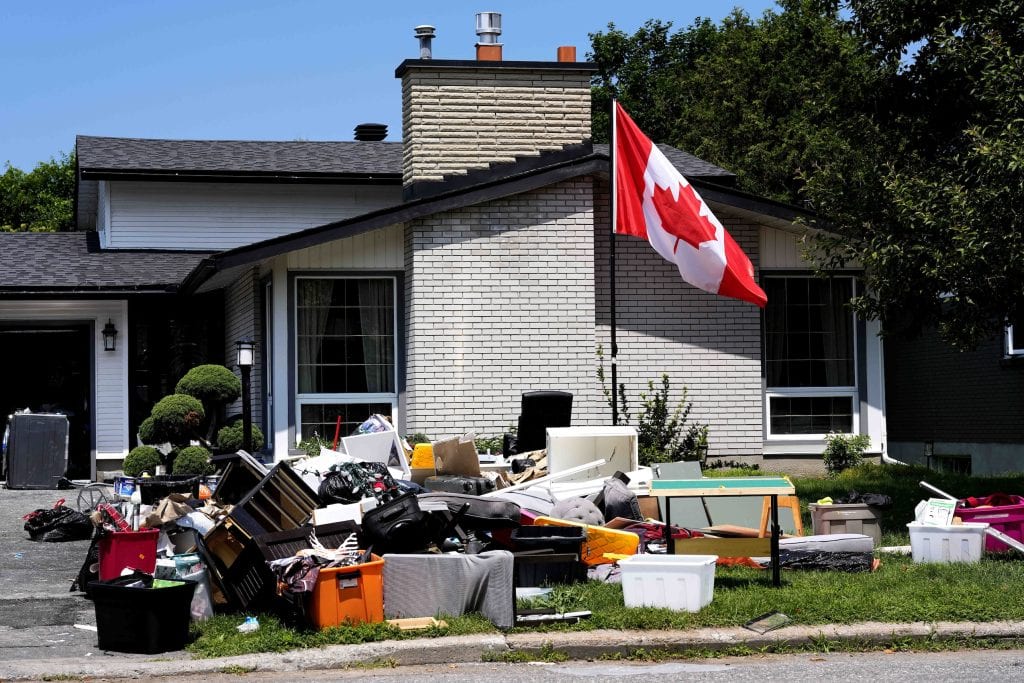
As much as 167 millimetres of rain, more than an average month’s worth, fell in a matter of hours on the southwest corner of the city on July 1. Combined with high winds, the storm closed roads and downed power lines. City staff admitted the sudden deluge overwhelmed neighbourhood drainage systems, and more than 7,000 people reported their basements had flooded. It was a big contributor to what became Ottawa’s wettest summer on record.
But it was all heavily concentrated in one part of the city — so localized, in fact, that Environment and Climate Change Canada didn’t even clock it in its system for monitoring climate-driven extreme weather, a spokesperson confirmed to The Narwhal. That system only looks at rainfall across the broader region, which didn’t record the same degree of rainfall levels that day.
The lopsided impact demonstrates how climate change doesn’t affect everyone equally.
Summary
Some residents are more exposed to climate risks, like those who live along shoreline, or in neighbourhoods that don’t have robust enough sewer systems to handle huge amounts of stormwater.
That’s a big issue for Ottawa, as both heavy rains and flooding are expected to be significant risks across the city in the future, as the climate keeps heating up from fossil fuel use.
A 2020 report commissioned by the City of Ottawa and the National Capital Commission predicted that climate change will bring “more intense precipitation.” This will increase the risk of flooding and stormwater overflows, and “municipal planning must account for climate impacts, including future flood risks,” the report noted.
“The real surprise isn’t the storm. The surprise is that we are still treating these events as unexpected rather than preparing for the climate reality we know is already here,” Community Action for Environmental Sustainability Ottawa said in a statement following the storm.
“Every flood, every heat wave and every major storm is another reminder. Climate action isn’t only about preventing a dire, far-off future, it’s about protecting our communities today.”
Many Ottawans have spent months dealing with the mess the storm caused, removing ruined furniture and mould, while also dealing with the complexities of insurance that left some people out of pocket. Meanwhile, the city has been investigating flooding impacts and studying what can be done to fix the situation.
The issue has spilled over into the Oct. 26 municipal elections. All four leading candidates in Ottawa’s mayoral race have promised to do something to protect residents from future flooding.
Ottawa mayoral candidates talk flooding
According to Jeff Leiper, a three-term city councillor who is running for mayor, the Canada Day storm was another example of the extreme weather, energized by climate change, that has pummelled the city in recent years. There have been multiple tornadoes, heat waves, flooding, toxic wildfire smoke and a derecho storm.
“On the whole, we have a good idea that we need to make our infrastructure considerably more resilient to more extreme storms,” he told The Narwhal in an interview. “But we are not at the point where we have funded making our infrastructure appropriately resilient.”
Leiper has announced a $50-million plan to fix sewers and other infrastructure in the three Ottawa wards hit hardest by the Canada Day storm. His plan would also increase grants to those impacted by flooding, create a new team to help residents with insurance claims and relief programs, waive permit fees for flood repairs and increase municipal staff responding to 3-1-1 calls during major storm events.
Ottawa Mayor Mark Sutcliffe, who has held the title since 2022, is running for a second term. He plans to prioritize $500 million in funding for “infrastructure that make[s] our communities stronger in the face of extreme weather,” including heavy rains which cause flooding. He said he would “expand the application of a climate lens for infrastructure investments.” A spokesperson for his campaign told The Narwhal he will make “all necessary investments” to fix infrastructure “in the areas directly impacted by the July 1 storm.”
Sutcliffe’s plan includes upgraded storm sewers and ditches, with priority “given to addressing infrastructure gaps in flood-prone communities as guided by expert recommendations.”
The campaign spokesperson said they disagreed with Leiper’s assertion that climate infrastructure hasn’t been funded. Ottawa’s 2026 budget includes $94 million in capital contributions “that apply a climate lens to projects across the city.”
Another mayoral candidate, Neil Saravanamuttoo, an economist, plans to replace sewers, prioritize infrastructure investments in existing neighbourhoods and carry out flood mitigation measures like creating stormwater ponds and planting trees. He is also promising “city-run neighbourhood retrofits,” where the city arranges the bulk of the buying and financing, and also helps residents apply for federal rebates.
“The Canada Day flooding was a wake up call for Ottawa,” Saravanamuttoo’s platform states. “Weather events that we thought were once-in-a-century events are now happening every few years, and we are seeing the significant cost that flooding can impose on Ottawa households.”
Alex Lawson, a business owner who is another contender for mayor, said he would review the city’s process for responding to disasters and produce a report that examines maintenance records for sewers, street by street.
A spokesperson for the Lawson campaign, Laura Kurkimaki, also said Lawson has experience navigating disaster response from his time on the board of West Carleton Disaster Relief, and he believes the city’s emergency response plan puts “too much pressure on volunteer organizations.”
City staff, mayor dispute minister’s comments on flood response
Leiper said he felt the city’s response to the flooding was “far too slow” and that as mayor, he would have “visited the flooded sites earlier and more frequently.”
At an Oct. 6 meeting of the Ontario legislature’s Justice committee, Chandra Pasma, the NDP MPP for Ottawa West–Nepean, the riding which includes the affected area, also criticized the provincial response.
“Why was no help sent to Ottawa, despite the city’s request to actually help people clean out their homes and make them safe to live in again?” she asked.
“In the situation in Ottawa, the flooding and the rain happened on July 1. We didn’t receive a request for assistance until July 9,” Ontario Emergency Preparedness Minister Jill Dunlop said. “When we did have the request for assistance from Ottawa, we did work with some of our partner organizations.”
Sutcliffe’s campaign disputes both the minister’s timeline and Leiper’s comment about the city’s response.
The campaign’s spokesperson told The Narwhal that Sutcliffe and his office had spoken with city staff and emergency officials the day of the storm, and that the following day, July 2, he “spoke personally with residents and councillors in the affected areas.”
“Over the course of the following days he continued to contact affected residents, visit them on site and direct city officials to provide immediate solutions,” the spokesperson said. He then spoke with Dunlop, Ontario Premier Doug Ford and Municipal Affairs Minister Rob Flack on July 2 and 3, the spokesperson added.
A city general manager also told CBC News city staff were in touch with the provincial emergency operations centre immediately following the floods and maintained contact “nearly daily.”
Dunlop’s office did not respond to a request for comment from The Narwhal.
Ottawa is just one of 414 municipal governments holding elections across the province, with 2,800 elected positions to be filled, according to the Association of Municipalities of Ontario. Local governments are responsible for administering the vote. Find your municipality’s contact information here.