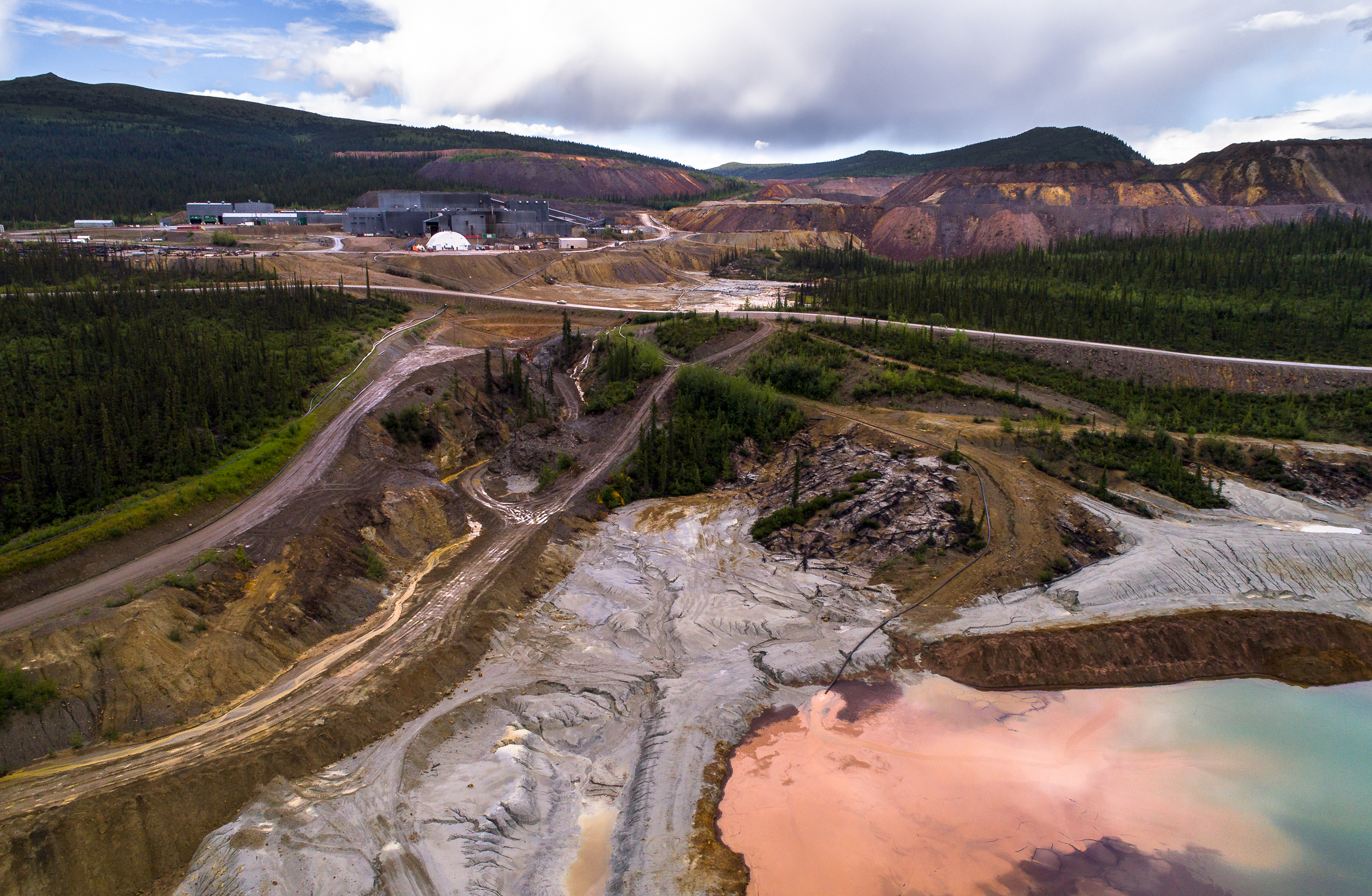
The Yukon's Faro Mine was abandoned in 1998, leaving behind 320 million tonnes of waste rock and 70 million tonnes of tailings. The mining industry's track record can be a barrier for recruiting new workers.
Photo: Matt Jacques / The Narwhal
The mining industry has a bit of a reputation problem, and it's getting in the way of recruiting. In our latest newsletter, we chat with mining reporter Francesca Fionda about how the industry is responding
That’s how many young people think of the mining industry in Canada these days. Sure, it might yield well-paying jobs that come with benefits, but the reputation of the industry — including its environmental footprint — is deterring many from even considering the field as a potential career option. Fewer people are enrolling in disciplines like geology, Earth sciences and engineering that are geared toward mining, according to industry groups. One survey says attracting people to the field is a “nearly existential challenge.”
With Canada vying for a top spot in the rush for critical minerals — like manganese for wind turbines, cobalt for electric vehicles and tellurium for solar panels, each of which is widely considered crucial for a low-carbon economy — the industry sees that as a bit of a problem.
“It was really exciting to have conversations with young people in mining who were eager to talk about the environmental challenges that inherently come with working in the industry,” B.C. mining reporter Francesca Fionda told me.
While pickaxes and the prospect of dusty job sites aren’t really selling points for young people, a new look for the industry just might be. That’s why industry groups are trying to promote positive attitudes about mining, with financial help from the feds, using outreach and education programs that highlight the need for a transition to a green economy — and even using TikTok.
“The importance of more honesty and transparency came up a few times in interviews as well as in conversation with people at an exploration conference in Vancouver earlier this year,” Francesca said.
We’ll continue to report on the mining industry goings-on — the good, the bad and the future, as far as we can tell. Until then, read Francesca’s in-depth story here.
Atenas Contreras hasn’t worked at a library in more than eight years. Her home tells a different story, however: her books are all organized by the Dewey Decimal System. It’s that kind of attention to detail we’ve been blessed with at The Narwhal, with Atenas joining the pod as our director of operations and finance! 🥳
Hailing from Mexico City, Atenas moved to the unceded and unsurrendered territories of the xʷməθkwəy̓əm (Musqueam), Skwxwú7mesh (Squamish) and Səl̓ílwətaʔ (Tsleil-Waututh) nations seven years ago. Her organizational prowess not only benefited the libraries she once worked at, but also the film sector: she comes to The Narwhal after having crunched all the numbers at DOXA, a Vancouver-based non-profit that runs an annual documentary film festival.
Read our Q&A with Atenas to find out more cool and nerdy things about her — and to see which celebrity memoir just wasn’t shady enough for her.
This week in The Narwhal
Ontario could run out of landfill space in nine years. Then what? By Fatima Syed
Industries, businesses and institutions make two-thirds of Ontario’s garbage. It’s too easy for them to dump, burn and export instead of reduce, reuse and recycle.