


 16 min. read
Summary
- Ranchers in some parts of Alberta are earning six figures from oil and gas sites on public land they lease from the government for below market value.
- An analysis by The Narwhal shows millions in tax dollars are going to the ranchers to cover debts owed by delinquent oil and gas companies.
- Ranchers argue the money is fair compensation for impacts from oil and gas operations; the auditor general has criticized the “personal financial benefit” for ranchers as being too high.
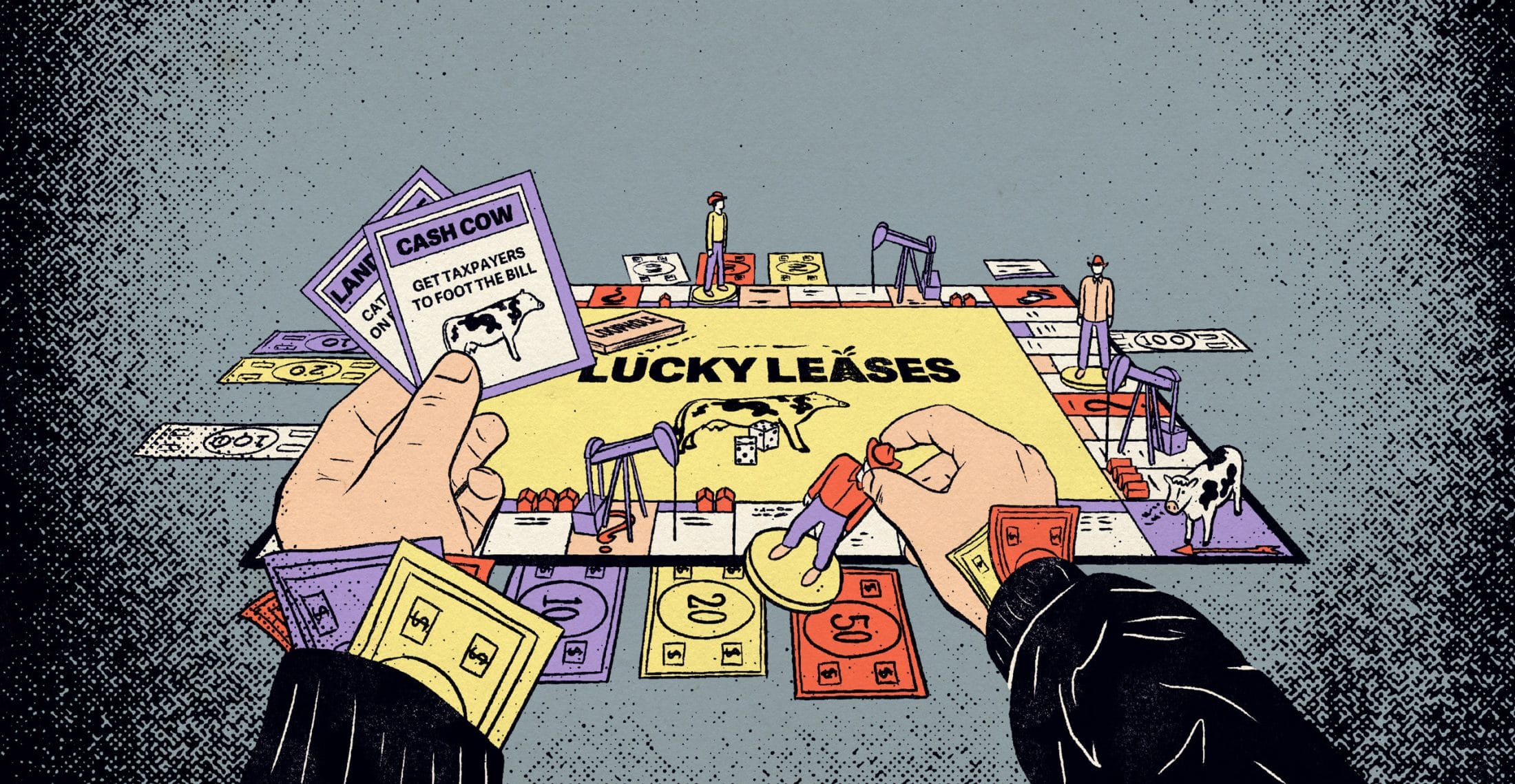
Some ranchers leasing public land from the Alberta government are receiving windfalls from oil and gas wells drilled on that land, according to a new analysis from The Narwhal. In some cases, taxpayers are on the hook for those payments.
Though successive governments have long known of the multi-million dollar issue, none have acted to stop it.
An auditor general report in 2015 castigated the province for allowing ranchers to earn undue profit off of public land. “Personal financial benefits are being derived from public assets,” the auditor general wrote. The auditor general pointed to examples at the time where ranchers were receiving five times in oil and gas compensation compared to what they paid in rent.
In other jurisdictions, like Saskatchewan, compensation from oil and gas companies does not go to ranchers using public land to graze cattle. It goes to the government.
Yet, to this day in Alberta, the system remains and problems have only increased as more and more oil and gas companies walk away from wells, or stop paying the compensation they owe to use the land, leaving the bills to taxpayers and languishing well sites to ranchers. It’s the result of decades of regulatory failure.
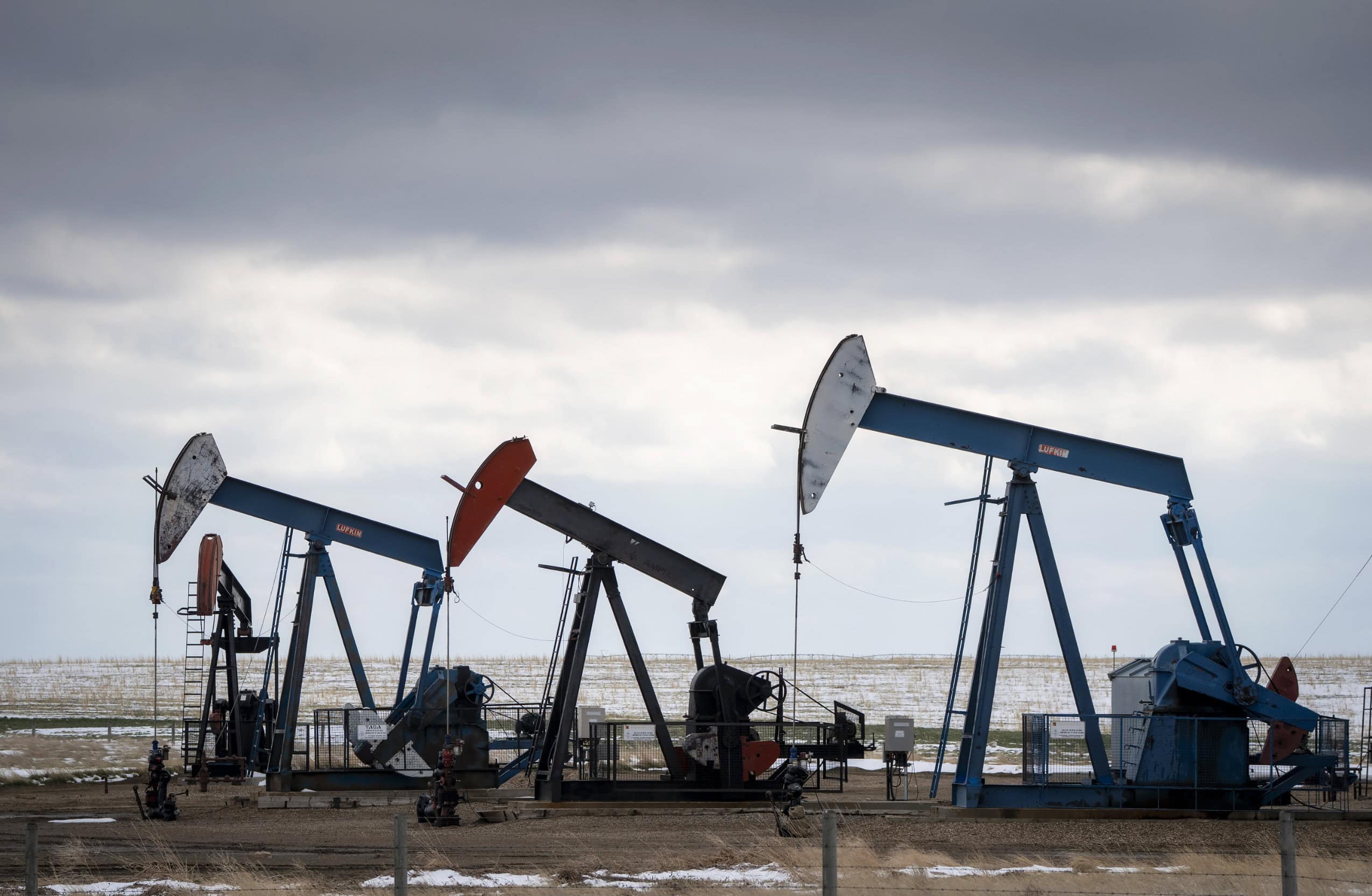
Compensation from oil and gas companies, similar to a surface lease on private land, is for impact and damage from those operations, including everything from chasing cattle after gates are left open, to weed control, loss of access to land as well as pollution and noise.

This is part of Who Pays?, a series at The Narwhal looking at the intersection of the environment and the economy
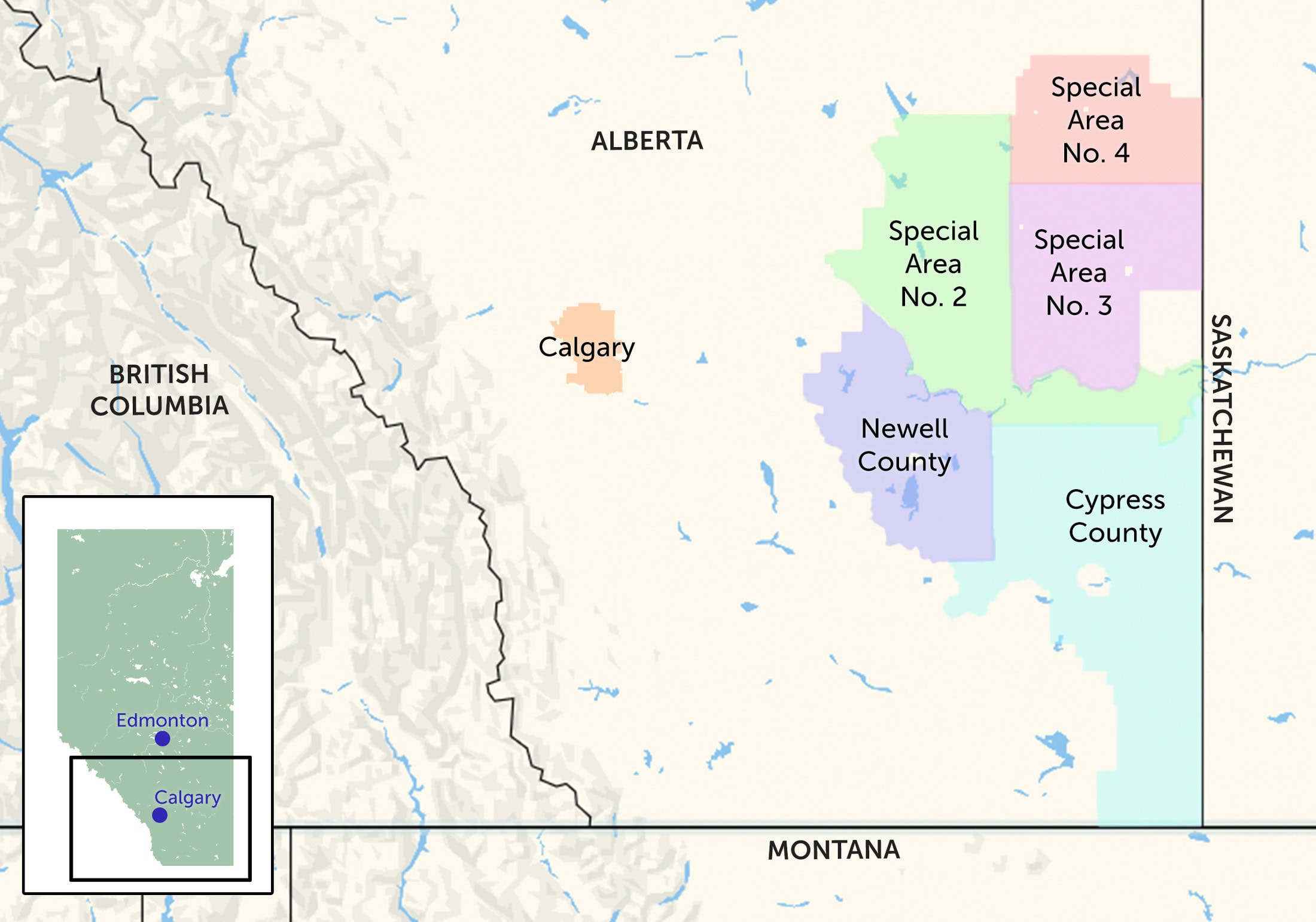
There are approximately 5,700 grazing leases across Alberta, covering roughly 5.2 million acres, or about five per cent of the province’s land base. To get a clearer picture of the issues in 2026, The Narwhal focused on Cypress County, the County of Newell and what are called the Special Areas in southeastern Alberta. We sourced public records, including leaseholder maps and government payments to landowners when oil and gas companies fail to pay what’s owed.
An analysis of data from the Land and Property Rights Tribunal, a government body that directs tax dollars to landowners and leaseholders when oil and gas companies don’t pay their rent, found that since 2021, $5 million in taxpayer money has been paid to grazing leaseholders in the region to cover company debts.
The Narwhal tried to verify the total with the tribunal. Executive director Mike Hartfield said the tribunal’s database is “designed to be self-service in nature.”
“Given the nature of this request and the time and staff resources it would take, we’re unable to verify this figure,” he said by email.
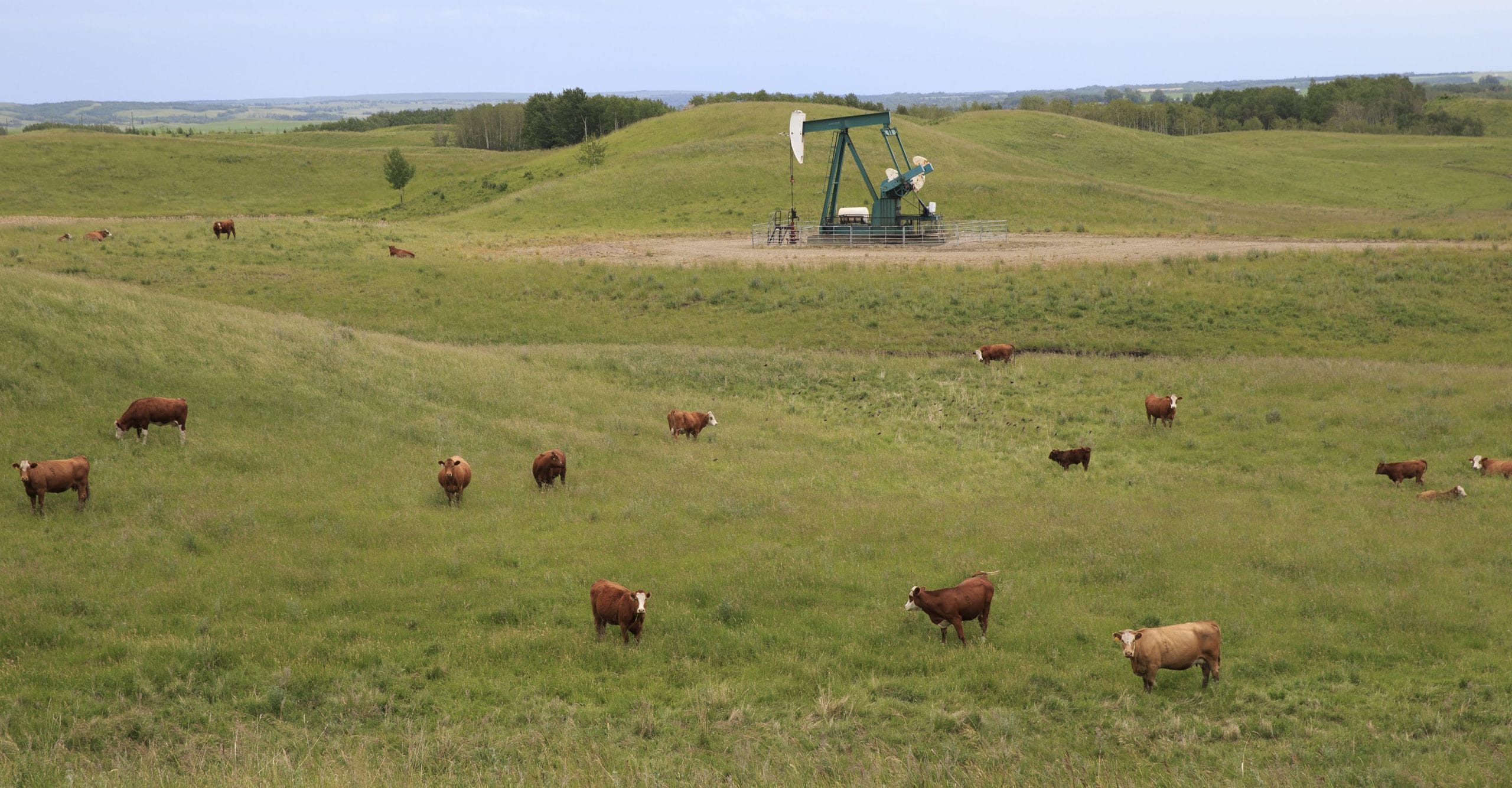
The issue is political, and particularly acute in the deeply conservative ridings of Alberta Premier Danielle Smith and federal Opposition Leader Pierre Poilievre. Here, a significant percentage of the land is public and rented to ranchers to graze their cattle — although some plots are so thick with wells it’s difficult to imagine enough room to graze. It’s a potential boon, but also a significant headache, for ranchers.
“[Grazing leaseholders] are rich and influential in their communities, and not just a little bit on either point,” Shannon Phillips, the NDP environment minister at the time of the auditor general’s report in 2015, said in a recent interview. “Historically, it’s an area of Alberta that has flexed its muscles within conservative movements. And, once again, not just a little bit.”
The Narwhal contacted seven Alberta ranchers with grazing leases in southern Alberta, all of whom either didn’t reply, or declined interviews, but did speak with Lindsye Murfin, who represents both a leaseholder and stock grower association.
The office of Grant Hunter, the minister of environment and protected areas who is responsible for the grazing leases, did not respond to questions from The Narwhal.
“I don’t know why anybody in their right mind would touch this topic,” one leaseholder, who declined to be interviewed, said over the phone.
Cheap land, free money — and government bailouts
Across Alberta, landowners are struggling with increasing numbers of inactive and orphan wells on their land, or active wells owned by oil and gas companies that do not pay what’s owed to operate on their land. When an oil and gas company doesn’t pay, the tribunal can order the government to pay on their behalf. Those payouts have dramatically increased in recent years.
Previous reporting from The Narwhal has shown only a small fraction of payments made by the government on behalf of delinquent companies, less than one per cent, is ever recovered from the companies.
Ranchers who lease public land from the government can face the same troubles getting the money they’re owed from oil and gas companies. But the financial rewards can also be significant.
The current system in place across the province allows ranchers to rent public land from the government for a fluctuating yearly price based on a complex formula that includes how much land is needed to feed a cow, as well as market prices and costs. In return, the rancher is expected to maintain the land and pay for upgrades such as fencing, as well as cover property taxes.
Those ranchers also have to deal with oil and gas companies, including signing contracts when the companies come knocking. In Alberta, no one can deny access to an oil and gas company that wants to drill, even if the land is public land earmarked for grazing.
It’s impossible to know the exact cost of a particular grazing lease without seeing the private contract between the government and the rancher, but estimates are possible. A report by the University of Alberta’s Alberta Land Institute estimated in 2014 that the average lease in southern Alberta was $850 per year.
Those statistics, however, can be misleading, according to Murfin, the manager of the Alberta Grazing Leaseholders Association, which advocates for ranchers grazing cattle on public land, as well as the general manager of the Western Stock Grower’s Association, which advocates for ranchers. Murfin said, in general, grazing leases can range from 14 acres to 14 sections of land (one section is 640 acres), although she’s not sure of the exact range. In the north, they tend to be smaller, while in the south, they sprawl. A grazing lease at $850 per year would represent a smaller plot, with a 14-section stretch costing an estimated $6,000 or more in 2014.
Between 2015 and 2026, the government’s rates have gone up three and a half times, meaning that same average would be $3,024 today, or approximately $22,000 for a 14-section lease.
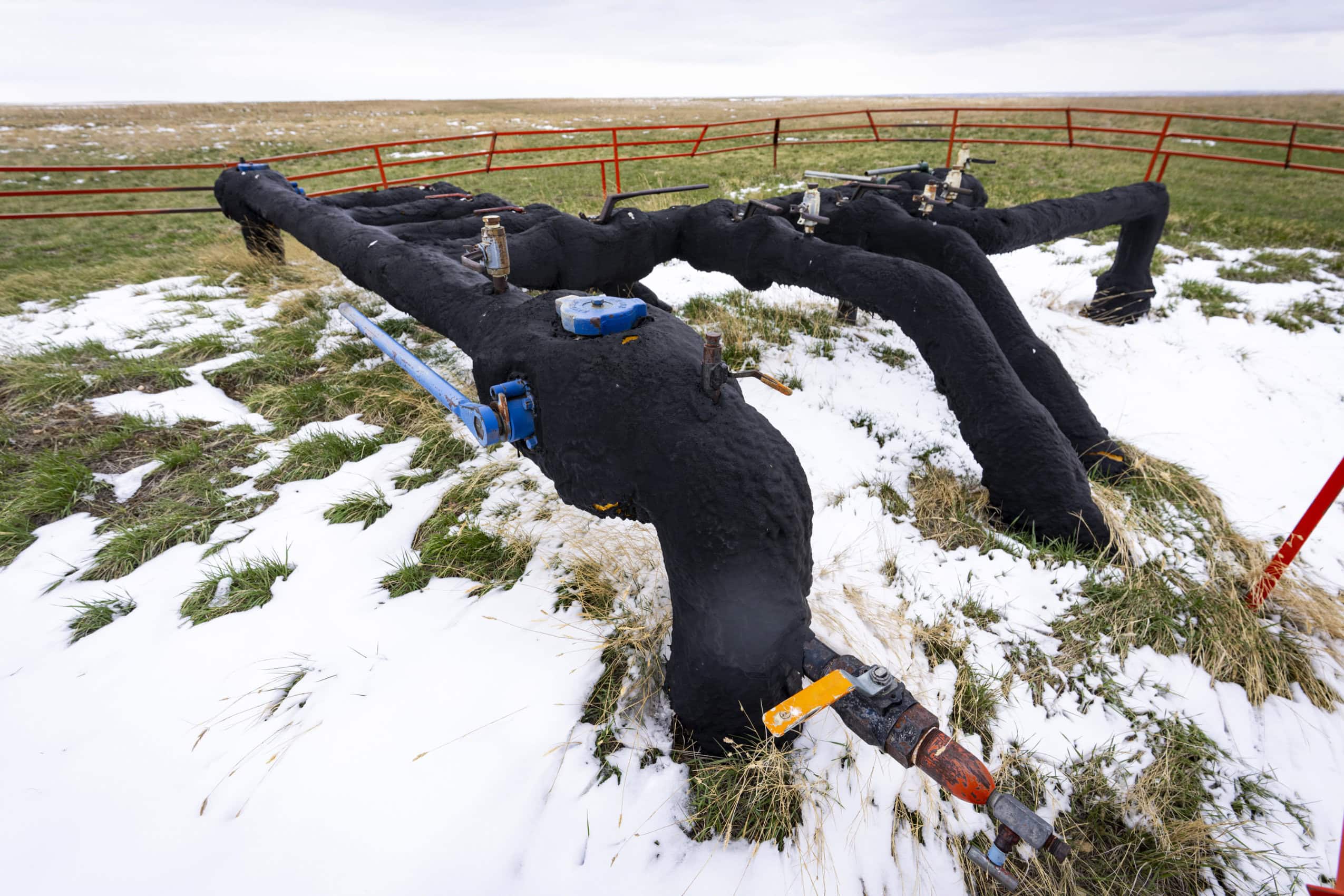
It’s also difficult to pinpoint the compensation paid by oil and gas companies to ranchers, as each is negotiated in a private contract. However, tribunal payments covering delinquent companies offer some insight, where yearly payouts of $1,500 per well per site are the norm. That’s also the price the auditor general determined was the average price per oil and gas site back in 2015.
The number of wells on leases can range from zero to hundreds, with a select few grazing areas, particularly in southern Alberta, hosting huge numbers of oil and gas wells. And that means reaping significant financial rewards.
Critics of the system say grazing lease rates are too low, even after recent increases, and say some ranchers are making too much profit off oil and gas operations on public land.
Phillips, the former NDP environment minister, said the oil and gas companies are “a pain in the ass” and that ranchers should be compensated for impacts, but said there should be limits.
“It shouldn’t just be a free for all,” she said.
Phillips said it’s a classic example of socializing the risk and privatizing the reward.
“It is socialism at its finest, but only for rich people — for a smaller and smaller sliver of people — and it is our public land base that gives those gifts.”
Some ranchers are earning six figures from oil and gas on public land: analysis
The Narwhal looked specifically at data from Cypress County, the Country of Newell and the large and sparsely populated Special Areas region that stretches across a wide swath of the province approximately 200 kilometres east of Calgary. The Special Areas have a unique government structure, represented by an elected board which reports to the province.
The Alberta Land Institute report noted that while almost half of all provincial grazing leases do not have oil and gas sites, most are located in the south of the province. Meanwhile, 61.2 per cent of all wells on provincial grazing lands are located in the South Saskatchewan region.
That was particularly true in the Special Areas, where the density of wells was slightly higher than the rest of the province, with 5.24 wells per lease, according to the report.
The Narwhal examined public land maps that show who controls specific grazing leases, as well as which oil and gas sites on those plots.
Assuming an average price of $1,500 per oil and gas well site, The Narwhal’s analysis finds some ranchers are earning well over $100,000 per year from oil and gas payments. According to The Narwhal’s analysis, one rancher with 233 wells spread across a grazing area is earning an estimated $349,500 each year in oil and gas leases alone. Another rancher, with 164 oil and gas wells, is earning an estimated $250,000.
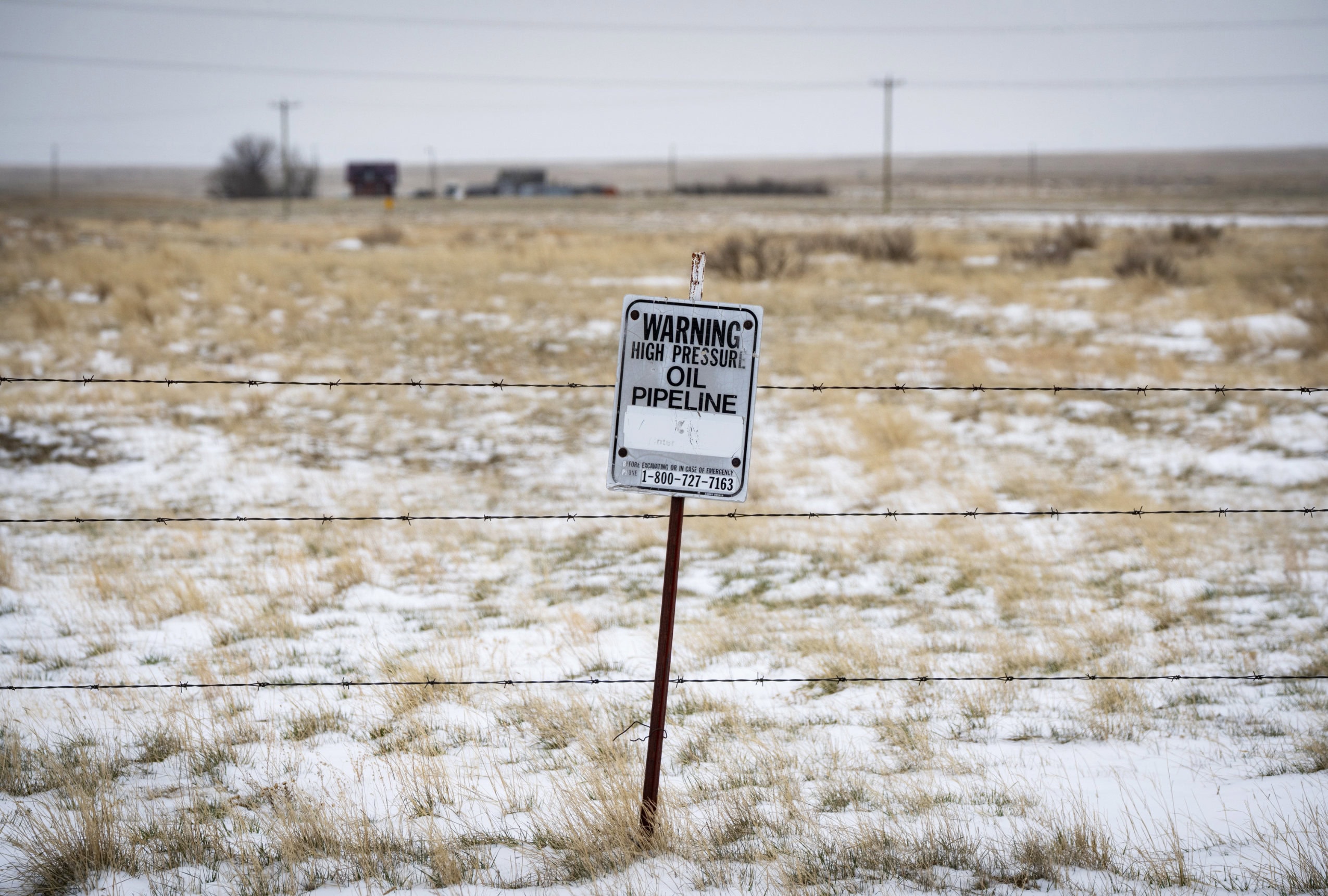
In some instances, it’s difficult to know who is benefitting from oil and gas compensation, with some ranchers tied to several corporations, according to corporate registry documents obtained by The Narwhal.
The Alberta Land Institute tracked down one leaseholder in 2014 with the “largest estimated amount of annual compensation paid on a single lease” — $1,218,000. The lease contained 812 wells.
Grazing associations can earn even more, although that money is distributed to members. The auditor general found one grazing association in 2013 “paid the province $68,875 in rent for its multiple leases and collected $348,068 in payments from industry operators for activity on its leased land.” That’s five times more in oil and gas compensation payments than they paid in rent.
Beyond what oil and gas companies pay to leaseholders, there are also millions of dollars paid to ranchers by the government. The Narwhal scraped data on payouts in the areas in question between 2021 and 2026 from the Land and Property Rights Tribunal website.
There were 3,263 decisions in total when the analysis was done at the beginning of April.
Since 2021, $5 million has been paid to grazing leaseholders to cover the debt owed by oil and gas companies for sites on public land, including significant individual payments. That estimate is based on the tribunal data.
One leaseholder received almost $600,000 in tribunal payments over that period. One grazing association was paid almost $1 million.
Big payouts, but also big disparities
Murfin takes issue with the idea that leaseholders are unduly benefiting from the current system and said the compensation is fair considering the impacts of oil and gas operations and the costs incurred by ranchers.
A grazing lease, she said, is similar to any other lease of public land, from oil and gas to gravel pits to forestry.
“The leaseholder has purchased the right from the province to be the occupant of that land,” she said. “And with those rights come a lot of responsibilities.”
She also says the impacts from oil and gas operations can be significant. “I know a guy who has to have someone hired, not for ranch work, but to manage the oil and gas companies,” she said.
That ranch has extensive native grassland and without someone “managing the damage, it would be much worse.”
“The beef industry in Alberta is a multi-billion-dollar contributor to the economics of the province, instrumental in the maintenance and survival of rural communities and the singular reason we have large tracts of contiguous native grassland in this province,” she said.
When asked about leases where the density of wells would seem to make it impossible to actually ranch, Murfin said that just makes the job of the leaseholder more challenging and that compensation should be paid. She rejects the notion of capping the amount of money a rancher should receive from oil and gas sites on public land.
“Their management of grazing is hard,” she said. “The grazing lease system is a stewardship-based system, so the grazing leases are inspected to make sure that the forage resource is kept healthy and productive.”
Successive governments have declined to reform the system
The Alberta Grazing Leaseholder Association was founded in 1998 in response to efforts to revamp the system by Ralph Klein’s Progressive Conservative government.
That year, a government report called for caps on payments to leaseholders. A year later, the government introduced legislation that was quickly passed, but never proclaimed into law.
Bill 31 would have set rates per well for leaseholders that started at $300 per well, gradually dropping to $100 per well if there were ten or more sites on a grazing lease. The bill would have capped the amount of money that could be earned from surface leases on public grazing land at $5,000 annually.
The reforms received fierce pushback from ranchers and their advocacy organizations. The Alberta Grazing Leaseholders Association’s purpose was to resist the Klein government “directly attacking property rights of leaseholders.”
Phillips, the former environment minister under Premier Rachel Notley, said her government also faced pressure when the auditor general’s report came out in 2015 and said there simply wasn’t enough time, or political will, to change the system.
“People who have never governed will hear it as an excuse, but I’m sorry it’s just not,” she said in an interview. “You only have so much bandwidth to do so many controversial things in a four-year term.”
The NDP government was already mired in controversy with ranchers and farmers for legislating workplace insurance and safety standards for their operations. The government also faced the impacts of an oil price crash.
“Some elements within the grazing leaseholders certainly signalled a willingness to be less than cooperative on re-examining some of the large asks that they benefited from,” Phillips said.
That sort of pressure and the complexities of reforming the system aren’t new in Alberta and the provincial debate isn’t the only example.
Just to the east of Cypress County, the Municipal District of Taber recently brought in reforms that have split the community.
The municipality manages its own portfolio of grazing leases and already charged ranchers higher rates than the province, as well as restricting the amount of money a rancher on public land can receive in oil and gas compensation. Those rules were tightened even further in April: among the changes, rates were raised even more and now, after the 10-year grazing leases expire, ranchers must bid for them competitively.
The decisions have been contentious. Among other reasons, provincial grazing leases also exist within the Municipal District of Taber, meaning neighbouring leases could have drastically different costs and returns.
Tamara Miyanaga, the reeve of the municipal district, said balancing the wishes of long-time leaseholders against those that want to bid on that land is the most challenging thing she’s done during her time at the municipality.
“Unfortunately, I think it will still create a divide in the community,” she said in an interview. “But council has made their decision, and now we will go forward to continue serving the residents of the [Municipal District] of Taber the best we can.”
As wells age, more public dollars could flow
In the area of southern Alberta where grazing leases sprawl and wells are dense on the landscape, the oil and gas industry is changing.
Reservoirs that once fuelled Alberta booms, filling pockets and government coffers alike, are dwindling. More and more companies are failing to live up to their end of the bargain and the costs of cleanup continue to rise. It’s a region with some of the highest concentrations of orphan wells.
That means more public dollars will flow, even as revenues from wells in the area diminish or disappear.
Murfin said her organization is also concerned about the issue of aging wells and delinquent operators, but it’s not something that only impacts her members. “It’s going to fall on every taxpayer in Alberta to pay for that,” she said.
She’s not convinced the government will be able to fix the problem, and takes issue with its plan to deal with old oil and gas wells.
The government’s plan, she said, is “just a scheme that has been cooked up by somebody who has been in oil and gas his whole life.”
For Murfin, the government is moving even further away from the polluter pays principle, which would see oil and gas companies pay to clean up their messes.
Instead, she believes the government is “downloading all the costs of reclamation on landowners and municipalities and taxpayers.”
This investigation was supported with funding from the Data-Driven Reporting Project. The Data-Driven Reporting Project is funded by Arnold Ventures and the Google News Initiative in partnership with Northwestern University | Medill. As per The Narwhal’s editorial independence policy, no foundation or outside organization has editorial input into our stories.
Methodology
The Narwhal’s Prairies reporter Drew Anderson and web developer Andrew Munroe created estimates for this story from data gathered from a public government database of decisions regarding compensation oil and gas companies are supposed to pay to landowners when they put infrastructure on their land. The database is called the Land and Property Rights Tribunal database and contains tens of thousands of records of rulings. Each ruling contains information on the oil and gas company that failed to pay its bill, the land or leaseholder to whom the debt was owed, the amount owed and more. It is an extensive database, with each individual ruling page containing data on company names and grazing leaseholders or landowners, the amount paid and whether or not the site is located on a grazing lease.
Information regarding well sites located on grazing leases was obtained by purchasing municipal land maps on an app named iHunter, which provides the names of grazing leaseholders, contact information and outlines oil and gas sites on those lands.
Updated on Apr. 30, 2026, at 10:19 a.m. MT: An earlier version of this story said there was no response from the Western Stock Growers’ Association. However, after publication The Narwhal was told Lindsye Murfin is both the general manager of that association as well as the manager of the Alberta Grazing Leaseholders Association.