

 5 min. read
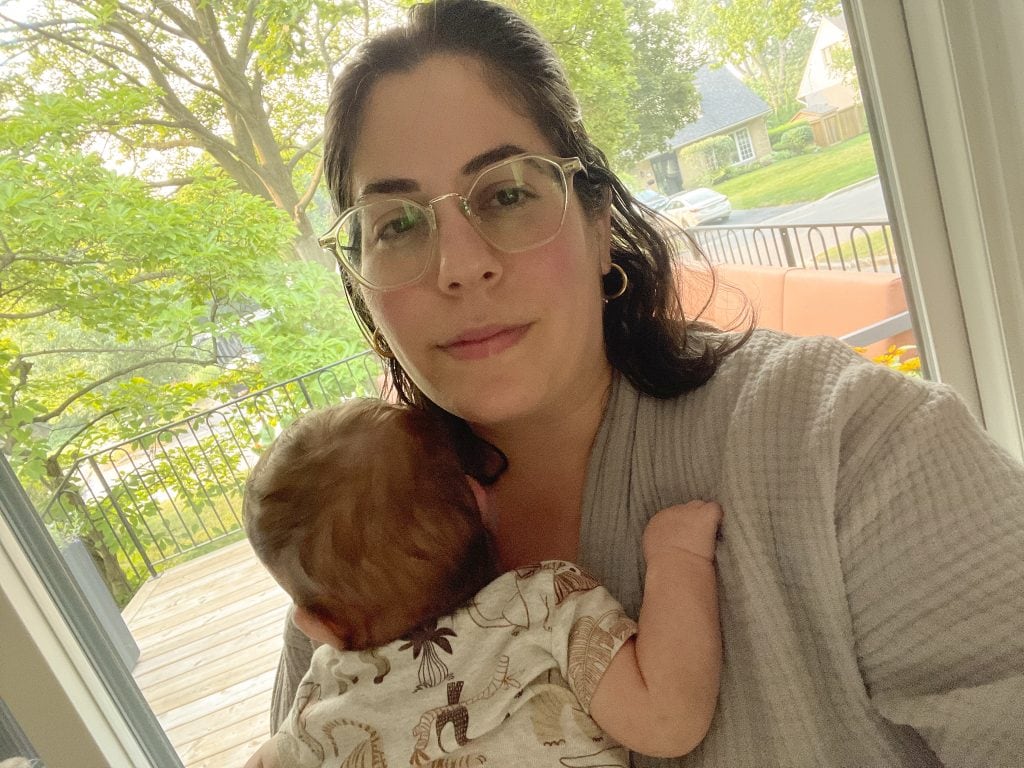
I am standing in my kitchen in a grey cotton robe, holding my baby — 12 weeks old today — swaying back and forth as he sleeps on my chest. I am acutely aware that my heart is right under his head, that he can hear my heartbeat, a source of comfort and regulation. No matter how calm I look on the outside, no matter how slowly I sway, he can probably still feel it beating quickly. Too quickly.
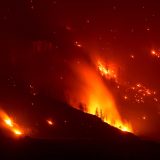
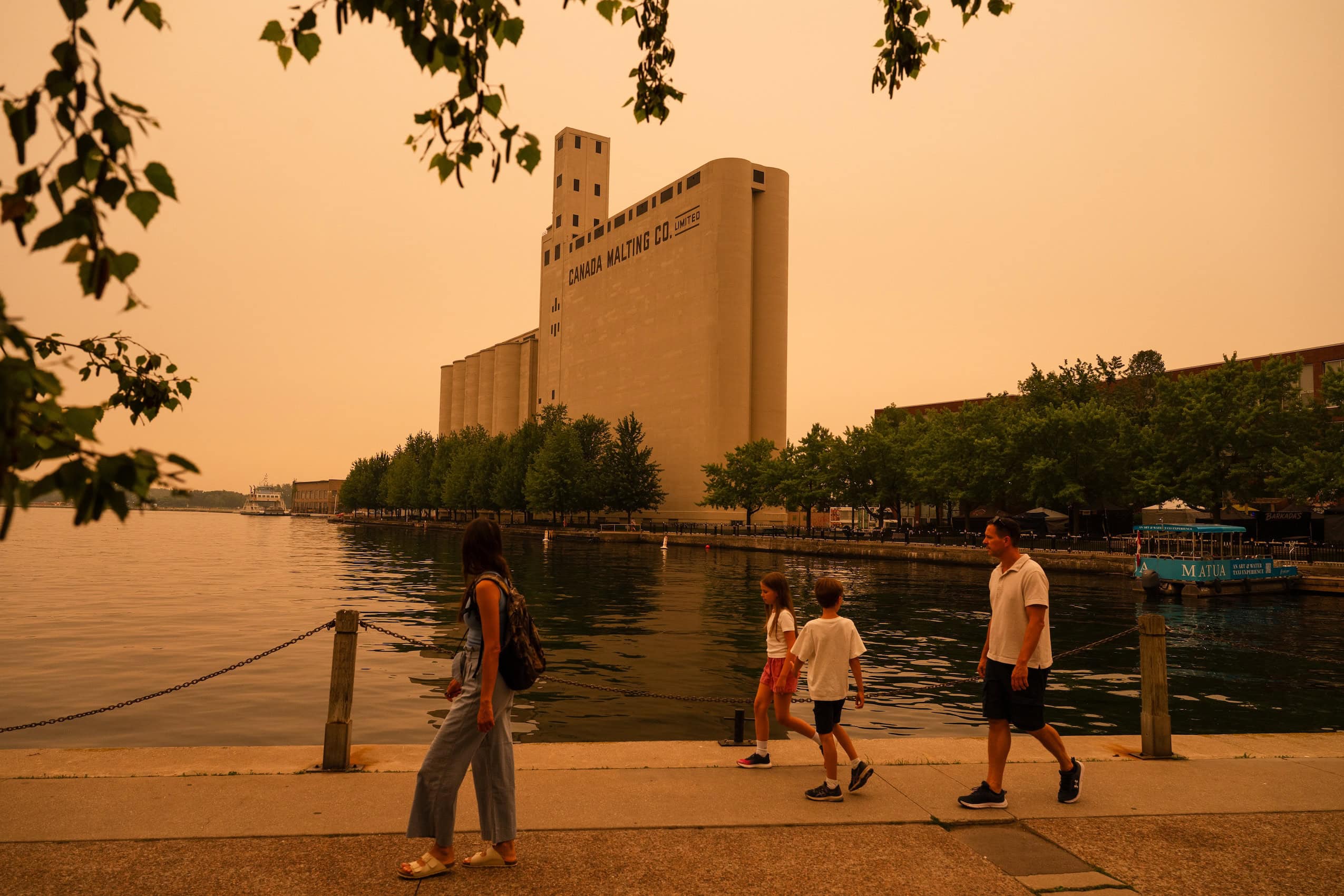
I feel anxious looking at the eerie scene out the window. Our entire home has an orange glow. I noticed it as soon as I opened my eyes this morning, the light already wrong before I was fully awake. It’s familiar now — other parts of the country, other parts of the world, have lived this many more times than Toronto has. But even here, we know the scene: orange skies, a bright sun hazed over in the distance, headlines that Toronto has the worst air quality in the world, because fires are raging in northern Ontario. On Tuesday, it felt like 47 degrees outside. A couple of weeks ago, the same. We’ve been under multiple heat domes and heat advisories this summer.
When I found out I’d be giving birth in the spring, I was excited. I imagined parks, walks with friends; a summer spent outdoors. And yet over the past many weeks, it has often been too hot or too smoky to leave home — and I am aware, even as I say that, of how much safety our heat pump and well-insulated walls buy us. Not everyone gets to wait this out indoors. Right now, tenants across this city are stuck in apartments with no cooling at all, no way to open a window and feel relief, because our governments keep letting rent climb while doing nothing to guarantee a liveable indoor temperature. Toronto already legislates a minimum indoor temperature for winter. There is still no equivalent maximum for summer, even as doctors warn heat is causing excess deaths among seniors and that any delay in a bylaw will cost lives.
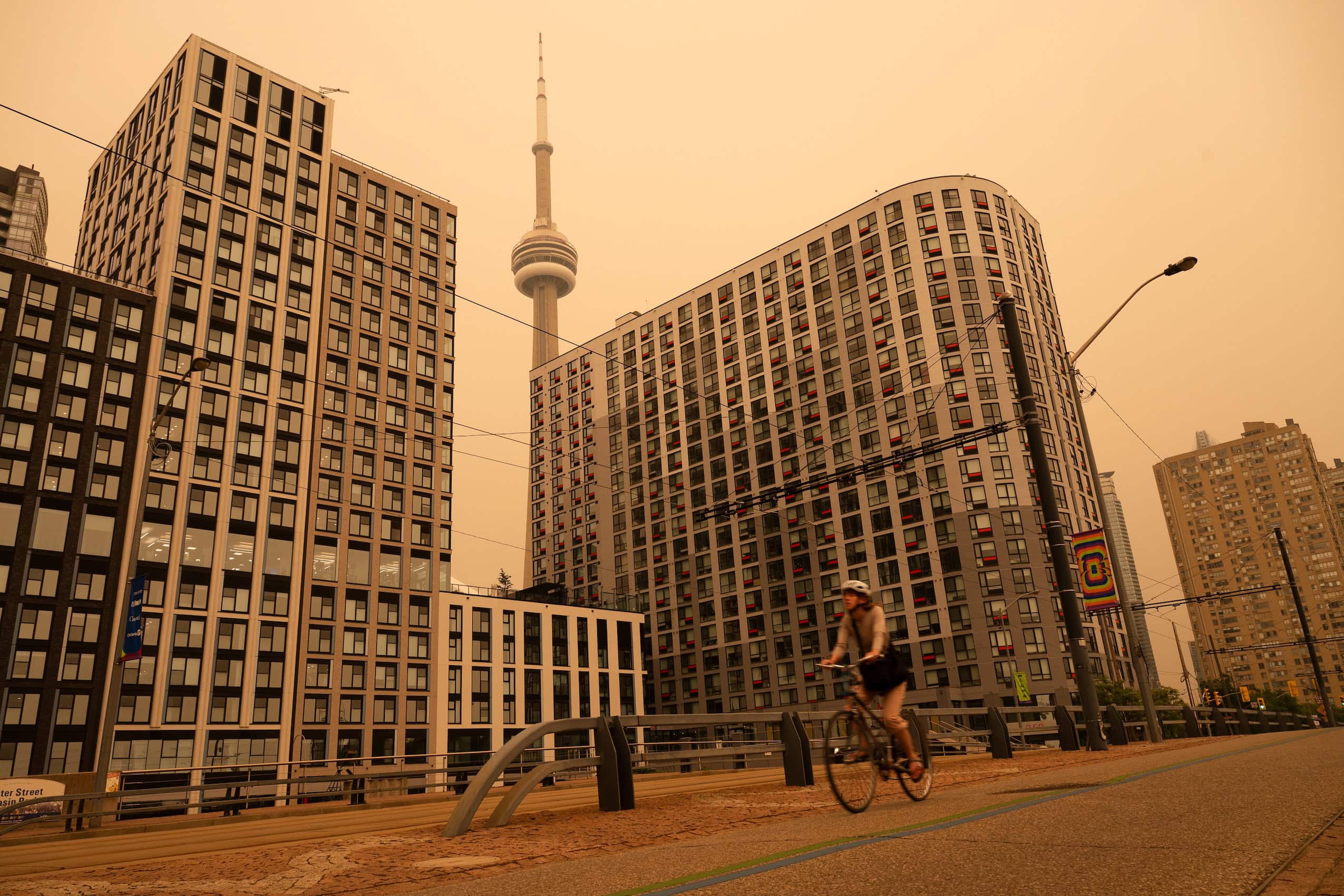
A friend told me that her kids didn’t even question the N95 mask she wore to water the garden this week. They’ve grown up with summers like this, and to them it barely registers as strange. Yet when I called my dad to warn him about the air quality, he said, “Oh, that’s why it looks weird outside” — he had noticed the sky but hadn’t connected it to smoke. “But there aren’t fires here,” he said, as if that settled it. He described seeing ash on his car but wasn’t concerned because he doesn’t feel it’s affecting him. But the particles in this smoke are small enough to slip past the body’s defences, working their way deep into the lungs and bloodstream, where they can inflame and damage organs whether or not you ever feel short of breath. The distance between my friend’s kids’ understanding of this and how little urgency my dad feels is a reminder of how quickly the baseline is shifting, and how differently each generation is being asked to carry our reality.
Last night, when my baby was struggling for a few hours, I kept my nervous system calm, telling myself: let’s just sway a little, rock a little, walk a bit around the house. Sure, we can’t go outside, but there’s so much we can do in here. We can bounce. We can listen to music — his favourite song at the moment, Pump Up the Jam, discovered by my partner during a particularly stressful diaper change. It was manageable because a friend was over. It was also manageable because I knew it would end. My calm could regulate his nervous system, which he still borrows from mine, because I knew it would end. He eventually calmed down and went to sleep.
This morning, I changed him, fed him, played with him on the floor for a while — that orange cast still hanging over everything, a low hum in another room, there, but not yet something I could afford to feel. It was only once I’d gotten him down for his first nap, once I was standing in the kitchen swaying with him against my chest, that it actually landed: what that smoke actually is, and where it’s coming from. Here in Toronto, many of us can close the windows, turn on the air purifier, wait it out.
In Namaygoosisagagun First Nation, there was no waiting it out — residents had only minutes to reach boats as fire jumped the rail line behind their homes, evacuating without the support of emergency services. And this is the summer our government chose to scrap emissions targets, support a new oilsands pipeline with public money and accelerate LNG projects — decisions that will likely make summers like this one more frequent, more severe and harder to survive for the people who have the least power to protect themselves. I am standing here trying to calm my own anxiety so my baby can keep sleeping, aware that my heartbeat alone can unsettle him, while people who hold so much more power than I do are making choices that will shape the rest of his life.
Baby Z, I don’t know yet how I am supposed to show you the beauty of the world, and everything there is left to save, everything there is to fight for, without burdening you with the grief of everything we have already lost, and all the things I experienced that you never will. Someday you’ll need to know all of it — who made these choices, and why, and what it cost — and I hope you’ll be someone who fights back. But for now, my job is to keep swaying, to keep the room calm, to let you sleep a little longer before any of this is yours to carry.