






 11 min. read
A document meant for a behind-closed-doors group of fossil fuel advocates earlier this year got right to the point: Canada’s policies to fight the climate crisis, protect nature and defend Indigenous Rights are a “problem,” and environmental organizations are “opponents.”
The document, a copy of which was reviewed by The Narwhal, relates to a presentation that was scheduled to occur in January 2026. It was prepared by two advocacy groups called Energy United and Resource Works, both with connections to the country’s largest oil and gas lobby group, the Canadian Association of Petroleum Producers.
It was part of a session in which fossil fuel advocacy groups were to discuss shaping public perceptions in favour of the oil and gas industry and against the transition to clean energy, according to materials downloaded from a coordinating group’s website by The Narwhal and originally uncovered by Greenpeace Canada.
Summary
Under the heading “Knowing our opponents,” the document details work by environmental advocacy organizations and First Nations, and the funding that supports them.
It lays out how environmental non-profit groups are collaborative, well-funded — and effective. “The damage is real & intentional,” the document says of environmental advocacy in Canada, adding, “Every major ‘problem policy’ we fight traces back to an ENGO-authored framework or idea.”
An ENGO is an environment-focused non-governmental organization. The document includes examples of “problem policies,” including the federal emissions cap, Canada’s commitment to protect 30 per cent of its lands and water by 2030 and the United Nations Declaration on the Rights of Indigenous Peoples.
The document also highlights funding for Coastal First Nations, and their stance against lifting the oil tanker ban in northern B.C. — a years-long thorn in the side of the fossil fuel industry and another “problem policy,” according to the document.
“So, what can we do about it?” the document asks of environmental advocacy in general. It proposes moving “from defence to offence” by launching “counter-campaigns,” “calling out hypocrisy” and filing “regulatory complaints” against environmental groups like the David Suzuki Foundation.
“They want to be on the attack,” Keith Stewart, senior energy strategist for Greenpeace Canada, said of oil and gas groups in an interview.

Stewart is one of the authors of the Greenpeace report “Manufacturing Petro-Populism,” which was published Oct. 8 and delves into the web of pro-fossil fuel organizations.
The document was one of eight presentations scheduled to occur at the January “funders session,” according to an agenda published on the website of a coordinating network, Energy In Action. The session was organized for a group called Canadian Energy Prosperity. The Energy In Action website stated that it hosted a “showcase of a selection of our 30+ groups” Canadian Energy Prosperity works with.
The document was posted publicly on the Energy In Action website, where The Narwhal viewed it. The Narwhal emailed questions to Energy In Action on Oct. 5. The following day, the website became password protected.
Energy In Action and the Canadian Association of Petroleum Producers did not respond to requests for comment. Nor did the advocacy organizations Energy United and Resource Works. Canadian Energy Prosperity does not appear to have its own web presence or any publicly available contact information.
Media, including The Narwhal, singled out in internal oil and gas document
The document also singled out a government funding program called the Local Journalism Initiative.
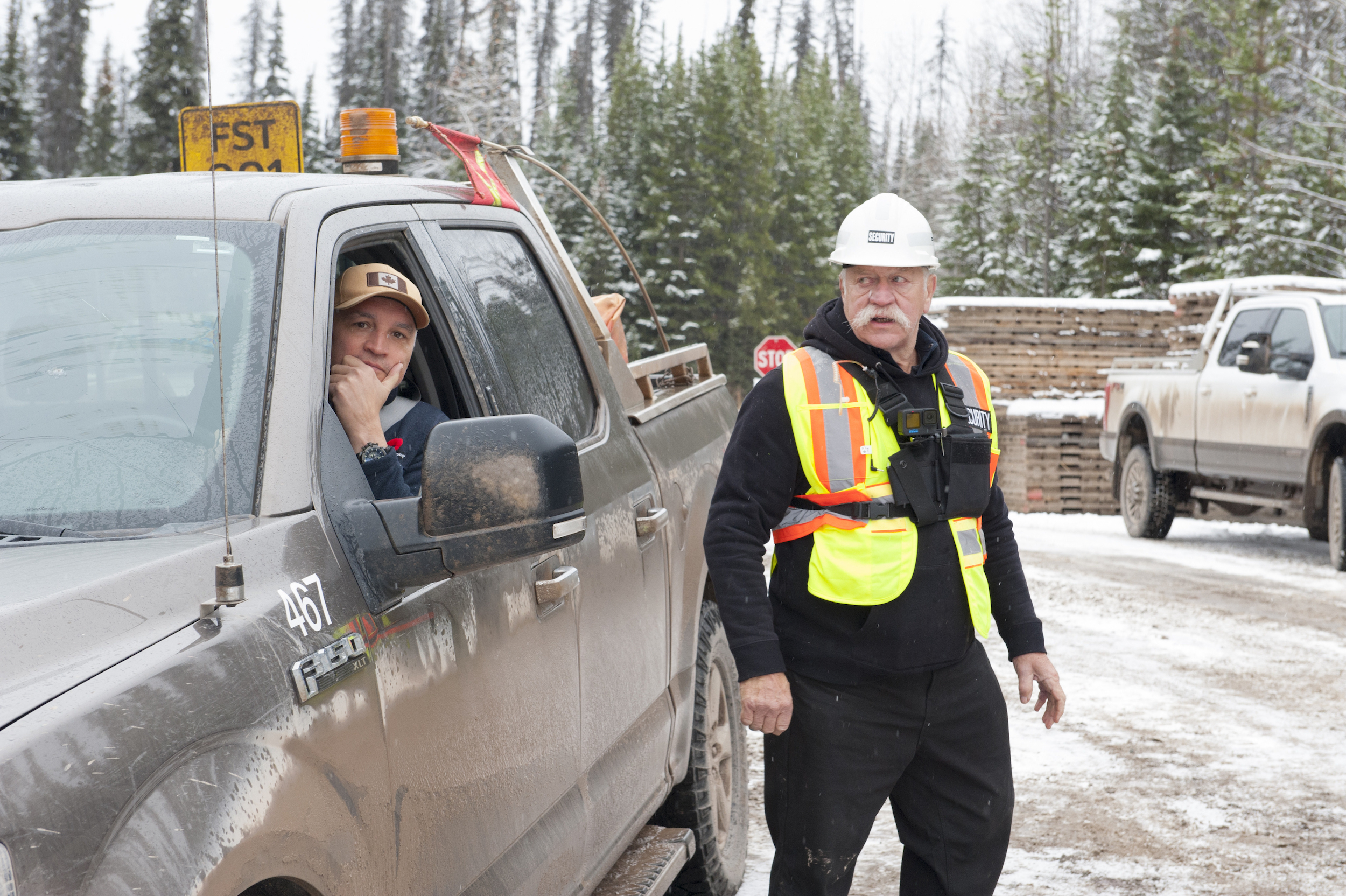
It included a screenshot of a story published by The Narwhal, written by journalist Matt Simmons, whose work has been supported by the initiative. The story recounts Simmons’ experience being followed by private security as he reported on a pipeline being built through Wet’suwet’en lands.
The Local Journalism Initiative is a federal program that funds news reporting in rural, remote and otherwise underserved communities. The Narwhal receives this funding for reporting in northwestern B.C. and northern Ontario.
To protect the independence of the press, the government does not directly fund media outlets. The program is delivered by independent non-profits representing different segments of Canada’s media industry.
“It’s clear that they see some journalists as opponents,” Stewart said of the pro-fossil fuel groups behind the document. “They don’t want anyone looking too closely at what they’re actually doing.”
Material ‘appears to build on a long-standing public outreach program’: Greenpeace
Greenpeace Canada claims the Energy In Action network “appears to build on a long-standing public outreach program” by the Canadian Association of Petroleum Producers, “which seems to have been repurposed to enable oil companies to spread their message via third parties.”
Energy United founder Tim McMillan was president of the Canadian Association of Petroleum Producers for seven years, and is currently registered as a federal lobbyist on energy issues. Stewart Muir, the president of Resource Works, formerly lobbied for a pro-fossil fuel group organized by Resource Works called The Task Force For Real Jobs, Real Recovery. The task force’s website claims the Canadian Association of Petroleum Producers is a “supporter.”
Requests for comment to McMillan and Muir’s LinkedIn pages were not returned.
Greenpeace Canada’s report says the Energy In Action network operates “under the guise of independent and grassroots entities” but actually coordinates industry-linked activities designed to “shift public discourse and actively lobby against renewable energy initiatives.”
It said the network’s “hidden funders” are investing in campaigns targeting a large cross-section of Canadian demographics and regions, using different tools like lobbying, public advocacy and digital and traditional advertising.
The network’s activities and internal materials, it said, deploy “climate disinformation, covert influence campaigns and attacks against activists.”
The Energy In Action documents should be seen as part of a broader context of an industry that’s been proactive for years in trying to shape public opinion about its activities, its climate impacts and its economic benefits, according to Shane Gunster, a professor in the school of communication at Simon Fraser University who studies oil and gas populism.
In an interview, Gunster said his research has shown pro-oil-and-gas messaging shifted over the last decade from more expensive public relations campaigns to using social media to mobilize supporters.
He said in recent years he’s seen greater use of what he calls “pop-up groups,” which appear to be self-contained entities that focus on a particular issue in a particular geographic location, and only appear for a limited time.
“Groups that are not explicitly connected to particular funders or industry itself can do things that industry itself would find challenging to do or to say,” he said.
He said the group of funders tied to the activities Greenpeace uncovered are supporting particularly aggressive messaging, but that isn’t always the case with pro-oil-and-gas campaigns.
Canada passed legislation in 2024 to crack down on greenwashing, which is when companies make misleading claims about how environmentally friendly their products or actions are. It created a requirement for companies in Canada to back up their green claims with evidence. After it passed, oil companies scrubbed their websites and social media feeds.
Although Prime Minister Mark Carney’s government rolled back a clause stipulating that this evidence be based on internationally recognized standards, several oil companies were still citing the law as a reason why they can’t disclose more information.
Gunster said he felt the anti-greenwashing changes were a factor, but not necessarily the driving force behind the pro-oil-and-gas messaging shift towards pop-up groups, which he began seeing before the anti-greenwashing law was in place.
There is public evidence that at least some of the entities Greenpeace connected to the Energy In Action network have received funding from oil companies themselves.
According to corporate disclosure records, Cenovus, one of Canada’s largest oil and gas companies, has funded seven of them, including Resource Works. Cenovus is a member of the Canadian Association of Petroleum Producers, and Cenovus president Jon McKenzie is also the chair of the association’s board.
Cenovus proactively discloses its advocacy funding, while some other prominent oil companies do not.
There’s no indication that the funding Cenovus has provided is directly related to the public advocacy activities reported by groups such as Resource Works during the Canadian Energy Prosperity sessions. Cenovus did not return a request for comment.
Groups tied to Energy In Action are funding disinformation: Greenpeace
Another document, a video presentation viewed online by The Narwhal, introduced itself as a “performance update for CEP,” the acronym for Canadian Energy Prosperity. The beginning of the video is dated July 2, 2025, and states that it would take place at the Calgary Petroleum Club.
That video highlighted four pro-fossil fuel ad campaigns by the organization Debunk Inc., which claims its mission is to “challenge misinformation.” Debunk’s video said the campaigns were “thanks to CEP’s support,” but did not specify who funded them or how much funding they received.

One of Debunk’s ads defended the use of natural gas in homes. Another attacked a proposal to limit heat-trapping carbon pollution from the oil and gas industry. A third downplayed the necessity of transitioning to lower-emissions fuels, and a fourth suggested liquefied natural gas, or LNG, could lead to “lower” emissions.
A Harvard study has shown that low levels of pollutants seep into homes with gas heat, while gas stoves have been associated with increased risk of asthma in children. Scientists say a disputed theory long favoured by the industry, that LNG can displace coal power abroad, underestimates the climate impact of equipment leaking methane, the main component of natural gas.
Each of these campaigns achieved results, the video claimed. The most successful was the anti-emissions cap campaign. Debunk claimed it had reached “up to 1.5 million Canadians” each month, and scored 22.3 million total views in 2025.
The Calgary Petroleum Club did not return a request for comment.
On the Energy In Action website viewed by The Narwhal, an individual webpage also featured content from Debunk, listing the four campaigns as well as a “top performing post” which claimed it is “debunking the ‘complete fabrication’ of climate change.”
That post, which the webpage said received “over 3,000,000 views,” contained a video claiming carbon dioxide does not cause harmful climate change. Hundreds of global climate scientists working under the United Nations Intergovernmental Panel on Climate Change have confirmed that the burning of fossil fuels is “unequivocally” responsible for recent global warming.
The Debunk webpage on the Energy In Action website featured a social media post claiming, “We’re wasting a lot of money for very little, if any, gain with all this climate hysteria.”
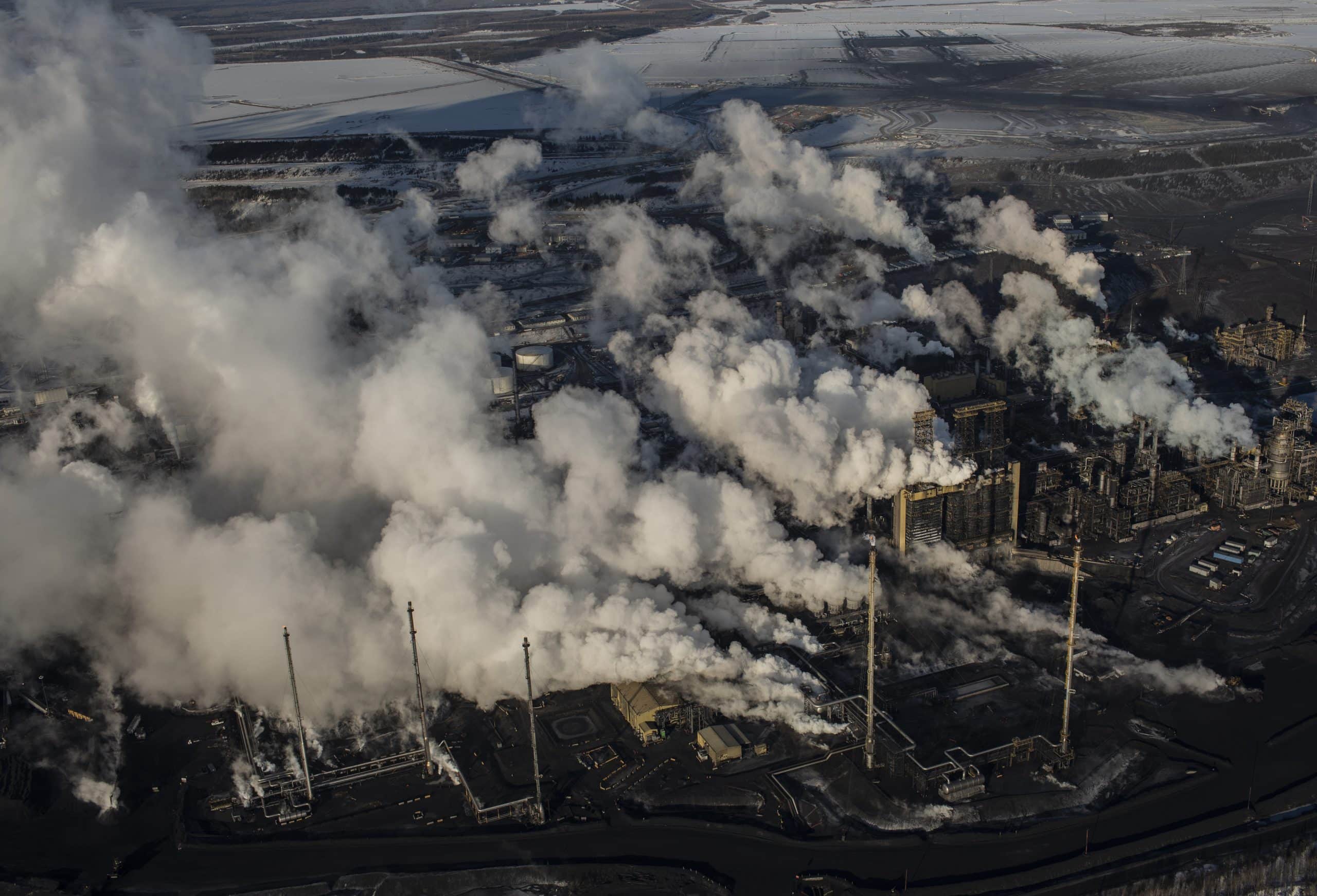
That post contains another video claiming the amount of human-caused carbon dioxide emissions in the atmosphere isn’t a significant problem. Concentrations of carbon dioxide in the atmosphere have increased dramatically in less than two centuries, recently to levels that have not been seen in millions of years.
Debunk did not respond to requests for comment. Founders Anastasia Columbos and Britni Weston are described on the website as “two Canadians with deep roots in the energy industry.” Neither responded to requests for comment on LinkedIn.
Greenpeace is calling on “all entities, organizations and corporate partners” involved in the Energy In Action network to disclose their funding sources and any financial connections to Canadian Energy Prosperity.
It is also echoing UN Secretary-General António Guterres’s call for countries to ban fossil fuel advertisements.
The presentations and agendas for two “Canadian Energy Prosperity funders” meetings, one in mid-2025 and one in early 2026, were posted publicly on the Energy In Action website, energy-in-action.com. The contact email listed was hosted on the domain cep-eia.com, a combination of the acronyms for both Canadian Energy Prosperity and Energy In Action.
The Narwhal reviewed the material directly by downloading it from the Energy In Action website on Oct. 2 and Oct. 5. The Narwhal emailed questions to Energy In Action’s email on Oct. 5. The following day, the Energy In Action website became password protected. Energy In Action did not return the request for comment.
One of the documents mentioned in this article included reference to a handful of philanthropic organizations, several of which have provided funding to The Narwhal and are disclosed on our website along with all major donors. Greenpeace carried out its investigation with support from the Trottier Family Foundation, which also provides funding to The Narwhal. As per The Narwhal’s editorial independence policy, no foundation has any editorial input.