





 13 min. read
B.C. Premier Lorne Doerkson announced a slimmed-down cabinet Friday, eliminating several ministries, renaming others and dropping references to climate change in favour of an expanded focus on natural resources.
With 63 MLAs to choose from, Doerkson opted for a smaller cabinet than his predecessor with 18 cabinet ministers, compared to the NDP’s 23. The BC Conservative cabinet also includes six sub-portfolios, known as ministers of state, double the number included in the final NDP cabinet.
The Ministry of Mining and Critical Minerals is no longer a standalone portfolio. Instead, mining is once again part of a broader natural resource-focused ministry, the Ministry of Energy, Mines and Petroleum Resources. Larry Neufeld, a long-time proponent of unleashing B.C.’s oil and gas sector, will head the ministry.
Summary
The Ministry of Emergency Management and Climate Readiness no longer exists and the Ministry of Environment no longer mentions parks in its title. The Ministry of Water, Land and Resource Stewardship has been rebranded as the Ministry of Water, Land and Natural Resource Operations.
“We will be accountable to British Columbians, not just for the commitments that we make, but for the results we deliver,” Doerkson said following his cabinet being sworn in.
The new cabinet will have plenty of time to find their feet before being called on to defend legislation or stand up during question period. With Doerkson’s decision not to recall the legislature this fall, it’s unlikely MLAs will return to Victoria again until February. In the meantime, some of the new government’s policy priorities can be realized by cabinet order.
What’s next for Indigenous relations?
Caroline Elliott, a vocal critic of the outgoing NDP government’s approach to Indigenous consultation, has been named as B.C.’s new Attorney General. Elliott worked as a staffer in former BC Liberal premier Gordon Campbell’s government, where she spent time in the Ministry of Transportation and the Ministry of Environment.
Elliott was also a candidate in the BC Conservative leadership race earlier this year. She came second to former party leader Kerry-Lynne Findlay. She is a newly elected MLA representing West Vancouver—Capilano.
During the election campaign, the Conservative government pledged to repeal B.C.’s Declaration on the Rights of Indigenous Peoples Act, or DRIPA, though Doerkson emphasized in his first speech as premier he is “committed to building relationships grounded in respect, dignity and trust.”
“I promise that personally, I will work with every one of our nations,” Doerkson said.
Scott McInnis is the new Minister of Indigenous Relations and Reconciliation. Elected in 2024 in Columbia River—Revelstoke, McInnis has served as Indigenous Relations and Reconciliation critic.
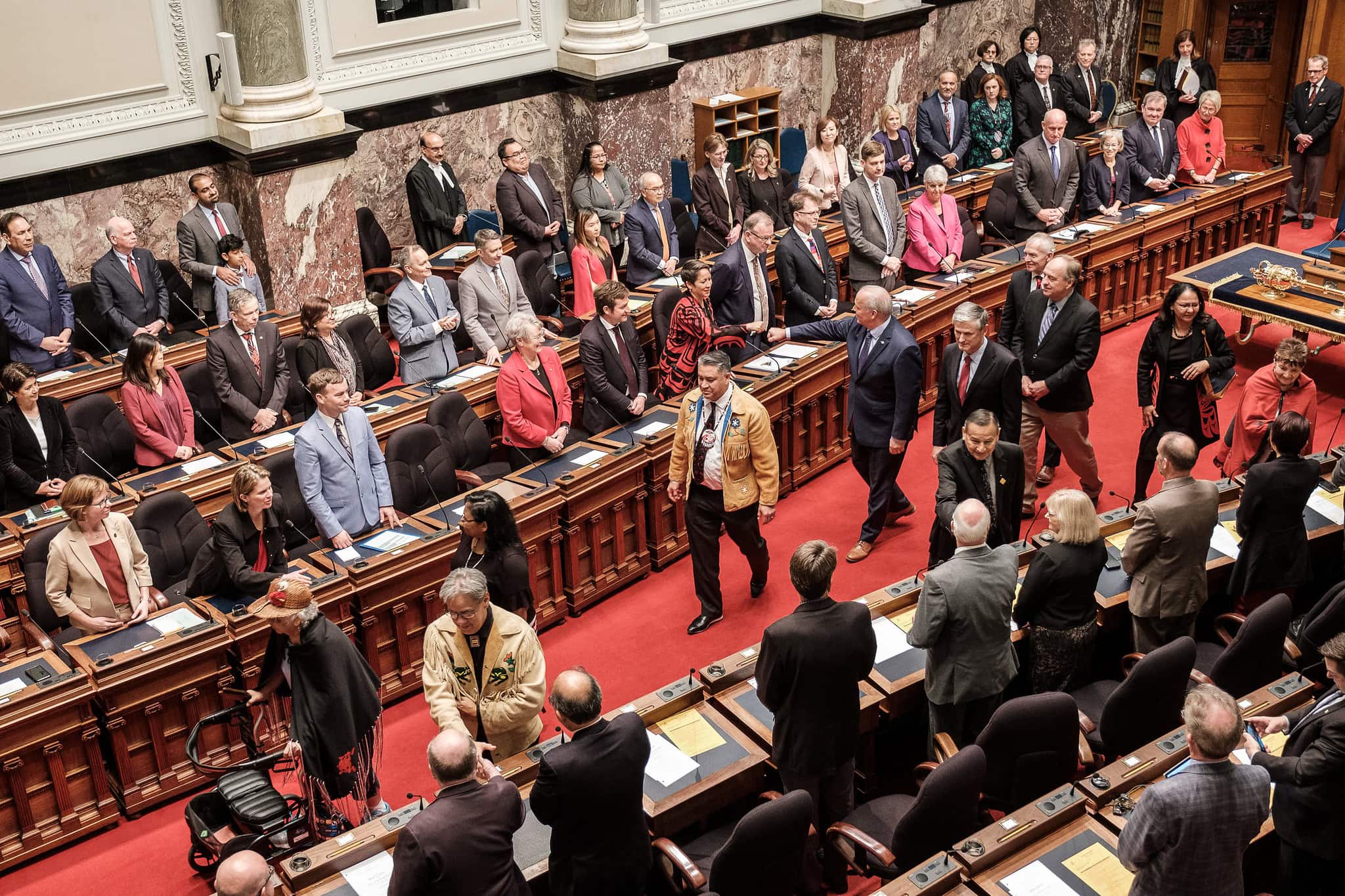
“Reconciliation involves everybody in this province,” McInnis said during his first media availability as minister. “We have 204 First Nations with unique needs and challenges around this province and I’m really excited to get to work.” (The federal government recognizes 202 First Nations in B.C.)
The pledge to axe the landmark human rights law was featured in the party’s campaign platform under a section titled “protect private property rights” — despite the fact that the act doesn’t deal with private property. Expect a bill to repeal one of the few pieces of legislation ever to pass unanimously in the B.C. legislature to be introduced in spring 2027.
Removing the law could jeopardize a handful of high-profile resource extraction projects enabled by DRIPA. Section 7 of the law allows for joint decision-making agreements with First Nations regarding industrial projects on their traditional territories. These agreements have helped advance a few natural resource projects, including the Eskay Creek revitalization, the Red Chris mine, the Galore Creek Project and a groundbreaking forestry plan on Vancouver Island.
Doerkson said his government will repeal DRIPA, even if doing so stalls projects created under Section 7. “I am committed to repealing DRIPA because it hasn’t worked,” Doerkson said in his post-ceremony press conference.
Ditching DRIPA will not eliminate the B.C. government’s consultation obligations with First Nations or eliminate friction related to Indigenous Rights and Aboriginal Title. Even in a post-DRIPA province, the constitutionally guaranteed rights of First Nations will likely continue to play out in the courts, as they have for decades.
Energy and mining reunited again in mega-resource ministry
The Conservatives are looking to speed up resource extraction projects with a promise to create fixed timelines for mining and exploration and make B.C. “the fastest place in North America to permit a mine and an LNG facility,” according to their campaign platform.
The party campaigned on reducing red tape, which will now be led by Minister of State for Red Tape Reduction Carson Binda. Binda, who will work within the Ministry of Economic Development and Tourism, is tasked with removing rules and requirements put in place by the NDP government until B.C.’s regulatory landscape is “back to 2017 levels.” The newly minted minister will be supported by “a specialized, business team working across government,” the party’s website says.
There are currently 41 major projects across the province, 16 of which are critical minerals and mining. Doerkson campaigned on the idea of “one project, one review” which aligns with Prime Minister Mark Carney’s commitment to work with provinces and territories towards a “one project, one review” approach on projects described as in “Canada’s national interest.” The federal approach aims to approve these projects within two years. The Red Chris mine expansion in northwestern B.C. is also a project of national interest.
Peace River South MLA Larry Neufeld will helm the Ministry of Energy, Mines and Petroleum Resources — the resurrection of a portfolio the former government abandoned in 2020. The appointment puts Neufeld, one of the most dynamic and prominent files in the province, with significant national relevance as well. First elected in 2024, Neufeld has a background in engineering and environmental remediation. He has served as the Conservative critic on energy, LNG and natural gas.
The Conservatives have promised to make B.C. an “energy superpower” by doubling liquefied natural gas (LNG) production by 2032 and tripling it by 2035. With Kitimat’s LNG Canada the only export facility currently operating in B.C., the province is already on track to more than triple the province’s LNG production by 2035 with five additional projects currently in development.
Meanwhile, Pete Davis, MLA for Kootenay—Rockies, will be the Minister of State for Mining. His riding is home to the largest steelmaking coal mines in the province, operated by Elk Valley Resources. The region has three new coal mine proposals and one expansion in the early stages of the environmental review process.
The party is specifically committed to supporting steel-making coal and wants to work with the federal government to “designate B.C. steel-making coal as a strategic mineral, strengthen domestic supply chains and local capabilities and use more Canadian steel.”
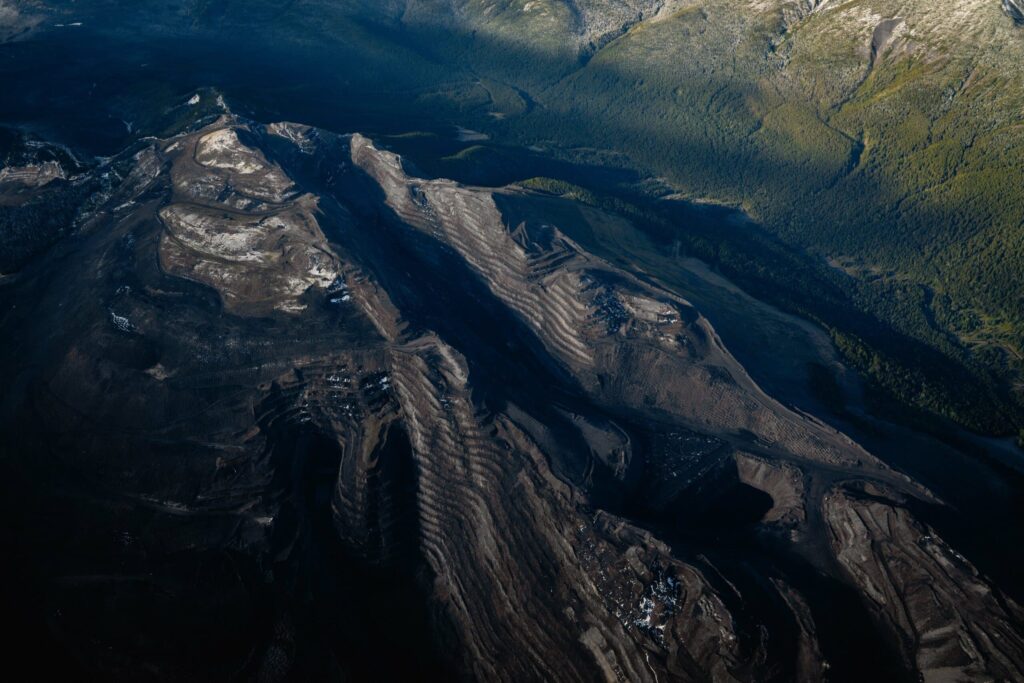
Elk Valley Resources is currently applying to expand and extend the life of its coal mines. It comes as the International Joint Commission — a watchdog that reviews transboundary water issues — gets set to release a draft report into the region’s decades of water pollution.
Plagued with tens of millions of dollars in penalties, recent reporting from The Narwhal found the company has quietly applied to eliminate three planned water treatment facilities and six phased water treatment expansions in the Elk Valley.
B.C. energy policy shifts could reshape emissions and power generation
The Conservative energy platform pledged to replace B.C.’s industrial carbon tax — known as the output-based pricing system — with new rules aimed at ensuring B.C.’s gas exports are competitive with the United States and Qatar.
Also on Neufeld’s to-do list could be a new approach to tallying B.C.’s greenhouse gas emissions, one that runs counter to the 2016 Paris Agreement. The Conservative platform proposed taking credit for “emissions avoided through cleaner B.C. exports,” using the example of exported gas replacing coal-fired power in other countries.
The new ministry is likely to be tasked with finding ways to boost B.C.’s energy production “from every available source,” as promised in the campaign platform. They will also have to decide on whether to move ahead with the previous government’s new oil and gas royalty framework. The plan, which has yet to be finalized, was subject to intense scrutiny following revelations last summer that the previous government had made a multi-billion budget error.
Doerkson said he is still getting up to speed on the file.
“I am committed to sorting that out very quick and I know that the industry wants a better understanding of that as well,” he told reporters following the swearing-in ceremony. Asked whether he is committed to implementing a new royalty framework by Jan. 1, 2027 — the deadline set by the previous government — Doerkson did not directly answer.
On renewables, the Conservatives support wind, solar and small-scale hydro power “where economics and reliability make sense,” as well as geothermal projects in instances where a business case can be made.
The new government may also mean a new direction for BC Hydro, especially if the Conservatives prioritize increasing the use of gas-power to meet electricity demand. That could be done by making natural gas projects eligible for BC Hydro’s calls for power.
When the 2027 budget drops, keep an eye out for changes to BC Hydro’s 10-year capital plan — released in 2024 and dubbed Power Pathway: Building B.C.’s Energy Future — especially around prioritizing renewable energy sources and reducing power-related emissions.
During the election campaign, the Conservatives also promised to “restore choice in energy for home heating and cooking” — a commitment to attacking restrictions and bans on natural gas use implemented by local governments — and overhaul B.C.’s Energy Step Code, which sets energy efficiency standards for new buildings.
Notably, the 2026 BC Conservative platform did not mention nuclear power, an energy source the party touted as part of the solution to B.C.’s energy crunch during the 2024 election.
B.C.’s forest ministry remains in place
Kiel Giddens, the MLA for Prince George—Mackenzie and the former Conservative labour critic, is the new Minister of Forests. Giddens, another former BC Liberal staffer, was elected in 2024.
Giddens faces a tall task: salvaging a sector that has been in decline for decades. On Nov. 9, Millar Western Forest Products Ltd. announced the closure of its Quesnel River pulp mill, affecting 90 workers. In September, the company said it would temporarily shutter the mill but that closure is now permanent. The Quesnel facility is one of at least three mills to close in B.C. in 2026.
On the campaign trail, the BC Conservatives promised to do many of the same things the NDP government did to bolster the province’s floundering forestry industry: secure support from the federal government to offset the impact of U.S. tariffs on softwood lumber, boost policies aimed at getting more woodfibre to mills and provide cash for mills to upgrade their operations.
The Conservatives’ forestry platform promised to make more trees available for harvest — but did not address how the party would ensure companies actually harvest the maximum amount allowed, something that has not happened in years due largely to the dwindling availability of economically viable trees to log. Other forestry-related priorities from the platform include streamlining permitting, reducing costs for forestry companies and supporting value-added manufacturing.
If the government sticks to its campaign promises, Giddens will also need to find a way to “resolve the old growth deferrals, which have dragged on under the NDP,” according to the campaign platform.
The Conservatives promised to protect B.C.’s “original old growth and the most endangered and rarest ecosystems,” during the campaign while returning other areas to logging. The campaign platform did not mention discussions with First Nations to identify priority protections for old-growth trees, something the previous government regularly cited when asked about the years spent working on the issue.
One of the NDP government’s final actions before the election began was to extend the deferral order protecting Fairy Creek old growth through Sep. 30, 2028. With the swipe of a pen, Giddens could end this order and several others enacted by the previous government.
Rebranded environment and land ministries take on new responsibilities
Donegal Wilson will lead the newly titled Ministry of Water, Land and Natural Resource Operations. She has represented the Boundary—Similkameen riding since 2024. Before politics she was the executive director of the BC Snowmobile Federation.
The former Ministry of Water, Land and Resource Stewardship was put in charge of much of the legislation that governs how land and freshwater is used in the province. The ministry took point on land use planning efforts with First Nations, which led to several cabinet orders temporarily barring new mineral claims being staked in the areas under negotiation. In opposition, the BC Conservatives routinely criticized the extent of those negotiations and the lack of transparency around the ongoing discussions. The mining claim deferrals are set to expire at the end of January unless the new government decides to extend them.
WLRS — as the ministry was sometimes called — was also responsible for realizing the government’s commitment to protect 30 per cent of lands and waters by 2030, known as 30-by-30. However, the reference to that commitment in the most recent mandate letter for the ministry was paired with a directive to enable mine exploration and development in the province’s northwest in partnership with First Nations.
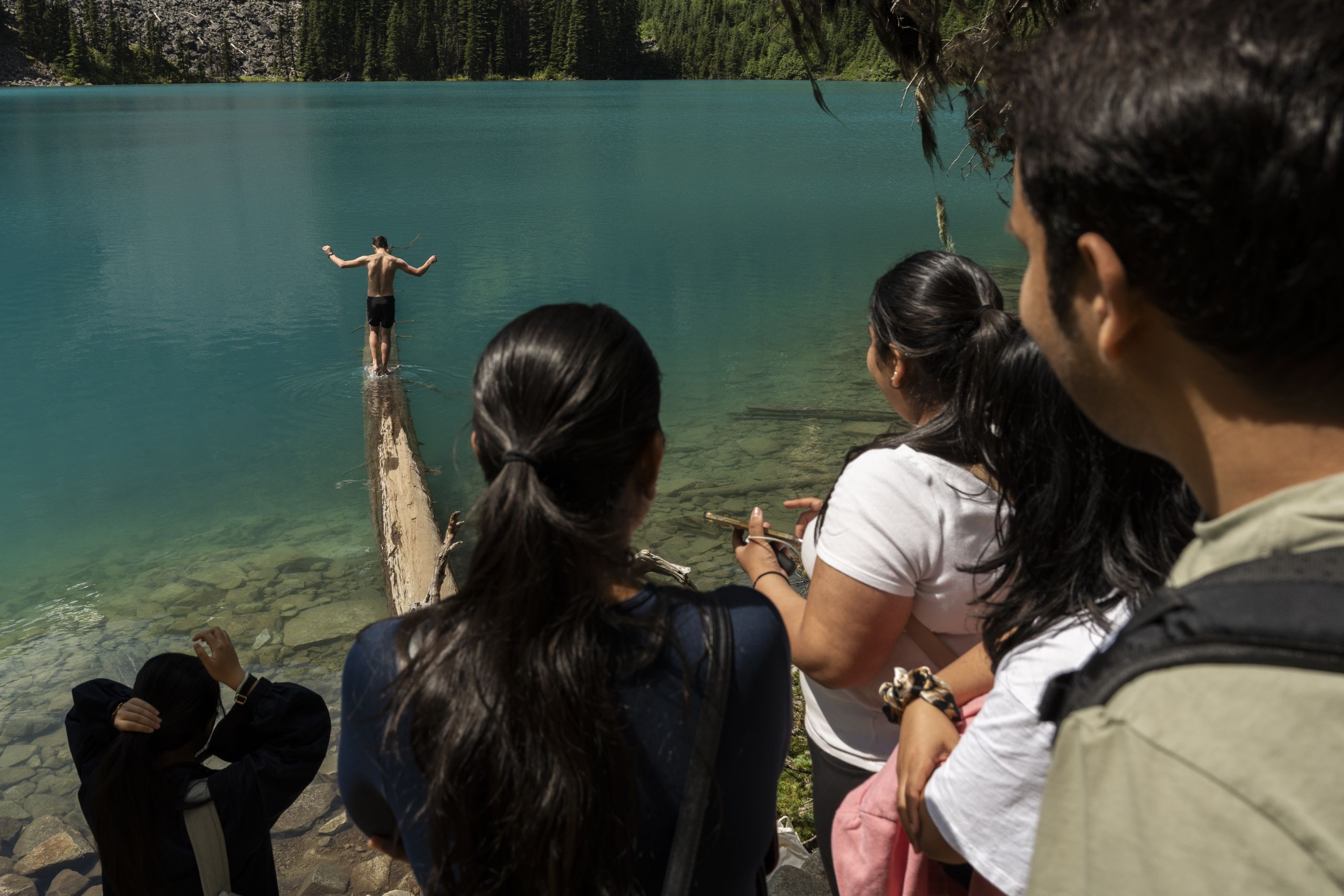
The BC Conservative platform claimed conservation is a conservative value but did not offer many specific conservation-focused commitments.
Meanwhile, parks was dropped from the name of the Ministry of Environment and Chilliwack—Cultus Lake MLA Áʼa:líya Warbus was tapped as minister. Elected in 2024, Warbus previously served as house leader for the BC Conservatives. Warbus, a member of the Stó:lō Nation, previously worked for the Stó:lō Xwexwilmexw Government and in the Capilano University’s Indigenous digital filmmaking department.
The new cabinet lacks a standalone ministry responsible for climate readiness — previously paired with emergency preparedness — and the Energy Ministry is no longer responsible for climate solutions. When The Narwhal asked Doerkson about these changes and where responsibility for climate issues now lies, he said Warbus will be his lead on the climate file.
“Á’a:líya Warbus is very committed to that file and so am I,” Doerkson said, adding that his Cariboo—Chilcotin riding has been hit hard by wildfires and drought in recent years.
“I love our back country, I love our communities and before I had this job as an MLA in 2020, I was a very committed outdoorsperson. We have some beautiful places.”
During the election campaign, the Conservatives promised “restore equal access to Crown land and provincial parks,” a pledge that appears to target annual temporary closures of Pipi7íyekw/Joffre Lakes Park, which restrict visits to members of Líl̓wat and N’Quatqua First Nations, whose unceded territories encompass the park. These reconnection periods have been taking place since 2023 and are intended to allow the nations to conduct traditional harvesting, as well as ceremonial and cultural practices.