




 8 min. read
The Alberta government introduced legislation Monday that would enable it to create Crown corporations to oversee and potentially build the province’s natural gas pipeline system.
The legislation closely mirrors leaked cabinet documents which the government tried to distance itself from when they were first published by The Narwhal in September.
That distance closed on Monday.
“[This legislation] gives Alberta the ability to plan for tomorrow instead of waiting for private industry to completely determine all of our opportunities,” Brian Jean, Alberta’s minister of energy and mines, said at a news conference.
“This legislation creates a framework for a future Crown entity to participate in energy transmission should it be determined that industry is incapable of independently meeting the needs as prescribed by Albertans.”
Summary
At a briefing earlier on Monday morning, officials from the Ministry of Energy and Mines stressed the legislation does not create Crown corporations, but sets up the legal framework for the government to do so.
The legislation also lays the groundwork for the government to create infrastructure plans for how it wants the natural gas system to expand and to compel private companies to build new infrastructure based on those priorities.
Officials said if no planning entity, which could include a Crown corporation, is established the minister of energy and mines could assume responsibility for planning the natural gas pipeline system.
“Crown entities involved in designated infrastructure could be directed to follow an approved plan,” an Energy Ministry official said, speaking on background at a technical briefing for journalists. “In whole or in part, private owners of designated infrastructure would be required to consider approved plans and could voluntarily agree to be bound by them.”
The new rules would also apply to existing infrastructure, according to the official.
Authority would rest with cabinet
The Energy Ministry official said there are not yet any stated repercussions for a private company that chooses not to comply, but it could include the government assuming control of planning and/or building the infrastructure.
The legislation only targets natural gas infrastructure formally designated by the government, but it’s unclear what that entails. Distribution systems which deliver gas to homes as well as rural gas utilities will be excluded.
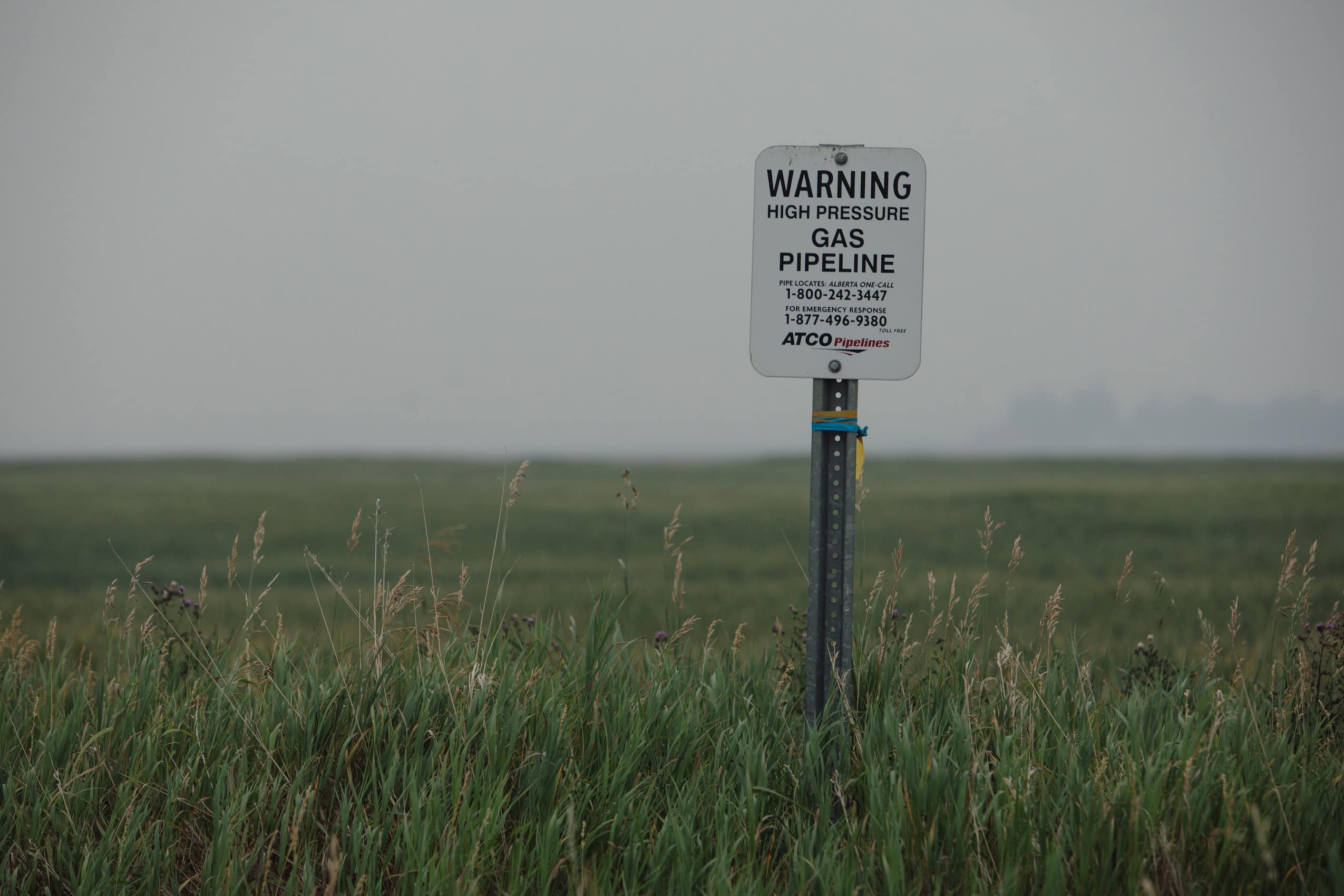
The government bill would also rewrite existing legislation affecting the way designated gas pipelines are approved, with final authority to approve or deny plans resting with cabinet.
Existing environmental and First Nations consultation regulations would remain in place.
It will also enable the Alberta Utilities Commission, the regulator of the electricity system and domestic gas transmission system, to “require an owner to extend or expand transmission facilities where necessary to serve demand,” the government official said.
The government can also deem a gas transmission pipeline as critical infrastructure, which would bring it under the purview of the Critical Infrastructure Defence Act, which imposes harsh penalties for broadly defined activities including willful destruction or obstruction of operations of a designated project.
Even if a private company submits plans for expansion of the gas transmission system, the cabinet could deny or withdraw approval if the plan is “not being carried out or is not achieving outcomes consistent with the act,” according to the official.
Details, however, still have to be worked out.
“Future decisions on governance, planning authorities, infrastructure plans, project designation, provincial participation and funding would be separate steps requiring the appropriate approvals,” the official said.
‘I’m not tabling an ultimatum’: Energy Minister Brian Jean
The moves put the government in direct conflict with private industry in Alberta, which builds and operates the natural gas distribution system. The leaked cabinet document showed the government was already planning to set aside millions of dollars to fight anticipated legal battles, particularly with TC Energy, one of the largest energy companies in Canada and the operator of the majority of the gas pipeline system.
The company has been quiet in response to the leaked documents, posting statements to its website highlighting investments in expanding the natural gas pipeline network. Recently, the company unveiled plans to build a new pipeline to the oilsands region, but only if demand warranted the investment.
Before the legislation was tabled on Monday, The Narwhal obtained a letter from TC Energy president and CEO François Poirier to Premier Danielle Smith outlining deep concerns with the changes and warned planned expansions of the system could be put on hold.
“The uncertainty created by the government’s proposed measures would mean companies and customers cannot make long-term capital and contracting decisions with confidence,” Poirier wrote on Nov. 21.
In the letter, Poirier said TC Energy attended a meeting with government officials on Nov. 19 to outline the company’s growth plans and was informed by those officials that the legislative path outlined in the leaked document was moving forward, “potentially as early as November 23.” TC Energy declined to comment on the letter.
The leaked documents said discussions with the company broke down over disagreements regarding the tolls TC Energy could charge to use its gas pipeline system and its resistance to expanding the system based on “speculative demand.”
Following the release of the legislation, TC Energy sent an official statement to The Narwhal.
“TC Energy is reviewing the legislation introduced today and assessing its potential implications for customers, investment and future growth of the integrated NGTL System,” it reads, referencing the pipeline network it operates known as the NOVA Gas Transmission Ltd. or NGTL. “We will provide further comment once that review is complete.”
When asked at a news conference if this legislation was a threat to companies such as TC Energy, Jean insisted the opposite was true and that it represented a “tremendous opportunity for industry.”
“I’m not tabling an ultimatum,” he said. “I’m tabling a piece of legislation.”

Jean did not directly respond to a question about whether the government was still anticipating lawsuits with private companies impacted by the moves, as was laid out as a possibility in the leaked document, and would not specify the nature of the conversations he’s had with gas companies including TC Energy.
“We’re certainly hoping that’s not the case,” he said. “TC is a good partner, as we have many partners. They’re a great company, and we’re looking forward to working with them to make and take advantage of what we have as a natural gas asset, which is an amazing opportunity for us if we move forward together.”
The letter obtained by The Narwhal from Poirier suggests the company isn’t sold on the legislation.
“We are concerned the government’s proposed policy direction could have significant, material and negative consequences for Albertans,” he wrote. “As the government’s own analysis acknowledged in the now-public cabinet brief, it could result, among other things, in increased costs for Alberta families and businesses and expose taxpayers to significant financial risk.”
Poirier asks the premier directly to “rule out legislation that would override” the current system “or establish government-backed infrastructure that unnecessarily duplicates the existing system.”
The new legislation does not authorize funding for any future Crown corporations or planning, which would require another bill, but it is the first step in establishing the systems Poirier opposes.
Debate over how new legislation could impact consumer utility prices
The cabinet document obtained by The Narwhal in September showed one justification for the government’s actions was to improve the price of Alberta’s natural gas, bringing in more revenue for government and industry.
The document warned, however, that it could also mean higher gas and electricity costs for Albertans.
Jean disagreed with that analysis at Monday’s press conference.
“I can’t imagine that leading to more expensive natural gas,” he said. “When you have supply and demand, and they work together effectively, you get what you need when you need it for the price you need it.”
This contradicts the government’s earlier assessment, which showed a doubling of natural gas prices may be required to support continued production, particularly for older wells.
The moves are designed not only to feed gas to industry, including AI data centres hungry for power, but also to help double oil production.
“I was tasked with doubling oil production, and in order to do that, I have to double gas production,” Jean said. “This is essentially that mandate the premier gave me, and I take it very seriously.”
‘Constraint on future investment and economic growth,’ including of AI data centres
Outlining the bill and the logic behind it, the government official said, “demand is growing from established and emerging sectors, including oilsands, petrochemicals, hydrogen, liquefied natural gas, electricity generation and data centres. Access to transmission capacity is becoming a constraint on future investment and economic growth.”
The leaked document published by The Narwhal in September also pointed to AI data centres, alongside increased oil and gas consumption, as a catalyst for the proposed plan, adding the province risks losing investment if it can’t come up with “speed-to-market” solutions.
The document said private ownership of natural gas transmission pipelines is throttling growth and that “escalatory and direct measures are now required,” especially as “the Government of Alberta is actively courting hyper-scale data centre capital and other investors.”
Updated on Nov. 23, 2026, at 3:14 p.m. ABT: This story has been updated to correct a typo in the spelling of TC Energy president and CEO François Poirier’s name.
Updated on Nov. 23, 2026 at 3:35 p.m. ABT: This article was updated to include a statement from TC Energy shared with The Narwhal after publication.