



 10 min. read
Around 13,000 years ago, our blue planet got a lot whiter.
Temperatures in the northern hemisphere dropped precipitously and in a relatively short time — decades, not centuries — big ice sheets spread down from the mountains, freezing out once-teeming habitats populated densely by flora and fauna.
Humans, and our non-human relatives, had been flourishing for some 10,000 years in the warm afterglow that followed the previous deep freeze. Abundance had bloomed in the glacial melt and from the sediment left on the land. Life stretched out in the absence of ice. But then the ice came back.
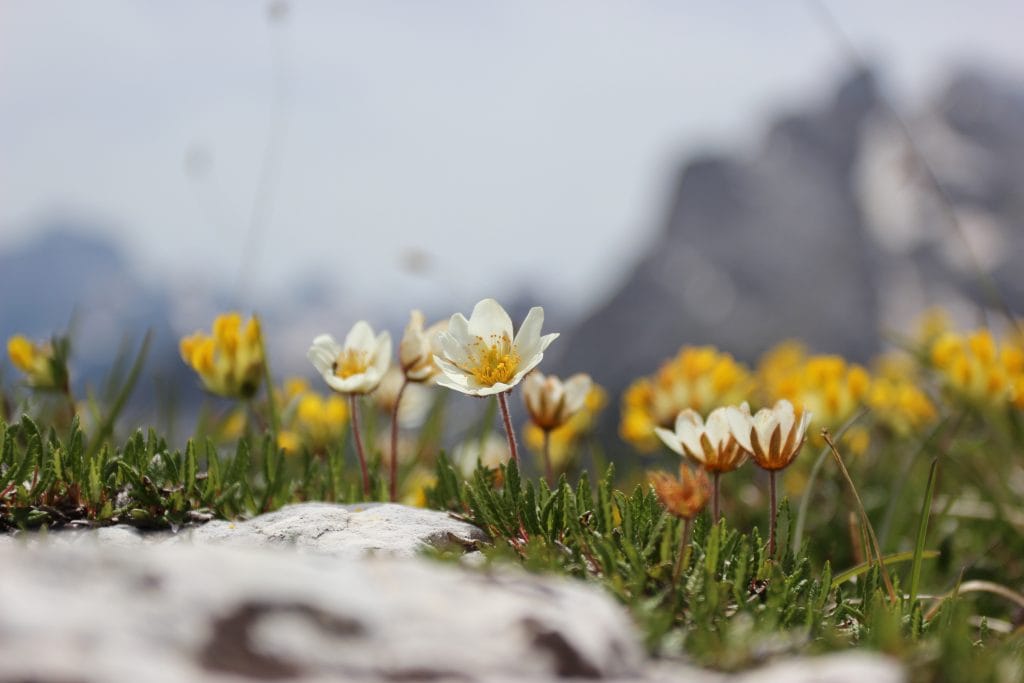
The ensuing thousand-year period is called the Younger Dryas, named for a little Arctic flower called Dryas octopetala. In some places, like Greenland, the freeze took mere months. Other parts of the northern world succumbed more slowly, but the overall process, in geological time, was like the heartbeat of a hummingbird. And then it was quiet.
_1.jpg)
The onset of the Younger Dryas may have been abrupt, but it wasn’t catastrophic. Humans adapted. Clinging to refugia — pockets of the landscape where conditions were favourable enough to support plants and animals despite the pervasive cold — we endured. Ultimately, we thrived. When the period ended, as abruptly as it had arrived, so began the Holocene.
Like the humans who watched the world change so quickly to white and like their descendants who felt the rapid return of the sun, we are living through a period of dramatic and accelerating changes to our environment.
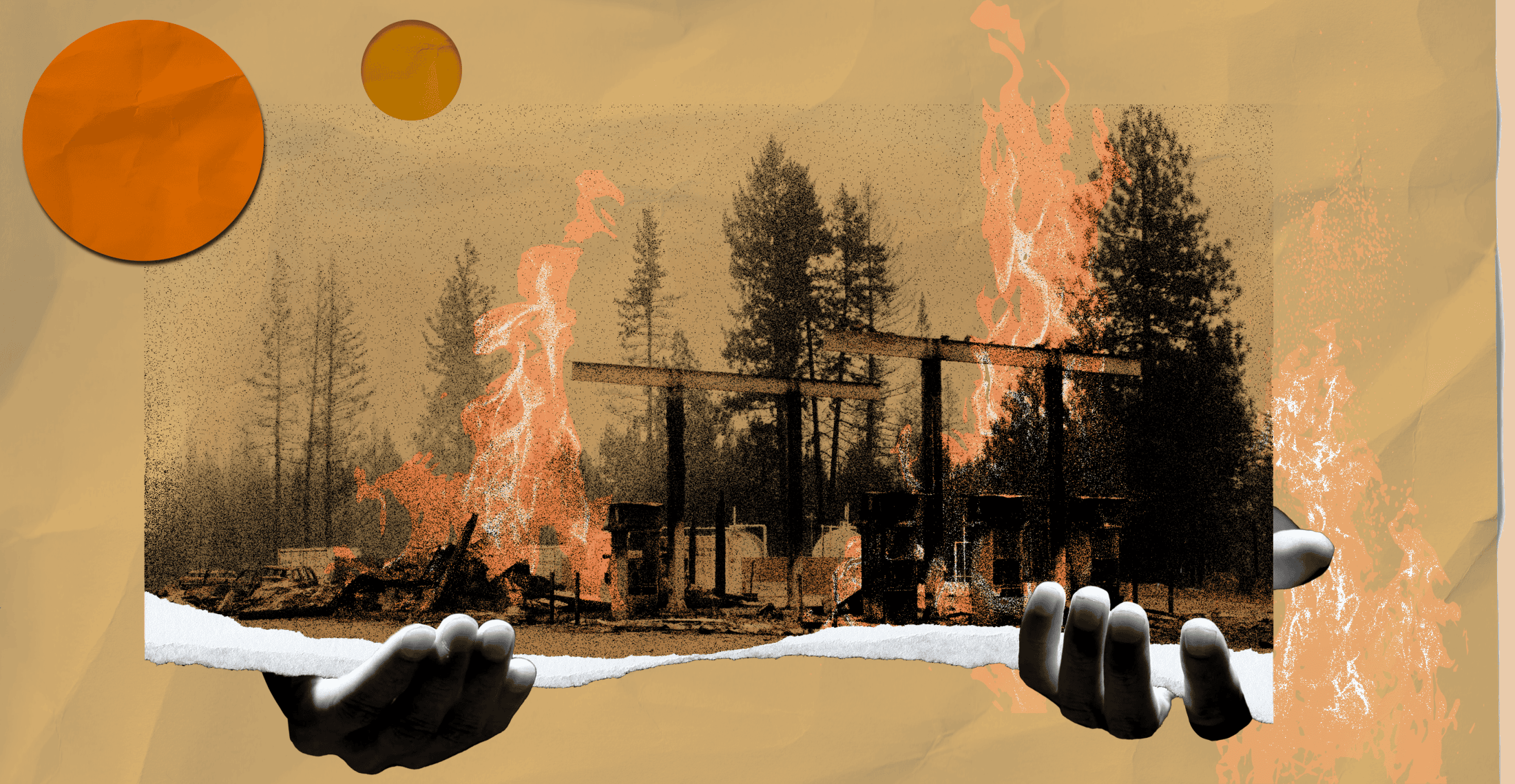
But ours is a different time, one characterized not by ice, but by fire.
Last fall, while walking down an alleyway in my northern British Columbia town, I ran into an acquaintance. We traded the usual pleasantries and then talk turned, as it so often does, to the weather. It was hot and dry and the skies were choked with the haze from a spate of wildfires that had flared up after the season appeared to be mostly over.
“This isn’t normal,” my friend insisted.
Unlike me, he grew up in the area. As an avid outdoors enthusiast and former mountain guide, he was well-positioned to say what’s normal and what’s not. He seemed unsettled, agitated.
“I have never seen a September like this,” he said.
We are living in the Anthropocene, a term many geologists have adopted to characterize the era where humans are the primary agents of change on the planet. Our actions over the past few centuries have led to the increasingly erratic and unstable climatic systems wreaking havoc across the globe. As we grapple with the impacts of our collective past, we also need to grapple with ourselves as we come to terms with how we process the changes we are experiencing. We are reckoning with a restless world.
Those same wildfires that suffused my little mountain town with the smell of campfire blanketed the city of Vancouver with thick smoke. For a few days, the air quality there plummeted to rank as the worst in the world. It all felt surprising somehow, even as we collectively chided ourselves for being surprised.
Humans are incredibly adaptable — but we crave certainty. We intuitively cling to patterns we’ve seen before to guide our expectations about what a day, month or year might bring. We plan around those expectations: picnics and road trips, soccer games and barbeques.
As the world around us continues to change, we begrudgingly change with it. We plan now for wildfire season — unheard of in my childhood. We slather our kids in sunblock and pack asthma inhalers. We don’t roast marshmallows on crackling fires anymore when we camp out in the woods in the summer because of months-long fire bans. But change is a painful and iterative process and we keep setting a new normal to anchor ourselves to, again and again and again.
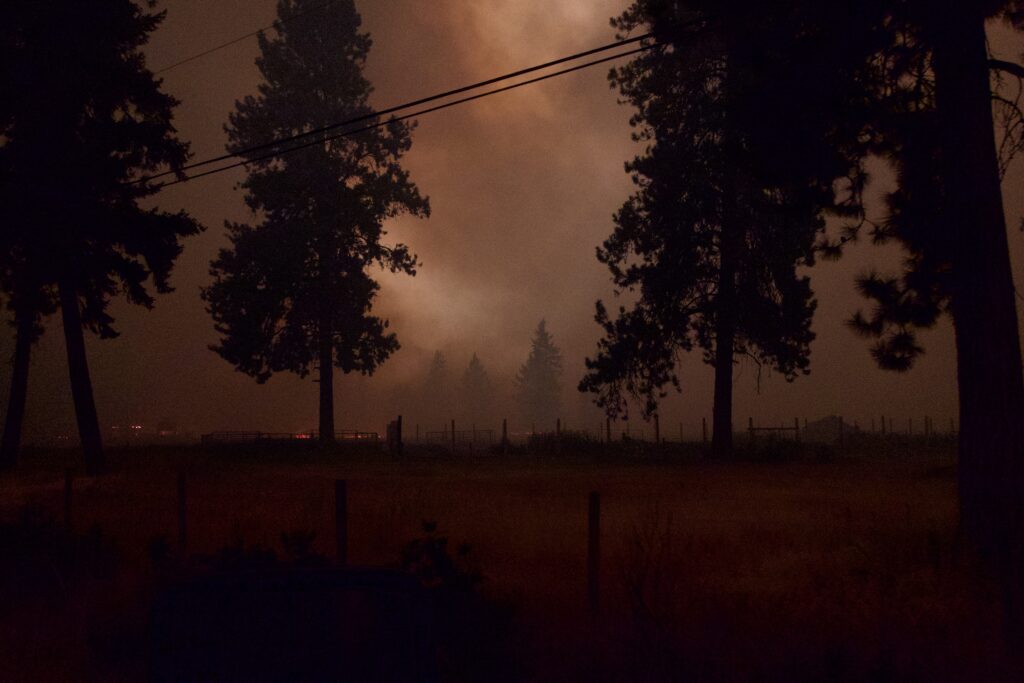
Our preference for certainty can have profound impacts on mental health. Very little quantitative research has been done but there is a growing consensus that climate impacts — including the anticipation of those we have not yet experienced — are leading to a mental health crisis.
“Climate change has been associated with numerous mental health conditions including posttraumatic stress disorder (PTSD), depression, anxiety, grief, substance use disorders and suicidal ideation among many others,” Elizabeth Wiley, a physician, wrote in the BC Medical Journal in 2019.
We do plan further ahead, peeking into possible futures with predictive climate models to design and build infrastructure we hope will protect our communities from fires and floods and more. But our world is changing as fast as that flickering hummingbird heartbeat and we act as if each pulse will last forever. There’s only so far we can see.
In our temporal myopia, we need to get more comfortable with not knowing — and embrace uncertainty as an essential part of our existence.
Our ancestors found refugia to withstand an icy world that became increasingly hostile to life. Now, as we speed inexorably into a hotter future, we are confronted with a growing list of urgent problems we need to prepare for, and adapt our existence to meet. We need to build our refugia.
David Stainforth, a physicist and climate scientist from Oxford, England, says policy makers and scientists need to pay closer attention to uncertainty — and build for unpredictable outcomes. He told me climate modelling has an important role to play in adaptation, but relying too heavily on a particular set of predictions, however sophisticated the models may be, can inadvertently fall prey to the human tendency to seek certainty.
“It will kind of spuriously get rid of the uncertainty, meaning you can now build your flood defences — but you’re building the flood defences to protect yourself against the future in the model,” he said on a video call last year. “And the future in reality could be very, very different from that. There’s a danger you might misdirect society.”
In his 2023 book, Predicting Our Climate Future, Stainforth makes a case for embracing the uncertainties in climate models as a guiding principle for building resiliency at a community level. As he wrote in an essay for Aeon, uncertainties compound over decades until “almost everything can influence almost everything else.”
“Changes in Arctic sea ice could influence the Indian summer monsoon,” he wrote. “Changes in rainfall in the North Atlantic could influence temperature patterns in central Africa.”
In essence, Stainforth argues we risk catastrophe if we are too reliant on the predictions of complex climate models — which can do many things but not all things — for the decisions we make about how to survive the inevitable changes that are coming. But by embracing uncertainty, he says, we can build refugia capable of withstanding impacts we haven’t yet imagined.
Michele Koppes, a professor in the department of geography at the University of British Columbia, says accepting uncertainty can also provide a path through climate-related grief and anxiety. Koppes studies the effects of climate change on mountains and glaciers and works with communities living with the impacts, which include “dwindling water resources and increases in landslides and natural hazards like outburst floods.” That work began with a focus on the physical changes to the landscape, but has shifted to focus on the human side.
“Who are the people that are living in the closest proximity to these impacts and what are their stories?” she said. “How are they perceiving this and what do they need in order to be resilient and to feel like they can continue their livelihoods and their lives in the face of all this change?”
She said asking these questions helped her process the loss and helplessness she was feeling as she watched the places she loved melt away. Reframing how we think about climate change asks us to accept uncertainty as a core principle — and while that can be deeply uncomfortable it also offers a truer understanding of the world around us.
“The notion of certainty is a fallacy,” Koppes said. “Or maybe I’ll be more specific: the notion of control is a fallacy.”
“The more I spend time on this earth, the more I recognize how we are just one small part of a complex system,” she explained. “And complex systems are the process of emergent phenomena — you never quite know where it’s going to go. The more we think that we understand or we have control, or we’re certain about one aspect, the further we are from truly knowing everything is a web of relations.”
Faced with the onset of the Younger Dryas, our ancestors probably didn’t sit around arguing about how to stop the ice from advancing. It’s far more likely they took stock of their surroundings and found ways to act quickly to protect the things they cared about most.
“Some people will care about the decreasing glaciers and certain types of wildlife, whether that’s butterflies or polar bears, or whatever,” Stainforth said. “But I don’t think most people do. Their cares are smaller; their cares are more personal. I think the number one thing that we care about with respect to climate change is protecting our societies and our cultures. It’s the world that we have, the world we’ve grown up in, our support structure.”
Stainforth said grounding conversations in how climate change affects what we care about is essential to spurring action — and hope.
“There will be places where the train track needs rebuilding because of landslides, because of flooding or because of drought, or because of changes in the grasses that are growing there,” he said. “These things are going to happen, and they’re going to happen more and more frequently, because that’s what climate change is.”
Responding to impacts will be a steady drain on government resources, he said, which in turn means “we won’t have resources for other things — and that can be culture, it can be transport, it can be sports facilities or it could be health or education.”
“It’s a threat to everything,” Stainforth said. In response, we have to decide what to save. “It’s about building a future that we want,” he said.
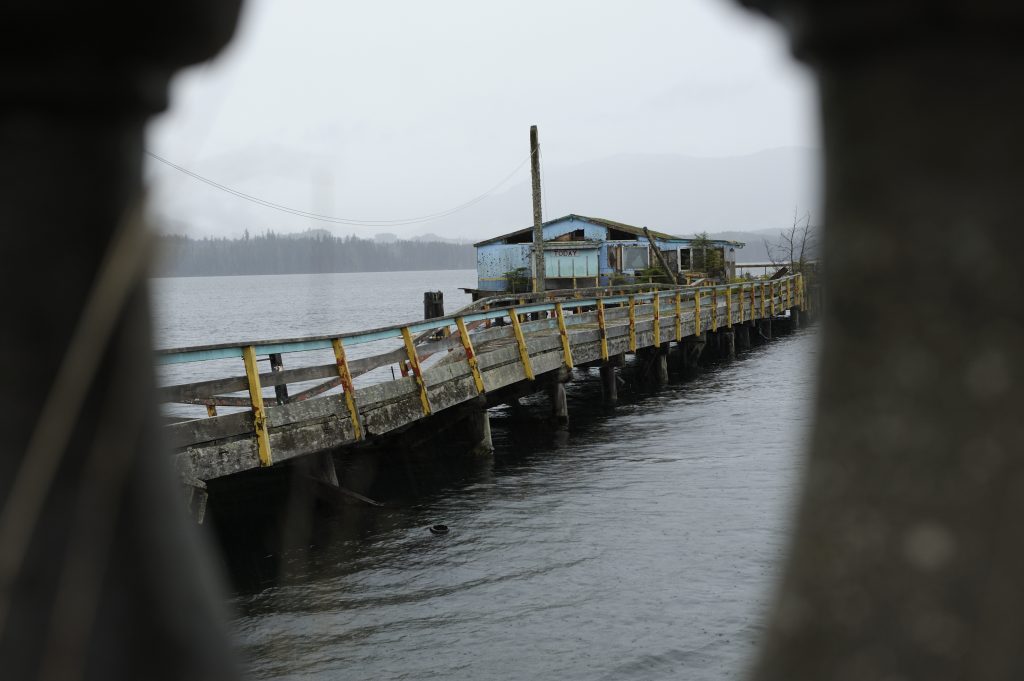
When American author and activist Rebecca Solnit wrote about hope, she emphasized the value of uncertainty.
“Hope locates itself in the premises that we don’t know what will happen and that in the spaciousness of uncertainty is room to act,” she wrote in her 2004 book Hope in the Dark. “When you recognize uncertainty, you recognize that you may be able to influence the outcomes — you alone or you in concert with a few dozen or several million others.”
If we believe too firmly in a predictable future, Solnit writes, we risk setting ourselves on a path of apathy. Therein lies grief and anxiety and ruin. But if we accept uncertainty as a fundamental part of change, we can act accordingly.
Koppes believes we can see this belief at work in the next generation. Her students have loosened their grip on certainty, she says, but not in an apathetic way.
“There’s no longer any expectation that one can take a snapshot of time or a memory of place and that we can either get back to that time or that place — or that the environment and the climate was ever in a form of stasis,” she said. “They’re grasping at those components of their environments that are still bringing them joy, knowing that they might not exist for their lifetime.”
In other words, her students are accepting and embodying an existential truth: that everything is always in a state of change. And while we can’t be certain about the risks of the future, we also can’t predict how beautiful or resilient it might be.
One day we might name this period for Chamaenerion angustifolium, the fireweed. Or maybe we’ll go for Delonix regia, sometimes called the Phoenix tree. Like our distant relatives, not just enduring but thriving, we’ll rise from the ashes into a world we co-created that protects all that we hold dear.