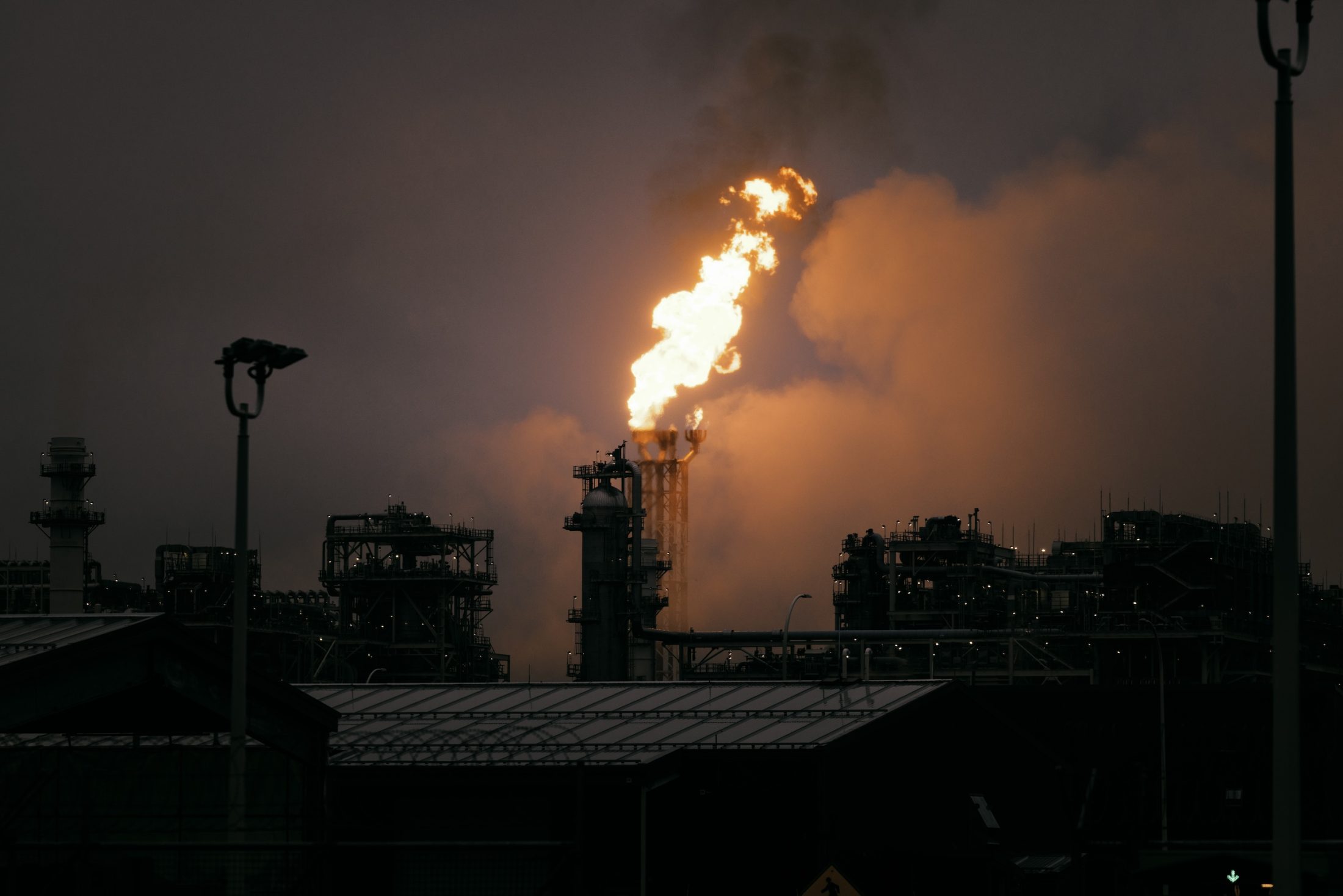
LNG Canada is sending more gas than expected up a flare stack in order to protect its equipment from damage. Kitimat residents have questions about what comes next.
Flaring from the LNG Canada facility in Kitimat, B.C, is a hot topic around town — it’s not easy to ignore a 90-metre-high flame. And, as I first reported last summer, some neighbours say their lives have been significantly disrupted by the noise, light and smoke.
“A new facility the size and complexity of LNG Canada requires a break-in period to stabilize, which is normal,” a spokesperson for the company told me at the time.
I wanted to know what they weren’t telling me. So I filed a freedom of information request and teamed up with freelance journalist Lauren Watson to review more than 2,000 pages of internal documents.
The facility burned more than 1.7 million cubic metres of gas on a single day in September. That’s more than 150 times what the liquefied natural gas (LNG) processing and export facility would have needed to burn if its equipment was working as expected.
While that day was an outlier, the LNG behemoth — run by a consortium of foreign-owned companies led by Shell — consistently burned upwards of 15 times more gas than typical, for months on end. The problem was later described as “an integrity issue” with one of the flare stacks. Feeding high volumes of gas to the flames became necessary to protect the infrastructure. Fixing the issue could take three years.
The documents show LNG Canada has known about an issue with its flaring equipment since December 2024 — and the BC Energy Regulator, a provincial government agency responsible for making sure oil and gas companies follow the laws and regulations aimed at protecting communities from harm, has known since at least April 2025.
“Flaring during commissioning and early operations is a normal occurrence in any LNG asset,” a spokesperson with LNG Canada told us, declining to answer several questions about the equipment issue and how the consortium had handled public communications.
In notifications about the flaring, the consortium regularly said its flaring operations were “normal.” As I reported last year, residents living nearby weren’t convinced.
The regulator admitted awareness of the issue and said it has been working with LNG Canada to get things under control, but it hasn’t issued any fines to the consortium.
“The [BC Energy Regulator] does not disclose information with respect to any ongoing investigations that may be underway, but to date, no penalties have been issued to LNG Canada,” a spokesperson wrote in an email.
We’re not stopping here, as we still have a lot of unanswered questions. Check out the full story on our website, and stay tuned for more reporting from me and Lauren in the coming weeks.
The judge heard testimony from several journalists who were involved in coverage of the tensions over construction of the Coastal GasLink pipeline in November 2021, around the time of Amber’s arrest.
Filmmaker Melissa Cox was arrested the day before Amber, at a different location, while gathering footage for YINTAH, a documentary about Wet’suwet’en resistance. CBC reported on her testimony in court this week.
Check out this page for more information about the case, including how to attend the Vancouver courtroom in person or otherwise support The Narwhal’s fight for press freedom.
If you’re interested in looking back on The Narwhal’s coverage of the Coastal GasLink pipeline around that time and beyond — including Amber’s photos and reporting on the circumstances of her arrest — take a look at this Bluesky thread.
This week in The Narwhal
Watch: Ontario is returning to the office. What does that mean for traffic and emissions? Produced by L. Manuel Baechlin
The Doug Ford government has sent public workers back to the office five days a week. We explain what that means for commuters around Toronto and beyond.
Woodfibre LNG didn’t monitor salmon correctly. B.C. took 4 months to tell the public By Matt Simmons READ MORE
‘Incredible alignment’: Canada is picking away at an oil and gas industry wish list By Carl Meyer READ MORE
Could energy co-ops ease BC Hydro’s power crunch? By Shannon Waters READ MORE
Canada failed to protect 25% of lands and waters by 2025 By Ainslie Cruickshank READ MORE
Opinion: Ontario cities are policing gardens and ignoring biodiversity By Elaine Anselmi READ MORE
That feeling when you find an important story buried in 2,000 pages of government documents. Tell your friends to subscribe to The Narwhal’s newsletter if they like a good scoop!
Here at The Narwhal, we do journalism differently. As an independent non-profit, we’re accountable to you, our readers — not advertisers or shareholders. So we measure our success based on real-world impact: evidence that our reporting influenced citizens to hold power to account and pushed policymakers to do better.
Our stories have been raised in legislatures across the country and cited by citizens in petitions and letters to politicians.
Take our reporting on Alberta’s decision to allow cougar hunting in parks, which was cited in an official ethics complaint against the parks minister. And, after we revealed an oil and gas giant was permitted to sidestep the rules for more than 4,300 pipelines, the BC Energy Regulator started posting the exemptions it grants publicly.
This kind of work takes time, money and a lot of grit. And we can’t do it without the support of thousands of readers just like you.
Here at The Narwhal, we do journalism differently. As an independent non-profit, we’re accountable to you, our readers — not advertisers or shareholders. So we measure our success based on real-world impact: evidence that our reporting influenced citizens to hold power to account and pushed policymakers to do better.
Our stories have been raised in legislatures across the country and cited by citizens in petitions and letters to politicians.
Take our reporting on Alberta’s decision to allow cougar hunting in parks, which was cited in an official ethics complaint against the parks minister. And, after we revealed an oil and gas giant was permitted to sidestep the rules for more than 4,300 pipelines, the BC Energy Regulator started posting the exemptions it grants publicly.
This kind of work takes time, money and a lot of grit. And we can’t do it without the support of thousands of readers just like you.
Your access to our journalism is free, always. Sign up for our newsletter for investigative reporting on the natural world in B.C. — and across Canada — you won’t find anywhere else.
Your access to our journalism is free, always. Sign up for our newsletter for investigative reporting on the natural world in B.C. — and across Canada — you won’t find anywhere else.
As a journalist who has spent decades asking questions that cut through noise, I’m cautious where I place my trust. The Narwhal has earned it — through rigorous, independent reporting, careful, on-the-ground storytelling and a clear commitment to the public interest. It’s why I’ve become a member myself. Will you join me? The Narwhal needs to add 230 new members this month to keep telling these important stories. And if you join now, you’ll get a special tote bag as thanks.
Anna Maria Tremonti, founding host of CBC Radio’s The Current and member of The Narwhal’s board of directors
As a journalist who has spent decades asking questions that cut through noise, I’m cautious where I place my trust. The Narwhal has earned it — through rigorous, independent reporting, careful, on-the-ground storytelling and a clear commitment to the public interest. It’s why I’ve become a member myself. Will you join me? The Narwhal needs to add 400 new members this month to keep telling these important stories. And if you join now, you’ll get a special tote bag as thanks.