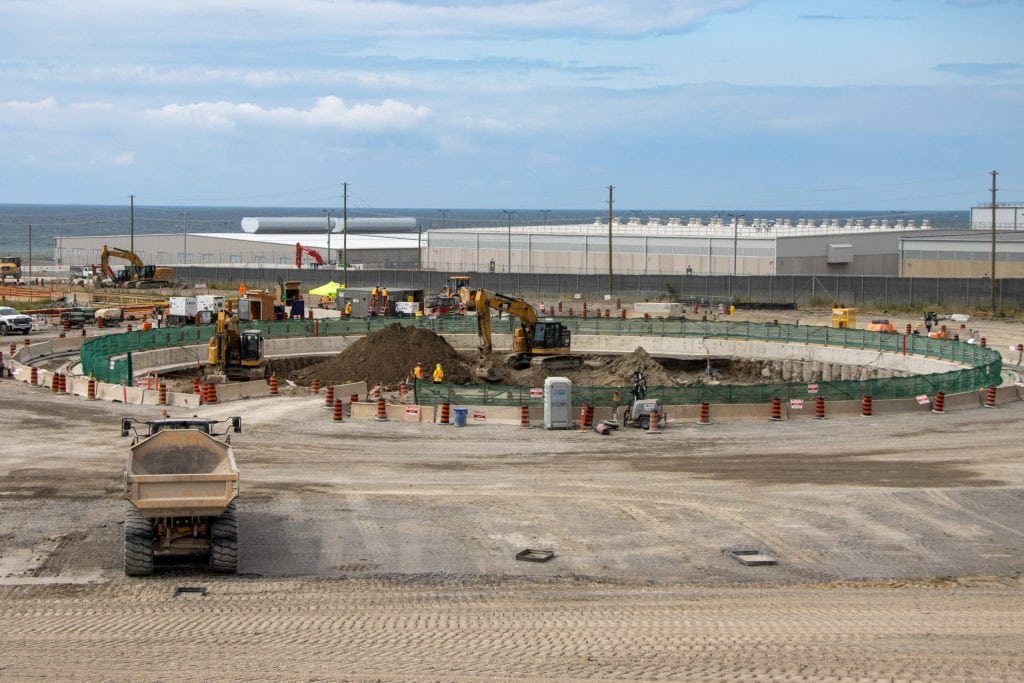
Ontario’s first small modular reactor is being built at the Darlington Nuclear Generating Station in Bowmanville, Ont.
Photo: Supplied by Ontario Power Generation
What’s a small modular reactor and what does it have to do with Great Lakes water? New reporting by The Narwhal dives into Ontario’s big plans for small nuclear power plants
“Avoid acronyms literally 99 per cent of the time.”
That’s the first rule in the first section of The Narwhal’s style guide, a document that outlines how we use words and language to communicate our ideas.
We want our stories to be understandable to as many people as possible, and that means avoiding the jargony, acronym-laden language used in a lot of government, scientific and technical writing.
But acronyms are sometimes better than the alternative. You might not be familiar with the term “light amplification by stimulated emission of radiation,” but you probably know what a laser is.
And so, as the English language evolves, we expect no end to internal debates about which acronyms are OK to use, and how often.
The latest challenger? “Small modular reactors” or “SMRs” — terms that refer to next-generation nuclear power plants that are smaller in size and quicker to build. Only a couple are in operation worldwide, and the Ontario government wants to build the first in North America, then three more again after that.
Her reporting dives deep into what we know about the plan to build four SMRs at the Darlington nuclear plant in Bowmanville, Ont.: how they’ll be funded, where the radioactive waste will go and what does “small modular reactor” really mean, anyway?
Ontario isn’t unique in its nuclear expansion ambitions. There are plans for SMRs to pop up all around the Great Lakes, on both sides of the Canada-U.S. border. It turns out, putting water-thirsty nuclear power plants next to the world’s largest freshwater system is pretty ideal.
The same goes for AI data centres (there’s another acronym that’s increasingly creeping into our writing), which typically require large volumes of water to keep the computer systems cool.
As these two industries promise to reshape land, water and economies across the Great Lakes region, The Narwhal has joined forces with four U.S. publications to better understand what it all means.
Shockwave is the third annual series produced by the Great Lakes News Collaborative, with support from the Mott Foundation. We’ll be publishing more stories over the coming months about what rising energy demand means for the future of the Great Lakes — you’ll find them posted here.
We’re the sole Canadian member of the news collaborative, but I assure you the cross-border relations are much friendlier than in the political sphere. We live together with these critical waterways, and it’s incumbent upon us to recognize their value and understand what’s really at stake.
Take care and TTYL,
Elaine Anselmi
Ontario bureau chief
P.S. Tax receipts have been sent out! If you had a recurring monthly or annual donation to The Narwhal in 2025, be sure to check your inbox for an email with the subject line “Your 2025 recurring donation receipt,” sent from [email protected]. (If you made a one-time gift last year, that receipt was sent on the day of your donation.) Check here for answers to membership and tax receipt questions — or drop us a line.
After five weeks in a Vancouver courtroom, The Narwhal and Amber Bracken’s trial against the RCMP is on pause. Proceedings will resume April 9 and through the following week. Final arguments are now expected to be heard over two weeks beginning June 8.
A huge thanks, again, to everyone who has sent words of support, joined us in person in the courtroom or contributed to our legal fund. It takes a village, and we quite literally could not do it without you.
We’re in it for the long haul, because all journalists in Canada should be able to do their jobs without risk of police interference — and we think that’s worth fighting for. Together, we’ll keep up the fight for as long as it takes.
Google us?
If you’re reading this, it hopefully means you appreciate getting news and information from The Narwhal. Good news for you: it’s now possible to tell Google that you’d like to see relevant stories by The Narwhal in your search results more often. Here’s how:
Click here or copy-paste this URL into your browser: www.google.com/preferences/source?q=thenarwhal.ca
You might be prompted to sign into your Google account, if you aren’t already.
Then, click to select the box to the right of “The Narwhal.”
That’s it! This tiny action helps you get the high-quality, independent reporting you’re looking for — and helps us make sure the people who are interested in our stories can actually find them. Thanks so much!
This week in The Narwhal
As grocery prices climb, one farmer bets on growing African staples in B.C. By Steph Kwetásel’wet Wood
People said he was crazy to start a farm based in African foods. ‘It’s good to be crazy in a good way,’ Canadian Black Farmers Association founder Toyin Kayo-Ajayi says.