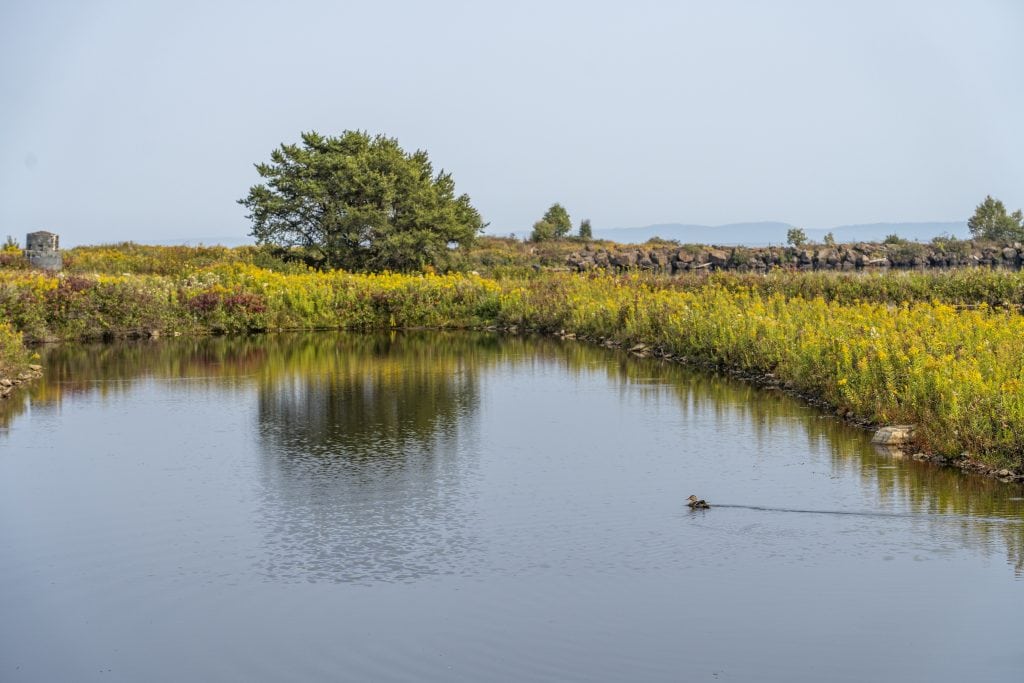
For nearly 80 years, conservation authorities have been tasked with protecting public health and safety related to the province’s watersheds. The Doug Ford government has begun the process to consolidate them from 36 down to nine.
Photo: David Jackson / The Narwhal
I’m used to getting inside information from confidential sources. But the volume that came to me this time from conservation authorities was surprising
Fatima Syed has been reporting on energy issues and more from Mississauga, Ont., since 2019, digging into documents obtained through freedom of information requests and speaking regularly with industry sources.
Ontario reporter Fatima Syed landed quite the scoop this week…
Before I hand her the reins to tell you all about it — let’s celebrate! On this day in 2018, Emma Gilchrist and I swallowed our doubts and officially launched The Narwhal.
Today, we’re ringing in The Narwhal’s eighth birthday alongside more than 7,300 members who make it possible with recurring donations, and thousands more who chip in each year — including 41 new supporters since yesterday! Here’s what one new Narwhal had to say:
“Your investigative journalism deserves support! I admire your commitment to our environment and your energetic pursuit of environmental justice.”
For 80 years, a network of watershed-based conservation authorities has sought to protect the sources of drinking water across Ontario.
Two weeks ago, the heads of those agencies received a letter from the provincial environment minister. It directed them to halt any “significant financial, asset or employment decisions.”
Four days later, the letter landed in my inbox from three different sources. Then came the leaked recording of a meeting between Environment Ministry staff and conservation authority officials discussing the directive, among other pressing issues.
In case you missed it, Doug Ford’s government plans to dramatically overhaul Ontario’s conservation authorities by consolidating them from 36 to nine in 2027. That raised real concerns about the agencies’ ability to do their work effectively — and that was before the minister told them to stop making significant decisions.
I’m told by a ministry official — who called me minutes before my story deadline and spoke in an unofficial capacity — that this kind of directive is normal for a consolidation. But one public servant told me it “essentially handcuffed” conservation authorities, while undermining their independence.
You can read about all this in my latest story. It relies on a lot of anonymous sources, which, in Ontario, is becoming par for the course. But here’s what I want to tell you: anonymous or not, the volume of intel that came my way is not common. That tells me that people on the inside want you to know about this — even if the risk of speaking out is enormous.
In recent months I’ve heard from longtime sources, who’ve informed countless stories with insider information, that they’ve been instructed not to speak to journalists, on or off the record. They say doing so anyway could mean losing their jobs or their funding, all of which is firmly in the government’s hands.
Tied with weakened freedom of information laws — which now allow Ford and his ministers to keep their own communications secret — telling well-informed stories has never been more difficult in Ontario.
I’ve written about this before. But the fear I spoke of then has become magnified as the Ontario government seeks to further centralize its power over information and decision-making.
The government’s consolidation of conservation authorities is just one of the many changes it is making to water protections. Just today, Ontario passed a bill that could lead to privatization of public water systems.
Together, these decisions will ultimately impact Ontario’s water, the lifeline of the natural world that we’re a part of. That’s why I’ll keep trying to talk to whomever I can, to understand what the heck is going on. If that’s you, get in touch.
We’re looking for experienced reporters who can land ambitious stories about the natural world, help The Narwhal’s storytelling reach more people and serve as leaders within our editorial team.
Know someone who might fit the bill? (Maybe it’s you!) Please check out the job postings, and spread the word. Applications are due June 7, and the new positions will begin in October.
This week in The Narwhal
Nature makes Canada a whole lotta money. We’ve got the charts to prove it By Julia-Simone Rutgers
Conserved and protected areas in Canada are invaluable — but we have 9 charts that try to capture their economic impact.
From pipelines to mines, Canada’s environmental reviews could be transforming. Here’s how By Carl Meyer READ MORE
The Trans Canada Trail connected the country coast to coast. Not anymore By Cameron Fenton READ MORE
Will Canada’s carbon tax rules kill its pipeline romance with Alberta? By Drew Anderson READ MORE
Inside Haida Gwaii’s historic plan to ditch diesel By Zoë Yunker READ MORE
Why critics say changes to B.C.’s freedom of information law could make government less transparent By Shannon Waters READ MORE
All we want for The Narwhal’s birthday is cupcakes, belly scratches and to tell everyone about the decisions being made today that will affect the natural word in Canada for generations to come. You can help — become a member today!