







 9 min. read
This investigation is a collaboration between The Narwhal and Point Source, a U.K.-based investigative journalism organization.
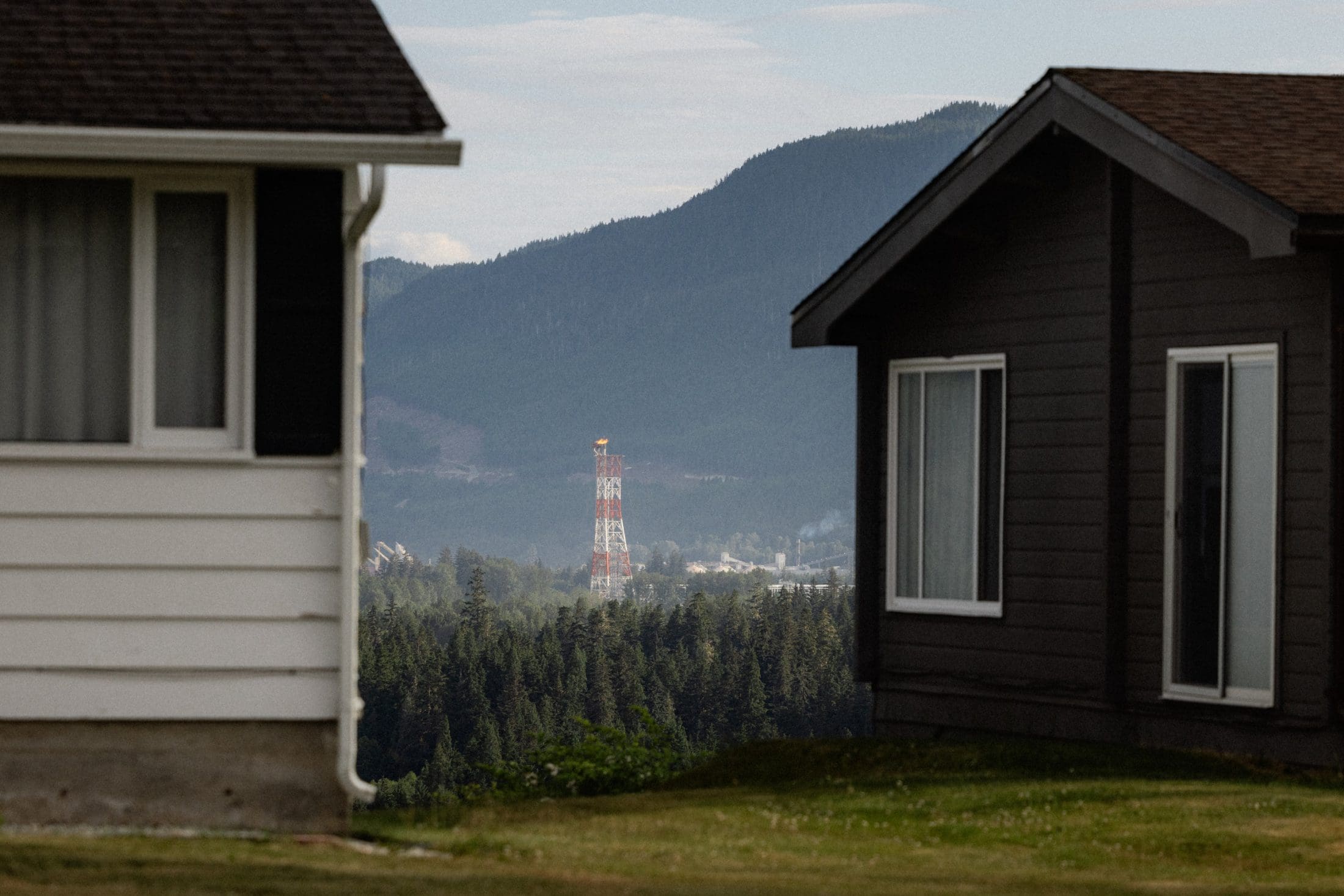
LNG Canada told the BC Energy Regulator its Kitimat, B.C., gas export facility was likely to emit black smoke continuously for multiple days, a warning that came ahead of key environmental permits being granted, according to recently released documents.
The new documents, obtained by The Narwhal and U.K.-based investigative journalism organization Point Source through freedom of information legislation, raise questions over whether the regulator should have sought more assurances about measures to stop this kind of pollution before permits were granted.
Summary
- LNG Canada has been emitting more black smoke than originally planned and some Kitimat, B.C., residents are concerned.
- Black smoke can indicate gas is not burning efficiently, releasing higher levels of toxic pollutants, according to one expert.
- The BC Energy Regulator knew about the smoke ahead of giving the project approvals but has now ordered LNG Canada to make changes.
In July 2022, LNG Canada — a consortium of five foreign-owned companies led by Shell — submitted a document to the provincial government outlining its expectations around black smoke emissions.
“Given the unpredictable nature of these types of events, it is not possible to give a frequency of them occurring although an estimate is provided,” the consortium wrote.
The colour of black smoke is caused by a concentration of particulates and unburned fuels, which is toxic. The estimate provided to the regulator said black smoke would be emitted at the facility for between 15 and 60 minutes one to three times per year prior to the facility completing 200 shipments. LNG Canada sent its 100th shipment in mid-June, nearly one year after its first. It also estimated slightly less dark smoke would be emitted continuously from the facility for between five and 15 days on four to six occasions in the first year.
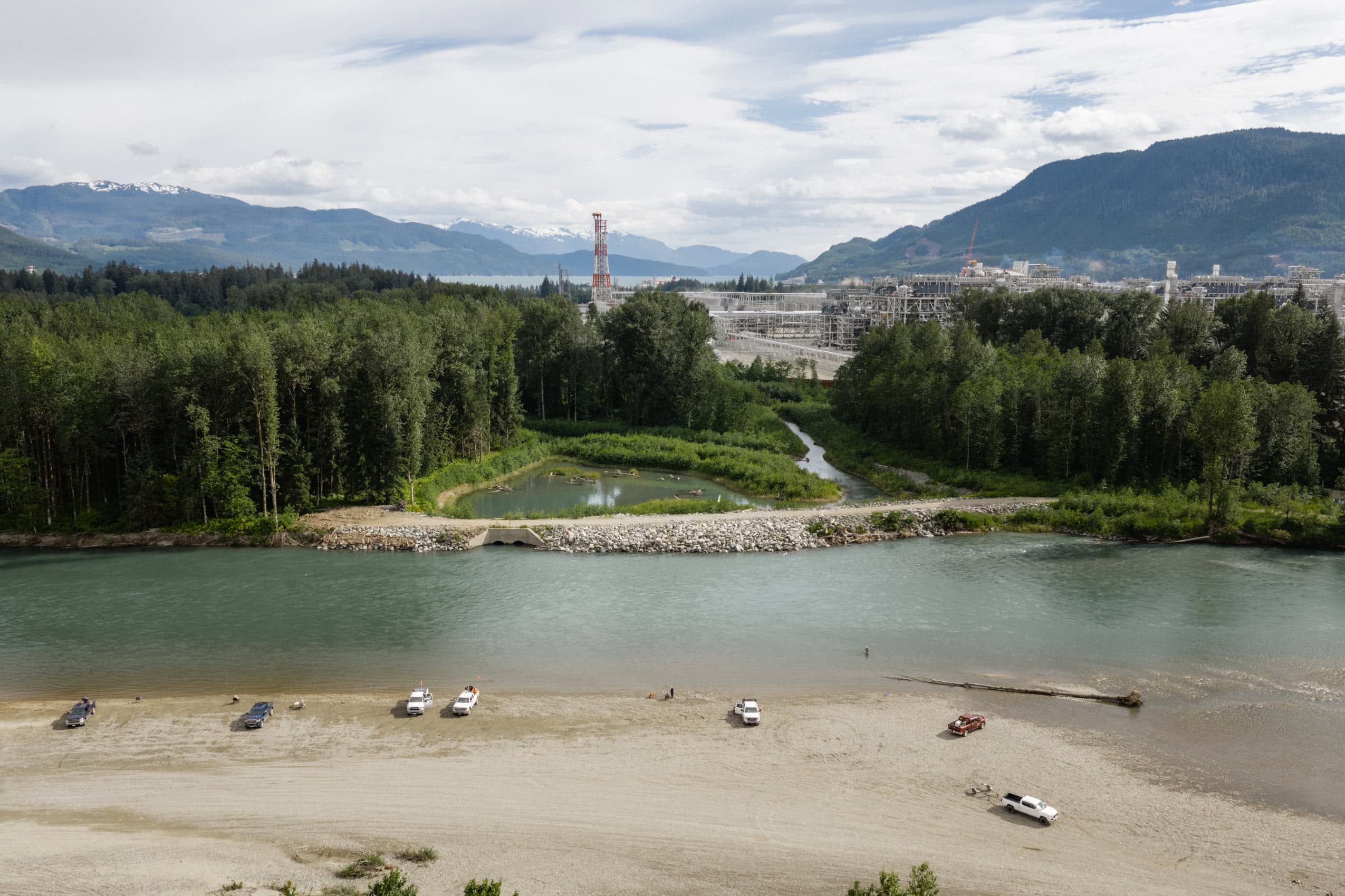
Despite this information, the regulator issued LNG Canada a facility permit requiring that black smoke not be continuously emitted for more than 15 minutes. The company committed to that limit, but has failed to keep to it.
On Jan. 6 2026, the export terminal emitted black smoke emissions during non-emergency conditions for more than seven hours. The next day, it emitted black smoke for over two hours.
In April, the BC Energy Regulator told LNG Canada to identify the root cause of black smoke emissions during flaring at its facility in Kitimat, and implement a fix by October.
In late June, the regulator instituted new requirements, including mandated reporting of instances of black smoke emissions.
A spokesperson with the regulator said the facility’s permit “contains clear statutory requirements regarding black smoke emissions designed to minimize air pollutants to protect public safety and the environment.”
“When our oversight activities identify non-compliances, such as in this case, we can place additional requirements (e.g., having to report black smoke) on permit holders,” the spokesperson noted in an emailed statement.
Black smoke from the flare stack of a LNG facility usually indicates that gas from the facility is not being burned off in an efficient manner and higher levels of toxic pollutants are being released, according to Tim Doty, a former oil and gas inspector with the Texas state government.
“The black smoke that can be visually seen being emitted from the flare is soot, basically,” Doty said in an interview. “In theory, flares are designed to burn in an efficient way that doesn’t produce this black smoke.”
According to the regulator’s reply to detailed questions, LNG Canada’s new requirements as of June include:
- Report to the BC Energy Regulator (BCER) all instances of black smoke that exceeds 15 minutes in duration and provide operational details concurrent with such instances;
- By Aug. 15, 2026, submit a report completed by a qualified professional to the BCER that identifies the root causes of the emission of black smoke and measures to prevent the emission of black smoke;
- By October 15, 2026, identify and implement measures to prevent the emission of black smoke based on the root cause analysis as required by the report;
- For the months of October 2026 to March 2027, submit a monthly report to the energy regulator BCER completed by a qualified professional that assesses the effectiveness of the measures implemented .
‘I want to have a family’: community members concerned about potential health impacts
For some community members, the black smoke and presence of other potential pollutants are a source of great concern.
The Narwhal and Point Source spoke to a young resident who we are calling Avery Sutherland, to keep her name confidential and protect her identity. Kitimat is a small town where LNG Canada is a significant employer and a major donor to local causes, and criticism is often seen as a threat to that.
Avery Sutherland said she tried on multiple occasions to get answers to questions about potential health concerns, but LNG Canada representatives would not respond.
“As a young person, I want to have a family,” she said in an interview. “There’s been a lot of back and forth I’ve seen over the last couple of years at different talks that LNG [Canada] gives, where they refuse to directly acknowledge the studies that have been done on the impacts of flaring on women who are pregnant and their children, and how that often leads to like more birth complications and more premature births.”
In response to questions about this, the regulator spokesperson said: “It is important to note for the benefit of residents of Kitimat that air quality measurements in the Kitimat Valley have remained below B.C. Ambient Air Quality Objectives since LNG Canada received its air discharge permit.”
But some critics claim the air quality monitoring program is insufficient.
“The current ambient air pollution monitoring is not sufficient to get a real handle on what the health implications are for the people that are living close to this facility,” Tracey Saxby, executive director of environmental non-profit, My Sea to Sky, said in an interview. “When you dig into the data you realize that there aren’t enough sensors, they aren’t gathering data in the right places and not enough of the sensors are continually operating.”
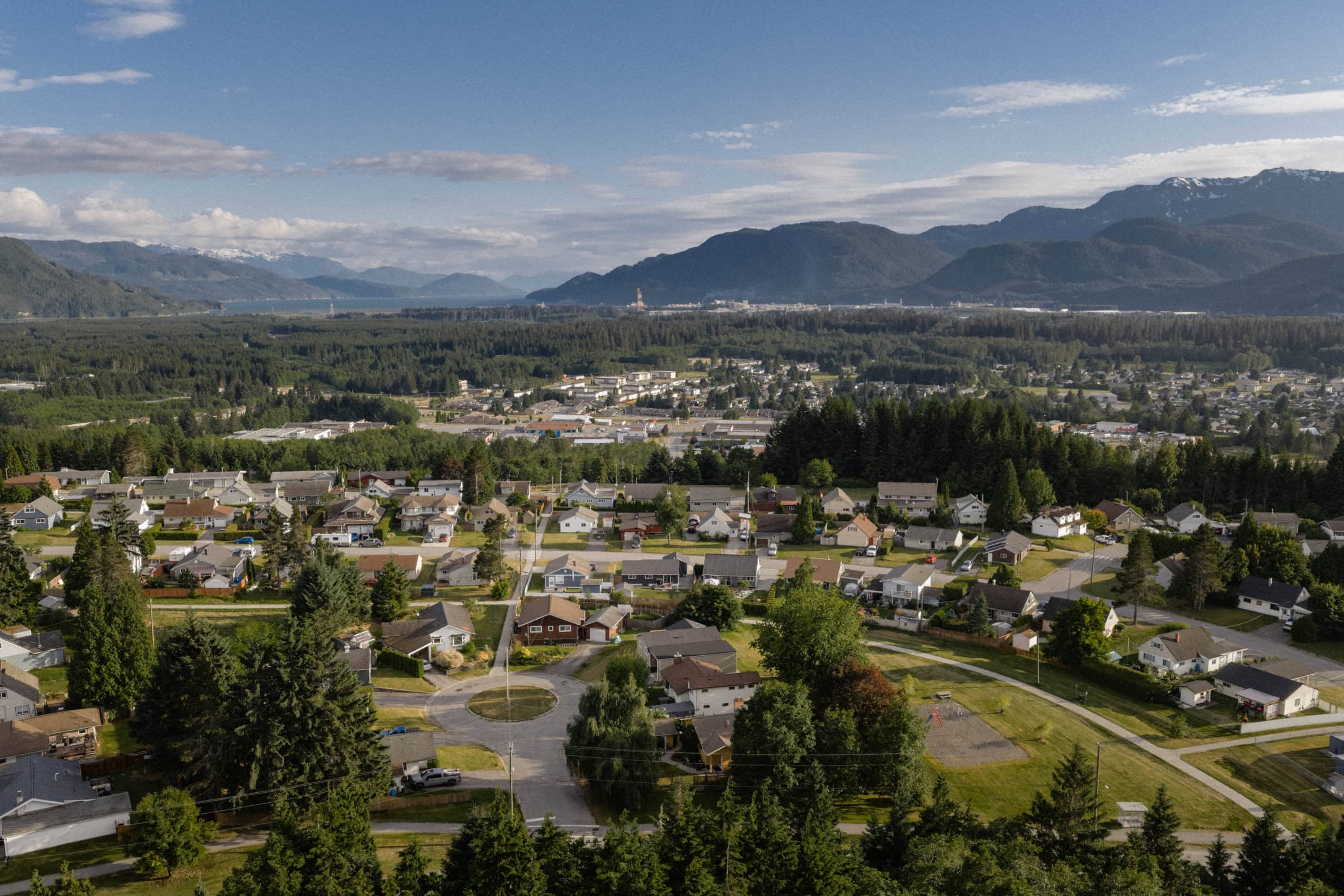
The Canadian Association of Physicians for the Environment has said the facility’s flaring activity has exposed residents to “health-harming chemicals, including black carbon and benzene.”
“They are not consistently monitoring for some of the most harmful pollutants, like benzene,” Saxby said. “These are big monitoring gaps.” Health Canada has labelled benzene a known carcinogen since 1993.
In 2024, the U.S.-based Bullard Center for Environmental and Climate Justice published a report highlighting how LNG export facilities degrade air quality by releasing pollutants known to cause respiratory illnesses, cancer and birth defects from prolonged exposure.
Scientific studies have shown that burning gas also releases other toxic pollutants as a result of incomplete combustion, such as volatile organic compounds, nitrogen oxides, sulfur dioxide, polycyclic aromatic hydrocarbons and fine soot particles, which are directly associated with respiratory and cardiovascular diseases and risks to fetal development.
“When you see this kind of pollution, it’s a sign that the flare isn’t being operated correctly and usually that comes with a lot of other emissions that are actively being released that are not visible to the naked eye,” Doty explained.
“It’s likely that the real world pollution levels are far worse than the picture painted by the current data,” Saxby said. “Even though the existing data is very sparse, it shows worrying spikes in benzene levels that raise a lot of questions about the health impacts from the LNG Canada facility.”
As The Narwhal and Point Source recently reported, LNG Canada originally told the regulator it would operate its facility without routine flaring — and then quietly removed this commitment months before commissioning.
Sutherland wishes the consortium that owns LNG Canada was more forthcoming with information. Its presence in the community has been divisive for as long as the facility has been in development, which means for young residents like herself, it’s been a factious issue for most of their lives.
“When I was growing up, there were schoolyard and classroom arguments about this since as long as I can remember,” she said of the facility, which was proposed in 2013.
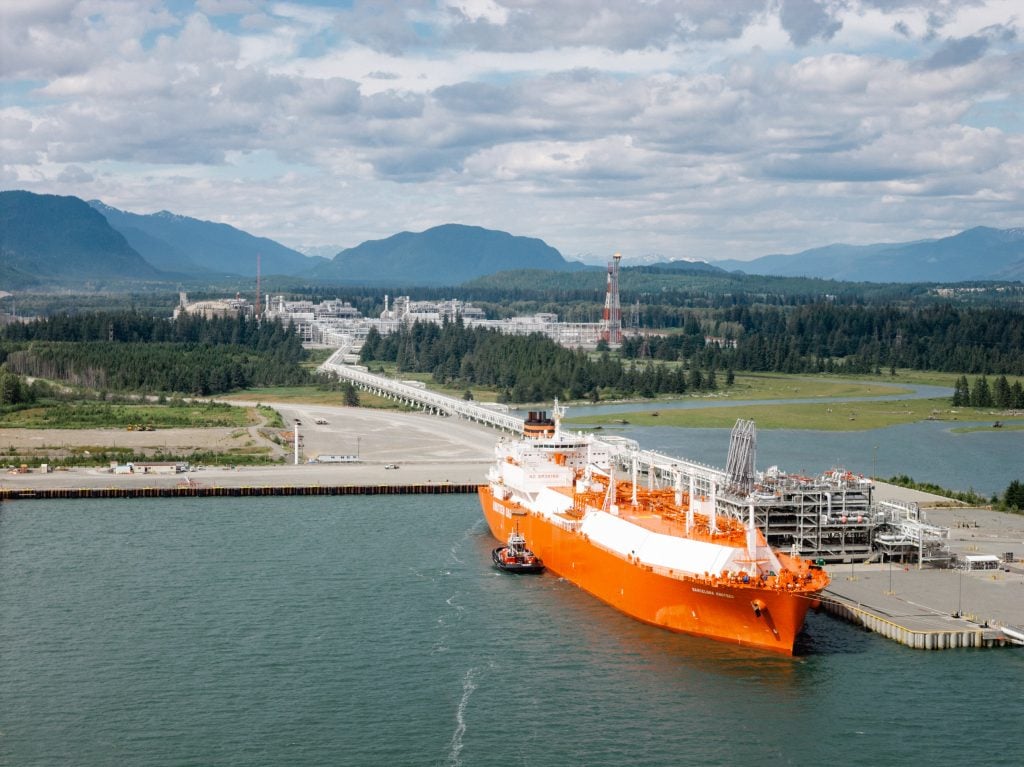
James Smith, another Kitimat resident whose name has been changed to protect his privacy, worked at the plant during construction. He said while he was expecting problems to occur at the facility, he didn’t predict the scale of the impacts.
“I wasn’t expecting the black smoke,” he said.
Smith said he’s experienced excessive noise and bad smells at his house since the facility started operations and on multiple occasions found his yard covered in a thin film of black residue.
Doty said the ongoing problems suggest to him the facility’s problem with its flare tip could be causing the black smoke.
“Flares like this should be operating with about 98 per cent combustion efficiency, but there is no way that the flare is operating with anything close to that efficiency,” he said. “If there’s too much pressure going to it, you’re never going to get things to combust properly — and that seems to be what is happening at LNG Canada.”
In response to questions from The Narwhal and Point Source, the regulator spokesperson noted: “The causes of the black smoke events have not yet been definitively determined.”
‘Truly massive’ invisible emissions
On top of the elevated levels of flaring at the LNG Canada export terminal, there are increasing concerns about the facility routinely releasing natural gas into the atmosphere.
Natural gas is mostly composed of methane, which is an invisible, odorless and an extremely potent greenhouse gas. When released directly into the atmosphere it is 80 times more powerful than carbon dioxide for its short-term warming impact on the climate.
“If people could actually see the invisible emissions that are being released from the LNG Canada facility that are detectable with an optical gas imaging camera, it would really blow them away,” Doty said. He monitored emissions at the Kitimat facility with a camera.“The emissions that could not be seen with the bare eye were shocking. They were truly massive.”
Doty said the emissions — both visible and invisible — could have “very negative health implications for nearby communities and downwind receptors.”
“If I was living nearby, I would be very concerned, and I would want the plant shut down, at least in the short term, while it is re-engineered,” he said. He noted the unburned gas could contain volatile organic compounds such as benzene and butane, in addition to the climate-warming methane.
“At the moment, the program to monitor ambient air pollution in the area isn’t effective and doesn’t have enough monitors in place to truly calculate how air quality is being impacted,” he said.