


 11 min. read
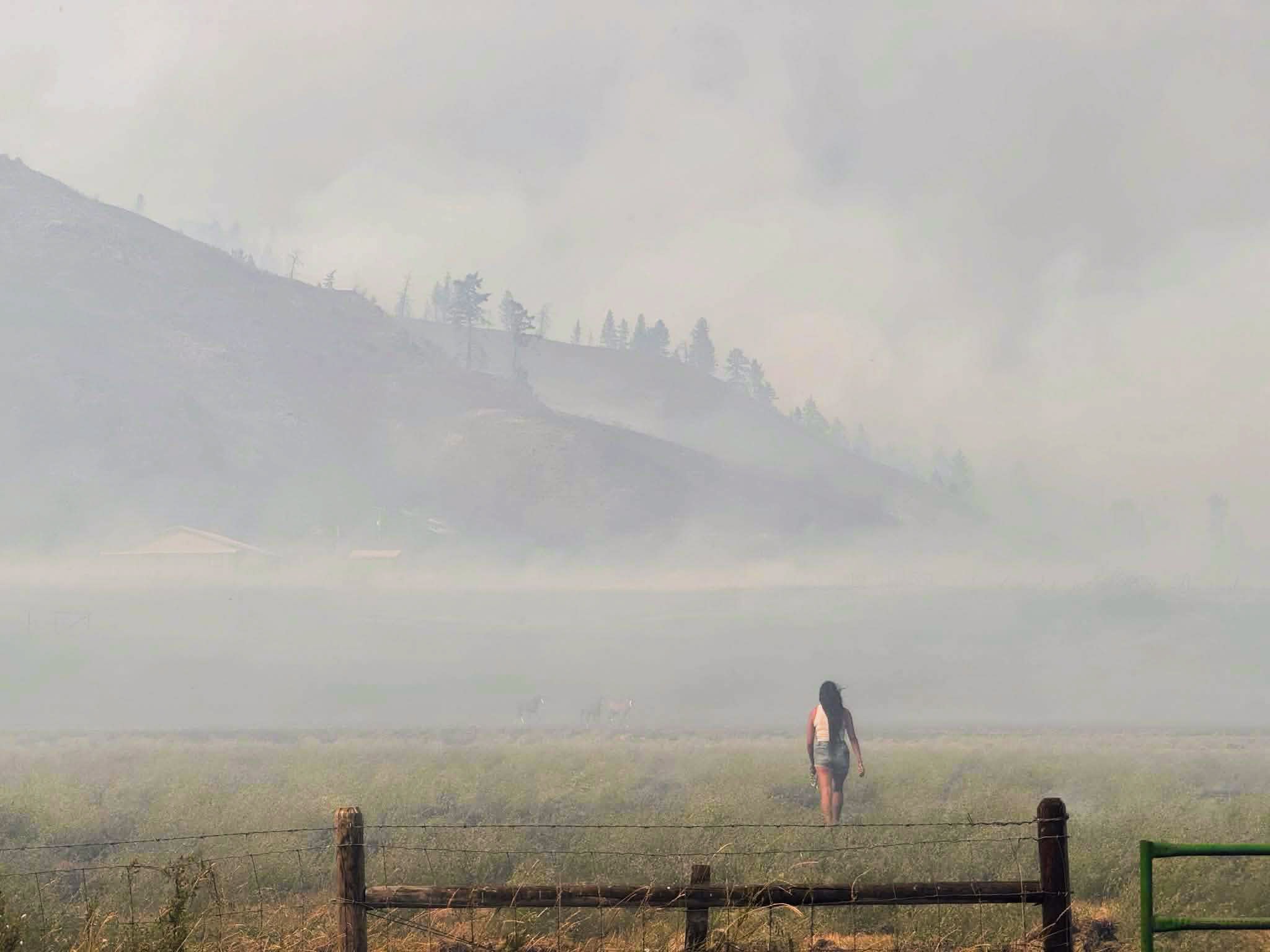
When the fire came to the Okanagan Indian Band on Aug. 1, Sienna Belanger’s first instinct was to catch her horses.
Winds reached 115 kilometres per hour, with sustained speeds of 80 kilometres per hour, according to the BC Wildfire Service. Six-foot-tall flames ripped through the grassland, prompting evacuation orders for thousands of people.
“I only managed to get one of my horses,” she said. “Then we just opened up the gate and ran with them down to our bottom field. They got loose. All I could do was hope and pray.”
Sienna did not know the syilx word qwilmiʔst when the Bradley Creek wildfire came, but she lived it. The teaching describes a person who pulls together their physical skills, their sharpest thinking, their deepest intuition and their spiritual awareness and acts without hesitation.
It is what the Old People call on when facing anything serious. To hold back part of yourself is to risk everything. To give your whole self is how you meet the unknown.
As the fire grew closer, the flames were everywhere. Sienna ran through the smoke, through the flames, to turn on the water at her mother’s barn.
She started dousing the flames. She does not remember making the decision, but she remembers her body moving.
“It was just like that adrenaline moment where you do something or you freeze, and my loved ones froze, and I just couldn’t in that moment myself not do anything,” she said.
“I just felt like a different switch turned on, and I was like, ‘Okay, there are things to do, things I need to organize.’ ”
She was not thinking or hesitating, she was qwilmiʔst. All of herself was in motion.
A land worker, a horsewoman, a dreamer
Sienna has remained at home on the Okanagan Indian Band since the fire came over the hill on Aug. 1. She and her neighbours at Abel Cove were under evacuation order, but with such a short time to leave, they chose to stay.
Her papa had always been intentional about who lived in this community.
“My papa did really good in picking his people for his community,” Sienna says. “He chose people that would be helpful, that would be a good contribution to his family and an extension. And so all of these families who have stayed have been people who I’ve known my whole life.”
Even though he’s gone, she says, his efforts are still here. The people he chose knew how to fight fire. They knew how to hold their ground.
So, with no time to flee, or to pack, it was just Sienna, the fire, the wind and her horses.
The Bradley Creek wildfire has destroyed or damaged an estimated 245 structures on Okanagan Indian Band land, according to a formal assessment by Canada Task Force 1, a specialized search and rescue team deployed in urban environments. The team examined 513 structures over three days. As of Aug. 19, the fire was classified as “being held,” with more than 100 firefighters and six helicopters still working the perimeter.
For at least two weeks, there was a constant presence of blades chopping, of shadows of helicopters crossing the sky, of the distant rumble of bombers dropping fire retardant on the hillside above Sienna’s mother’s place and her grandmother’s house at the beach.
Sienna, 25, is a syilx sqilx’w youth born and raised at the Okanagan Indian Band. Her nsyilxcen name is xixʷutm, a name she carries from her great-granny Mary.
Sienna and her mother, Mariel Belanger, own and operate Studio Síspl̓k on the Okanagan Indian Band reserve, welcoming community organizations, schools and wellness programs for workshops that bring together storytelling, visual arts, land-based learning, food forest knowledge sharing and n’syilxcen language. It’s the kind of work she’s been doing for years: creek rehabilitation, forest restoration, plant identification, seed harvesting — work that has always been about connection.
That work is rooted in the nsisúlaʔxʷ Food Forest Project, a living, land-based classroom and gathering place where Sienna’s food plants, medicines and community are able to grow in kinship with one another. She’s also been on a language revitalization journey for six years, learning to speak the words her ancestors spoke.
She has been building a food forest on 10 acres of her family’s property, dreaming of a space where her people could harvest berries and medicines.
The fire took Sienna’s food forest. More than 100 plants, berries, medicines — the careful work of years— reduced to ash. It took her prospector tent and a platform she had built for outdoor education. It took her plans for a creative space.
Coyote is destroyed. Fox gathers the bits. Coyote comes back to life.
In the captikʷɬ, the syilx law story system, there is a pattern that repeats again and again. Coyote is destroyed through his own foolishness, through greed, through ignorance. And Fox always comes along to gather the bits, the hair, the bone, the fragments of what remains, and breathes them back to life. Something is lost. Something is gathered. Something is brought back. These stories are how knowledge is renewed. These stories are how people survive.
Sienna does not talk about the loss of her food forest with self-pity. She talks about it with survivor’s guilt.
“Even though my work burned, we survived compared to the rest of the community, who’ve totally lost everything,” she says.
And yet, just two weeks after the fire, she says, “There are some parts of my food forest coming back. I’ve been checking on it every day and am seeing new life already, little green shoots are starting to come up.”
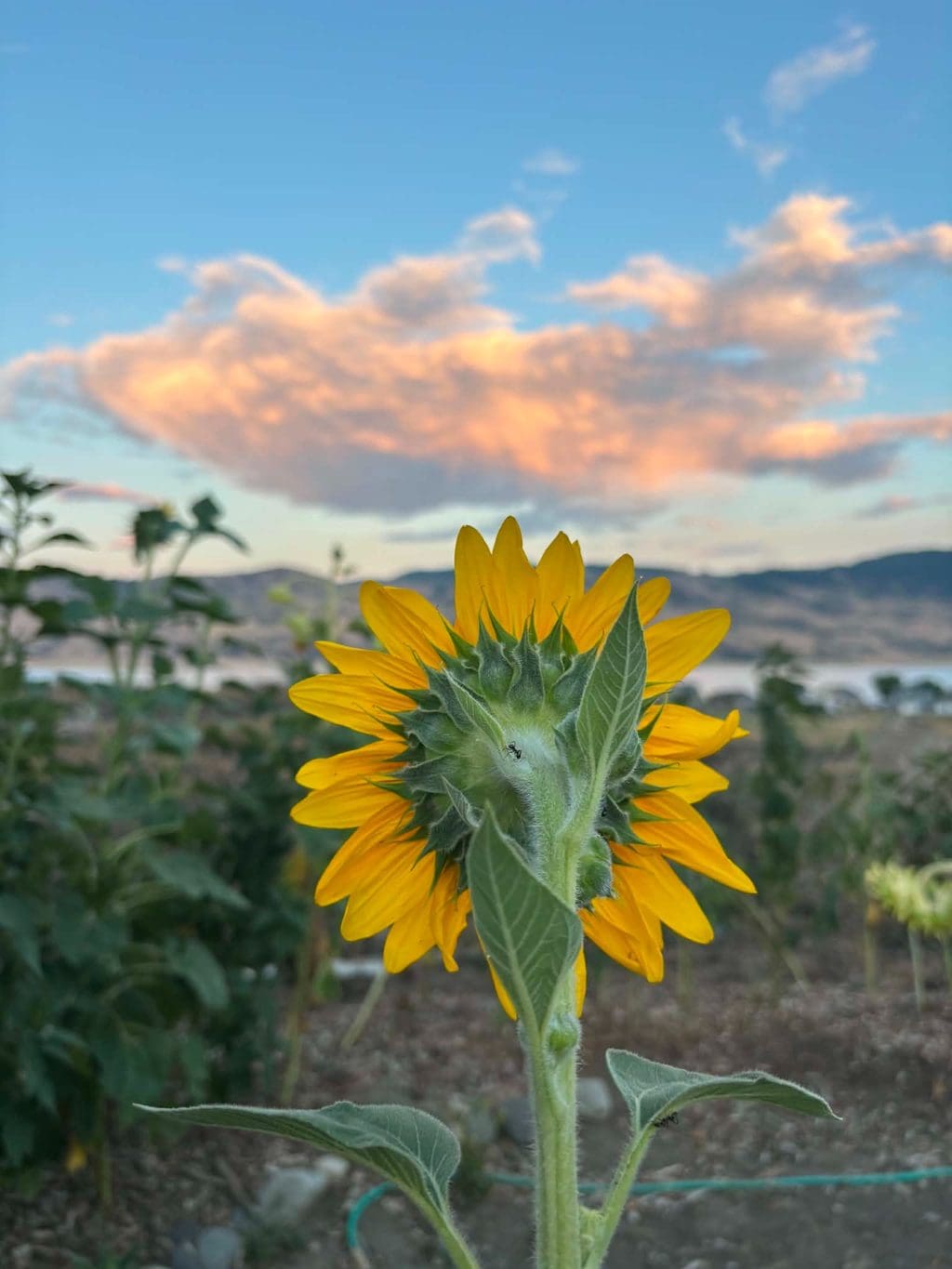
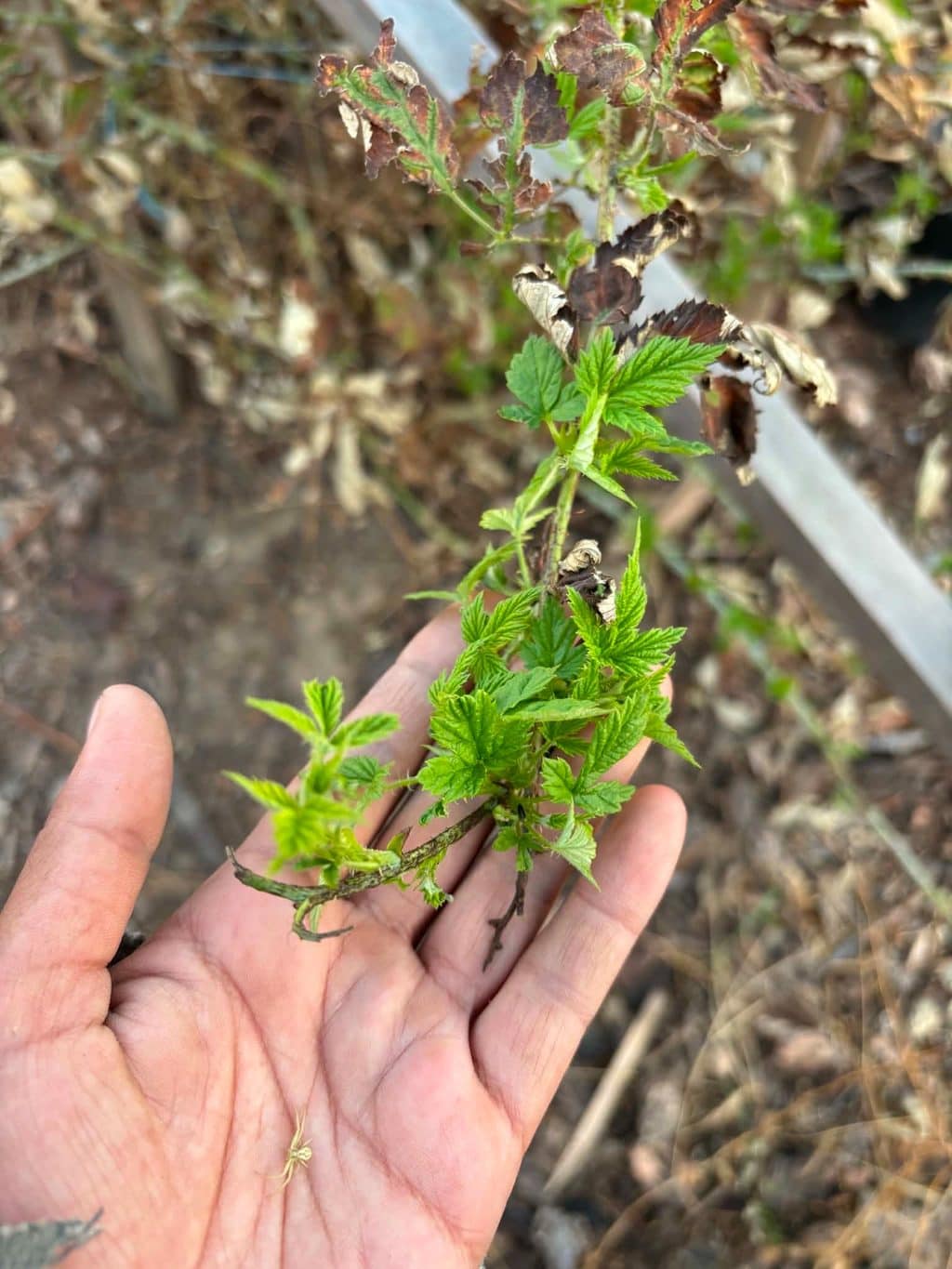
Sienna is Fox. She is gathering the bits. She is watching for the green shoots. She is breathing new life into what remains.
Sienna’s grandmother has been staying with her through all of this, offering emotional support. She has watched Sienna work herself to exhaustion, caring for the horses, checking on the food forest, organizing supplies, making sure everyone else was okay before she ever stopped to breathe.
One day, she sat Sienna down and told her something Sienna is still trying to hold onto.
“My grandma recognized what I was going through and told me, you are allowed to accept kindness right now.”
Sienna’s grandmother has seen fire take what her people built. She has seen them rebuild. She knows survivor’s guilt is heavy, and that accepting help is part of the ceremony of healing.
Grief needs a witness
On the morning after the fire passed by her house, a chestnut stallion appeared at Sienna’s fence. She recognized him.
Her cousin Devyn McMillan runs Rewild Ranch, which provides equine-assisted therapy — workshops and events where people can connect with horses.
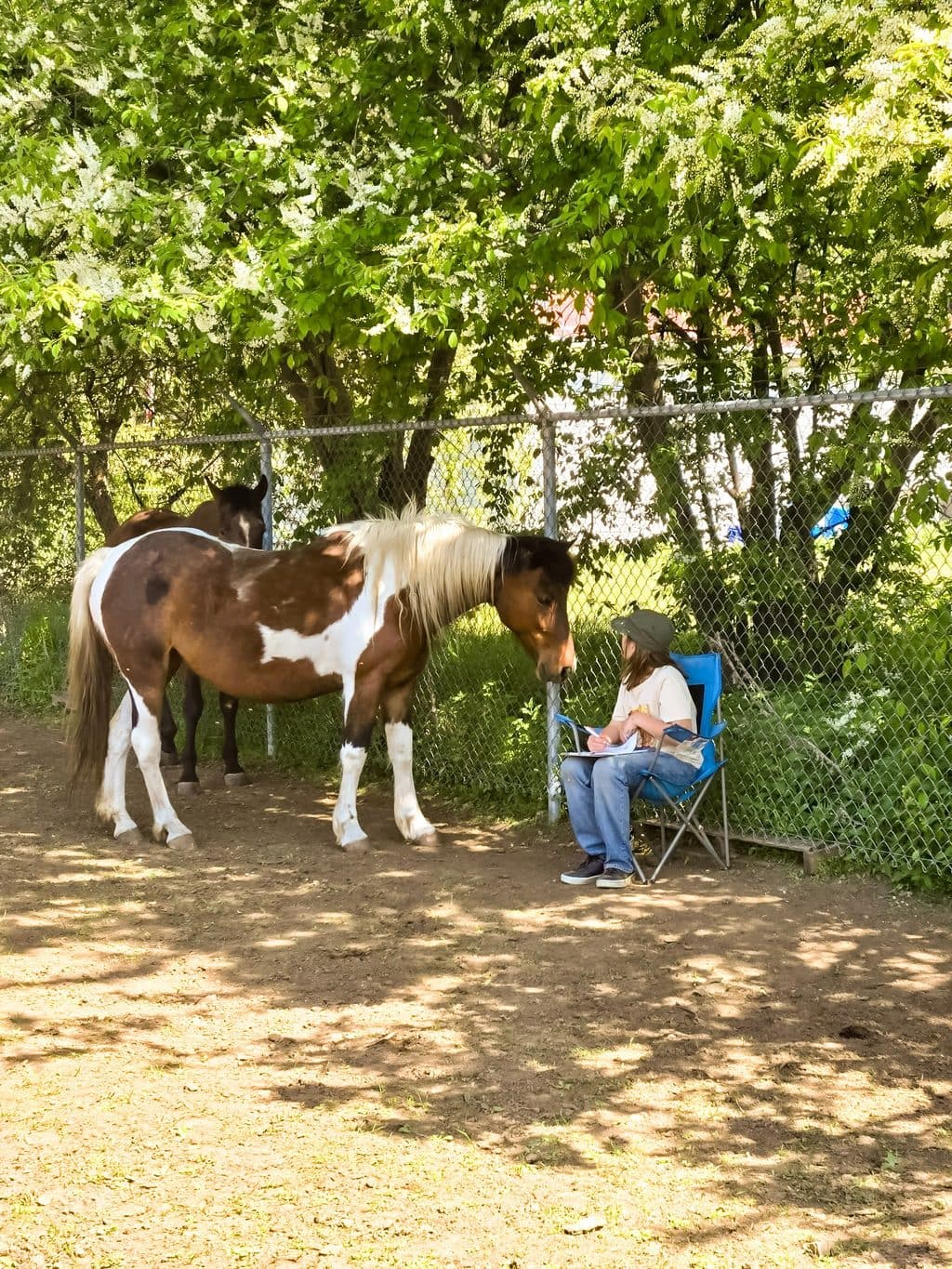
“I sent my cousin a message,” Sienna says. “I was like, ‘Hey, your red stallion’s here. He’s okay. I hope you guys are okay.’ I had no idea at that time that her house was gone until my grandma told me that her family barely escaped.”
It was then that Sienna and her grandmother decided it was time to go look for her cousin Devyn’s horses and to finally go and acknowledge themselves what happened to her family’s homestead.
As they passed what had been the family homestead, there was nothing left but chimneys standing against the sky. Her grandmother started crying.
“We wanted to look away, we didn’t want to see what happened,” Sienna says, tearing up.
But they looked together. That is what you do. In syilx teachings, you do not turn from grief. You face it and let it be witnessed.
Sienna cried too. She let the tears come down, but she did not stop; she knew she had work to do.
She drove to her cousin’s property and saw the horses standing there.
“I got there and started counting, one, two, three, four, there were 12 of them, and I had one of the stallions at my house, it was 13, I was so happy, it was all of them,” she said.
Sienna grabbed a bucket and a lead rope and walked into the field. She caught one horse and led it into the sand arena. Then she went back for the rest.
“At that time, my heart just totally broke for my cousin because it’s such a hard thing to go through, to lose everything,” Sienna says. “She had built her hopes and dreams on those horses, and I understand because we both love horses in the same way.”
Sienna doesn’t see herself as the hero of this story. She didn’t know a convoy was already on its way; she just knew what needed to be done. She also noticed something that said everything about Devyn’s horses: they were still together, still standing in the place they knew. Scattered horses run. “That’s how you know they are well-trained horses,” Sienna says. “They know to stay together. They know home.”
Friends and family came together anyway. Neighbours organized a supply run with 16 bags of horse feed and a box of groceries. It was the Old Way. The people came together, and what one could not carry, many could.
“It was truly that moment when a village came together to help,” Sienna says. “I just felt so blessed and touched.”
Sienna is also quick to acknowledge the community that surrounded her. Mary’s Emerald Bay, she says, is where people stuck to the teachings her papa passed down about fire safety. They came together in their time of need, saving themselves, saving their neighbours and saving the animals. They even rescued a burnt kitty.
Of the 21 homes at Mary’s Emerald Bay, only one has minimal fire damage. The rest survived because of the people who knew what to do and did it together.
‘If I can fight flames, I can get on the back of a horse again’
As of mid-August, helicopters were still flying. Evacuation orders are slowly being lifted, but Sienna and her community are still under an evacuation order zone. They’ve been actively trying to get permits to leave, but technically, they’re still stuck, unable to leave for two weeks now. The waiting is the hardest part.
“Since being stuck here and being isolated, it’s been a little hard on our mental health,” Sienna says. “The land work was a way for me to keep busy and keep all my mental health issues at bay. Fire really has done a number on that.”
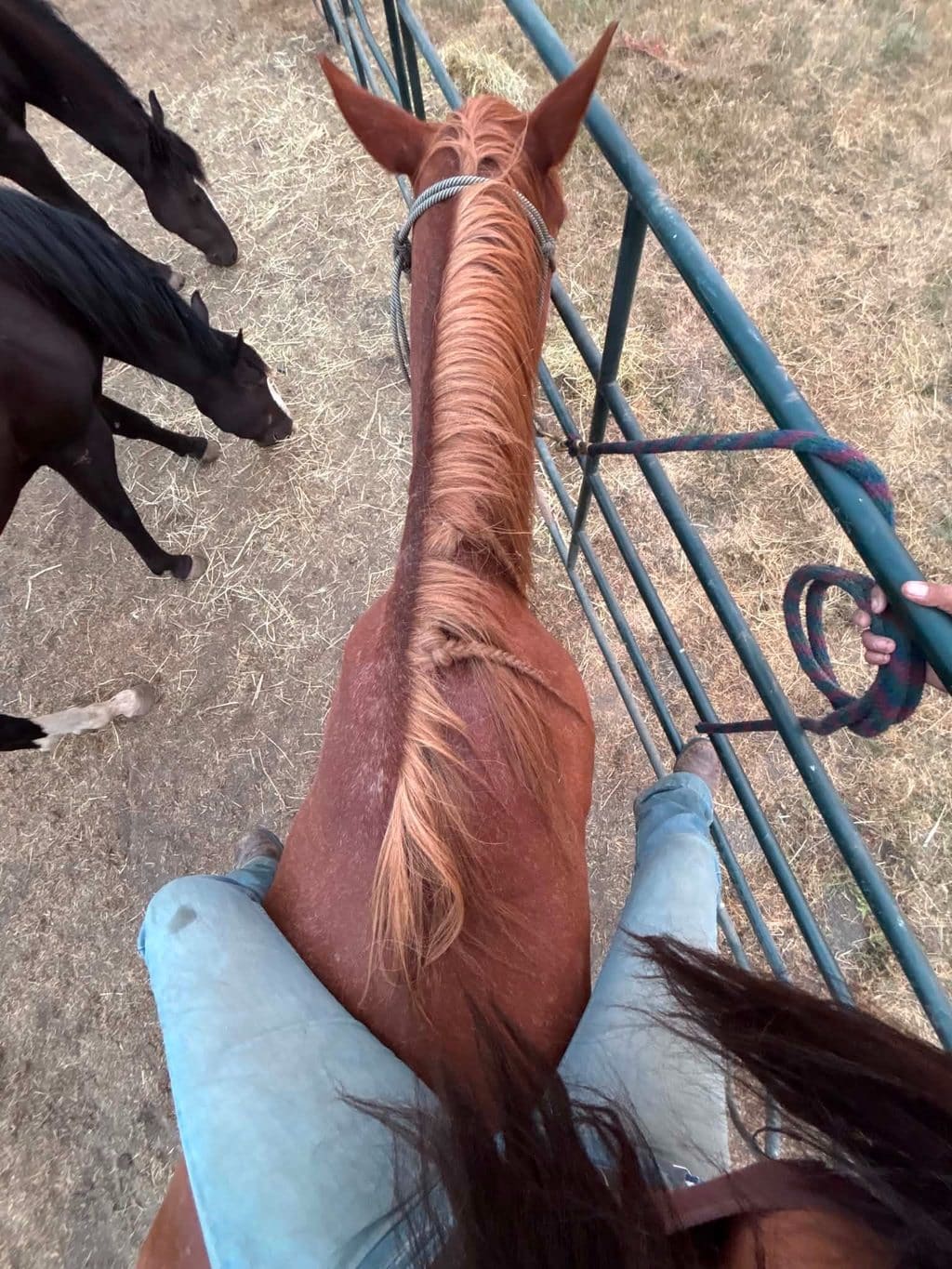
And yet, being isolated has also given her time to return to something she thought she had lost: horse training. Years ago, her horse Lily kicked her in the head, fracturing her skull and leaving her deaf in one ear. The accident left her with lingering brain damage, with issues that still follow her today. She has not been able to fully get back on Lily since.
But she says something changed in her after she walked through the flames.
“In my mind, if I can fight flames, I can get on the back of a horse again,” she says.
She has started slowly, partially sitting on Lily for brief moments. She has not been able to do that since the accident.
She is learning to trust her body again. To trust the horse, and to trust that she can survive what has already happened to her. The fire taught her that if she could face the flames, she could face her fear. She could get back on. “It’s been so rewarding,” she says.
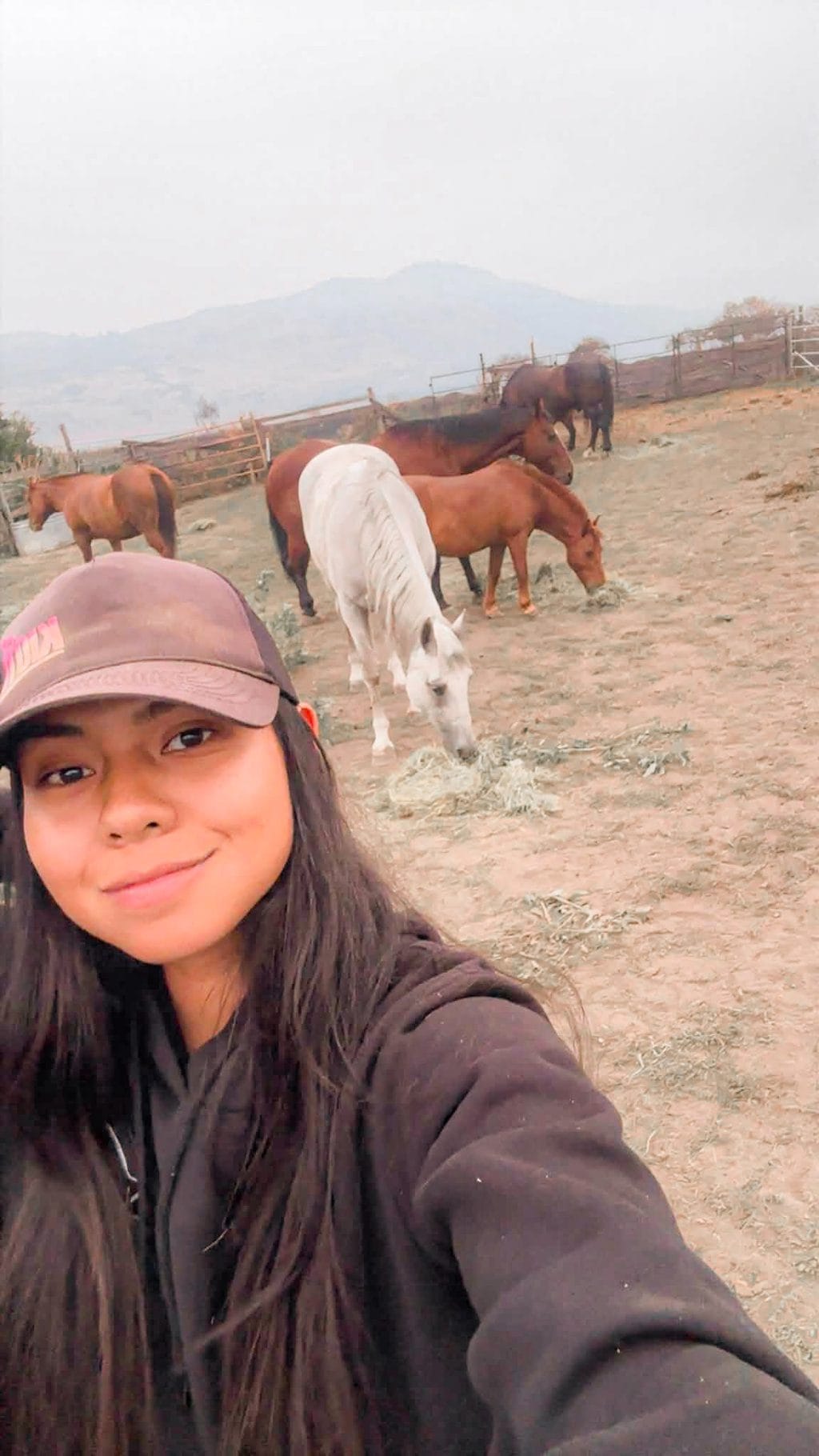
She is still planning: packaging seeds she harvested from the food forest, traditional sunflowers and vegetable garden varieties for a seed sale. A concert with music collective Kinfolk Nation that she is hoping will still happen in September. Black, Indigenous and queer artists, coming together on the land. Food harvested from the land, cooked on the land.
“My dream was to create a space that was organic for plant material, for berries, for harvesting, for all of our people’s traditional uses,” she says.
She has been sketching a new design for her food forest. Since her tractor survived, she has the ability to move soil, to transform her place again.
“I’ve been trying to step out of that guilt so I can get back to what I was doing,” Sienna says.
The fire could not take her, or her horses. It could not take the green shoots pushing through the ash of her food forest, and it could not take the teachings her grandmothers and papa passed down. It could not take the courage she found in the smoke, and it could not take her dream.
So she is still here, moving, and gathering the bits and breathing them back to life. And now, she is sitting on Lily’s back again, learning to trust herself and the horse, because if she could fight flames, she could get back on, so she did.
That is qwilmiʔst. That is Fox. And Sienna will still be here — breathing new life into what remains.