


 11 min. read
British Columbians are heading back to the provincial polls on Oct. 24, just two years after the 2024 election where the BC NDP barely held on to power.
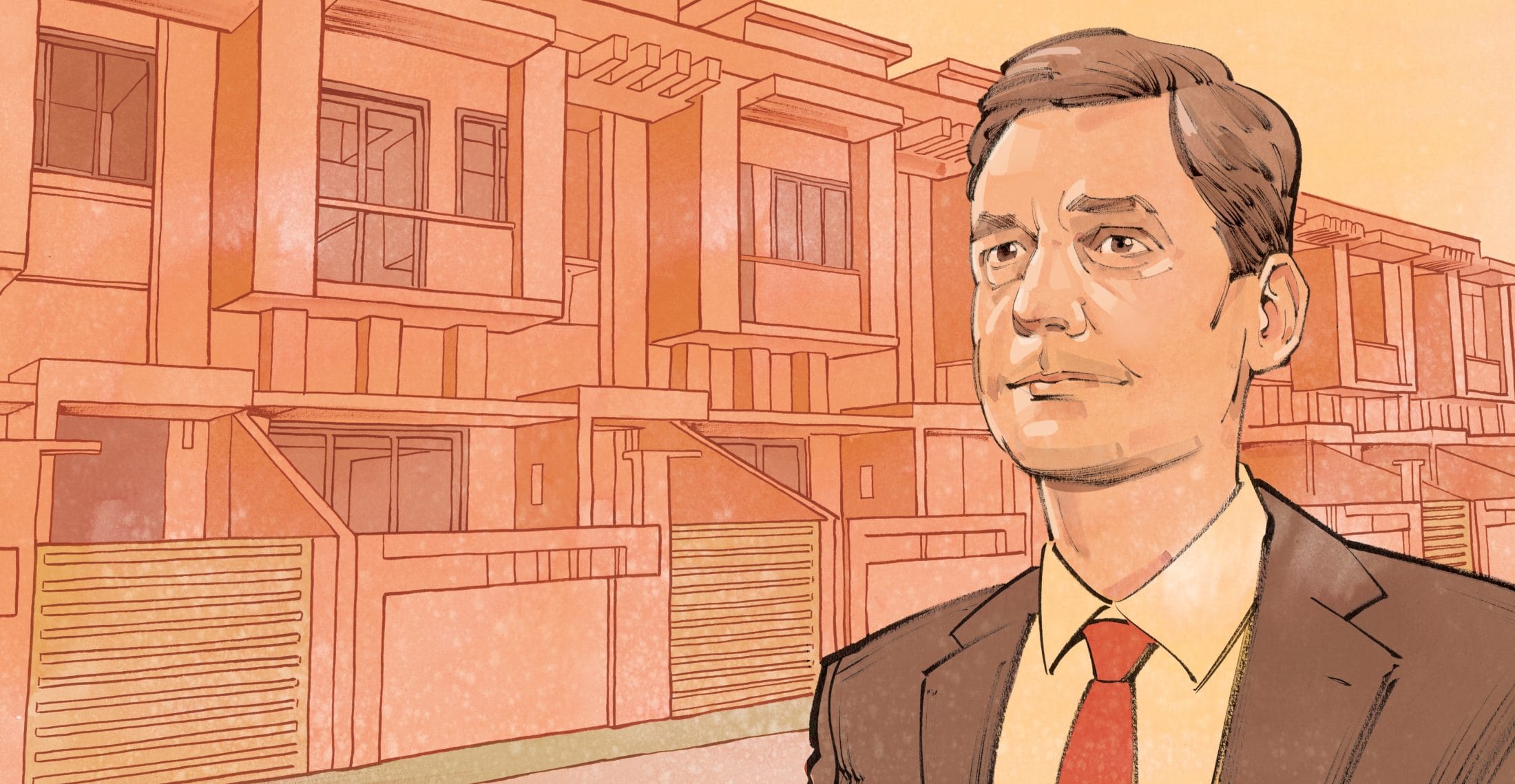
David Eby justified his decision to call a snap election on Tuesday, pointing to threats posed by trade issues with U.S. President Donald Trump and chaos on B.C.’s political right.
Eby said British Columbians can choose between “the chaos, the cuts [and] the cozying up to Trump of the Conservative caucus” or his party’s pledge to “stand shoulder to shoulder across the country with Canadians.”
Summary
During his speech, Eby repeatedly used fire imagery, comparing the situation in the United States to a spreading wildfire. “We need to build a firebreak around the things that make British Columbia special, things that matter most to British Columbians,” he said. “A firebreak, yes, against Trump’s economic attack, but a firebreak against our dependence on the United States, and a firebreak against the Trump-style politics that threatens to infect our province.”
Eby’s decision will also cost the province tens of millions of dollars and disrupt the work of government, leaving legislation in limbo and throwing wrenches into all kinds of timelines. Calls for B.C.’s auditor general to investigate the billion-dollar error in the province’s gas royalty calculations will remain unanswered. Legislation to enact a treaty between B.C. and the Kitselas First Nation could be delayed by months. And the future of the Declaration on the Rights of Indigenous Peoples Act will be uncertain at least a little longer.
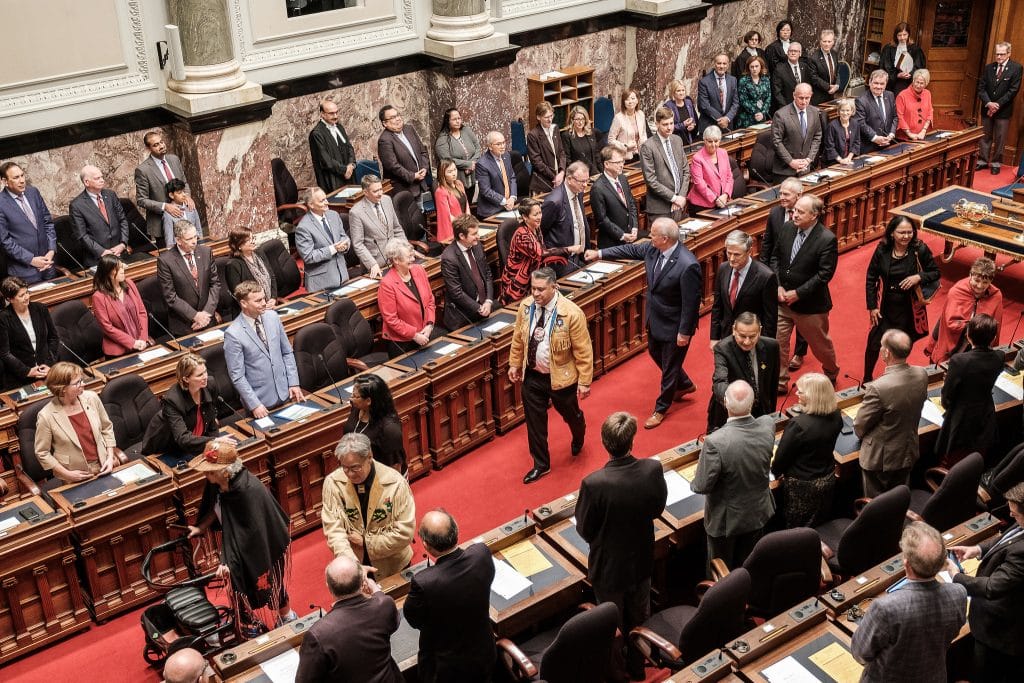
The premier’s choice to call a snap election now has angered many local government representatives. Municipal elections will take place across B.C. on Oct. 17, and the final weeks of those campaigns will now be overshadowed by the looming provincial election.
“It’s two conversations at one dinner table — it’s noisy, it’s hard to understand and only the loudest voices will be heard,” Cori Ramsay, a city councillor from Prince George who served as the president at the Union of B.C. Municipalities, said at the organization’s annual conference last week. “Overlapping elections will lead to less scrutiny, less accountability, and it’s not in the public interest.”
At the conference, delegates endorsed an emergency resolution calling on the B.C. government to keep a provincial election campaign separate from the scheduled municipal elections.
Kathryn Harrison, a political science professor at the University of British Columbia, said Eby is taking a calculated risk calling an election so soon after the last one.
“Will the NDP be able to make a credible case for voters that this economic moment justifies an election compared to the case that their opponents will make that this is premature?” she asked.
This isn’t the first time in recent memory a BC NDP premier has called a snap election during a fraught historical moment. In fall 2020, former Premier John Horgan decided to go to the polls, arguing the impact of the COVID-19 pandemic required a majority government to effectively serve British Columbians.
Horgan’s gamble paid off, with the NDP winning 57 of the B.C. legislature’s 87 seats.
“I assume that experience is top of mind for Premier Eby and the NDP this time round,” Harrison said. “Can they make the wartime mandate argument, given that Donald Trump’s threats to Canada — threats to the B.C. economy, especially — were not something that was foreseen?”
Despite the risk, Eby has decided to proceed with a snap election call. Here’s why and what it means for some of the significant policies affecting B.C.’s environment.
Why call a B.C. election now?
If the justifications seem flimsy, it may be because all signs point to a major factor in Eby’s decision being the state of the BC Conservative Party, B.C.’s official opposition.
To briefly recap: John Rustad resigned as the party’s leader in December 2025 after weeks of caucus infighting. The race to replace Rustad resulted in Kerry-Lynne Findlay, a former Conservative Party of Canada MP and cabinet minister, becoming leader of the BC Conservative Party on May 30. Findlay’s victory was narrow; she won 51 per cent of party members’ votes, barely beating out second-place finisher Caroline Elliott.
Findlay’s tenure as party leader was spectacularly brief and chaotic. Multiple members of the BC Conservative caucus publicly criticized her leadership style and staffing choices. Over a six-week span this summer, 10 MLAs left the BC Conservative caucus, citing a lack of confidence in Findlay’s leadership. Three others were removed from the caucus, including Rustad (though he has since been invited to rejoin the BC Conservative caucus). Going into this fall election, the BC Conservatives have just 25 MLAs seeking re-election, down from 44 elected in 2024.
Findlay resigned as party leader on September 20, leaving the BC Conservatives to appoint Cariboo-Chilcotin MLA Lorne Doerkson as interim leader.
B.C. politics is infamous for dramatic developments and unprecedented situations, but the unravelling of the BC Conservatives — a party that came within a handful of votes of driving the NDP out of government in 2024 — over the past two years is truly remarkable. For Eby, leader of an aging government with a tenuous grip on power, the chaos enveloping the BC Conservatives presents an irresistible opportunity to potentially trounce his political opponents.
After a week of mounting speculation about a snap election call at the Union of B.C. Municipalities conference, the B.C. government issued a flurry of announcements in the days before Eby confirmed his decision.
Over the weekend, the BC NDP announced a pair of significant investments into healthcare, and on Monday, published 16 press releases, twice the number of any other day this month. They highlighted millions in government spending, including $27 million from the Clean Industry Fund for 17 emission-reduction and efficiency projects.
Tilbury LNG Phase 2 was promoted twice. First, Environment and Parks Minister Tamara Davidson and Energy and Climate Solutions Minister Adrian Dix announced the project received its environmental assessment certificate, less than two months after the final public comment period ended.
The final government press release of the day touted the major expansion — a 10-fold increase in the facility’s liquefied natural gas production capacity — at Tilbury as “a major economic, clean-energy opportunity for B.C.”
The flood of press releases made it seem the B.C. government was working to clear the decks of government business before an election call prompted a shift into campaign mode.
B.C. election comes amid criticism of gas royalty framework
The election call also comes amid criticism and controversies facing the BC NDP. Including that fossil fuel companies will pay B.C. hundreds of millions of dollars less than anticipated over the next few years due to an error in the province’s natural gas royalty calculations, as reported by Business in Vancouver last month. The miscalculation means the province will collect $306 million less than projected this fiscal year, according to the Ministry of Finance, though experts told Business in Vancouver B.C. could end up losing out on $500 million per year.
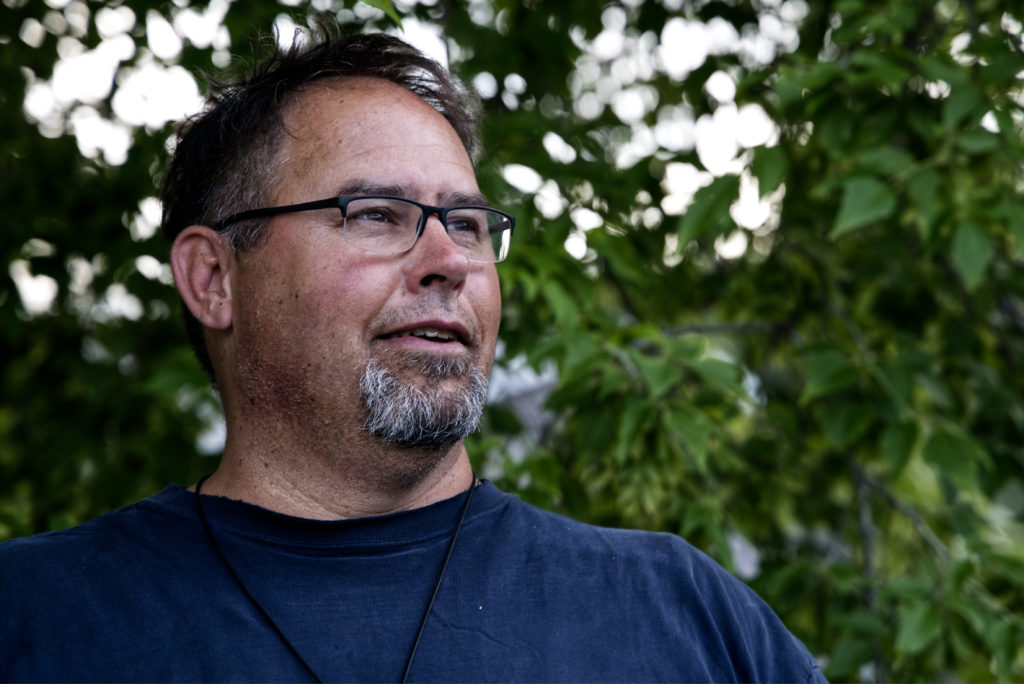
The B.C. government explained the error as a simple calculation mistake which has been rectified, but West Moberly First Nations Chief Roland Willson wants a more detailed explanation.
“I don’t think they know what they’re doing,” Willson said in an interview.
Treaty 8 First Nations, including West Moberly First Nations, flagged the error to the province in the midst of consultations on a new pricing structure for natural gas extracted in B.C. The incoming royalty framework is meant to collect a fair share of profits from companies extracting natural gas from land owned by the province. The new framework is scheduled to take effect in January 2027 and will replace a temporary system that has been in place since 2022, after an independent assessment found the existing system needed a complete overhaul.
In 2022, the B.C. government said the new royalty framework would collect half of company profits from natural gas, but Treaty 8 First Nations have since concluded the new framework may capture just 11 per cent.
Willson wants the new framework paused until a thorough and independent review can be done.
“The auditor general should do a complete review and it should be transparent,” he told The Narwhal. “I think they should make it public because this would affect B.C.’s revenues — the fiscal health of the province — for decades.”
On Sept. 14, Finance Minister Josie Osborne said the Ministry of Energy and Climate Solutions was communicating with the Office of the Auditor General about the budget error and possibility of a review. The Office of the Auditor General told The Narwhal it does not comment on potential reviews. The Ministry of Energy and Climate Solutions did not respond to an email sent Sept. 17, requesting confirmation that an auditor general’s review had been requested.
The legislature was scheduled to convene on Oct. 5 for a five-week sitting. Eby’s snap election call either significantly shortens the amount of time MLAs will spend in the house this fall or eliminates it altogether.
The future of DRIPA
It may seem like a long time ago now but B.C.’s Declaration on the Rights of Indigenous Peoples Act, known as DRIPA, was at the centre of major political drama this spring.
Following a December 2025 court ruling, Eby kicked off the spring session vowing to amend the law to shield the provincial government from legal liability over the pace and scope of its reconciliation work. At first, he claimed changing the law was non-negotiable, and something that had to be done before the legislature’s summer break.
Eby went so far as to vow to make his DRIPA amendments a confidence vote, thereby staking the future of his government on its outcome
But First Nations leaders rejected Eby’s plan and told him his “approach was totally unacceptable.” That prompted the then premier to propose suspending DRIPA for up to three years, an approach he soon abandoned in the face of steady opposition from First Nations leaders.
By the time the legislature’s summer break arrived, Eby had settled on continuing discussions about DRIPA’s future with First Nations and tabling unspecified amendments during the fall session.
“We’re still at the table with First Nations leadership and it’s important work and we’re going to continue that work,” Eby said of the DRIPA discussion during a Sept. 8 press conference.
Without a fall session, any changes to DRIPA will wait until the spring, leaving lingering uncertainty about the future of the law.
In the meantime, the BC Conservatives have continued to call for DRIPA’s repeal. In August, Elections BC approved an initiative petition backed by BC Conservative MLA Harman Bhangu that aims to repeal DRIPA. If Bhangu collects signatures from 10 per cent of registered voters in each of B.C.’s 93 ridings by Jan. 25, the petition will be submitted to the legislature for a vote.
Kitselas treaty bill
If the fall session doesn’t happen, the legislature may not reconvene until February, shortly before the B.C. government traditionally presents its throne speech and introduces its budget.
Before the throne speech, a process called prorogation wipes the legislative slate clean, giving legislators a fresh start. Any legislation left lingering on the order paper is erased and must be reintroduced before starting the process to become law all over again.
If that happens following this election, three pieces of legislation will be sent back to the drawing board. One is Bill 21, the Kitselas Treaty Act, which received first reading on April 15. If passed, the bill would be the provincial government’s first step to implement the treaty with Kitselas First Nation.
If the treaty is ratified by both the B.C. and Canadian governments, Kitselas First Nation would no longer be controlled by the federal Indian Act and instead governed by its own constitution. Work on the Kitselas Treaty began in 1993 and Kitselas members voted in favour of the draft treaty in April 2025.
David Try, senior negotiator with the Kitselas treaty team, expects the election will delay the passage of the bill by up to six months, depending on when the legislature reconvenes.
While the delay is disappointing, Try is hopeful B.C.’s next government would make the Kitselas treaty bill a priority in its first legislative session.
“When you negotiate something for 30 years, there’s a certain implicit commitment to bring it home,” Try said. “We think that the treaty would be back on the legislative agenda, but how do we know? We don’t.”
The Lax Kw’alaams and Nine Allied Tribes dispute the scope of the Kitselas Treaty’s territorial claim and the Union of B.C. Indian Chiefs called for both treaty bills to be paused until the territorial boundary disputes with neighbouring First Nations were addressed.
Eby’s choice to call an election is predicated on his confidence that they will win back seats lost to the BC Conservatives in 2024. However, this victory is far from guaranteed. After Oct. 24, B.C. might have a new party in power — or it might be the same one, its power weakened or consolidated. None of the possible outcomes guarantees the provincial priorities will stay the same.