



 9 min. read
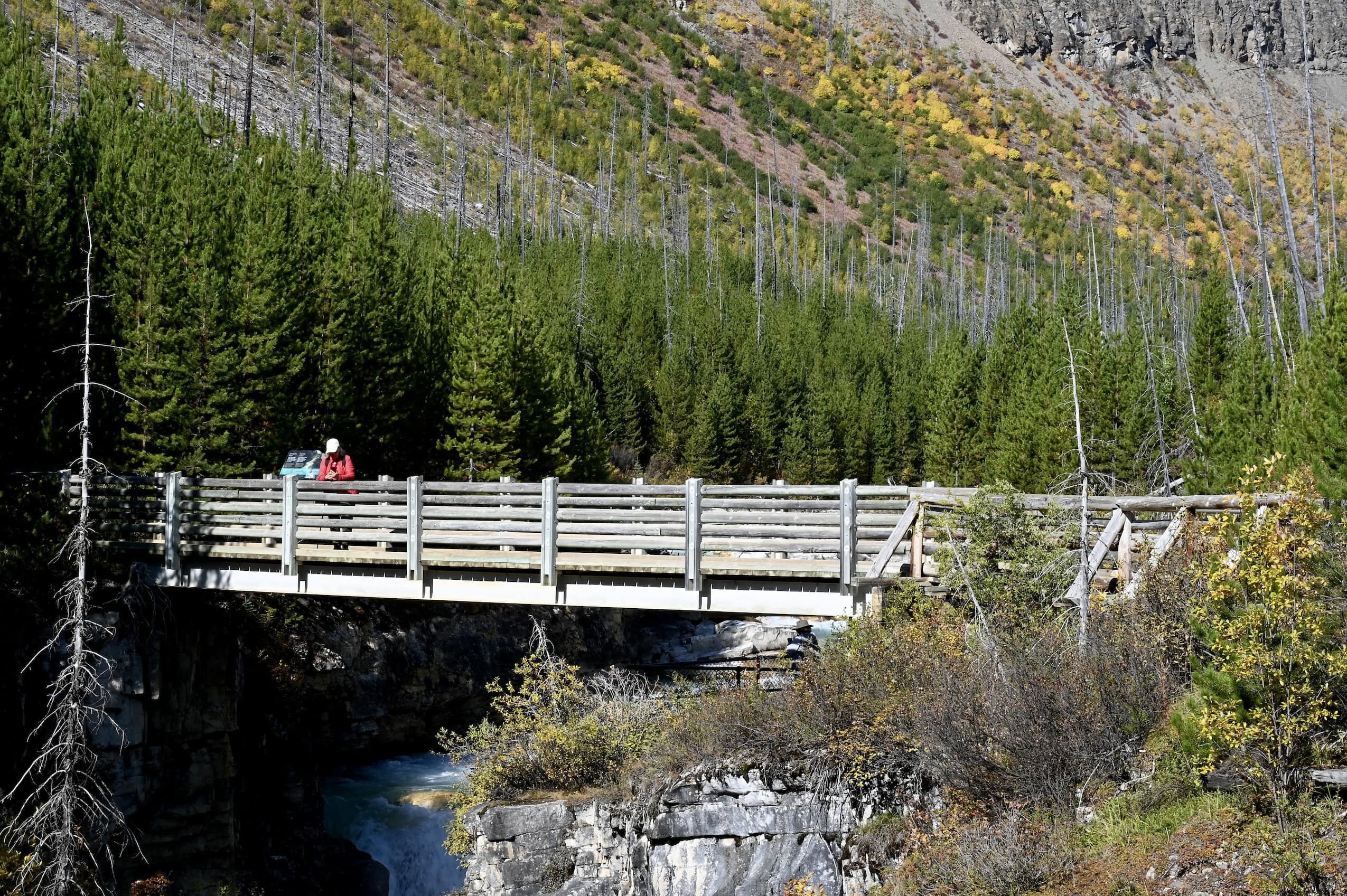
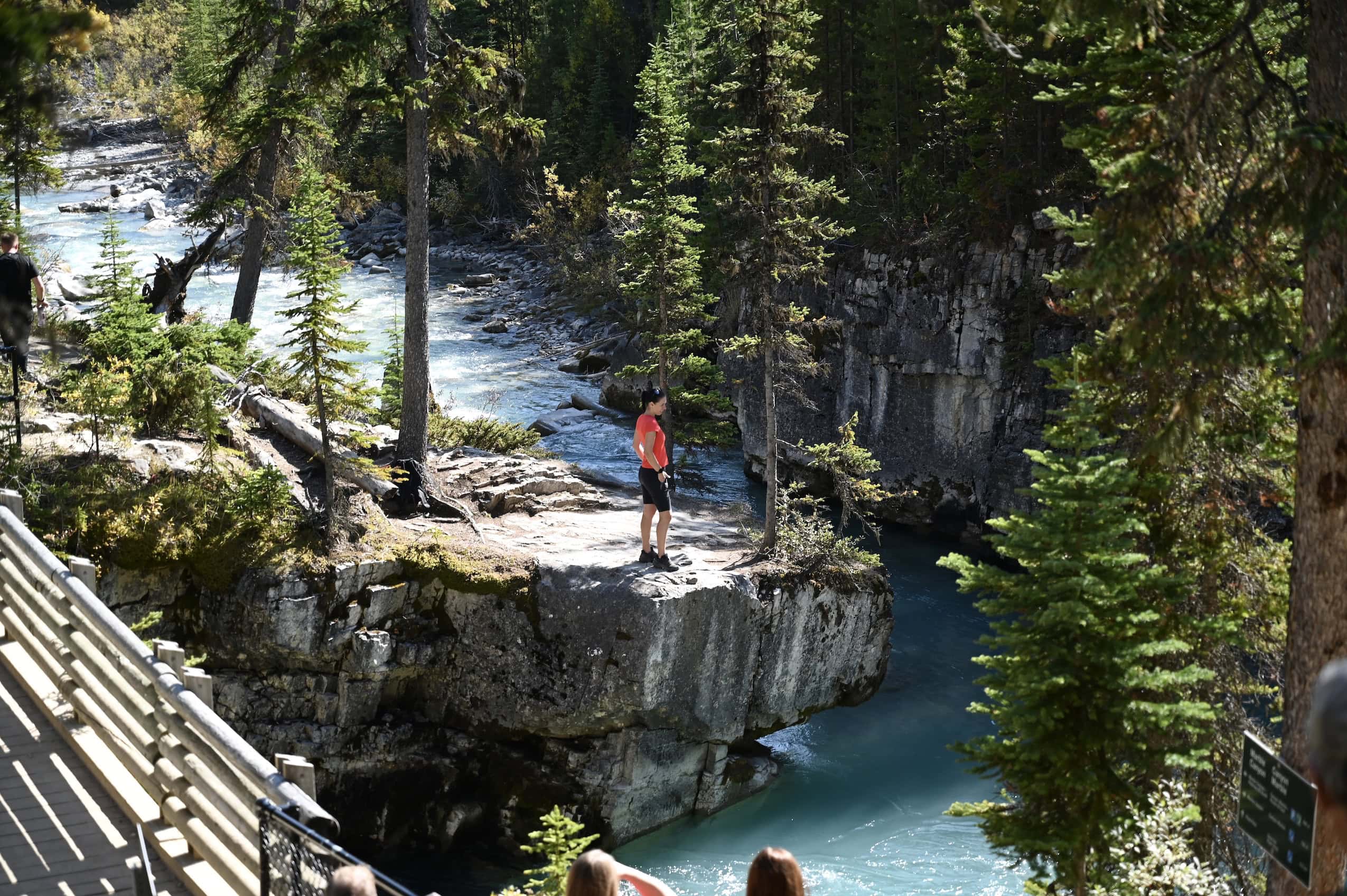
The parking lot off the highway is busy and there’s a line-up for the outhouses next to a Parks Canada information stand featuring maps from years past. To the left, a wide accessible trail leads to the well-trod bridges and pathways crisscrossing Marble Canyon in Kootenay National Park in southern B.C. just 50 kilometres from the Alberta border.
The walk up the length of the canyon is short, barely a kilometre, with a little detour near its end where the ubiquitous red chairs of the national park system sit on a rise looking back toward the parking lot. It’s about as far as most people venture, but those red chairs don’t mark the end of the trail system through the valley.
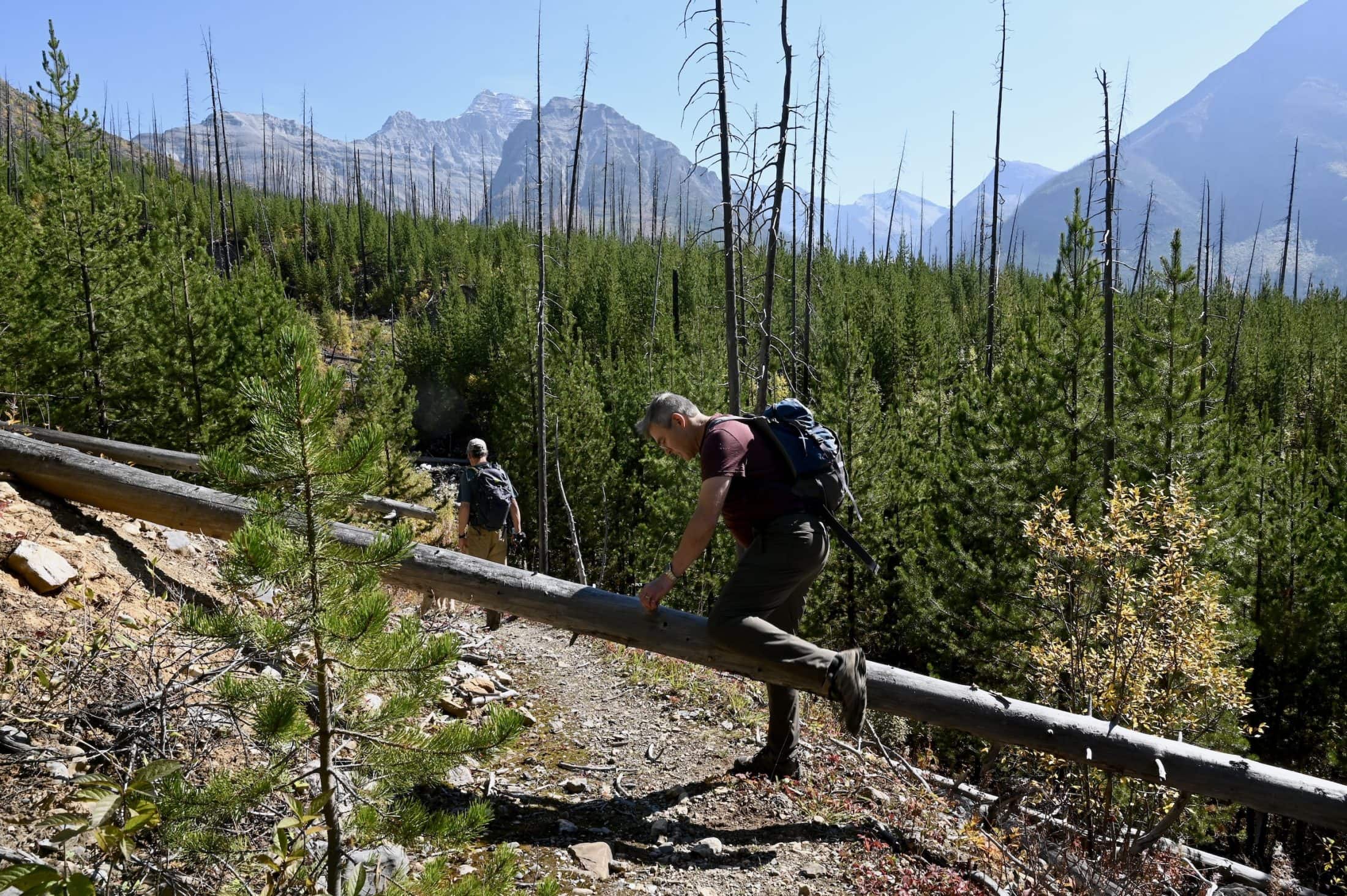
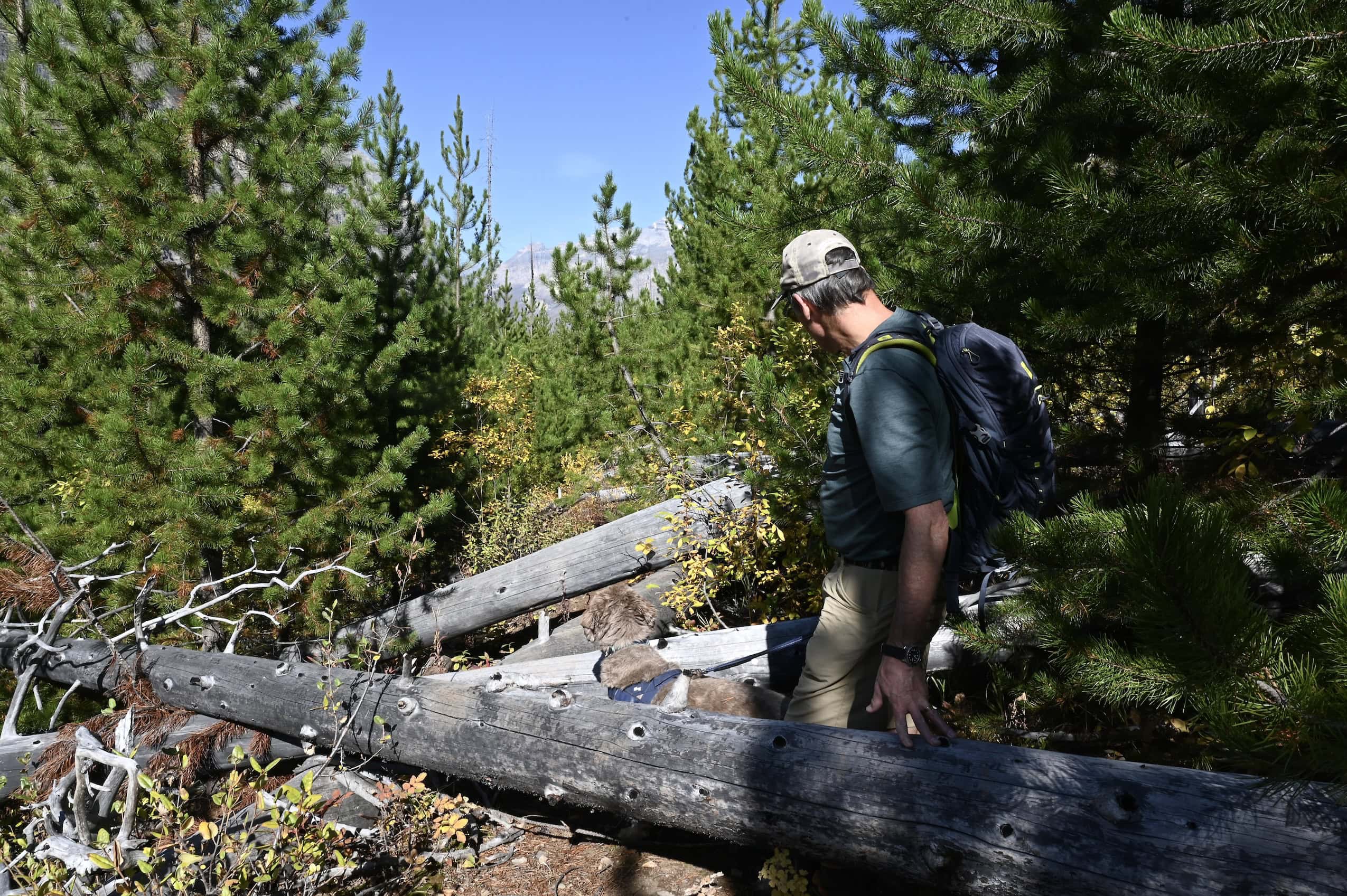
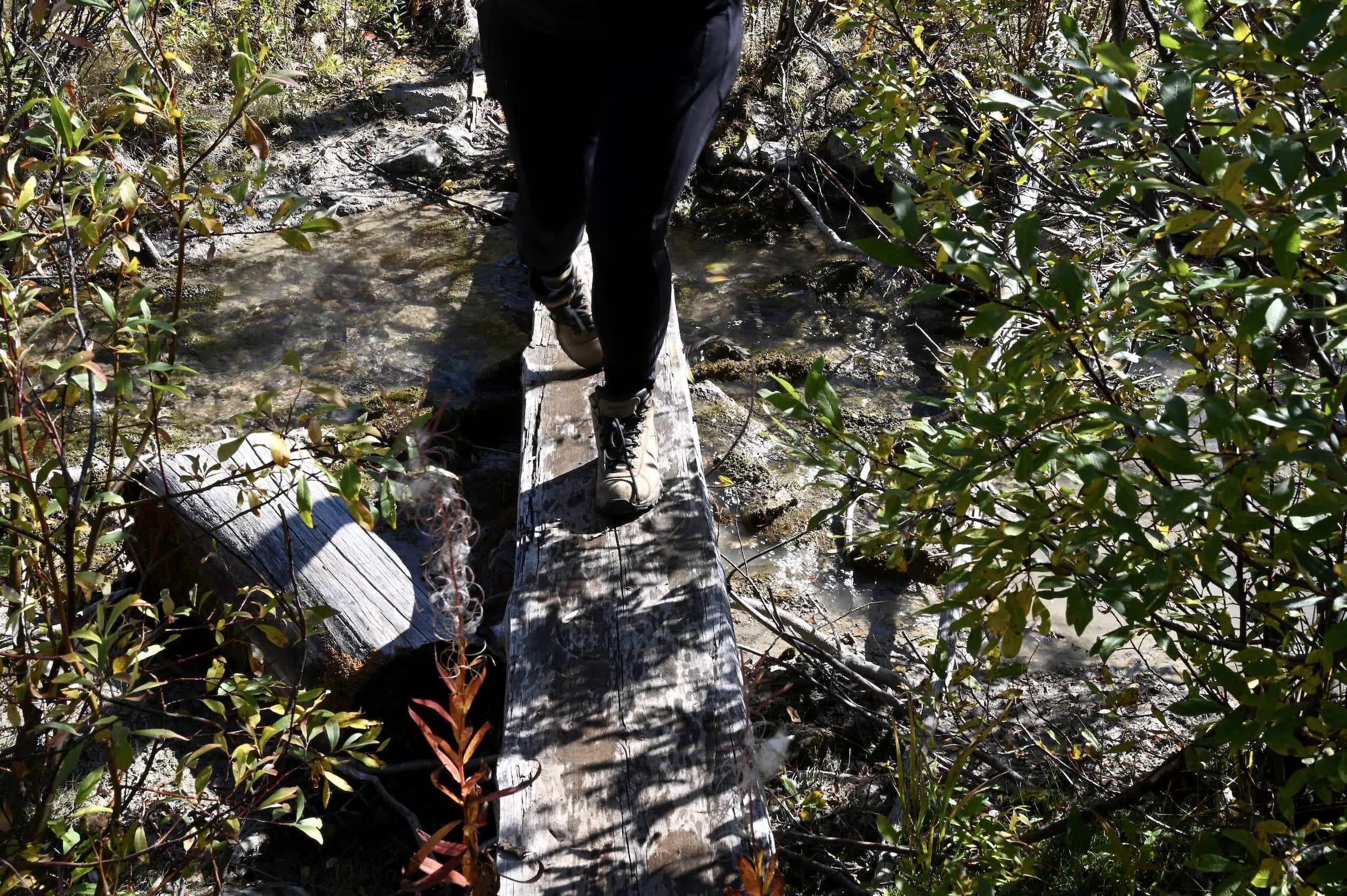
A few more steps and walkers encounter a sign warning that the trail ahead — still listed on those yellowing maps — is no longer maintained. The sign doesn’t lie. Heading up through Tokumm Creek valley requires climbing over and under fallen trees, over collapsed log bridges and through overgrown brush.
It’s the sort of trek that eats at Trevor Willson, the president of the Canadian Backcountry Trails Preservation Society.
“I’m an engineer,” he says, driving through the Rocky Mountains toward Marble Canyon one fall weekend. “So if you have a problem, you don’t ignore the problem, you solve the problem.”
His organization is trying to convince Parks Canada to reinvest in trails it says have been abandoned, hindering backcountry access in parks at a time when more and more people are visiting. That’s particularly true for the Rocky Mountain parks of Banff, Kootenay and Jasper.
According to Willson, the cost of his plan to fix the nation’s parks is minimal, approximately $50 million to replace bridges and fix all of the existing trails, plus one-to-two million dollars per year in maintenance. Parks Canada, he says, doesn’t want to spend the money in an era of budget cuts, and doesn’t want volunteers taking on some of the load.
But the question runs deeper than dollars and cents, touching on a philosophical debate about the purpose of Canada’s national parks and whether to prioritize recreation, conservation or some balance between the two.
“Hiking and horseback riding are the classic activities to do in the mountains,” Willson says. “If you want to see the national park, you need to get out of the town of Banff because it’s beautiful, but it’s a very civilized, very well-developed little chunk of real estate.”
It should not be, he says, a “drive-through park.”
‘Proverbial pulling of teeth’: backcountry hikers frustrated with perceived lack of action from Parks Canada
Willson has been involved in trail building and maintenance for years, including building bridges and negotiating partnership agreements with governments. He was inspired to start his society when he tried to convince Jasper National Park to replace a bridge along a historic passage across its northern border — and was rebuffed.
The Simon Creek bridge broke around 2015, severing a trail that was once a thoroughfare for First Nations and then the fur trade. Willson says he approached Jasper National Park about fixing it but was told there wasn’t enough money. Not one to take no for an answer, Willson found private funding but says he was eventually told rebuilding the bridge would have a negative impact on the ecology of the area.
Willson and his organization focus their efforts on existing trails and areas where bridges once spanned significant waterways. They do not, as he puts it, campaign to get rid of all obstacles or prevent your feet from getting wet.
“The point is, if you come to a river or creek and it’s impassable — like you can’t get across — and therefore you have to turn back, that bridge should be replaced,” he says, adding the bridge on Smith Creek crosses a section of fast, opaque and boulder-filled water.
Gavin Fitch, a fellow society member and environmental lawyer based in Calgary, says the group had a formal meeting with Jasper National Park officials in April, but still haven’t received a response.
“Our optimism has, I would say, changed to pessimism,” he says.
Not only is the Canadian Backcountry Trails Preservation Society trying to convince the government to make investments in trails and bridges — potentially one of Willson’s own designs — but to allow certified volunteers to help maintain the trails. That’s common in provincial parks, particularly in B.C., but Parks Canada has moved away from the practice and is reluctant to change tact, Willson says.
Parks Canada did not directly answer questions emailed by The Narwhal, but says it regularly reviews investments in the more than 8,000 kilometres of trails in its network based on visitation and conservation priorities.
“These decisions help ensure available resources are focused where they provide the greatest benefit to visitors, Indigenous partners, communities and protected places,” spokesperson Charlotte Bordeleau says in an email.
“In Kootenay National Park, for example, maintenance on portions of the Tokumm Creek Trail above Marble Canyon was discontinued as part of broader wilderness management decisions designed to support conservation objectives and wildlife habitat protection.”
Climbing over trees and scrambling through brush on the hike from Marble Canyon, Fitch says abandoning infrastructure doesn’t just prevent access to the backcountry, it erases public trails.
The trails are not decommissioned, simply allowed to deteriorate, he says. Then they disappear from government websites. Soon, the hiking apps used by modern adventurers downvote them into near obscurity.
It’s one reason Fitch carries around a well-worn trail book from 1990, an encyclopedic guide to routes across the Rocky Mountain region that’s fading in the digital age.
“One of the issues here is — now I’m putting on my administrative lawyer’s hat — these are decisions that Parks Canada makes with zero consultation,” he says.
“And of course, once the decision’s made, as we are finding out, trying to get them to reverse a decision that they’ve made on maintaining a trail is like proverbial pulling of teeth.”
Who is a national park for?
It’s only a matter of minutes up the valley from Marble Canyon and those red chairs before the crowds feel far away. It is quiet and empty and the trees blocking the route multiply as you move farther in. The live trees are short, showing only about 20 years of growth since a fire ripped through this area. Skeletal burnt trunks still hover high amidst the green.
The quiet, even this close to a highway tourist stop, isn’t uncommon in the sprawling mountain parks that hug that Alberta-B.C. border. The vast majority of land in these parks is tucked far away from main thoroughfares. In Jasper, Willson says his own calculations show 83 per cent of the land is more than five kilometres from a highway.
“If you don’t have trails to access that 83 per cent, that’s a huge loss,” he says.
But not everyone would agree.
Bordeleau says Parks Canada has invested approximately $155 million in trail infrastructure since 2015, a figure that goes beyond backcountry trails. But she says the first priority of the agency is protecting the ecological integrity of the parks.
Willson argues that focus is too restrictive and ignores Parks Canada’s commitment to enjoyment of these vast public spaces.
“Ecological integrity is the number one priority in national parks. It’s written into the National Parks Act, and it states that the national park shall be maintained for future generations, which is fine, is great,” he says. “But they interpret that as ‘Keep people out of the back country.’ ”
At the same time, he says, more and more people are crowding into tourist hot spots.
According to data from Parks Canada, more than 11,000 people visited Lake Louise in Banff National Park each day in 2025, and the park itself set a new record with 4.5 million visitors that year.
Data from digital tools could help inform Rocky Mountain trail decisions: conservation advocate
Nadine Raynolds, the director of communities and conservation at the environmental group Yellowstone to Yukon Conservation Initiative, says there are ways to balance human access with ecological integrity, given the proper data and funding.
But that doesn’t necessarily mean maintaining existing or historic routes and will depend on wildlife routes, the specific species that use an area, the impact of human activities and even the time of year.
“What is the information that we need to support decision-making on the landscape?” she says. “Often what that leads to is making choices about where those trails should be and where is a place where we maybe shouldn’t put trails because of the wildlife needs.”
Unlike Fitch and his guidebook, her organization leans into digital apps and technologies to determine what areas are popular among humans and wildlife as it decides where to invest tight budgets. And she argues those tools can be effective in monitoring.
“Land managers that we spoke with in B.C. and Alberta were really keen to explore all these options because they need this information,” Raynolds says, adding those managers don’t have the staff or resources to implement sufficient monitoring programs.
When it comes to underused backcountry trails, the impact of human activity is unlikely to be significant, and it would be easy to manage numbers with trail restrictions and campsite access.
But Fitch acknowledges the calculus could work against them, precisely because the number of people who want to trek in the backcountry is small.
“So I think it would be the bean-counter argument, that the scarce resources which we have should be put to use on essentially front-country infrastructure, so the stuff you can reach easily from the highway,” he says.
‘A very quintessential Canadian thing’
In March, the federal government announced $3.8 billion for initiatives it says will protect Canada’s natural landscapes. Of that, $267 million will go to the creation of two new protected areas overseen by Parks Canada. The plan also calls for private partnerships and investments in Indigenous-led stewardship.
It’s unclear if those moves will include a reinvestment in backcountry trails, but Willson and Fitch aren’t waiting to find out. They’re stepping up lobbying efforts, meeting with Corey Hogan, the sole Liberal MP in Calgary, and hoping that one of the doors they knock on opens.
Raynolds says the tools and the research exists to plan trails and parks that benefit both wildlife and recreation. But implementing those plans will take political will and a bit of investment.
Willson hopes there’s more to it than a simple cost-benefit analysis.
“The park is not only the highways and the towns,” Willson says. “The park is the trails too. Walking and hiking on a trail in wilderness is a very quintessential Canadian thing.”