


 7 min. read
Aquatic global change ecologist Mary Jade (MJ) Farruggia found herself studying the impact of wildfires on lakes by accident. She was researching lakes in the mountains of California in the summer of 2020 when, in “a tragic turn of events,” wildfires swept through the area, smoke clouded the sky and her plans quickly changed.
“Wildfires are becoming more intense and more frequent, and so it just became a phenomenon that was getting harder and harder to ignore,” Farruggia, a postdoctoral researcher at the University of Colorado Boulder, told The Narwhal over the phone. “As lake scientists, we started wondering, ‘what’s the impact of this on the systems that we study?’ ”
Summary
Canada is home to two million lakes, more than any other country. And the last three wildfire seasons have been among the worst on record here, making research like Farruggia’s critical.
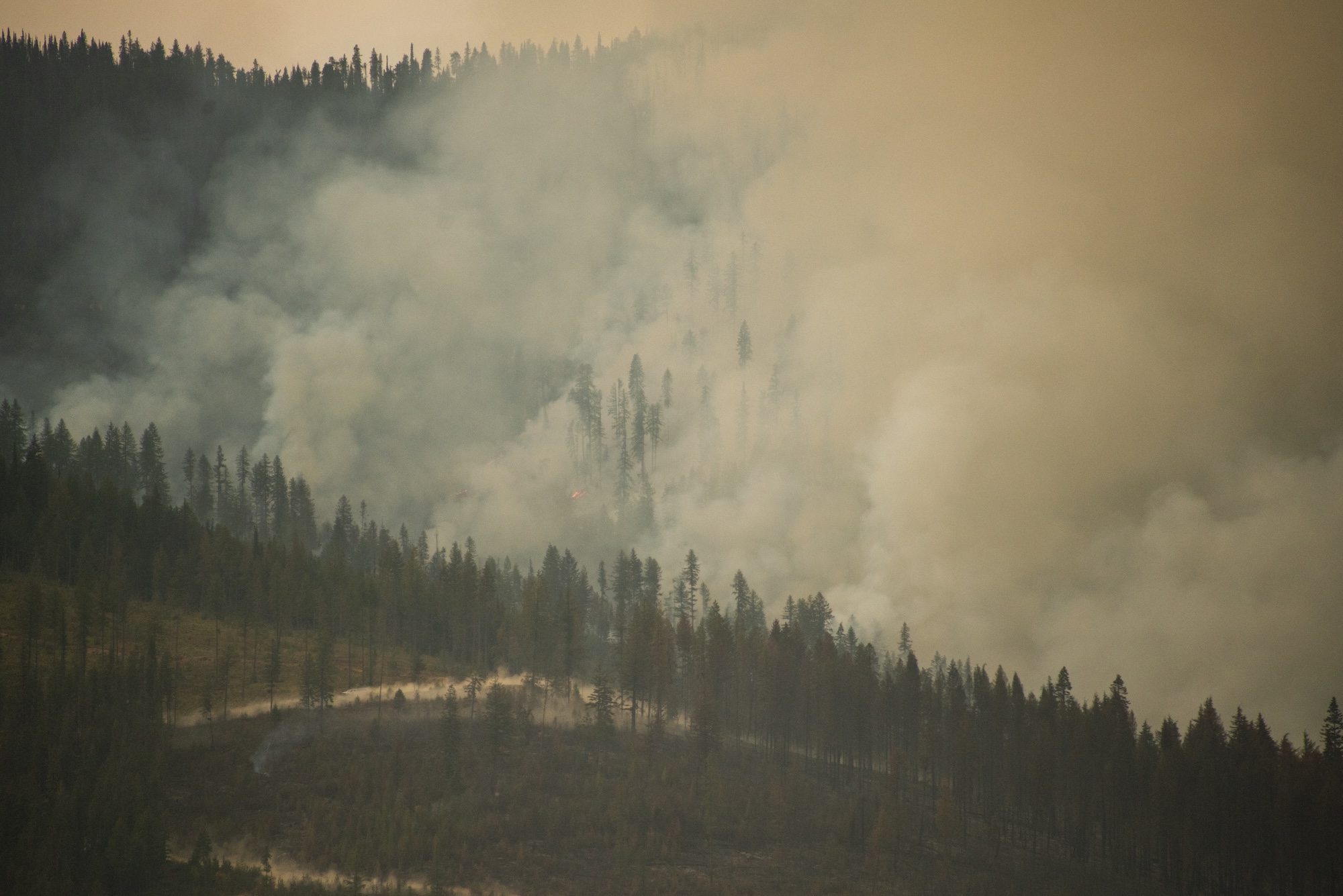
A record-breaking season in 2023 saw 15 million hectares of forest burned across Canada. The land hasn’t had much reprieve since. This year more than 4,700 fires burned more than four million hectares across the country by the end of August — many in Ontario.
“We as humans feel the impacts of [wildfire smoke],” Farruggia said. “If it’s affecting your own health, how is it also affecting your ecosystems and the nature around you and the systems that you rely on? Is your favourite lake going to be similarly impacted by smoke?”
‘Almost all’ North American lakes are exposed to wildfire smoke: researchers
Some of the direct impacts of wildfires on ecosystems are straightforward; as fires burn near lakes, they increase future flood risk, as plants that stabilize soil and filter runoff go up in smoke. Ash deposits contaminants and excess nutrients into the water, changing the makeup of watersheds.
For each lake and fire, the full impact depends on a slew of variables, including “the number of wildfires, their intensity, their location, the health of the ecosystem before the fire and even how much rain falls following a fire,” Terri-Lee Reid, a freshwater conservation researcher at the Canadian Wildlife Federation, said.
Less clear is how lake ecosystems far away from fires are being impacted as smoke travels, and Reid says there’s still more to learn. But, the science is much newer, and scientists like Farruggia and her colleagues spend their time designing and performing experiments to figure it out.
“Sometimes we get these summers where it feels like much of North America is covered in smoke,” said Steven Sadro, an associate professor of environmental science and policy at the University of California, Davis. He is also Farruggia’s co-author and former advisor. “This is smoke that’s affecting millions of lakes at continental scales.”
Sadro and Farruggia coined the term “lake-smoke day,” which provides a metric referring to the number of days a lake is exposed to smoke in a fire season. They found wildfire smoke can drift hundreds of miles away from its source, making its impact widespread.
“We found a pretty shocking response … that almost all lakes in North America experience some number of smoke exposure days,” Sadro said, adding that many of them were experiencing a full month or more over the course of a year.
“Smoke in the atmosphere can reduce the amount of sunlight that can reach the lake, and that can impact water temperature. It can impact the growth of algae and aquatic plants, and then that can have further consequences,” Reid said.
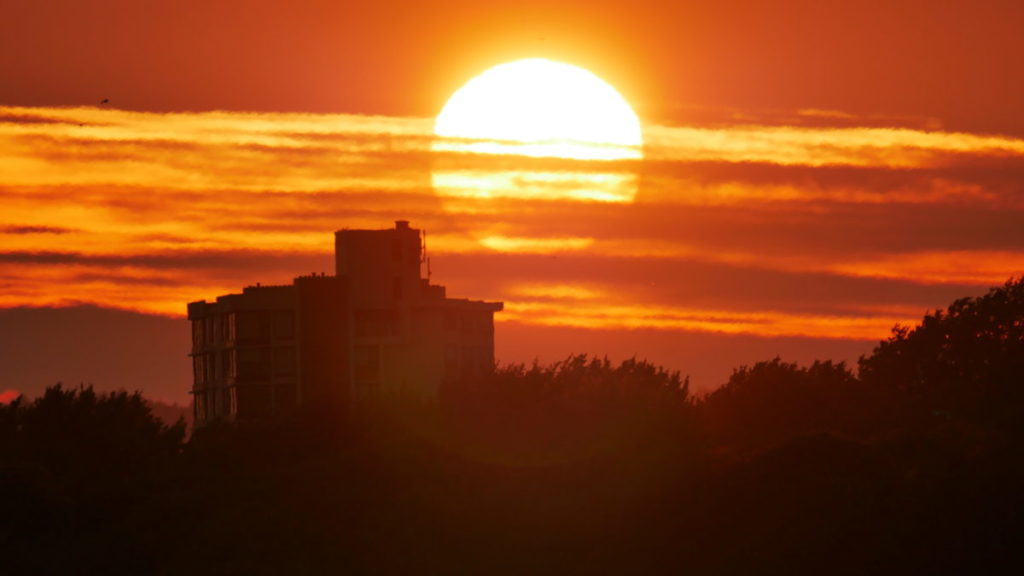
Their research suggests that smoke blocks sunlight from reaching lakes, lowering lake temperatures and reducing photosynthesis and respiration in the body of water.
What happens next is harder to predict. A lake’s depth, clarity, size, location and nutrient levels all influence how it responds to smoke. Larger lakes can be more resilient while smaller, clearer lakes can experience more algae growth due to the new nutrient deposits.
“The jury is really out on the magnitude of the impact. I’m not trying to say that millions of lakes in North America are having very large impacts from wildfire smoke. Some of them certainly may be,” Sadro said. “We don’t know what those numbers are yet.”
‘When the land’s not healthy, the lakes aren’t healthy either’
While researchers work to untangle those relationships, Amy Cardinal Christianson, director of fire stewardship for the Indigenous Leadership Initiative, says Indigenous Knowledge has long recognized the interconnection between fire, water and land.
She pointed to historical examples along the west coast where Indigenous communities have been aware of the cooling effect of smoke on waterways that western science has also recently ventured into. For example in California, when it was too hot for salmon to spawn, Cardinal Christianson said cultural burns would be used to help create a layer of smoke over the water to cool it and help the fish.
But while fire can be used beneficially, it can also cause harm to waterways.
“People often think of [a] lake as its own ecosystem, which it is, but it’s really tied into everything that’s around it,” Cardinal Christianson said. “When the land’s not healthy, the lakes aren’t healthy either.”
She explained that, instead of having separate plans for forest management, watershed management and more, “we need to start looking at things much more holistically.”
“For Indigenous people, our teachings are that everything is interconnected and related. So when these fires are happening, one of the big concerns for us is the impacts on water,” Cardinal Christianson said. “It’s a constant worry in the back of my head, just like, what [are] going to be the long-term effects to the water that we rely on?”
The challenges of studying how wildfires affect lakes
Farruggia is part of a working group of 30 American and Canadian scientists looking for answers. The group includes Scott Higgins, senior research scientist with the International Institute for Sustainable Development Experimental Lakes Area — a natural freshwater laboratory spanning almost 60 lakes in Kenora in northwestern Ontario.
“We work in the field and we certainly notice, especially during those intensive fire years, the smog and the ash clouds that drift over our site,” Higgins said. The boreal forest that spans Canada, including around Kenora, is sometimes referred to as a “fire forest” because its ecosystems are both flammable, and reliant on fire to help remove insects, disease and aged trees, allowing for new life to emerge.
“This is a really lake-intensive part of Canada,” Higgins said. “When the boreal forest burns, undoubtedly lakes are directly impacted.”
But while interest in researching the impacts of wildfires on lakes has been increasing as fire seasons become longer and more intense, he said the science is still in its infancy.
One problem, he said, is that, “it’s tough to do experiments on actual wildfires.”

It is often difficult for researchers to get into an area quickly after a fire to study the immediate impacts. Even if they can, there often isn’t data from before the fire to compare it to. To try to counteract this and build a better understanding, Higgins said, his team is planning to use the extensive, long-term data collected at the Experimental Lakes Area to its benefit, including adding wildfire ash directly into a lake to study the outcome, and to work with Ontario’s Ministry of Natural Resources to use a prescribed burn for study.
“We’ll be able to put some pretty good numbers on how important these fires are to nutrient cycles and to metal cycles and to what they mean for biota,” or the animals and plants living in that environment, Higgins said. “I think science is going to be able to provide in the next five to 10 years for sure.”
In the meantime, Farruggia said the early evidence offers reason to be hopeful — even in sensitive, smaller and more remote lakes.
“Lakes are actually very resilient systems. Even though we see there’s lots of sensitivity, especially in smaller, lower nutrient lakes, we have seen that they recover pretty quickly so far,” Farruggia said. “Lake resilience is something that I think could be celebrated.”