


 12 min. read
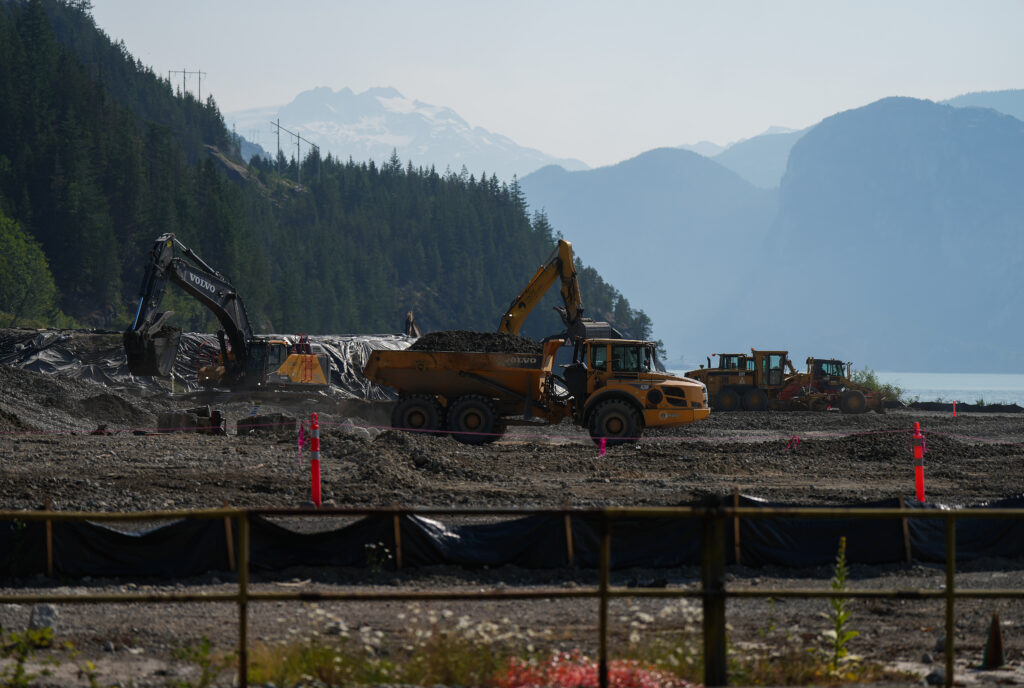
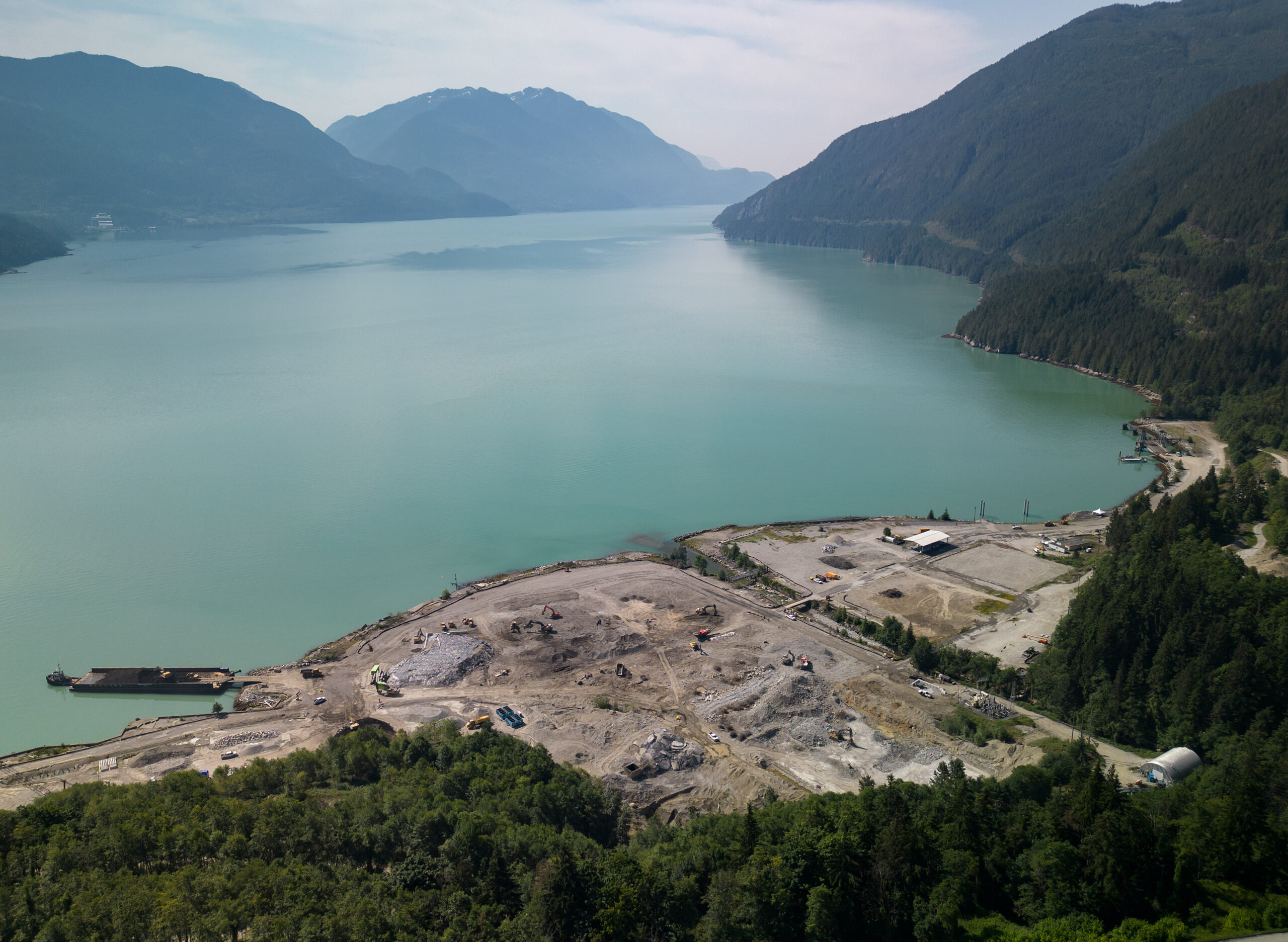
The Woodfibre LNG facility near Squamish, B.C., is still under construction but already has federal support to expand its liquefied natural gas (LNG) production. Federal Energy Minister Tim Hodgson announced a $200-million investment on Nov. 13 to help the facility produce up to 2.6 million tonnes of LNG per year, up from the 2.1 million tonnes Woodfibre LNG was designed to produce.
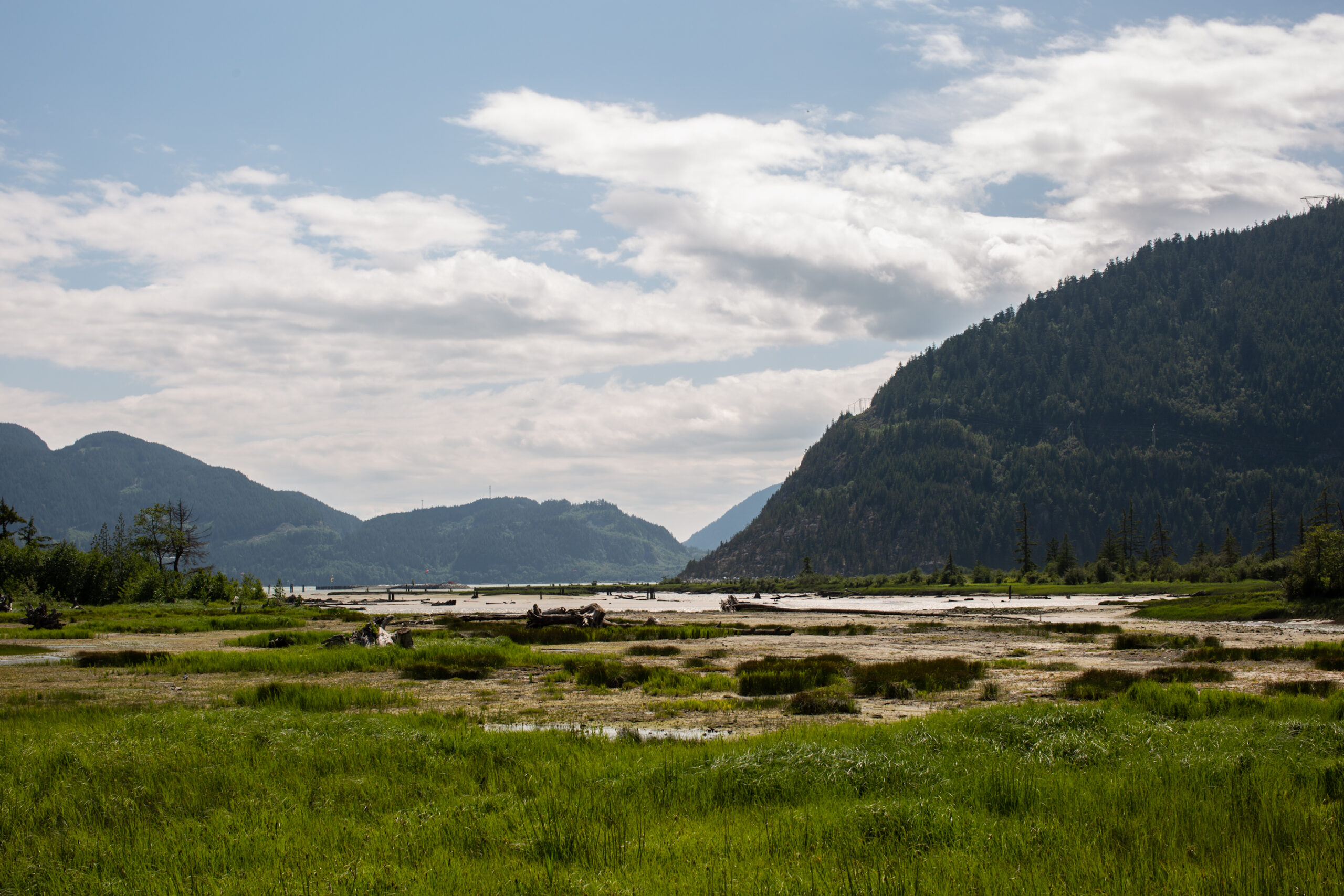
Situated on the shore of Howe Sound where a pulp mill once stood, the plant takes natural gas and cools it to -160 C, turning it into a liquid which takes up a fraction of the space and can then be transported by boat. Woodfibre LNG expects to begin exporting LNG mainly to Asian markets as early as 2027.
But as construction advances, so does the opposition. Some locals are worried about air emissions, flaring and the discharge of wastewater into the sound.
Summary
Woodfibre LNG CEO Luke Schauerte said the company is still in the early stages of planning the expansion the Canadian government has committed to support. While Woodfibre LNG’s existing environmental assessment “includes all requirements” to increase its production, according to Schauerte, the company may need to obtain additional permits before moving ahead.
“Obviously, first and foremost, we’ve been working with the Squamish Nation on that … and then working with the provincial and federal governments to go through those assessment processes that are appropriate,” Schauerte said at a press conference announcing the federal funding.
The Sḵwx̱wú7mesh Úxwumixw (Squamish Nation) is supportive of the project and led the first legally-binding environmental assessments of the LNG facility and corresponding pipeline between 2013 and 2015. The nation is working with the federal government and local environmentalists on restoring parts of the Squamish River estuary, long impacted by industrial activities.
Despite the expansion announcement, Woodfibre LNG is still in the process of obtaining permits from the BC Energy Regulator (BCER) for its original design and production capacity.
On Oct. 29, Woodfibre LNG submitted an application for an air emission waste discharge permit to the regulator, opening a 30-day window for members of the public to comment on the application. The 4,149-page application outlines anticipated emissions from the facility’s furnace, thermal oxidizer, flare stacks, vents and diesel generators. The permit application states repeatedly the facility will have the capacity to produce up to 2.1 million tonnes of LNG per year. The document does not mention the expanded capacity discussed on Nov. 13.
Woodfibre LNG conducted air quality dispersion modelling to estimate how the facility’s emissions could affect the local airshed, the application states. Those models project concentrations of the various chemicals the BC Energy Regulator requires the company to report on will remain “below applicable air quality objectives.”
The company is asking Squamish residents to trust its predictions about air pollution, but the data behind those assurances remains out of public view. Researchers and local residents have been unable to obtain the modelling files from the project’s original environmental assessment, and the company has not made the data behind its latest emissions projections public. At a press conference this week, physicians, environmental advocates and Squamish Nation Elders warned the stakes are high. They are calling for independent air-quality testing and continuous public monitoring before Woodfibre begins operating.
Woodfibre LNG refuses to release environmental assessment files
Laura Minet has been trying to access the air quality modelling data for Woodfibre LNG for years.
“Without accessing the actual air quality modelling files, it’s really hard to be 100 per cent sure of the modelling work that has been done to predict the air quality impacts of those facilities,” the assistant professor in civil engineering at the University of Victoria said.
To understand how emissions from Woodfibre LNG might affect the health of people living nearby, it’s important to understand the assumptions companies are using about their facilities and the airsheds where their emissions will be introduced, Minet said.

But getting access to that information has not been easy. In 2024, The Narwhal reported on Minet’s attempts to obtain details about how Woodfibre LNG modelled the potential impacts of flaring for its environmental assessment certificate, which was granted in 2015. Both Minet and The Narwhal requested Woodfibre’s air dispersion modelling data from the provincial Ministry of the Environment and from the BC Environmental Assessment Office, including via freedom of information requests.
None of the requests were successful in obtaining the files. In October, an employee with the B.C. Ministry of Environment and Parks’ environmental protection division told local environmental group My Sea to Sky they were “unable to locate those model files” which were part of Woodfibre LNG’s environmental assessment.
Kate McInnes, the director of health and economic campaigns at My Sea to Sky, an organization focused on environmental protections in Howe Sound, said it’s important the data provided by the company receives independent and public scrutiny.
“Why would anyone trust what proponents with a vested interest have to say about how their facility is going to perform?” McInnes asked. “This needs to all be dealt with skepticism and putting public health as the highest priority.”
McInnes requested the most recent modelling data from Woodfibre LNG and the regulator. In an email reviewed by The Narwhal, a BC Energy Regulator spokesperson told her to request the information from the company. Woodfibre LNG told McInnes she needed to ask the regulator for the modelling files.
The Narwhal contacted Woodfibre LNG to request the data and was directed to the permit application. The company told My Sea To Sky it does not plan to publish its modelling files “as part of the public consultation process” on the waste discharge permit.
The regulator also declined to provide the files or respond to questions about the permit application beyond directing The Narwhal to request the information from Woodfibre LNG. In an email, a communications spokesperson cited the ongoing election period, which continues until the new government is sworn in on Nov. 25.
Until then, the regulator can only communicate about “critical health, public safety and information related to statutory requirements,” according to the email.
Why does LNG emissions data matter?
A growing body of scientific research shows air pollution can have widespread and severe impacts on human health. The World Health Organization estimates polluted air contributes to seven million premature deaths every year. Pollution sources include exhaust from vehicles, industrial emissions and, increasingly, wildfires.
For LNG production and export facilities like Woodfibre, flaring is a significant source of air pollution, including benzene, particulates, hydrocarbons and sulphur and nitrogen oxides. Flaring is a process by which facilities burn off excess gas, mostly in the form of methane. It’s a routine part of operations at an LNG facility but may also be done in emergency situations to maintain safe operations.
Woodfibre LNG says its facility is “designed with multiple controls to keep flaring to the minimum needed for safe operations” and that the company will monitor and report on local air quality in compliance with provincial requirements. According to the BC Energy Regulator, permit applications are evaluated under provincial laws and regulations. Before issuing a permit, the regulator assesses potential effects and creates specific requirements aimed at preventing, minimizing and managing those effects.
As part of the permitting process in B.C., LNG facilities have to assess the impact their operations could have on the surrounding environment, including the air. Air quality modelling, Minet explained, takes into account the various factors that could determine where emissions from, say, Woodfibre LNG’s high-pressure flaring stack will go once they are released into the air. Factors like temperature, humidity, wind speed and direction and local topography can all affect the way emissions will travel and spread through the air.
For local air quality, Woodfibre’s proximity to residential areas in Squamish is a factor of concern. So is the local geography. Howe Sound is a long, narrow ocean inlet. Its steep sides, formed by glaciers, make the inlet susceptible to inversions, where a layer of warm air traps cooler air in the space below.
“That means that if there’s excess air pollution, air pollution could be also trapped close to the ground under certain meteorological conditions,” such as during heat waves, Minet previously told The Narhwal.
When Minet spoke with The Narwhal, she was still working her way through the thousands of pages in the permit application and had yet to request the latest data files from the company or the regulator.
Why is air pollution only being considered now?
The air emission waste discharge permit is one of the last authorizations Woodfibre LNG needs before beginning operations.
This permitting process comes 12 years after the project was granted its environmental assessment certificate and just one year before Woodfibre LNG anticipates completing construction.
“The project is over 75 per cent complete and construction completion is right around the corner,” Schauerte said during the Nov. 13 funding announcement.
McInnes finds the timing troubling.
“Investors have already poured billions of dollars into the project before anyone really scrutinizes the air pollution impacts,” she said. “It definitely feels like a box-ticking exercise.”
Minet also questioned the timing of the permit application, though she acknowledged the timeline is set out in B.C.’s Environmental Management Act.
“What are the chances of this not being approved?” she wondered, noting that Woodfibre LNG is closer to completion than to the start of construction.
She also noticed Woodfibre LNG’s estimates about the amount of flaring that will happen during its initial operations has changed significantly since its environmental assessment application was submitted in 2015.

Then, Woodfibre LNG estimated its start-up and commissioning phase would last about a month, according to a report submitted to B.C.’s environmental assessment office. Now, that initial phase could last six to eight months, according to the project website, with flaring occurring several days per week during that time.
Following start-up, it could take Woodfibre LNG another two years before flaring stabilizes and happens only once per month.
“There might be high flaring for up to three years,” Minet said. “In their environmental impact assessment 10 years ago, they had said the startup will last a couple weeks or a couple months. So there’s a big, big difference now in what’s been said.”
Since applying for the environmental assessment certificate issued in 2015, “Woodfibre has continually been planning, designing, and refining the project,” company spokesperson Sean Beardow said in an email.
“The change in the overall commissioning period was adjusted as a result of this process.”
LNG facilities flare a lot more gas during start-up and commissioning than they do during regular operations — up to three times as much, according to a 2025 study Minet co-authored.
In its recent permit application, Woodfibre LNG included information “based on detailed design and emission factors” updated since its environmental assessment application was filed, according to correspondence sent to McInnes.
The company responded to McInnes’ request for the modelling files from 2015 by implying the modelling — which informed the environmental assessment certificate issued for Woodfibre LNG — is no longer relevant.
“Those historical modelling files are not being relied upon for the purposes of the current [permit] application,” the emailed response reads.
“Therefore the original dispersion files will not be provided.”
Some residents worry Woodfibre could have the same issues as LNG Canada
For McInnes, who lives in Squamish, the spectre of LNG Canada looms large as Woodfibre moves toward completion.
When the Kitimat, B.C., liquefaction facility first fired up its flare stack, locals and workers alike quickly realized something was wrong. As first reported by The Narwhal, an integrity issue with the main stack was identified and later reported to the BC Energy Regulator. For months, the community was subjected to excessive noise, towering flames lighting up the night sky, black smoke and a concoction of unidentified chemical smells as plant operators tried to get things under control.
“How could anyone there properly understand the chemical profile of an LNG plant?” McInnes said. “The permits are given so quickly that people are just kind of like, ‘Okay, what?’ They don’t know what’s going on until it’s too late.”
But B.C.’s regulators were told that LNG Canada was likely to generate black smoke. While LNG Canada’s draft submissions to the BC Energy Regulator stated its facility would be able to operate “without routine flaring,” that commitment never made it into the final submission. In 2022, documents submitted to the regulator made clear the facility was likely to emit black smoke continuously for multiple days.
In 2025, LNG Canada burned approximately 350 million cubic metres of gas, making it one of the most polluting LNG facilities in the world.
LNG Canada said a redesign of the malfunctioning flaring equipment will be implemented in 2028. In the meantime, the company has requested an amendment to its permits to account for continued higher levels of flaring emissions.
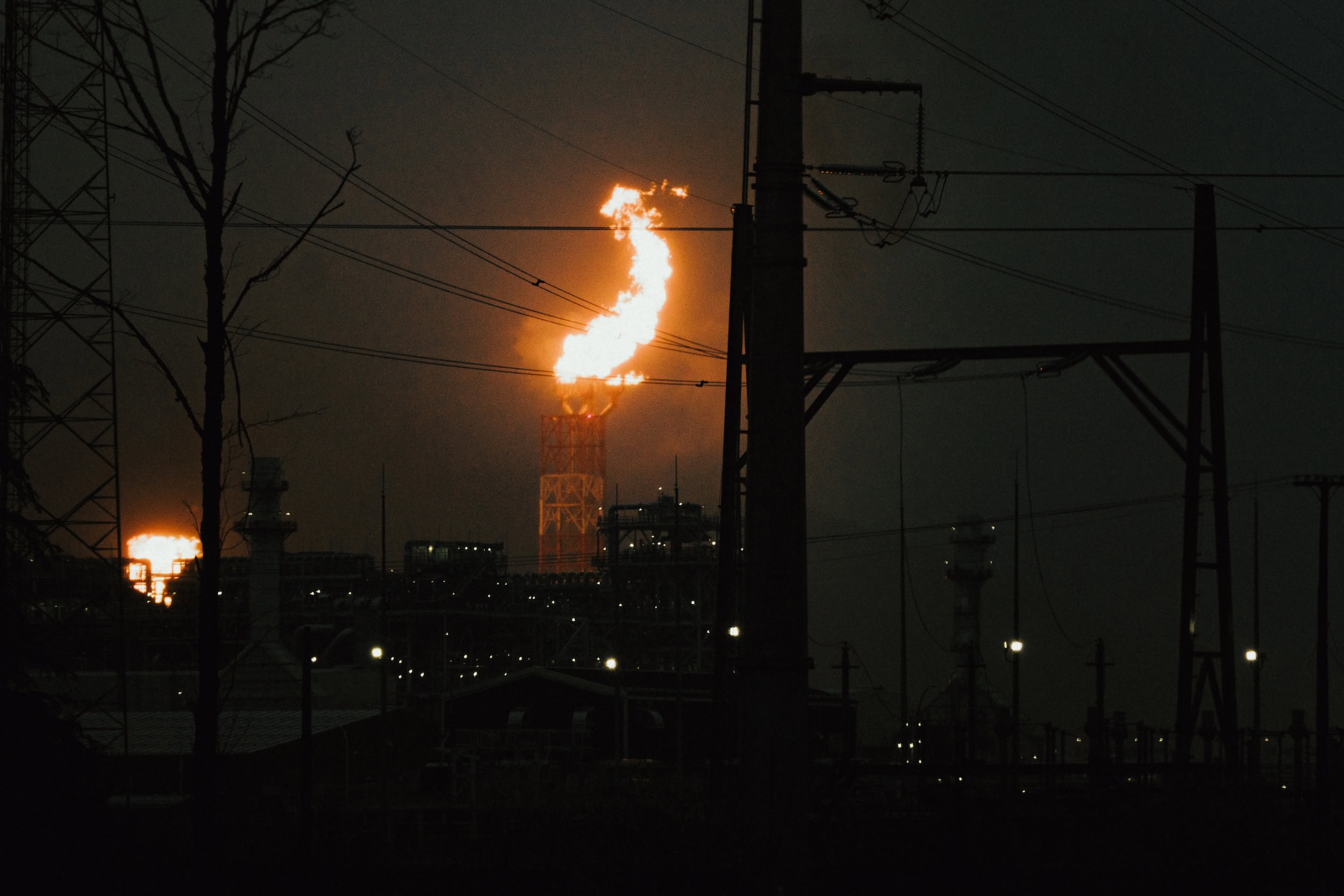
The BC Energy Regulator said “LNG Canada has reported ongoing instances where flaring from one or more of the facility’s flare systems is not consistent with the requirements of its air discharge permit to the [regulator, but] these instances have not had a measurable impact on local air quality.”
But it’s not just LNG Canada’s flare stack that has had issues. One of the facility’s two acid gas incinerators — used to destroy potentially dangerous gases — was offline for a total of 139 days between September 2025 and April 2026, according to reporting from The Tyee.
During those outages, toxic gases such as hydrogen sulphide and benzene were directed to one of LNG Canada’s flare stacks with additional gas used to increase the flare temperature. The Tyee reported LNG Canada and the BC Energy Regulator said the workaround is capable of safely destroying the toxic gases, though a chemical engineer disagreed.
McInnes wants to know if Woodfibre LNG’s recent modelling included similar scenarios.
“The models are only as good as their inputs,” she said.