It’s a tremendous feat to foist hope upon yourself, especially when it feels like there are forces at play much larger than you. The headlines are overwhelming these days — just wait for the piece on Canadian oil giants’ windfall profits from the Iran war, which we’ll get to in just a second!
But then you hear stories about people who, despite everything stacked against them, fight for a better future and refuse to remain silent. We published one of those stories this week, along with our friends at IndigiNews.
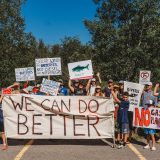
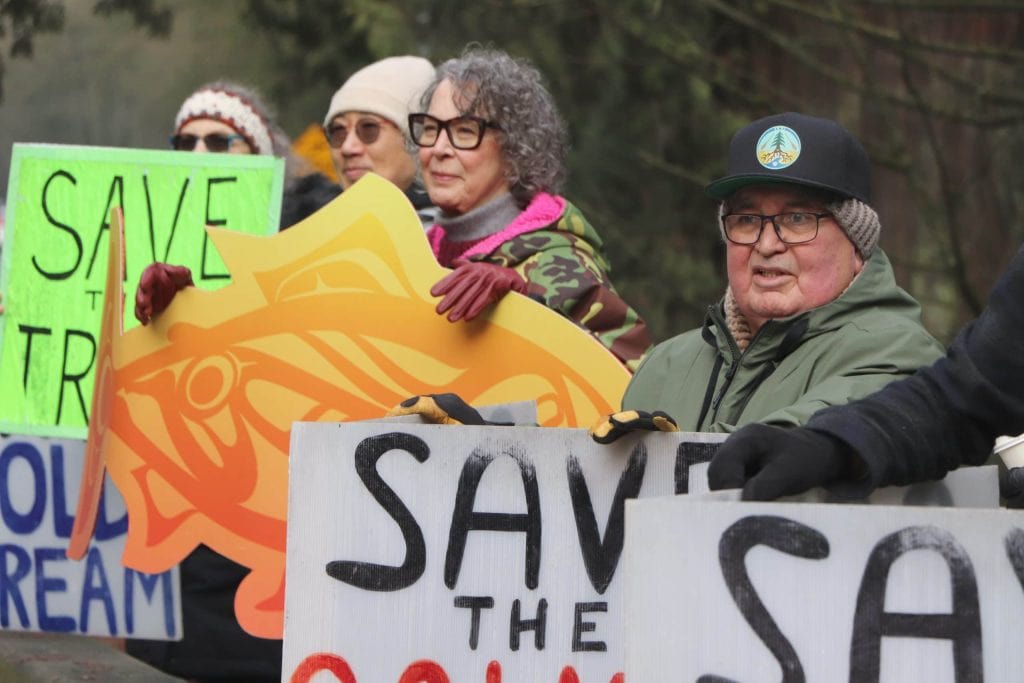
Late last December, freelance reporter Julie Chadwick visited the shoulder of the Malahat highway where the 78-year-old has been protesting for three years. Why? As Julie writes, the province has proposed widening the two-lane highway, which runs through Goldstream Park — home to waterfalls and 600-year-old Douglas firs that nearly 600,000 annual visitors fall in love with.
At least 200 threatened and endangered species live within five kilometres of the proposed expansion. Olsen was horrified to learn approximately 715 trees would also have to be removed, which could spell catastrophe for the salmon in Goldstream River.
“The canopy that creates the coolness of the water in the stream — if that disappears, those fish will disappear,” Olsen told Julie. “I thought, ‘Yeah, I can do this. I can be the voice for the salmon.’ ”
At first, it was just members of Olsen’s book club who came to support him, before it turned into a much bigger movement.
It’s not just biodiversity in Goldstream — bigger than New York City’s Central Park — that’s at stake. SELE₭TEȽ, as Olsen and the W̱SÁNEĆ people know it, was a fishing village that B.C. turned into a provincial park under a contested treaty 174 years ago.
And opposing the highway expansion is not the first time Olsen has fought to protect his culture. In the ’90s, he was arrested after shooting a decoy deer set up by provincial authorities. The case dragged on for a decade and would later uphold the W̱SÁNEĆ right to hunt and fish, as they always had.
So, Olsen’s back to his weekly protests — even though this February, the province said the expansion was being put on pause. He says he won’t stop until the whole park is protected from development.
“I’m not going to leave. I think they expected me to leave. We’re still there.”
Go read Julie’s on-the-ground story, with more on the park’s storied past, over here.
And if you feel inspired, like I do … host that potluck or dinner party, or start a book club with a few people in your neighbourhood. Who knows, maybe, just maybe, you’ll do something you always thought was beyond your control — or impossible.
It’s no secret gas prices are up due the Iran war, along with the cost of living in general. Some people are calling on Prime Minister Mark Carney to continue a gas tax holiday he instituted in the spring to lower the price at the pump, set to expire in September.
Others are wondering why we aren’t asking major Canadian oil producers to hand over more of the record-breaking profits they’ve made through this war.
In a new story this week, Ontario reporter Carl Meyer writes that a windfall tax on oil profits could net between $18 billion and $46 billion — which could put money back in people’s pockets and boost climate change initiatives. Check it out.
A firefighter’s struggle with PTSD
After we published a piece by freelance journalist Trina Moyles about Alberta wildland firefighters forming a peer-support network, we received an email from Matthew Brackenreed, a former wildland firefighter in the province.
“I’ve been meaning to send this out for a while now — the recent article gave me the courage,” Matthew wrote in his email.
In the piece, reflecting on nearly two decades of service, he writes:
“For years, I did what many firefighters do. I showed up for work, responded to emergencies and pushed through difficult experiences without fully understanding the impact they were having on me. Like many in emergency services, I believed I could handle it. Looking back, I now realize that the effects of repeated exposure to trauma were building for years.”
Doug Ford is pushing back at data centre resistance — but vows projects will pay their own way By Fatima Syed
From Armour Township to Toronto, Ontarians are worried about data centres’ water and electricity use. Here’s a look at the province’s plan to govern them.