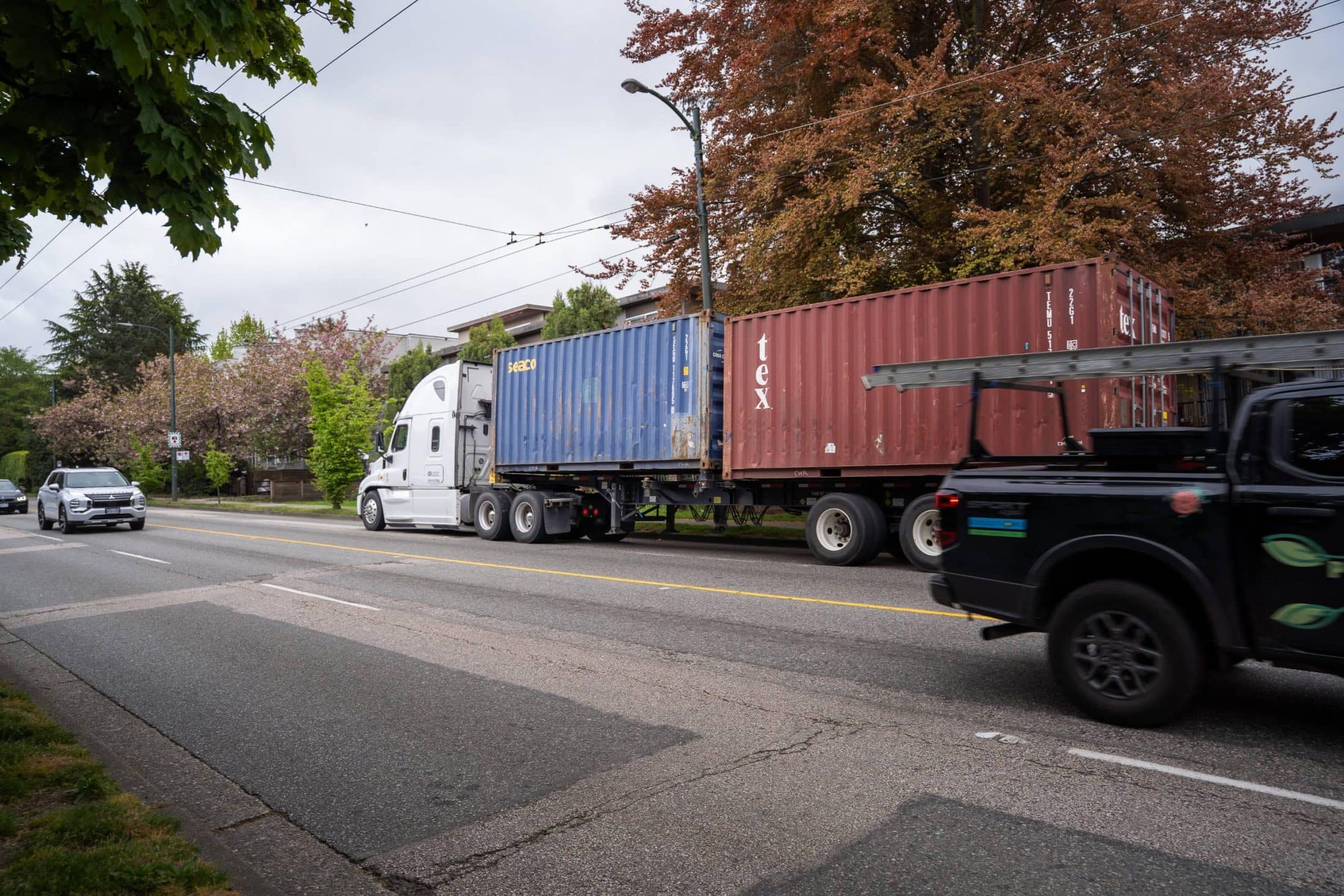
Last week, my friend and I winced as we pulled up next to a gigantic diesel truck at one of Vancouver’s busiest intersections — with the windows rolled down. I hastily closed them and plugged my nose, until we could no longer taste the pungent cocktail of pollutants in the back of our throats.
But for people who live along this truck route, with goods headed to and from the Port of Vancouver, the olfactory assault can be non-stop. And it brings with it myriad health impacts.
“It’s like a train of trucks,” resident Michelle Brown-Colistro told freelance journalist Anne Shibata Casselman. “You barely get a break between them.”
Heavy-duty diesel trucks contribute to a disproportionately high amount of pollutants, even if they represent a small percentage of traffic. Health issues that stem from breathing diesel exhaust include asthma, cancer, Parkinson’s and many other diseases. For children, impacts of traffic-related pollution are particularly hazardous.
That matters, because Anne’s reporting showed 10 elementary schools are located within 300 metres of the route, where pollutants are most concentrated. It means about six per cent of Vancouver’s public elementary school students are breathing air that health experts believe is dangerously compromised. One lung health expert said he’s concerned by the invisible toll of traffic exhaust on young children, which can affect them decades later: “Suddenly all these early life insults become much, much more significant.”
Across the globe, Anne learned, other countries are actively targeting the specific problem of emissions from heavy-duty diesel trucks. One expert who studies transportation systems and air pollution told Anne she thinks the “complacency” around this issue is “just in Canada.”
Trucking in B.C. doesn’t have to be this dirty. Some provincial regulations in the past have helped improve the overall air quality in the region. But rules targeting heavy-duty trucks, particularly older ones which pollute way more, have been met with resistance from the trucking industry.
Brown-Colistro’s efforts to reroute the constant traffic, at least off her residential street, have largely been unsuccessful. A couple of years after moving into her apartment in East Vancouver, the mother of two still wipes grime off her patio table every week, concerned it’s from the exhaust of the diesel container trucks passing by daily. She wonders who’s really afforded access to clean air in Vancouver.
“It’s certainly not low-income people. It’s certainly not a lot of young families who, due to the housing crisis, are forced to live along these busy corridors. It’s certainly not school kids.”
Check out Anne’s in-depth piece, with photos from Kayla Isomura, over here.
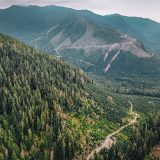
Our team has been following the harrowing flash flood that happened along the border of Nepal and Tibet. So far we know that at least 389 people are dead, and more than 1,300 others are missing, including 30 Canadians and permanent residents.
It’s too early to say what caused a massive glacier to break off and cascade into the valley below. But experts say rising temperatures in this region — largely caused by human reliance on fossil fuels — are responsible for thawing the permafrost, which likely played a role. The collapse has alarmed glaciologists.
A Kathmandu Post reporter, many of whose family members were taken by the water, wrote a devastating account: “I have never once, in all that time, seen the river come for us.”
“Nepal’s catastrophe is not Nepal’s warning alone,” experts write in this piece about preparing for disasters. For Canada, where extreme weather-related events like fires and floods wreak havoc, they say we have to be better prepared — something we’ve been thinking about a lot in our reporting.
— Karan
Photo: Christopher Katsarov Luna / The Narwhal
It’s … Lake Ontario.
Somehow a Great Lake has become the centre of the escalating trade war between the U.S. and Canada.
Today, President Donald Trump signed an executive order renaming Lake Ontario to Lake America. It may be the smallest of the five Great Lakes, but more than a quarter of Canada’s population lives in its watershed. It’s been called Lake Ontario for longer than the U.S. and Canada have existed.
We at The Narwhal know exactly how special these great bodies of water are in supporting clean drinking water, much-needed wetlands, biodiversity and even cooling infrastructure for nuclear projects, to list a few reasons. We also know water doesn’t recognize human-drawn borders.
Blackout threats in Alberta, explained By Drew Anderson
Produced by L. Manuel Baechlin
POV: you’re watching your daily ‘Love Island’ episode, while asking your AI-powered smart fridge what to make for dinner. You get a grid alert saying, ‘Hey, that’s a lot for me, man.’ Here’s what that means.