



 11 min. read
Iconic. Sexy. Yellow. Just a few words used to describe the Canadian-made water bomber, built specifically for fighting fires. This legendary aircraft, which was invented in Canada and transformed the way wildfires are attacked around the world, has been used since the 1960s. But while wildfires have increased in intensity and frequency, the country hasn’t added any new water bombers in over a decade.
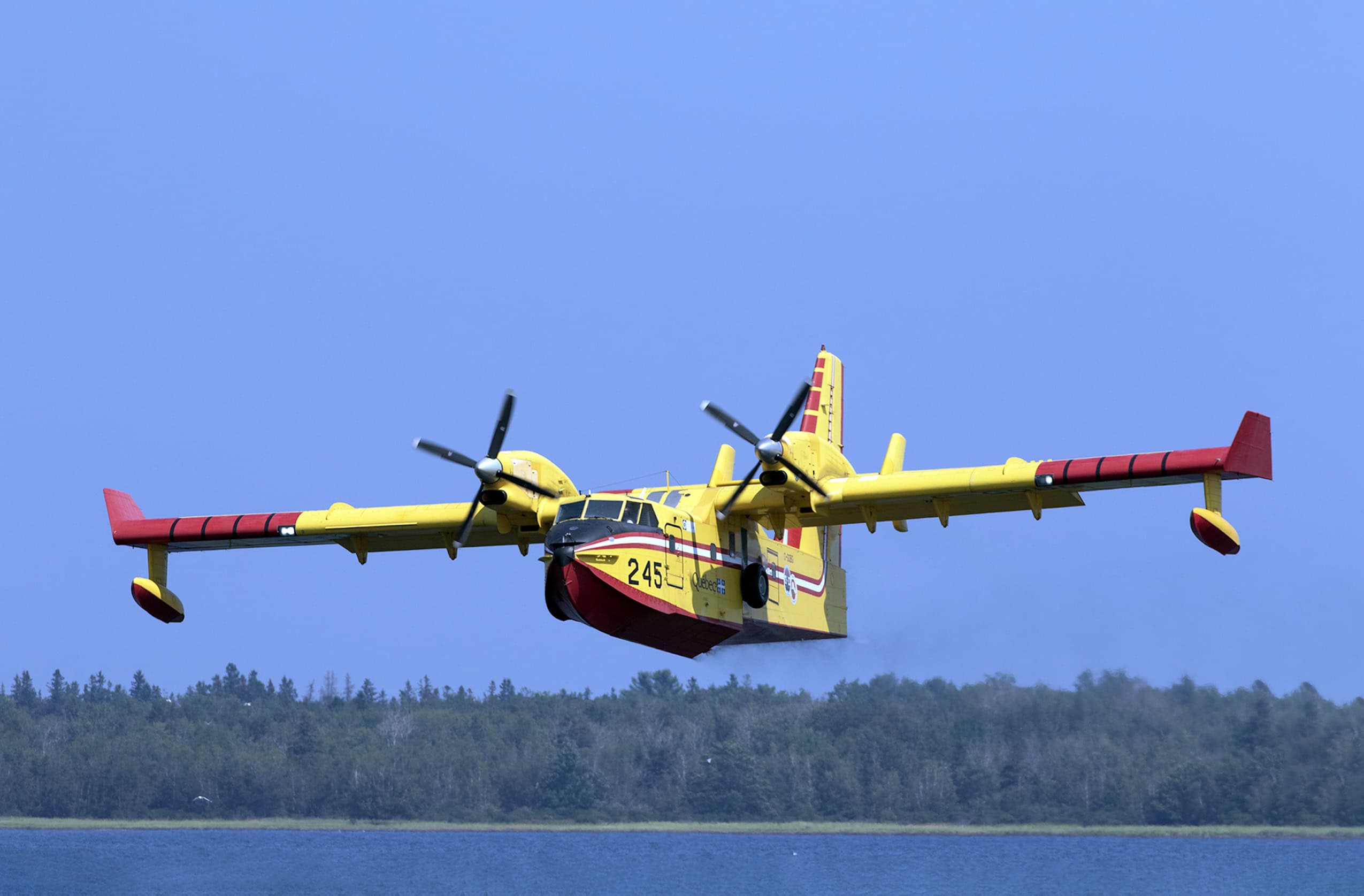
For months, Calgary-based aerospace company De Havilland Aircraft of Canada Limited has been pushing for a national fleet of 50 new planes, lobbying the federal government and urging Canadians to write to their members of Parliament. The newest model has a wingspan wider than six cars from hood to trunk. In 12 seconds, it can scoop up more than 6,000 litres of water, then fly over a wildfire and open its belly to release a waterfall from the sky. The company says it is the best firefighting tool in the world.
Summary
“Forest fires won’t wait,” reads a full-page newspaper ad bordered with flames. “It’s time for a national water bomber fleet.”
“We don’t have enough aircraft for the fires of today. We certainly don’t have enough aircraft for the fires of tomorrow,” Neil Sweeney, De Havilland’s vice president of corporate affairs, told The Narwhal. With increasing drought and extreme weather, Sweeney said, “it’s time to invest today for the problems of tomorrow.”
De Havilland’s lobbying efforts may have paid off. Leaked documents obtained by American journalism organization Politico suggest Canada has a new deal with the European Investment Bank to jointly purchase 50 water bombers. The announcement is expected this week at the European Union-Canada summit in Montreal.
So far, there are no details and plenty of unanswered questions of how this joint fleet could work; both continents have experienced simultaneous, record-setting wildfire seasons. And as wildfire response is provincial, not federal, it’s unclear who would take ownership of such a fleet. A national fleet is a multibillion-dollar project: if Canada were to purchase 50, it could be in the range of $3 billion to $4 billion. The newest model is still in production and it will be years before any new planes take flight.
The Narwhal talked to aviation and wildfire experts, read through Senate hearing transcripts, studies and media releases to try and understand if a national fleet could be part of the solution to Canada’s growing wildfires.
Many experts we spoke with hedged the idea with concerns or questions about how many planes Canada really needs, their effectiveness, wait times and costs. Some said dollars should be better spent on a variety of aircraft or, better yet, wildfire prevention.
Stretched for wildfire resources
There were 23 days in the 2026 wildfire season when fires were so significant that firefighters and equipment in every jurisdiction across Canada were maxed out. International help had to be requested.
When possible, wildfire resources are shared across jurisdictions in Canada. The Canadian Interagency Forest Fire Centre, a not-for-profit corporation owned and operated by federal, provincial and territorial wildland fire management agencies, acts as a resource broker. It coordinates sharing everything from hoses to personnel to aircrafts. As fossil fuel emissions drive climate change, Canada’s wildfire seasons are becoming longer and more severe. Water bombers can be a powerful tool to make fires more manageable and help crews on the ground.
Across Canada right now, there are about 50 water bombers owned by some provinces or private contractors. These planes were first manufactured in the 1960s by Canadair and then Bombardier. Over the years there have been some modifications and upgrades until orders slowed and production stopped in 2015. The average age of the current fleet is around 32 to 35 years.
“That was sufficient, you know, until the world started to catch on fire,” John Gradek, a lecturer at McGill University in aviation and supply chain management, told The Narwhal. He has worked in aviation for more than 30 years. Designed from scratch to be an amphibious, firefighting water bomber, Gradek said this built-in-Canada plane has a place in global aviation history.
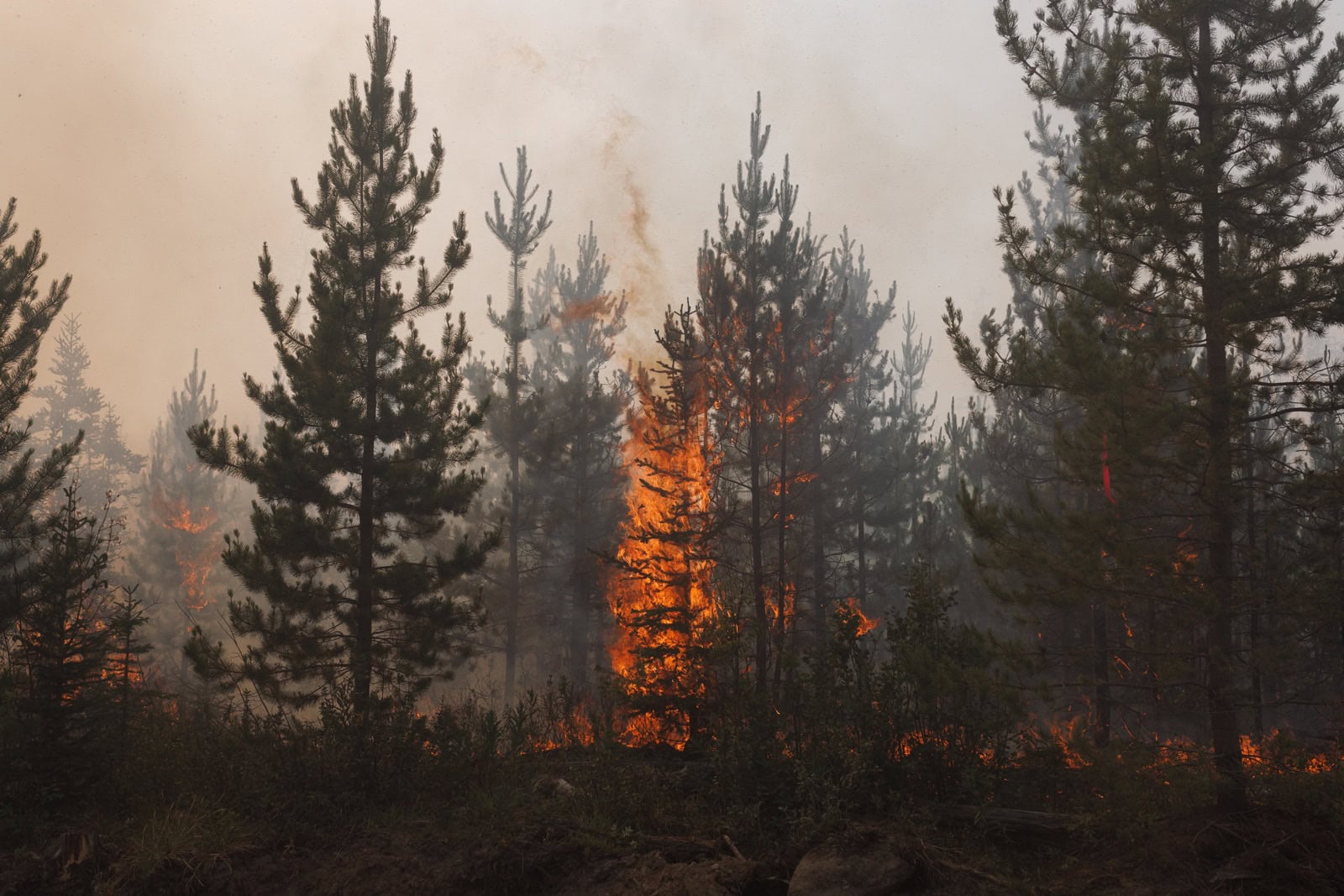
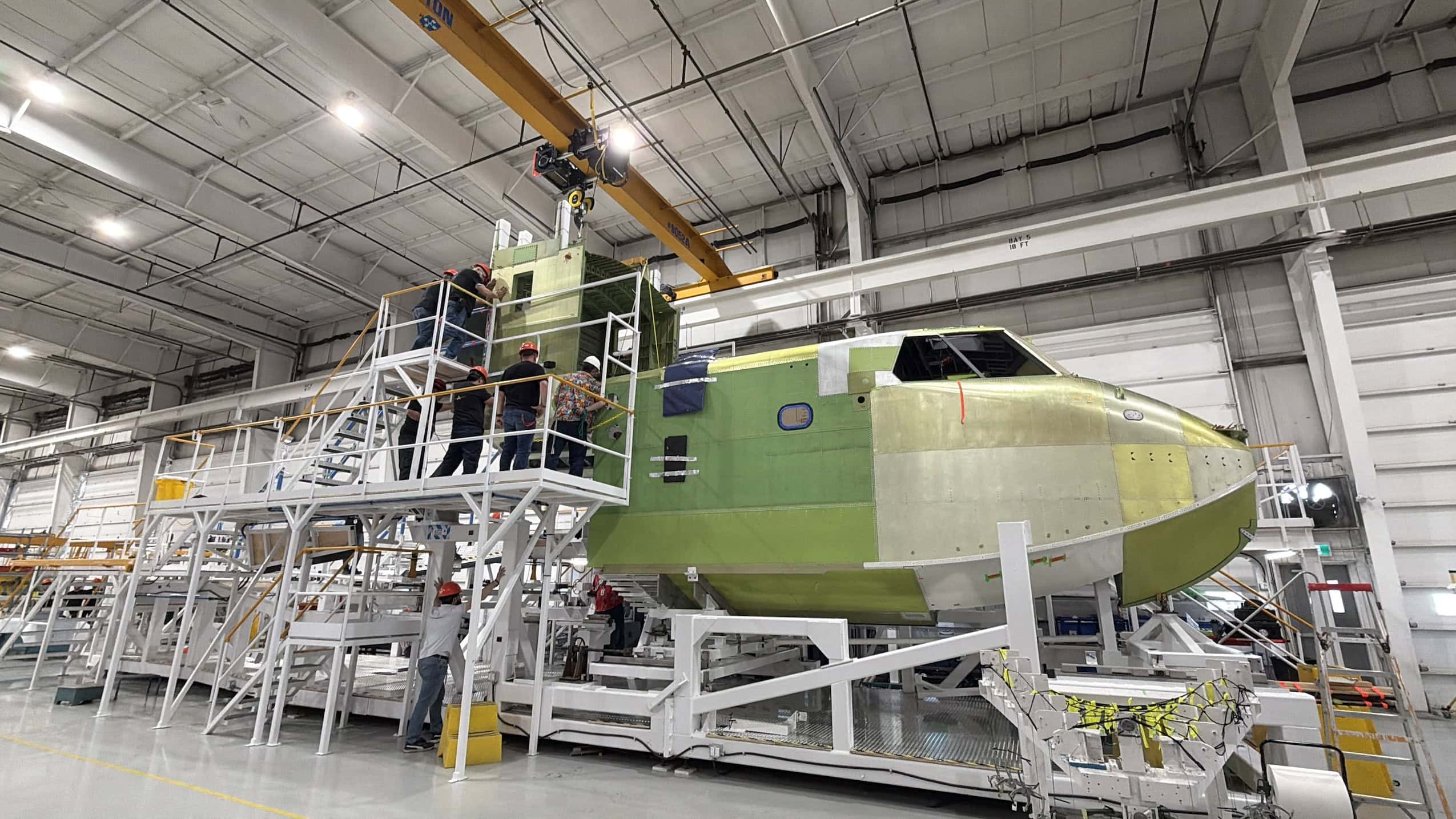
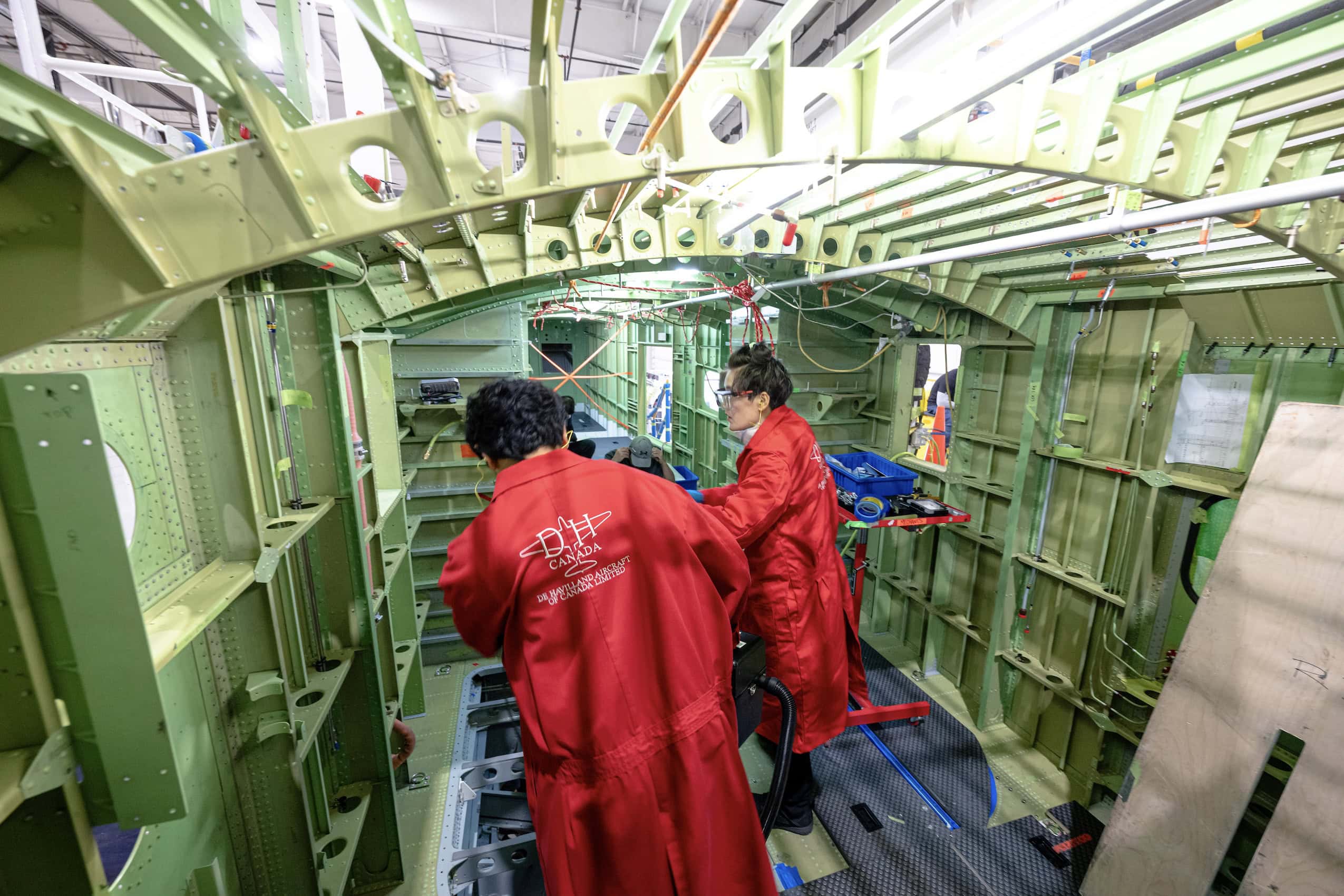
Now, De Havilland is restarting production with a newer model. When The Narwhal spoke to Sweeney, he said they can currently build about 10 water bombers a year. There are several orders already queued up. The first 22 planes will go to Europe. Manitoba will be the first Canadian province to obtain a new water bomber, which is expected to be ready by 2031. He estimated the wait time for a plane ordered now as six to seven years.
“Obviously, that’s a long time to wait for an aircraft,” Sweeney said. “We’ve never produced [this aircraft] before. We’re bringing a supply chain back into production. We’re making small but important changes to the aircraft. So there’s a lot of engineering that goes into all of that.”
The federal government spends about $1 billion a year on wildfire suppression and response, according to Natural Resources Canada. Sweeney couldn’t confirm the cost of a new plane but news releases from European and Canadian orders put the price tag from $60 to $80 million.
Water bombers not the ‘silver bullet’ to Canada’s wildfires
Whether or not 50 is the number of water bombers Canada will need for the wildfires of the future is a question experts couldn’t answer, telling The Narwhal more information was required. Namely, a better understanding of a national wildfire strategy and if there would be investments in other supports like a mix of aircraft, more crews or training.
The federal government didn’t give any details on who would manage the fleet or where the planes would be stationed. There are several federal agencies, like Public Safety Canada and Natural Resources Canada, which support provinces and territories to manage wildfires and emergencies. But wildfire management is ultimately the responsibility of each province or territory. While the Canadian Interagency Forest Fire Centre acts as a clearing house for resources, the country doesn’t have an integrated, national plan on how to best deploy a fleet of 50 planes, Gradek said.
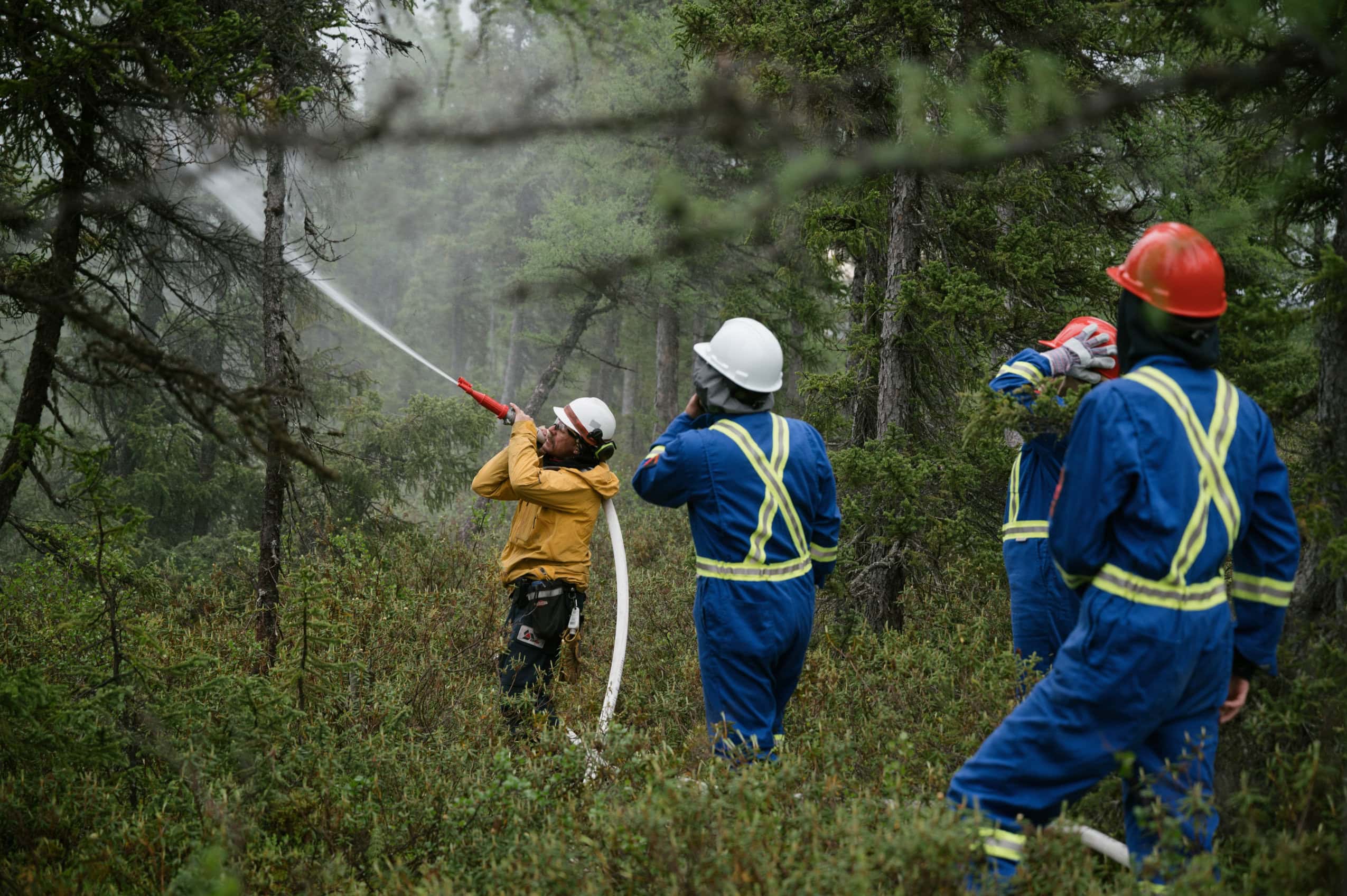
“I don’t know if 50 is the right number. It may be too little. It may be too much,” Mike Flannigan, a professor of wildland fire at Thompson Rivers University in Kamloops, told The Narwhal. “It’s part of the toolbox, absolutely. But to me, it’s not the most frequently used tool or the most important tool.” Flannigan is also the B.C. Innovation Research Chair in predictive services, emergency management and fire science. For Flannigan, firefighters and helicopters are more crucial as is a national wildfire strategy.
While water bombers are a tool, “they’re not always the most appropriate tool, depending on the landscape or the fire,” Alexandria Jones, a communications and engagement advisor with the Canadian Interagency Forest Fire Centre, said. They are most effective when they don’t have to travel far from a large body of water to a fire. In swampy or mountainous terrains, water bombers have a more challenging time filling up. In those scenarios, Jones said it’s better to rely on smaller aircraft or helicopter bucketing.
Water bombers do not extinguish flames, experts said many times over; firefighters do. Aircraft are used to make intense fires more manageable, buy time for crews to get established or help them put the fire out. Water bombers are “really not the silver bullet to the national fire situation that we’re seeing year after year,” Jones said.
Ahead of this year’s wildfire season, the federal government invested $316.7 million over the next five years to increase Canada’s aerial wildfire firefighting capacity. Water bombers were considered, but because there is a shortage and significant wait, the Canadian Interagency Forest Fire Centre, which received the funds, decided to hire a mix of other aircraft.
Sweeney acknowledged there should be investment into a variety of firefighting aircraft but sees the water bomber as the “backbone of most fleets.”
Fundamental questions unanswered, experts say
De Havilland has been actively lobbying the federal government to “buy Canadian” and is pursuing several projects. Sweeney told The Narwhal that if the government did agree to buy 50 planes, they “could be in Canada by 2029” as the company would set up a second production line and employ Canadian workers.
Representatives for De Havilland have been busy this year meeting with several departments, including Innovation, Science and Economic Development, National Defence, Global Affairs, Public Services and Procurement and the Prime Minister’s Office, according to data summarized by the Investigative Journalism Foundation. About three-quarters of De Havilland’s government contracts since 2009 were awarded without a bidding process.
The Narwhal reached out to several federal departments to ask how aerial firefighting procurement decisions are made, what research is considered and if water bombers are being considered. Our interview request was declined. An emailed statement from the office of Eleanor Olszewski, minister of emergency management and community resilience, said emergency management is a shared responsibility between several levels of governments, and pointed to recent public engagement on natural disasters and funding for aerial suppression that went to Canadian Interagency Forest Fire Centre.
“The federal government continues to strengthen our national emergency preparedness and response capacity, including through significant investments in wildfire response and resilience in recent years. For example, Budget 2025 included funding to lease firefighting aircraft to create new federal surge capacity.”
But several experts told The Narwhal that investments should be preceded by more clarity on Canada’s wildfire strategy, including where the fleet would be stationed and which agency would manage it. What’s more, Gradek said, there’s still questions around how many planes Canada really needs, and whether water bombers are the most effective tool for the money.
“Those are the fundamental questions that we have to ask ourselves before we start throwing hundreds of millions and billions of dollars into a firefighting fleet aircraft,” Gradek said.
‘The decisions we make today are really, really crucial’
Preparing for, responding to and recovering from worsening wildfires is mostly the responsibility of provinces and territories. To coordinate efforts more, the 2026 Senate report, Canada on fire, called on the Canadian government to create a national “office for wildfires and emergency response” and fund “a national fleet of modern firefighting aircraft.” Exactly how that would work is still unclear.
Olszewski’s office told The Narwhal in an email there could be the creation of a “federal emergency management agency,” based on input they heard from a national engagement on natural disasters.
Robert Gray was among the dozens of witnesses who shared expertise at the Senate hearings. A wildland fire ecologist, he believes water bombers perform an important role in fire suppression, and “we could probably use more,” but if we choose to spend billions on them, “it damn well better work.”
The water bomber question gets at a core tension to Canada’s wildfire strategy. “Do we double down on suppression or do we shift to trying to get ahead of the problem?” Gray asked. He sees a political culture willing to spend on visible solutions, like water bombers, versus mitigation and prevention efforts.
Studies show that mitigation and prevention efforts have high cost-benefit ratios. Clearing underbrush and prescribed burns, strategies that Indigenous communities have been using for centuries, have an estimated return of almost $4 to every $1 spent. In one study, restoration of fire-prone forests returned $7 for every $1 spent. Some nature-based solutions have an estimated return of $100 for every $1 spent.
“Those water bombers are really like the sexy part of firefighting, the prevention and mitigation aspect is less so, but equally, if not more important,” Jones said.
A year ago this month, Gradek spoke at the Senate hearings telling the committee the country could probably use 100 water bombers.
“What was the science behind that? Nothing,” Gradek told The Narwhal.
He’s since reflected on that answer and has stepped back, saying we need more research and clarity around what the country really needs and how these planes would be used most effectively.
A number helps us write a cheque but it doesn’t solve the wildfire problem, he said.
“The decisions we make today are really, really crucial,” Gray said. “If we spend $4 billion on air tankers, will we see a return on investment? We’re at a tipping point where we’re going to have to make a significant decision either way.”