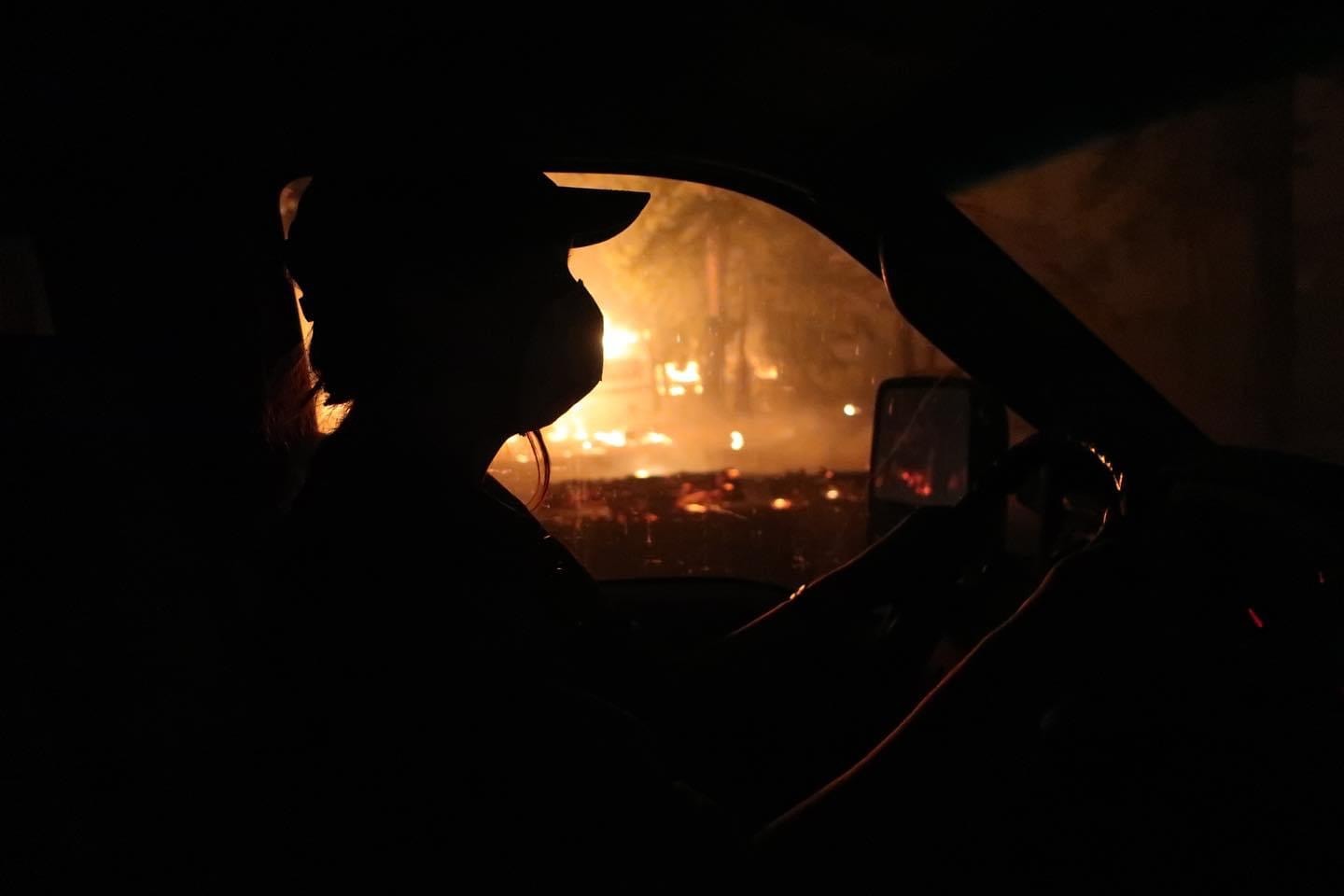
Experts say 2023 — which was the worst-ever year for Canadian wildfires, and included this one in Chase, B.C. — was a key turning point where wildfire misinformation reached a new level.
Photo: Mike Graeme / The Narwhal
Googling air quality and wildfire updates has now become a pretty routine part of our summers.
So as I prepared for a canoe trip to the interior of B.C., I typed in a query: “Murtle Lake air quality.”
“The entirety of Murtle Lake and associated backcountry areas are closed by BC Parks due to nearby wildfire activity and safety concerns,” read Google’s AI-generated summary.
There was just one problem: Murtle Lake was very much open, according to the BC Parks website. As for the sources Google cited for the closure? They included Facebook posts about two different park closures in the province — as far as six hours away.
The error raised some questions: how could Google get this so wrong? What about people who take the information they’re being presented online at face value? And, in the face of natural disasters that keep increasing in both frequency and severity, what harm could AI misinformation pose?
My experience was fairly trivial. But bad actors are circulating much more nefarious, potentially consequential (and sometimes comically inaccurate) untruths. One AI-generated graphic this summer falsely claimed 10,000 Albertans were under evacuation orders as of July 16, with a map showing Jasper National Park appearing to cover a large chunk of the province.
Experts who spoke with Michelle said 2023 — the worst year for wildfires in Canadian history, so far — was a key turning point where wildfire misinformation reached a new level. Meta instituted a news ban on Facebook and Instagram that summer, ChatGPT was already on the rise and Elon Musk was the new owner of Twitter.
It’s “faster, easier and cheaper than ever before to generate fake and misleading content with AI,” Carleton professor Chris Russill told Michelle. And when you see engagement, you can easily respond to ramp things up a notch. “Like, let’s make the smoke bigger. Let’s put a fleeing polar bear in there. Who knows, right?”
Researchers don’t yet know how this sort of misinformation is putting individual lives at risk. But the rise of AI slop means wildfire agencies are now forced to put precious time and resources into combatting conspiracy theories — at a time when a lack of trust is already a huge strain on frontline firefighters’ mental health.
That’s what freelance journalist Trina Moyles looked into for another story we published today. Last week in Alberta, six workplace safety charges were laid against the province’s Ministry of Forestry and Parks in relation to the death of a 24-year-old firefighter in August 2024. The tragedy highlighted both the dangers wildland firefighters face out in the field and the lingering effects when they get home, which crew members say isn’t dissimilar to returning from combat.
Because of the nature of their work contracts, many wildland firefighters are forced to deal with the stressors on their own after wildfire season ends. It’s pushed a former firefighter — and his team of veteran wildland firefighters, occupational health therapists, psychologists and climate specialists — to launch their own peer-support network, which will be the first of its kind in the country.
And firefighters aren’t the only ones facing health risks from a changing climate. Migrant workers in Ontario have suffered heat stroke and died while working outdoors in stifling conditions; two weeks ago demonstrators rallied in Toronto chanting “no more deaths.” As community and policy reporting fellow Rajpreet Sahota details in this story, temporary foreign workers are calling for better heat protections, health care access and increased pathways to permanent immigration status.
That included lessons about using fire for good: youth were able to harvest huckleberries in an area that was regenerating, seven years after a cultural burn.
Take care and don’t be sloppy,
Arik Ligeti
Director of audience
P.S. In the original email version of this newsletter, and a story that was shared in it, we used an image of fire crews participating in an Indigenous cultural burn — and not a wildfire. We’ve changed the image, and regret the error.
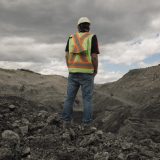
The federal government has approved the Crawford Nickel mine near Timmins, Ont. Some say it’ll bolster the local economy, while others worry about environmental and social impacts. Last fall, reporter Leah Borts-Kuperman covered the tension on the ground: “I do think that we’re headed towards an area where we’re going to rip up the entire boreal shield,” a member of Mattagami First Nation, south of Timmins, told her.
There’s a plan in place to store carbon in the mine’s waste rock, as reporter Carl Meyer wrote about in this explainer. The mine project has received millions of public dollars to figure out how to decarbonize its operations.
The Crawford Nickel mine was already being considered by both the Ontario and federal governments for fast-tracking under new systems for permit approvals. Reporter Fatima Syed has covered exactly how Ontario is pushing to speed up mine approvals — while many First Nations leaders are left with questions. Check out her story here.
— Elaine Anselmi, Ontario bureau chief
Paddling along
We’re still basking in the glow of good vibes at Vancouver Folk Music Festival!
Our staff had a blast meeting longtime readers and introducing The Narwhal to so many of you for the first time.
And nobody was more stoked about our time at the festival than Leah Weinstein — the winner of our paddleboard draw! Leah told us she’s eager to hit the waters with her kid and tune into Narwhal journalism as a new email subscriber.
Have an event in mind that you think would be a good fit for The Narwhal? Reply to this email and let us know.
This week in The Narwhal
(Almost) everybody in Canada wants a pipeline. Nobody wants to pay for it By Sharon J. Riley
More than half of Canadians support new pipelines, mostly for economic reasons. But no company has stepped up to cover the cost. Here’s what you need to know about the dollars and cents of pipeline projects in Canada.
Canada’s last peach breeder is growing fruit for the future By Denise Balkissoon
In Ontario’s Niagara region, scientist Jay Subramanian is designing a peach that will help reduce food waste, allow workers to avoid heat waves — and still taste delicious.
When you go straight to the source to get cold, hard facts instead of relentless AI slop. Tell your friends to sign up for our free newsletter, so they can read The Narwhal’s reporting — just like my cat, Mousey.