Leah Borts-Kuperman (Local Journalism Initiative Reporter) is based in North Bay, Ont., and focuses on issues affecting what's known as the near north.
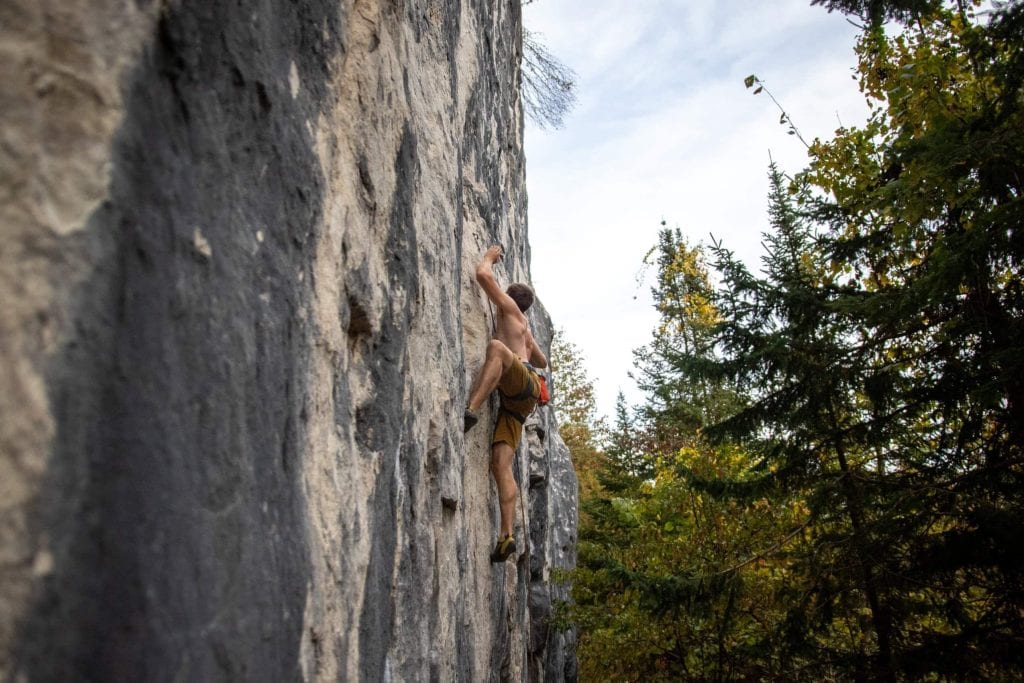
This spring, more than 1,000 pages of emails, made public through freedom of information requests, landed on my desk. There was lots to unpack: angry exchanges between rock climbers, neighbours, ecologists and Ontario Parks staff, over how and where rock climbing should be allowed on a fragile stretch of Niagara Escarpment in Devil’s Glen Provincial Park.
I sifted through allegations of violent threats, screaming matches and racial slurs, old-growth cedars sawed off, cars egged and climbing routes sabotaged. As I talked to sources, trying to understand how a dispute over a recreational activity had become so fraught, it was clear: the story wasn’t “climbers versus neighbours.” It was about what happens when the government ignores scientists, leaving everyone else to deal with the fallout.
In 2023, Ontario Parks installed signs to keep climbers off 23 routes, of more than 140. Government scientists identified these areas as sensitive — home to rare plants, nesting birds and endangered bats. But, after months of outcry from climbers, the signs came down. Then-environment minister David Piccini made that call, the emails show.
An Ontario Parks ecologist named Ron Gould pushed back: “There has been no scientific rationale involved in the removal of the signed protection areas so hopefully we can get those back in place soon,” he wrote in an email. “These ongoing climbing activities within the sensitive areas are likely to cause further user conflicts and impacts to park values.”
A year later, Gould’s boss sent him an email instructing him to postpone research in the park. This spring, the province listed rock climbing as an officially permitted activity.
And just last week, I learned Gould, the only protected areas specialist for Devil’s Glen, has since been dismissed from his role. Ontario Parks didn’t respond to my questions about his departure.
It’s a theme I’ve seen before.
Last month, senior Ontario reporter Fatima Syed and I investigated what’s happening inside the same ministry’s species-at-risk branch, where staff told us scientists have been sidelined and effectively silenced — reducing them to rubber stamps for development. The ministry didn’t answer our questions for either story.
In both cases, the devil’s in the details. I hope you’ll set aside some time to read the full story — and check out stunning photography by Steven Kell and beautiful illustrations by Susan Kao (come for the immersive opening scroll experience, stay for the juicy storytelling!). Even amid the climbing tensions, Devil’s Glen is well worth the visit.
Meanwhile in the Rocky Mountains, senior Prairies reporter Drew Anderson hit the trails for another story about the complicated relationship between humans and parks.
He travelled to Kootenay National Park to scamper over fallen logs and encroaching brush with members of the Canadian Backcountry Trails Preservation Society, who want the federal government to focus more attention, and money, on hiking routes.
But budget shortfalls, crowded tourist zones and the need to protect fragile ecosystems all complicate what some say is a straightforward request. Check it out.
See you in court Victoria
What happens when you sue the RCMP? Like, what actually happens?
Join The Narwhal on Nov. 13 in Victoria for a riveting night of storytelling (and cocktails!) to find out.
Come learn about the ins and outs of our nine-week trial, what’s at stake in the pending ruling and why the urgent fight for press freedom in Canada is far from over. Former CBC Ottawa News anchor Adrian Harewood will moderate a discussion featuring Narwhal co-founder and editor-in-chief Carol Linnitt, award-winning photojournalist and current Nieman Fellow Amber Bracken and our lead counsel, lawyer Sean Hern.
Life alongside the impacts of Alberta’s fracking boom By Drew Anderson
Photography by Amber Bracken
Locals say the creeks are dry and the roads are ruined. Here’s what life is like in a rural Albertan fracking hot spot.
What’s better than a kitten in a bath with a rubber duck? Getting news about the natural world in Canada, delivered right to your inbox. Remind your friends to subscribe!