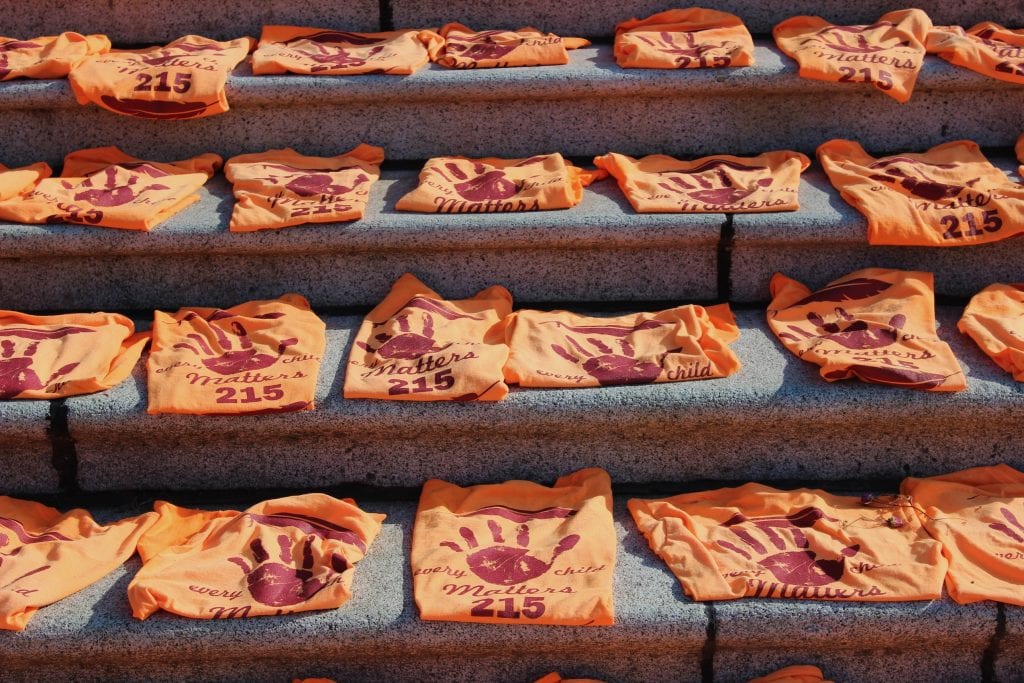
Wednesday was the National Day for Truth and Reconciliation: a day to reckon with the legacy of residential schools, a tool in Canada’s genocide of Indigenous people.
That reckoning landed differently in different parts of the country.
In Vancouver, on Sept. 29, First Nations, political and industrial leaders gathered to announce LNG Canada — the country’s largest liquefied natural gas facility — unlocked $33 billion in investment to double its production. As Matt Simmons reported, the announcement was wrapped in the language of partnership and reconciliation, as government and corporate executives touted First Nations participation and ownership as part of the project’s promise.
Thursday, Prime Minister Mark Carney designated the West Coast pipeline (now being called Pacific Link) as a project of national interest. It’s happening even though some Indigenous leaders have decried federal plans to condense consultation timelines for major projects, worried it could limit their ability to assert their constitutional rights in their territories, as reporter Carl Meyer wrote about last week.
Meanwhile, in Tk’emlúps te Secwépemc — the First Nation that first reported the presence of unmarked graves on former residential school grounds in 2021 — the days leading up to Sept. 30 laid bare the racism and hostility communities continue to face. A group of people wearing face coverings and black clothing allegedly associated with a white nationalist group was spotted on the reserve, and then later on a bridge with a banner that seemingly mocked the 2021 discovery. Leaders condemned the incident as racist and cowardly, while experts pointed to the alarming rise of residential school denialism.
These stories may seem worlds apart, but they aren’t. At a Truth and Reconciliation event in Toronto, lawyer Kimberly Murray spoke about the federal government’s plan to destroy thousands of records of the abuse and neglect children experienced — a move that could fuel residential school deniers. She also pointed out that Canada’s removal of 150,000 children from their families was part of a larger colonial project to remove Indigenous people from their land.
Which means that all of these splashy project announcements — and the concerns they continue to be met with — are tied to a question Canada cannot escape: what does reconciliation look like when it comes to the biggest decisions being made about lands, waters and resources in this country?
The effects of climate change in Canada are felt most acutely by remote Indigenous communities. It’s why we’ll keep an eye on these announcements — and report on what they mean for all of us.
Seattle’s dams cut off Canada’s salmon. A century later, they may be coming back By David Moskowitz
After U.S. Tribes won a hard-fought agreement to restore fish passage around Seattle’s dams, First Nations in British Columbia are preparing for the possible return of salmon to waters they’ve been absent from for more than a century.
Ontario farmers are finding ways to help the environment — and it starts with a pair of underwear By Matt McIntosh
By incorporating new methods of planting, fertilizing and generally operating, farmers are reducing their negative impacts and growing more food.
Manitoba acquiring campground near former residential school to keep ‘truth alive’: Kinew By Connor McDowell and Morgan Modjeski
‘We live in an era where people are trying to deny what happened in residential schools,’ Premier Wab Kinew said about acquiring a campground where at least 50 children are buried.