The air quality in Toronto this week was, at times, worse than anywhere else on the planet. Farther north, communities closer to the wildfires face more immediate risks
Fatima Syed has been reporting on energy issues and more from Mississauga, Ont., since 2019, digging into documents obtained through freedom of information requests and speaking regularly with industry sources.
I’m writing this newsletter in between coughing fits.
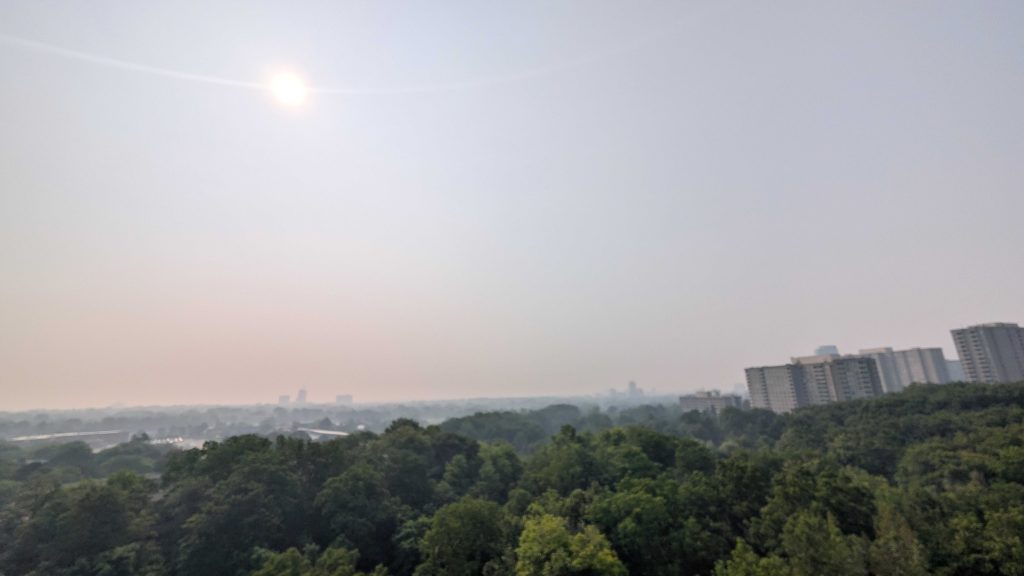
I’ve just recovered from bronchitis, so it probably wasn’t a good idea to step outside on my balcony this morning to take a mediocre photo of the wildfire smoke engulfing the Greater Toronto Area. My eyes started burning immediately; through tears, I saw my phone camera couldn’t focus because of the haze. The coughing hasn’t really stopped.
Toronto’s air quality is among the worst in the world right now — a result of such an intense Ontario wildfire season. There have already been 483 wildfires recorded inside Ontario’s fire region, compared to 351 last year and the 10-year average of 320. Earlier this week, 31 new fires were discovered in a single day.
More fires mean more smoke. That’s why B.C. reporter Shannon Waters and I wanted to take a quick look at health impacts from the wildfire smoke, in an article we published today.
I’m lucky in southern Ontario. Yes, the smoke is deeply toxic, headache-inducing and disruptive, but I’m reasonably safe.
Toronto-based campaigner Amara Possian shares the sentiment in a new essay: she’s anxious parenting her newborn, but knows she can shut the windows and wait out the smoke.
For many in northern Ontario, it’s a more terrifying story — one of slow responses and extreme risk.
At least 15 communities, most of them Indigenous, have either begun or completed evacuations. Members of Namaygoosisagagun First Nation (also known as Collins First Nation) — located about 210 kilometres north of Thunder Bay, and inaccessible by road — were the first to self-evacuate, largely by boat, “with only the clothes on their back,” Chief Helen Paavola said in a statement. People are now waiting for the Ministry of Natural Resources to give official confirmation “that our community was completely devastated by this forest fire.”
I’ve seen reports of road closures that are restricting the delivery of food and medical assistance to northern Indigenous communities. Power lines have also burned down in some parts, limiting residents’ ability to stay updated or ask for help if needed.
Fire crews are struggling to respond properly; the local fire department in Upsala has said their fire “is too large to fight.” Its message to the community is to “get your essentials together and be ready to run.”
In B.C., Indigenous journalism fellow Santana Dreaver knows what that means. She’s living near a wildfire in Lytton — and as you’ll see in her first video for The Narwhal, her bags are packed and in her car, ready to go at a moment’s notice.
Time and again, we’ve learned that wildfires and smoke move really, really fast, while our response to them often does not. That’s a choice.
Ontario’s Progressive Conservative government has significantly weakened or sidelined environmental policy, including by underfunding fire response and loosening forest management rules, in a bid to build. That includes a push for mines and pipelines in the very region that’s on fire right now.
As entire communities seek refuge, the potential consequences of those decisions are evident now across the whole, hazy province. We’ll continue to keep watch on those natural resource projects — and the natural disasters that come with our warming world.
In Nunavut, hunters and trappers are concerned about a proposal to expand the Mary River mine on Baffin Island. Freelance reporter Meral Jamal reported from Iqaluit about Baffinland Iron Mines Corporation’s plan to build a 149-kilometre rail line to support the expansion.
The mining company is the largest private-sector employer in Nunavut and contributes nearly a quarter of the territory’s GDP. Already in troubled financial waters, Baffinland says expanding its Mary River iron mine is critical to stay afloat.
Some hunters are pushing back, saying the shipping traffic will harm narwhals, walruses and bowhead whales — and the Inuit who harvest these animals for food and as a way of life.
Photo: Sheila Say / Vancouver Folk Music Festival
Attention: Vancouverites
Looking to enjoy some live music … and hang with Narwhals? Our team will have a booth at the Vancouver Folk Music Festival this weekend — and we’d love to see you there!
We’ll have games (move over cornhole; we’ve got blowhole), prizes (Narwhal swag! A stand-up paddleboard!), a shaded chill area and most importantly real humans you can chat with about our journalism and fight for press freedom.
You’ll find us in the community village, near the little bridge on the walk between the main stage and the south stage. Grab a ticket and come say hello any time from when gates open until 8 p.m., Friday through Sunday at Jericho Beach Park.
This week in The Narwhal
‘Industrial sacrifice zone’: the plan to bring oil supertankers to the mouth of the Fraser River By Shannon Waters
As governments look to expand Roberts Bank, scientists warn one of Canada’s most important ecosystems for salmon, southern resident killer whales and migratory birds could pay the price.